
Q1. Is Capital University the same as Helwan University?
+Yes. Helwan University was officially renamed Capital University following a 2025 government decree.
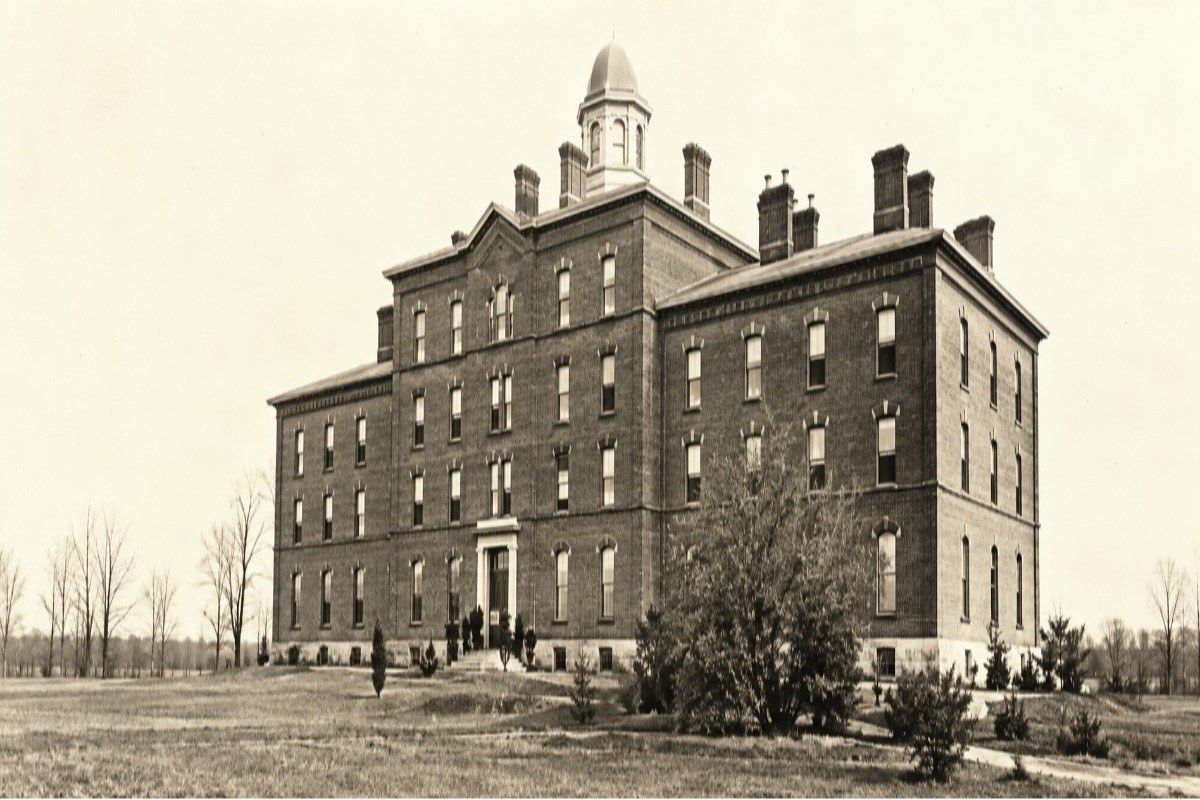
 Egypt | Est. 1975
Egypt | accredited and recognized by major global and national medical bodies including the World Health Organization (WHO) and the National Medical Commission (NMC, formerly Medical Council of India), as well as the General Medical Council (GMC) of the UK | English medium
Expert will call you within 2 hours
The University and What Makes It Different
Capital University is the new name for one of Cairo's own public universities, formerly known as Helwan University. The name change is genuinely recent: it took effect after Prime Ministerial Decree No. 4329 of 2025 was published, replacing "Helwan University" with "Capital University" across the executive regulations that govern it. So if a source still calls it Helwan University, that's not wrong, just not current.
The university itself goes back further. It was founded on 26 July 1975 under Presidential Decree No. 70, becoming the third of Greater Cairo's major government universities at the time, after Cairo University and Ain Shams University. Here's a detail most guides skip: several of the faculties folded into this "young" university are actually much older than the university itself. The Faculty of Applied Arts traces its roots to 1839, under Muhammad Ali's "Operations School," while the Faculty of Fine Arts dates to 1908 and Art Education to 1936. So a student walking onto one of Capital University's arts campuses is standing on ground that predates the Egyptian university system as most people know it, even though the medical faculty next door is barely a decade old.
That's the real contrast worth understanding here. Medicine is one of the newest faculties at Capital University, established in 2013, alongside the later addition of a Graduate School of Interdisciplinary Research in 2014, a National Institute of Intellectual Property in 2016, and a Faculty of Nutrition Sciences in 2020. So the medical faculty didn't inherit a century of clinical tradition the way Cairo University's Kasr Al-Ainy or Alexandria's medical school did; it was built inside an already-large, already-diverse public university that was mostly known for arts, applied sciences, and industry-linked programs.
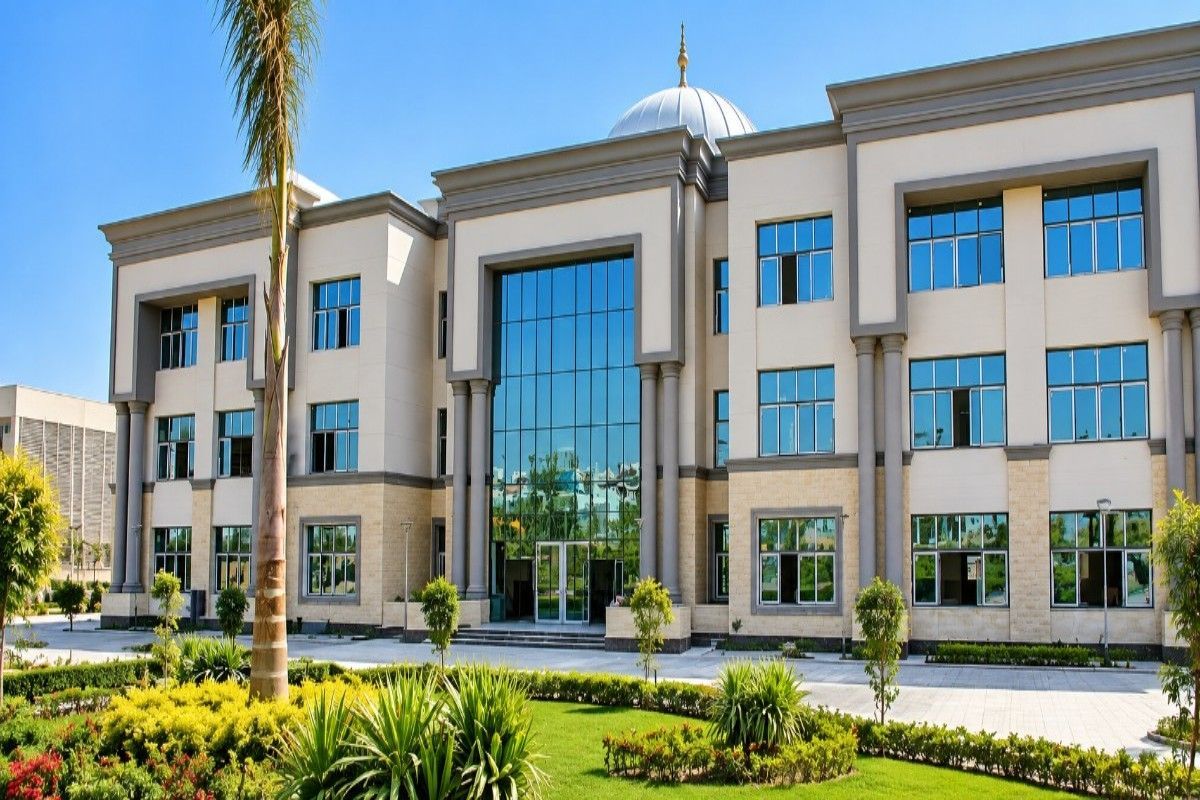
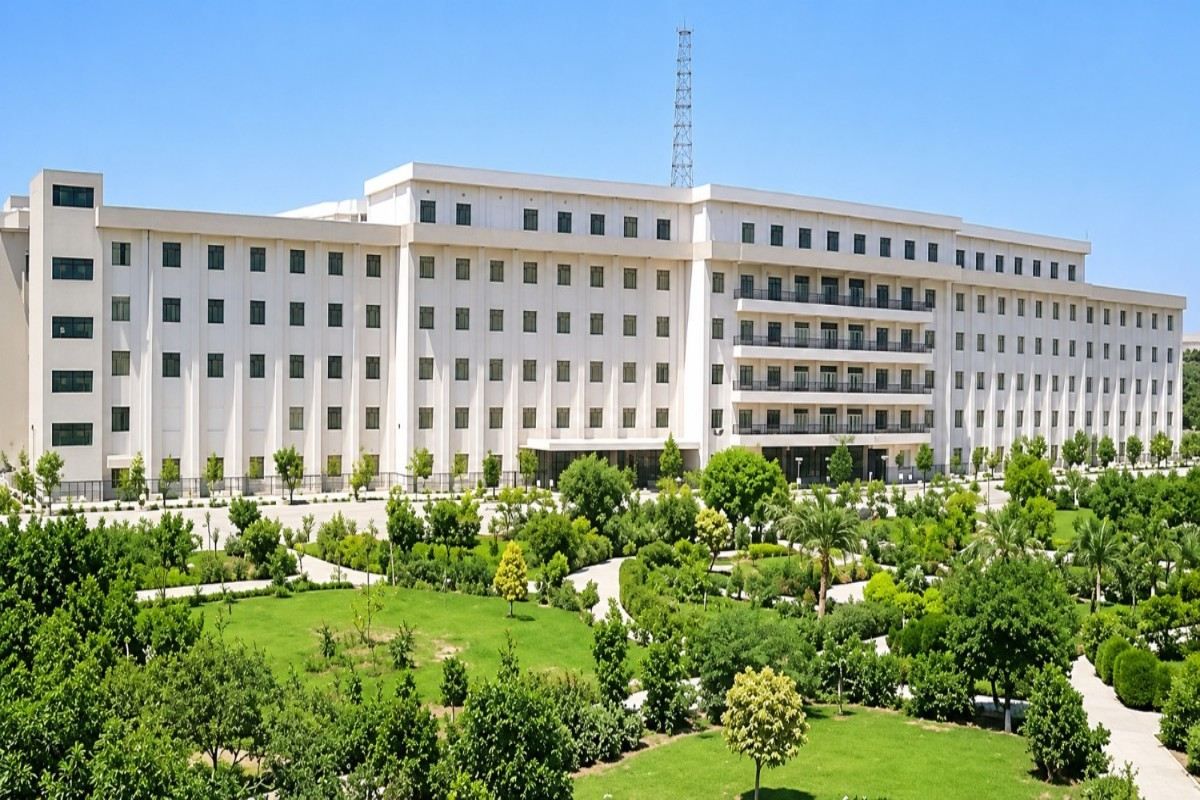
Capital University today runs roughly 23 to 25 faculties and institutes altogether, spread across more than 350 acres (about 140 hectares) of core campus land in Ain Helwan, with several older faculties still based elsewhere across Cairo and Giza, in areas like Zamalek, Boulaq, El Manyal, and Ain Shams. Medicine, along with Pharmacy, Nursing, Science, Law, Commerce, and several other faculties, sits on the main Ain Helwan campus rather than one of the scattered satellite sites.
The Campus and Its Setting
Ain Helwan sits about 25 kilometres south of central Cairo, on the east bank of the Nile, wedged between the Mokattam hills and the river valley. It's a genuinely industrial district, home to major cement and automotive works, which shaped the university's original identity as a technology- and applications-focused institution rather than a classical academic one. That industrial character is part of why medicine feels like a relatively new addition to the campus's personality, even though it now sits at the center of the university's expansion plans.
The medical faculty's clinical training has historically leaned on hospitals across Cairo rather than a single dedicated teaching hospital built from day one, since the faculty is still young by Egyptian standards. That's changing: university leadership has announced a major new hospital project intended as an integrated medical and educational hub for the Ain Helwan campus, combining a university hospital, specialized clinical centers, research laboratories, and training halls for students of medicine, nursing, and pharmacy together. As of the announcement, this is described as a strategic project rather than a completed facility, so applicants should ask the faculty directly about which hospitals currently host clinical rotations if that detail matters to their decision.
Course Structure, Cost, and Practical Details
Medicine at Capital University follows Egypt's standard public-university structure: a multi-year run of preclinical and clinical study, capped by a full-time internship year in hospital wards before graduates can register to practice, in line with the national medical education framework that applies across Egypt's public medical faculties.
Admission for Egyptian students runs through the national Tansiq coordination office, based on total Thanaweya Amma score, the same system that places students into every public university's medicine program nationwide; medicine consistently sits among the highest-scoring cut-offs in that system. International and non-Egyptian applicants generally apply through a separate track, often coordinated through Egypt's Ministry of Higher Education or the university's own international office, rather than through the domestic Tansiq system.
On cost, this is a public university, so tuition for Egyptian nationals follows the low, state-subsidized fee structure typical of Egypt's public medical faculties rather than the higher fees charged at Egypt's private and national universities. International students are usually charged separately, in line with the standard non-Egyptian fee track that most Egyptian public universities apply to overseas applicants; exact current figures for Capital University's medical program aren't consistently published, so this is worth confirming directly with the faculty before applying.
Quick Overview
Parameter | Details |
Established | University: 1975; Faculty of Medicine: 2013; renamed Capital University in 2025 |
Institution Type | Public state university |
Location | Ain Helwan, Cairo Governorate, Egypt, approx. 25 km south of central Cairo |
Programme | Human Medicine (public university structure), plus Pharmacy, Nursing, and other health faculties |
Duration | Preclinical and clinical years followed by a mandatory internship year |
Medium of Instruction | Not separately confirmed for Medicine; check directly with the faculty |
Admission Basis (Egyptian students) | National Tansiq coordination based on Thanaweya Amma score |
Teaching Hospital | New integrated hospital project announced; clinical rotations currently based across Cairo hospitals |
Fee Structure
Fee Component | Amount | Notes |
Tuition Fee (Egyptian students) | Low, state-subsidized rate | Standard for Egyptian public university medicine |
Tuition Fee (International students) | Not consistently published | Confirm current rate directly with the faculty |
Living Costs | Not separately confirmed | Varies by accommodation and lifestyle in Cairo |
Why Capital University's Medical Faculty Deserves a Closer Look
A young faculty inside a much older university
Most write-ups either treat this as "Helwan University, established 1975" or skip straight to admissions. Few explain that the medical faculty is barely over a decade old, sitting inside a university whose other faculties date back to the 1830s. That mismatch between old and new campus identity is genuinely unusual and worth understanding before applying.
A hospital project still being built, not inherited
Rather than relying purely on decades-old teaching hospitals, the university has announced a purpose-built integrated medical hub as a current strategic project. That's a meaningfully different starting point than faculties with century-old hospital infrastructure already in place.
Honest Assessment
Capital University's medical faculty is young, established in 2013, so it doesn't carry the clinical history or academic reputation of Egypt's oldest medical schools like Kasr Al-Ainy or Alexandria. The very recent renaming from Helwan University to Capital University, effective 2025, also means public information, rankings, and even the university's own materials are still catching up to the new name, so some confusion between the two names is expected for a while. The announced new hospital is a genuine investment, but it's a project in progress rather than a completed facility, so prospective students should ask directly about current clinical training arrangements. Students drawn to a large, diverse public university with genuinely old roots in some faculties, plus a newer, still-developing medical program, may find this a reasonable option; students wanting a medical faculty with an established, long-standing clinical reputation should weigh that gap carefully.
No hidden charges, no donation. The full picture of costs at MBBS in Capital University Faculty of Medicine.
Tuition Fee
RMB 40,000
Not consistently published; confirm with the faculty
Hostel Fee
Not separately confirmed by the university
Not separately confirmed by the university
Food & Meals
between RMB 1,500 and RMB 2,000
PER MONTH
Insurance
600–800 RMB
per year
Donation
No Donation
No Hidden fee
Total Estimated Cost
Modest for Egyptian nationals; higher and variable for international applicants
4 year
25–35%
Average FMGE first-attempt pass rates for students from many overseas medical universities. Students from structured programs consistently score higher.
Students returning to India need to clear the FMGE/NExT exam. MBBS in Capital University Faculty of Medicine integrates exam-oriented coaching into the regular curriculum so students are prepared from day one.
A structured program that takes you from foundational sciences to clinical mastery.
following Egypt's standard public medical curriculum sequence.
Foundational sciences including anatomy, physiology, and biochemistry
with clinical exposure beginning across Cairo-area teaching hospitals.
Introduction to pathology, pharmacology, and internal medicine
ahead of the university's planned integrated hospital coming online.
Rotations through surgery, internal medicine, and other core specialties
can register to practice under Egyptian medical licensing rules.
A full year of hospital-based practical training, required before graduates
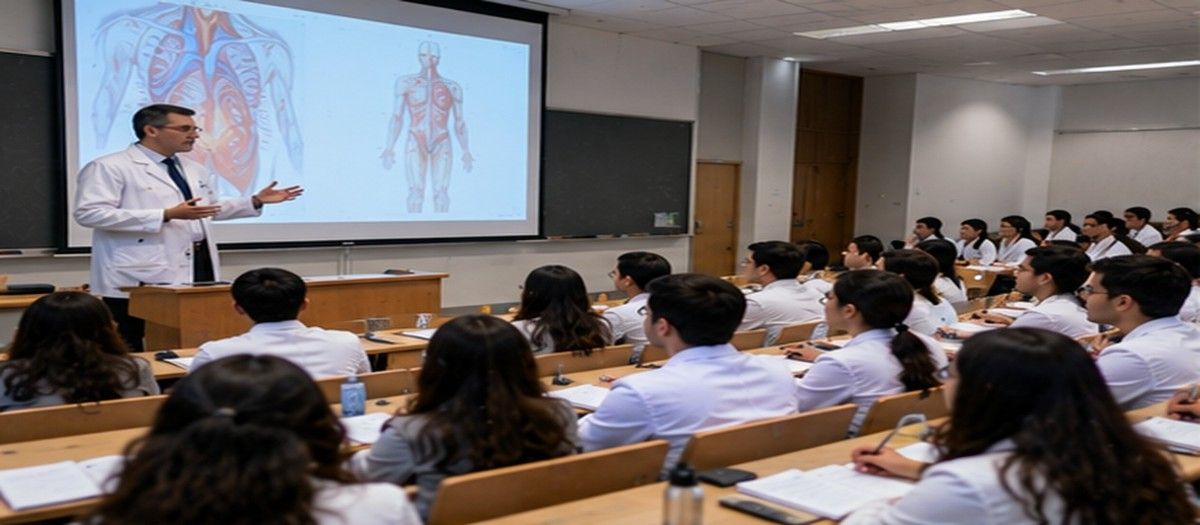
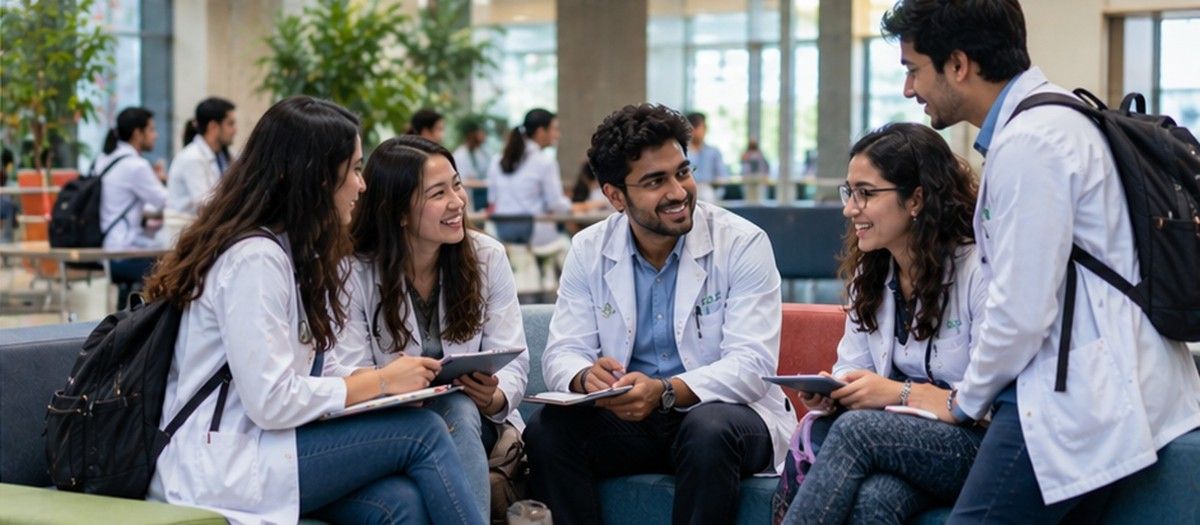
Furnished hostel rooms with Wi-Fi, laundry, 24/7 security, and Indian mess on or near campus.
Indian restaurants and mess facilities serving vegetarian and non-vegetarian home-style food daily.
Strong Indian community with cultural events, festival celebrations, and peer support groups.
Students get hands-on clinical training in government and private hospitals affiliated with the university.
Practical information for students planning to study at MBBS in Capital University Faculty of Medicine.
Prepare for all seasons. Thermal wear for winters, light clothing for summers. University provides heating in hostels.
Student visa processed with university invitation letter. Direct and connecting flights from major Indian cities.
Health insurance included in fees. Medical facility on campus plus city hospitals easily accessible.
Local SIM cards available. WhatsApp and video calls keep you connected with family back home.
Average monthly expenses of $150–$250 covering food, transport, and personal needs.
University library, online databases, and study groups. Seniors mentor juniors through academic challenges.
Our team guides you through every step — from application to arriving on campus.
Our Egypt specialist provides an honest overview of Cairo University vs Ain Shams vs ERU, English-medium status, FMGE outcomes, safety assessment, and total cost comparison.
We provide the Egypt-specific checklist. All documents are verified before university submission.
Direct submission to the suggested university. Offer letter typically within 7–14 days.
Either the students or our team receives the offer, walks you through the terms, and manages the initial fee payment.
We manage visa applications to the Egyptian Embassy in New Delhi, a minimum of 6 weeks before departure
Cairo city orientation, accommodation, Egyptian transport, food, currency, safety zones, and first-week logistics.
We advise on routing to Cairo International Airport (CAI). Confirms arrival with the local team.
Our Cairo representative meets you at the airport. No student arrives unsupported.
Hostel check-in and university registration handled by AMW's local Egypt team.
Our team files the student residence permit at the Egyptian Ministry of Interior within your first weeks. Renewed annually.
Admission Helpline — Contact our counsellors for step-by-step assistance.
“The faculty here is incredibly supportive. The clinical training during hospital rotations has given me real confidence in patient care.”
“Affordable fees without compromising on quality. The campus facilities and hostel life made my transition abroad very smooth.”
“English medium instruction and WHO-recognized curriculum were the deciding factors for me. No regrets so far — excellent experience overall.”
“The university helped with everything from visa to accommodation. Hospital exposure from year three has been invaluable for my FMGE prep.”
“Just cleared my licensing exam on the first attempt. The structured coaching and mock exams during final year were a game-changer.”
“Safe campus, good food options, and a strong Indian student community. The teaching methodology is very practical and hands-on.”
Yes. Helwan University was officially renamed Capital University following a 2025 government decree.
In 2013, making it one of the newest faculties within the wider university.
On the main campus in Ain Helwan, Cairo Governorate, about 25 km south of central Cairo.
It's a public university, a member of Egypt's Supreme Council of Universities.
Through the national Tansiq coordination system, based on Thanaweya Amma score.
An integrated hospital project has been announced; clinical rotations currently draw on hospitals across Cairo.
Tuition for Egyptian nationals follows the standard low, subsidized public-university rate; international fees should be confirmed directly with the faculty.
Preclinical and clinical years followed by a required one-year internship, per Egypt's national medical framework.
Yes. The Faculty of Applied Arts dates to 1839, and Fine Arts to 1908, both older than the university's 1975 founding.
Prof. Dr. El-Sayed Kandil serves as President of Capital University.
Our expert counsellors will guide you through the complete admission process — from documents to airport pickup.