
Q. Is English the medium of instruction at GCM?
+Yes. All classes, exams, and clinical training are in English. The Philippines is an English-speaking country. Indian students face no language barrier at all.
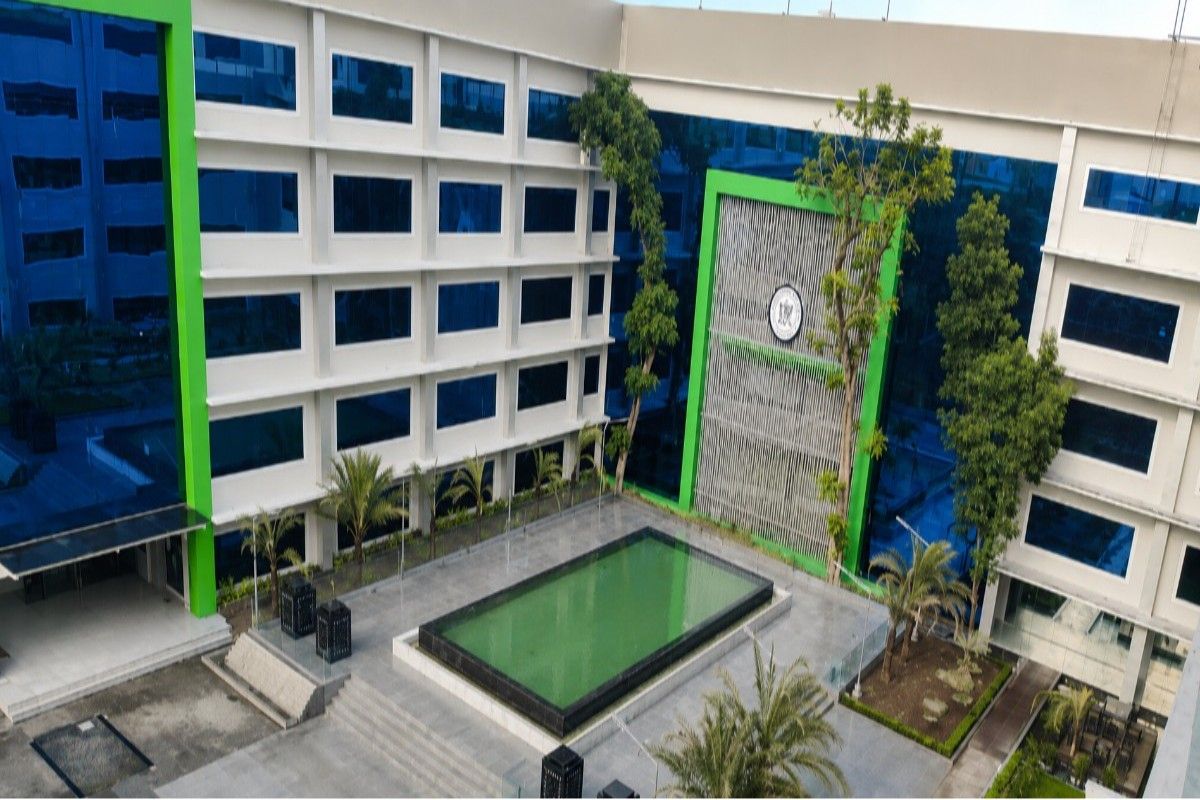
 Philippines | Est. 1919
Philippines | WHO,NMC/MCI,ECFMG,CHED,WDOMS | English only; no language preparation required medium
Expert will call you within 2 hours
The University of the Visayas has a rich history in Philippine education. Don Vicente A. Gullas and his wife, Lady Josefina R. Gullas, founded it in 1919 as the Visayan Institute in Cebu City. The goal was simple: give young people from average-income families access to quality education. The institute grew steadily over the years. The Second World War destroyed much of its early infrastructure. But Don Vicente did not give up. He reopened classes in Argao, Cebu in 1946. Within two years, the institution moved back to Cebu City. In 1948, the Visayan Institute became the University of the Visayas. It was the first institution in the entire province of Cebu to receive university status.
The Gullas College of Medicine was founded in 1977 by the Gullas family. It is located in Banilad, Mandaue City. The Ministry of Education, Culture & Sports gave formal approval for its establishment. The college was created to address a clear need: the Philippines required more trained physicians. It also aimed to give students from the Visayas and Mindanao regions better access to quality medical education close to home. That founding mission is still alive today. The college's guiding values are Amor, Servitium, Leadership et Humanitas; which means Love, Service, Leadership, and Humanity.
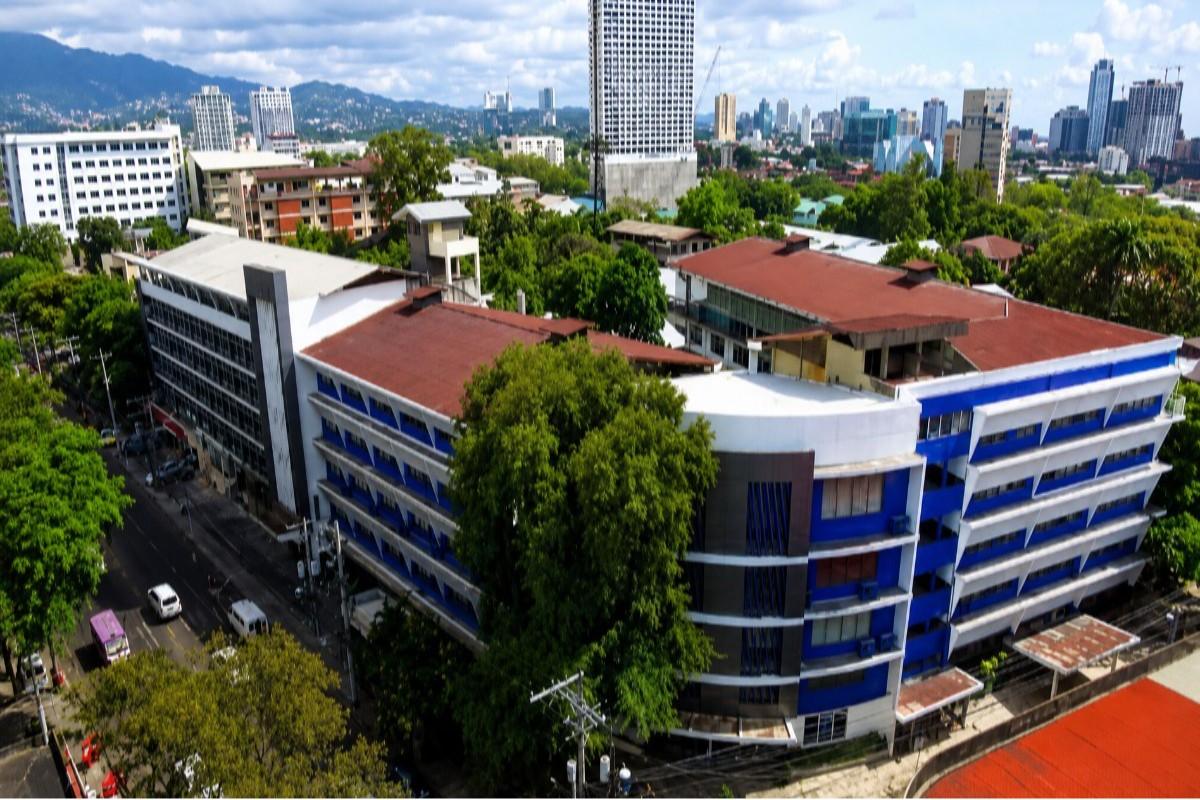
Today, the College of Medicine sits on the Banilad campus in Mandaue City. It shares this campus with the Vicente Gullas Memorial Hospital, the UV College of Nursing, the Gullas College of Dentistry, and the Tan Kim Ching Cancer Center. Having all these health facilities in one place is a real advantage. Students can access clinical training without travelling across the city. The Vicente Gullas Memorial Hospital is the primary teaching hospital. Students also rotate through major hospitals in Cebu. These include the Vicente Sotto Memorial Medical Center, an 800-bed government hospital, and Chong Hua Medical Center, a 660-bed tertiary care hospital. This gives students wide exposure to both public and private healthcare settings.
The programme at GCM follows the BS-MD format. It meets both Philippine regulatory standards and India's Foreign Medical Graduate Licentiate (FMGL) Regulations 2021. Students first complete a 14-month BS Biology pre-medicine phase. This builds the science foundation needed before entering the core Doctor of Medicine programme. After the BS phase, students sit the National Medical Admissions Test (NMAT). All students must appear for the NMAT. International students do not need a minimum score, but they must take the exam. After this, students enter the 54-month MD programme. This runs across four years with an extended clinical semester. It is followed by a mandatory 12-month internship at an affiliated teaching hospital in the Philippines. This full structure meets the NMC's requirement of 54 months of core medical study at one institution, plus a compulsory internship year.
The entire programme is taught in English. This is one of the biggest advantages of studying medicine in the Philippines. There is no language preparation year. There is no separate language test before admission. Students do not need to transition into studying medicine in a foreign language. Indian students, in particular, can focus fully on medicine from day one.
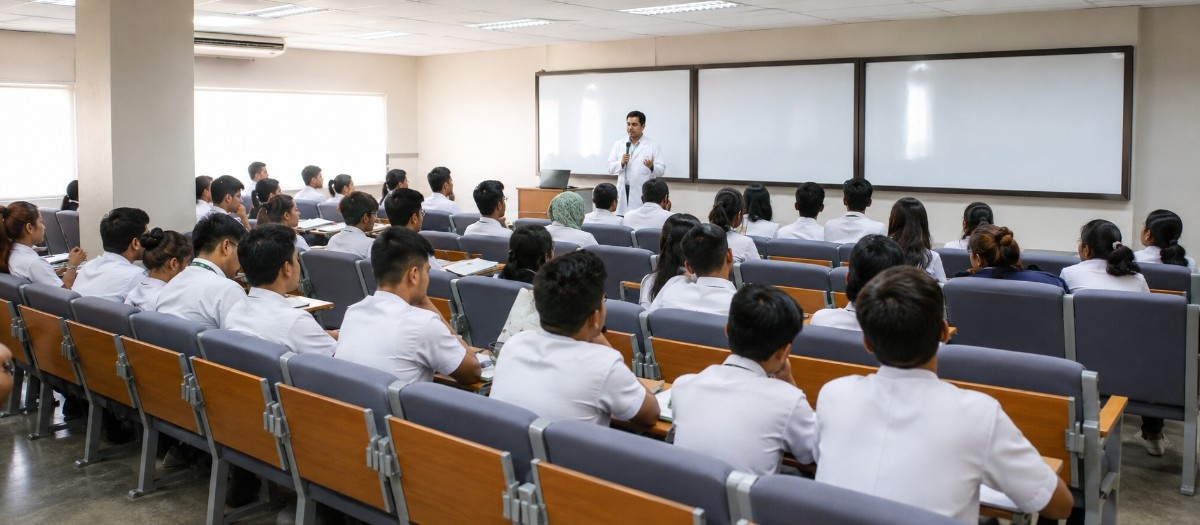
GCM uses an American-influenced curriculum. This model is standard across Philippine medical schools. It places early focus on clinical reasoning and patient interaction, alongside the basic sciences. The college has air-conditioned lecture rooms, well-equipped laboratories across all departments, and a main library with departmental libraries. These hold medical texts, international journals, and an e-library with computer access. The campus also has study halls, recreational areas, and a playground for students.
The university is listed in the World Directory of Medical Schools (WDMS). It is also WHO listed and recognised by FAIMER and IMED. These recognitions make graduates eligible for ECFMG certification and the USMLE pathway to practice in the United States. NMC recognition for NExT eligibility is also in place. However, as with all foreign medical institutions, students must check the current listing status at nmc.org.in before applying or paying fees. Recognition is reviewed from time to time.
GCM has produced over 43 batches of doctors. It has more than 3,000 alumni. These graduates are now working in India, the United States, the United Kingdom, Australia, Canada, and the Middle East. The college has had a series of dedicated deans since it was founded. The current dean is Dr. Jose Juan Rafael G. Laico, a neurologist. He continues the college's commitment to excellence in clinical training and medical education. GCM also welcomes students from over 25 countries, making the campus a genuinely international place to study.
Cebu and the surrounding Mandaue City area offer a good quality of life for students from abroad. Cebu is the Philippines' second-largest metropolitan area. It is well-connected by air, with flights to major Indian cities available via one or two stops. The cost of living is much lower than in Metro Manila and far more affordable than in Europe or Australia. The tropical climate is familiar and comfortable for most Indian students. Indian food is available in the on-campus hostels. The international student community in Cebu is large and well-established.
On-campus hostel facilities are available for both male and female students in separate blocks. Rooms are air-conditioned. Students have access to study halls, 24-hour internet, housekeeping, hot water, and laundry facilities. The college also runs a dedicated admissions office in India. It helps students with applications, NEET verification, visa processing, documentation, and flight planning.
Scholarships are available for international students at GCM. Selection is based on NMAT score at entry. Merit-based fee discounts are also available for students who maintain strong grades throughout the programme.
Annual tuition fees for international students range from approximately USD 3,700 to USD 5,000 per year. The exact amount depends on the year of study. Total tuition for the full BS-MD programme is approximately USD 30,200 over 68 months. When hostel, food, insurance, and travel are included, the total all-inclusive cost is estimated between USD 40,000 and USD 45,000 for the full programme. No donation or capitation fee is charged at any stage. Philippine government regulations strictly prohibit it.
No hidden charges, no donation. The full picture of costs at MBBS in Gullas College of Medicine, Inc., University of the Visayas.
Tuition Fee
USD 3,700–5,000 / ≈ ₹3.1–4.2 lakh
USD 3,700–5,000 / ≈ ₹3.1–4.2 lakh
Hostel Fee
USD 150–250/month
USD 150–250/month (air-conditioned; Indian food available)
Food & Meals
USD 100–200/month
per month
Insurance
USD 150–250/year
per year
Donation
None
prohibited by Philippine government
Total Estimated Cost
USD 40,000–45,000 / ₹33–37 lakh
4 year
25–35%
Average FMGE first-attempt pass rates for students from many overseas medical universities. Students from structured programs consistently score higher.
Students returning to India need to clear the FMGE/NExT exam. MBBS in Gullas College of Medicine, Inc., University of the Visayas integrates exam-oriented coaching into the regular curriculum so students are prepared from day one.
A structured program that takes you from foundational sciences to clinical mastery.
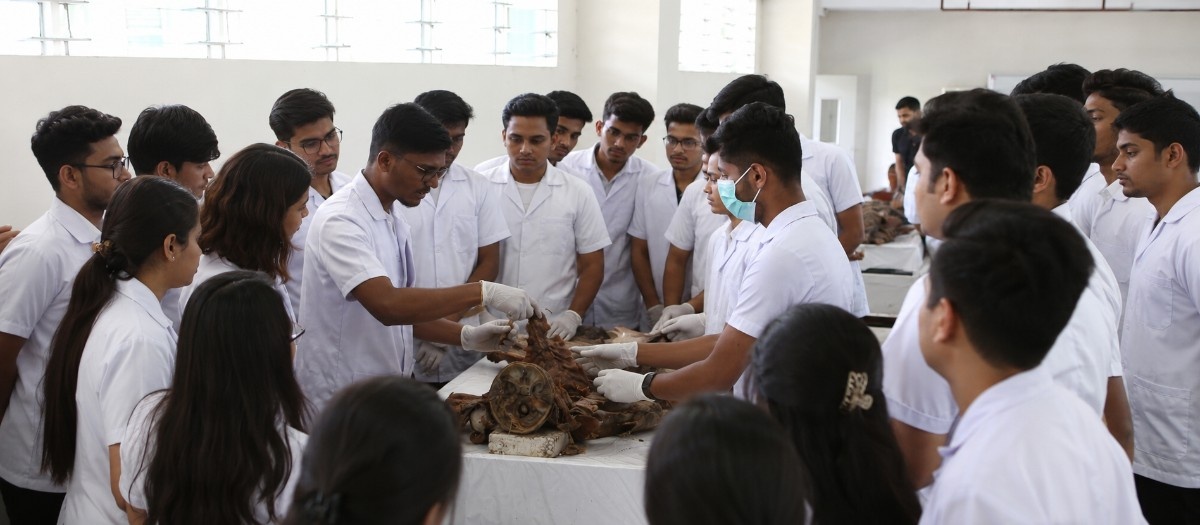
Year 1 focuses on foundational biomedical knowledge. Anatomy is taught through cadaver dissection alongside histology. Students are introduced to the doctor-patient relationship and community health from the very start.
Anatomy (Gross Anatomy, Histology, Embryology), Biochemistry, Physiology I, Introduction to Medicine, Community Health I
Year 2 moves into understanding disease mechanisms. Pathology and pharmacology are the academic core. The Philippine setting gives students early exposure to infectious and tropical diseases.
Pathology (General and Systemic), Pharmacology, Microbiology and Parasitology, Physiology II, Medical Ethics, Community Health II
Students begin supervised clinical activities in Year 3. All major specialities are covered before the clerkship year. The focus is on clinical reasoning, structured diagnosis, and case presentation.
Internal Medicine, Surgery, Obstetrics and Gynaecology, Paediatrics, Psychiatry, Radiology, Family and Community Medicine, Medical Jurisprudence
This phase runs until the full 54-month core MD requirement is completed. Students rotate through all major departments under attending physician supervision. Affiliated hospitals in Cebu include the Vicente Sotto Memorial Medical Center and Chong Hua Medical Center. After the MD is complete, students must complete a 12-month mandatory internship at an affiliated teaching hospital in the Philippines. This internship is required before sitting the NExT exam in India or the Philippine PLE.
Internal Medicine, Surgery, Obstetrics and Gynaecology, Paediatrics, Psychiatry, Emergency Medicine, Community and Family Medicine, Elective Rotation
This phase builds the science foundation before the core MD begins. Students must appear for the National Medical Admissions Test (NMAT) after the BS phase to enter the MD programme. Appearance is mandatory for all students, including international applicants. A valid NEET score is also required under NMC rules.
Biology, General Chemistry, Organic Chemistry, Physics, Mathematics, English, Social Sciences, Physical Education
Furnished hostel rooms with Wi-Fi, laundry, 24/7 security, and Indian mess on or near campus.
Indian restaurants and mess facilities serving vegetarian and non-vegetarian home-style food daily.
Strong Indian community with cultural events, festival celebrations, and peer support groups.
Students get hands-on clinical training in government and private hospitals affiliated with the university.
Practical information for students planning to study at MBBS in Gullas College of Medicine, Inc., University of the Visayas.
Prepare for all seasons. Thermal wear for winters, light clothing for summers. University provides heating in hostels.
Student visa processed with university invitation letter. Direct and connecting flights from major Indian cities.
Health insurance included in fees. Medical facility on campus plus city hospitals easily accessible.
Local SIM cards available. WhatsApp and video calls keep you connected with family back home.
Average monthly expenses of $150–$250 covering food, transport, and personal needs.
University library, online databases, and study groups. Seniors mentor juniors through academic challenges.
Our team guides you through every step — from application to arriving on campus.
The first step is to have a free phone counselling session. This is not a sales promotion or sales pitch. Here, we analyse all the universities mentioned side by side. We go through FMGE rates, total fees, city life, and whether the USMLE or NExT path better suits your goals. Most students walk out of this call with a clear first choice and a backup.
Once you pick a university, we will hand you a Philippines-specific document checklist. It is not a generic list. Every item on it is there for a reason, either for the university application, the 9(f) visa conversion, or the ACR I-Card registration. We check everything before a single paper goes anywhere.
Your application goes directly to the university through our partner channel. Most students get an acceptance letter within 10 to 21 days. However, December intake applications move faster than June ones, so timing matters. We follow up on all applications and will be in touch if there is any delay.
Once you receive your offer letter, we will have an in-depth discussion with you on the fees charged. The first instalment of fees will be deposited without any ambiguity. What you pay, when you pay, and what it covers, all of it is clear before any money moves.
Indian students do not need a pre-departure visa for the Philippines. You enter visa-free for 30 days. However, the 9(f) Student Visa conversion must start within the first week of arrival; it is time-sensitive. We also advise on the best flight route, whether Cebu or Manila, depending on your university.
About a week before you fly, we do a full pre-departure briefing. We cover accommodation options, campus location, Indian food sources near your university, how to transfer money from India, which SIM card to buy, and what the first week on campus actually looks like—students who attend this briefing land in the Philippines significantly less stressed than those who skip it.
On arrival day, our local team in the Philippines meets you at the airport, whether in Cebu or Manila. You are not landing in a new country alone. Someone who knows the ground is there from the first minute.
Within the first week, the 9(f) visa conversion process starts. Our team submits your documents to the Bureau of Immigration and closely tracks your application. The ACR I-Card, your official alien registration card, is processed at the same time. This step is strictly managed because delays here cause real problems later.
By the end of Week 2, your university enrollment is complete, your hostel room is confirmed, and your BS pre-medical orientation is done. You know your timetable, your faculty, and where everything is. Furthermore, our team has already flagged your NMAT preparation schedule, so there will be no surprises at the bridge stage.
After enrollment, our on-the-ground team in the Philippines stays in contact throughout all six years. If there is a university issue, a hostel problem, a visa renewal, or a health concern, there is a local contact to call. Moreover, from Year 3 onward, our FMGE and USMLE coaching track begins, because academic support does not stop at the airport.
Admission Helpline — Contact our counsellors for step-by-step assistance.
“The faculty here is incredibly supportive. The clinical training during hospital rotations has given me real confidence in patient care.”
“Affordable fees without compromising on quality. The campus facilities and hostel life made my transition abroad very smooth.”
“English medium instruction and WHO-recognized curriculum were the deciding factors for me. No regrets so far — excellent experience overall.”
“The university helped with everything from visa to accommodation. Hospital exposure from year three has been invaluable for my FMGE prep.”
“Just cleared my licensing exam on the first attempt. The structured coaching and mock exams during final year were a game-changer.”
“Safe campus, good food options, and a strong Indian student community. The teaching methodology is very practical and hands-on.”
Yes. All classes, exams, and clinical training are in English. The Philippines is an English-speaking country. Indian students face no language barrier at all.
GCM has been listed with the NMC of India. But recognition is reviewed from time to time. Always check the current status at nmc.org.in before you apply or pay any fees.
The NMAT examination is an entrance examination for admissions to the MD course in all over the Philippines. Every student needs to sit for the examination. A minimum score is not needed for the international candidates. A valid NEET score is also needed according to NMC guidelines.
The program consists of the 14-month BS pre-medicine course, followed by 54 months of core MD, and then a 12-month mandatory internship in the Philippines. It satisfies the NMC requirements of a 54 months core course at the single institution, along with one-year internship.
Yes, after passing the NExT examination. But first of all, it is necessary to have the 12-month internship in the Philippines. Please always refer to the NMC website at nmc.org.in for the latest guidelines on the same.
Yes. The Philippine MD degree is considered equivalent to the MBBS degree in India. Both programmes have similar total duration and clinical exposure requirements.
Students train at the Vicente Gullas Memorial Hospital on campus. They also rotate through the Vicente Sotto Memorial Medical Center (800 beds) and Chong Hua Medical Center (660 beds) in Cebu, among other affiliated hospitals.
The cost of staying in the hostel varies between 150 and 250 USD per month, including the Indian food. The average monthly costs of food, travel and personal needs would vary from 300 to 450 USD.
One can take NExT (India), USMLE (USA), PLAB (UK), AMC (Australia). ECFMG eligibility is helpful for USMLE pathway, whereas PLE eligibility is also needed for the Philippines for the Certificate of Registrability
GCM runs a dedicated admissions office in India, based in Chennai. It helps students with applications, NEET verification, visa processing, documentation, and travel. On campus, guidance counsellors are assigned to students from the day they arrive.
Our expert counsellors will guide you through the complete admission process — from documents to airport pickup.