
Q1. When was KWMC established?
+Founded in 1947, Kumudini Welfare Trust launched the college in 2001.
 Bangladesh | Est. 2001
Bangladesh | Recognised by Bangladesh's Ministry of Health & Family Welfare, affiliated with the University of Dhaka, and accredited by the BMDC. | English throughout; no IELTS or TOEFL required. medium
Expert will call you within 2 hours
The College and What Makes It Different
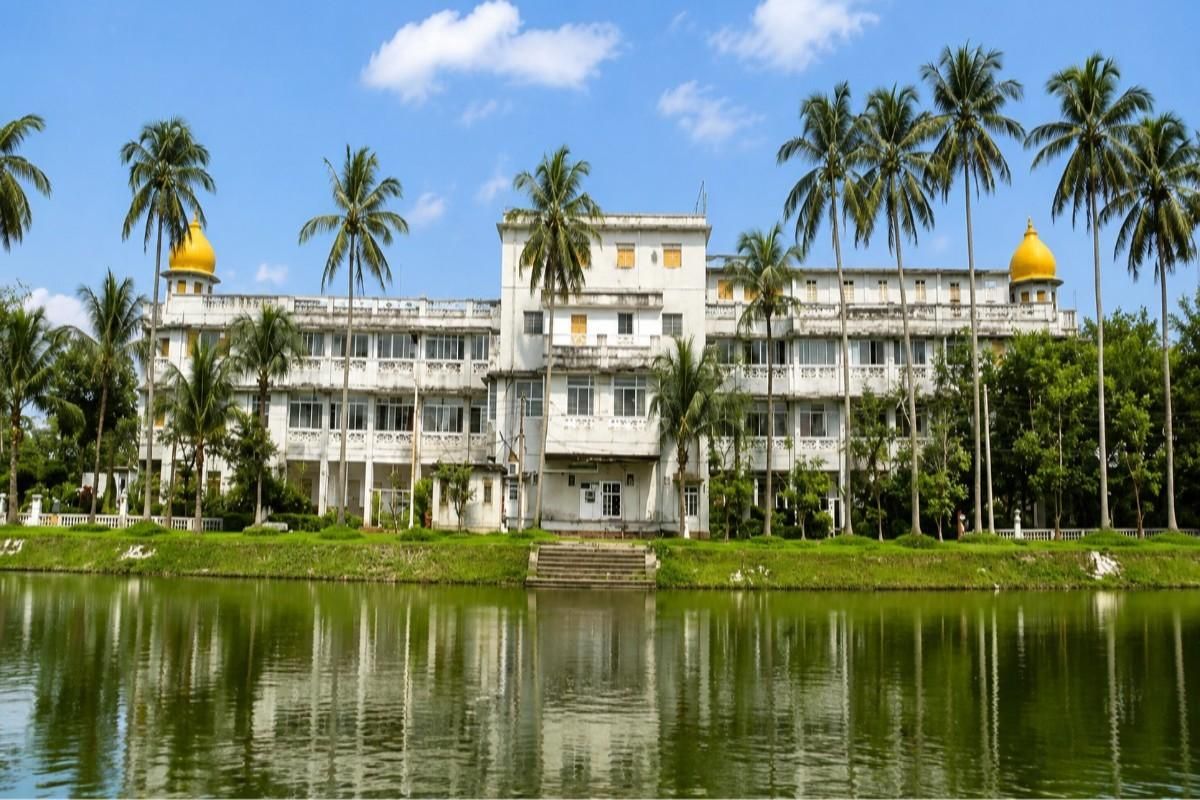
Kumudini Women's Medical College (KWMC) opened in 2001 under the Kumudini Welfare Trust of Bengal, founded in June 1947 by Rai Bahadur Ranada Prasad Shaha, a businessman who gave away his fortune to build hospitals and schools. So, KWMC sits inside a much older welfare mission, not a standalone start-up.
The trust's medical roots go back further: between 1938 and 1944, Shaha had already established a free dispensary and a 750-bed charitable hospital on this land, and colleagues later recalled that his dream had been a full medical college, nursing college, and university here. A detail most consultant pages skip: KWMC is also one of the few medical colleges in South Asia that admit only women, which shapes hostel design and safety concerns alike.
The Mirzapur Campus and Its Setting
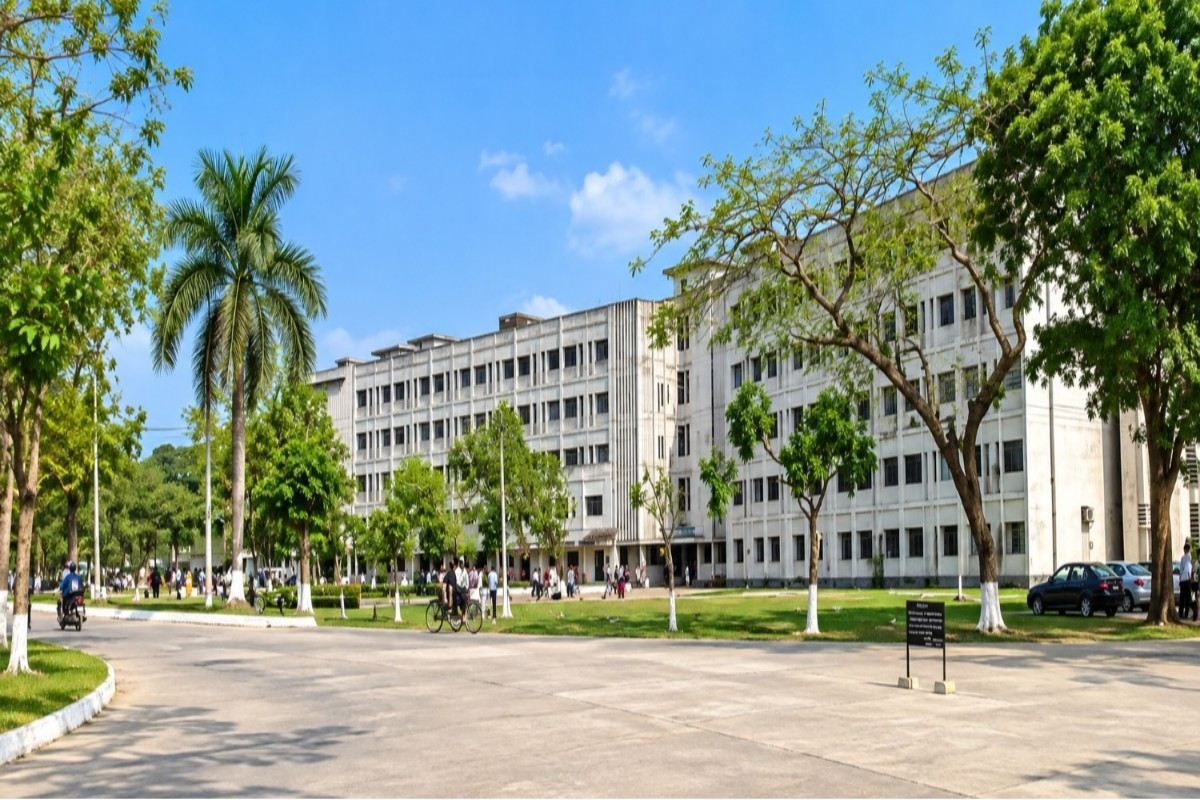
KWMC is located within the Kumudini Complex in Mirzapur, Tangail, about 70 km northwest of Dhaka, and is accessible by both road and rail. The complex spans roughly 110 acres and includes the college buildings, staff housing, and the attached Kumudini Hospital, where clinical teaching happens. Reported bed strength varies by source, from about 750 to just over 1,000, so treat the exact number as approximate until confirmed by the college. Mirzapur is a small town, not a metro area, so students get a quieter routine than at Dhaka-based colleges, with less city chaos but also fewer choices in food and transport.
Course Structure, Cost, and Practical Details
The MBBS course runs five academic years plus one compulsory internship year, for a total of six years. An Indian student must have a valid NEET-UG qualification, have passed Class 12 in Physics, Chemistry, and Biology, and be 17 years old by 31st December of the year of admission.
Fee figures differ across agent sites, sometimes by several thousand dollars, since currency conversion and bundled charges vary. Based on our research, the full five-year package is usually quoted between USD 44,900 and 45,300, roughly INR 35-38 lakh. Always confirm the current figure directly with KWMC before paying anything.
Why Kumudini Deserves a Harder Look Than the Brochures Suggest
Most agent pages describe KWMC in three words: affordable, safe, recognised. That skips the parts that actually help a family make a decision.
A Founder's Dream, Not a Rushed Private Venture — The 1956 account of Shaha's colleagues describing a future medical college, nursing college, and university on this same land is rarely mentioned online. It shows KWMC descends from a charitable mission predating it by over sixty years, not a venture built purely for foreign-student revenue.
The FMGE Number Almost Nobody Quotes in Full — Nearly every consultant page calls KWMC's FMGE record "excellent." NBEMS results tell a more mixed story: candidates cleared the exam at 55.81% in 2019 and only 34.29% in 2020, a swing of over 20 points in two years, not a guarantee, whatever a counsellor may imply.
The Safety Story Many 2025 Pages Never Updated — Bangladesh's 2024 political transition brought reports into January 2026, including a widely read Al Jazeera account, of real anxiety among Indian medical students amid anti-India sentiment, with enrolment at some institutes falling from roughly 30-35 a year to about 10. Classes were reportedly normal by April 2026, with fresh DGME circulars issued, but the underlying risk hasn't disappeared. Pages still using 2021-era "completely safe" language are out of date.
A Ranking Most Pages Leave Out — UniRank lists KWMC at roughly the 143rd position among Bangladeshi institutions and near the 16,499th position worldwide. That is not a red flag by itself, since global rankings weigh research output; a small medical college was never built to chase, but a page that only discusses accreditation while hiding the ranking isn't giving the full picture.
Honest Assessment
Be clear-eyed about the trade-offs. This is a small-town campus, so city conveniences are limited. The FMGE pass rate has swung sharply year to year, so this is not a shortcut to guaranteed Indian licensure. The 2024-25 political situation in Bangladesh adds real, ongoing uncertainty that did not exist a few years ago.
Who fits here: students who specifically want a women-only campus, are comfortable in a smaller town over a big city, and hold realistic expectations about the licensing exam back home. Students who need city life or an ironclad safety guarantee should first weigh other options carefully.
Student Safety Analysis
Safety here has two layers, but most guides discuss only one.
Campus-level safety — As a women-only institution, KWMC hostels run separate wings with round-the-clock security and warden supervision, a genuine structural advantage for families worried about mixed-gender campuses.
Country-level safety — Since the 2024 political transition, Bangladesh has seen periods of unrest, and reporting into January 2026 describes real anxiety and anti-India sentiment affecting Indian students, alongside a drop in new enrolment. Classes were reported as normal as of April 2026, but the situation remains fluid and unsettled.
Transportation – Students can reach the Mirzapur campus via road and rail from Dhaka; hence, they rarely face traffic in Dhaka.
Help from the Embassy – Indian students are advised to register with the Indian High Commission in Dhaka at an early stage of their studies.
Emergency Facilities – There is an attached Kumudini Hospital that provides on-the-spot treatment to students, which not all foreign medical colleges offer.
Honest takeaway: campus security looks solid, but Bangladesh's wider political climate is a live variable that families should track through official advisories rather than assume away.
Monthly Cost of Living (Approximate, Indian Students)
Expense Head | Approx. Monthly (USD) | Notes |
Hostel | 80-220 | Varies by room type |
Food / Mess | 60-100 | Often billed separately |
Local Transport | 10-20 | Mirzapur is small; local travel is only |
Internet / Mobile | 5-10 | Basic data packages are inexpensive |
Miscellaneous | 20-40 | Books, laundry, personal |
Estimated Total | 175-390 | Excludes tuition and hostel deposit |
Hidden and Additional Expenses
Visa processing and Bangladesh High Commission charges, separate from tuition
DGME equivalence fee, near USD 100, paid before document submission
Seat booking deposit, around USD 5,000, adjusted later against fees
Medical tests, including the mandatory HIV test report
Document legalisation via India's MEA and the Bangladesh Embassy
Return airfare for holidays across the six-year course
Hostel deposit and one-time college registration charges
University professional exam fees, charged periodically
2026 Admission and Regulatory Updates
DGME issues a fresh foreign-student circular each November. For 2025-26, criteria included a minimum PCB aggregate of 60% (55% for SC/ST/OBC), NEET-UG at the 50th percentile (40th for reserved categories), and a combined Class 10-12 GPA of 7.0 with a Biology GPA of 3.5+. Only 2024/2025 Class 12 passouts qualified, with a maximum gap of 1 year. The SAARC government-seat quota was capped at 125 nationally, so most Indian applicants, including those at KWMC, use the private-college foreign quota.
Separately, NMC requires Indian graduates to intern at the same institution that granted the degree, with no cap on FMGE attempts. Always verify the latest circular on DGME's portal before applying.
City and Student Life
Mirzapur and Tangail sit in a warm, humid subtropical climate similar to that of northern India, with a monsoon from June to September. Life is quieter than in Dhaka: fewer restaurants and malls, but less pollution and traffic. Indian food is available through the hostel mess and nearby eateries, though the variety is less than in a big city. Basic banking, mobile internet, and hospital-based healthcare are accessible on campus. The nearest airport is Hazrat Shahjalal International Airport in Dhaka, about 70 km by road.
Academic Setting
Teaching is conducted in accordance with the curriculum approved by the BMDC and the guidelines set by the University of Dhaka for the pre-clinical, para-clinical, and clinical levels. Tests are conducted twice annually, in May and November, and a passing mark of 60% must be obtained for each section. Practical training begins alongside theoretical lectures from the first year onwards.
Internship Structure
The compulsory one-year internship must be completed at Kumudini Hospital, in accordance with NMC rules for Indian graduates. Interns rotate through major departments under faculty supervision, and signing off here is a prerequisite for sitting the FMGE or NExT exam in India.
Common Myths vs Reality
Myth | Reality |
NEET score guarantees a KWMC seat | NEET only meets a minimum bar; allotment depends on GPA, quota, and timing |
FMGE pass rate is always high here | NBEMS data swings between roughly 34% and 56% across recent years |
Bangladesh is completely safe; no need to check further | Unrest since 2024 has caused real, reported concerns worth tracking via advisories |
MCI approves this college | MCI was replaced by the NMC in 2020; recognition now runs via the NMC |
All fee figures online are current. | Reported costs vary widely by agent; only the college's own circular is reliable. |
Admission Timeline
Qualify for NEET-UG in India.
Track DGME's foreign-student circular (usually released each November).
Make an application using the DGME’s international students’ website during the time provided.
Pay the required fee (USD 100) and submit certain documentation
Obtain your equivalence certificate from DGME and be aware of your position in the rank list.
Start with the seat allotment process of college according to your NEET result and GPY score.
Make the fee payment for booking of your seat in KWMC.
Get the invitation letter from KWMC for applying for a visa.
Apply for a student visa from the Bangladesh High Commission (4-6 weeks).
Travel to Bangladesh and register with the Indian High Commission in Dhaka.
Scholarships and Financial Aid
KWMC states it offers merit-based and need-based support to eligible students. Neither the number of seats nor the exact discount is independently verifiable, so treat this as something to ask about at the interview stage, not a guaranteed discount.
Why Students Actually Choose Kumudini
Set aside the marketing language, and three factual reasons stand out: a women-only campus for families who specifically want that, an on-campus teaching hospital that removes the commute many other colleges require, and a fee package that sits meaningfully below most private Indian medical colleges.
How Kumudini Compares
College | Approx. Total Fee | Beds | Notable Feature |
Kumudini Women's Medical College | USD 44,900-45,300 | 750-1,000+ | Women-only; on-campus hospital |
Dhaka National Medical College | USD 48,000 | 850 | 150 seats; Dhaka-based |
Bangladesh Medical College | USD 45,000 | Not confirmed | First private medical college (1986) |
Expert Opinion
On the facts alone, KWMC suits a narrow but genuine group: students who want a women-only campus, are comfortable in a small town rather than a capital city, and accept that both the FMGE pass rate and Bangladesh's political situation are moving targets, not settled guarantees. It is a choice that only makes sense once a family has weighed current safety advisories and real licensing-exam numbers against their own comfort with those trade-offs.
Quick Overview
Parameter | Details |
Established | 2001 (under Kumudini Welfare Trust, founded 1947) |
Institution Type | Private, women-only medical college |
Location | Mirzapur, Tangail, Bangladesh (about 70 km from Dhaka) |
Course | MBBS, affiliated with the University of Dhaka |
Duration | 5 years academic + 1 year compulsory internship |
Medium of Instruction | English |
Entrance Requirement | Valid NEET-UG score for Indian applicants |
Teaching Hospital | Kumudini Hospital (reported 750 to 1,000+ beds) |
Student Body | Around 600 students, roughly 170 of them foreign nationals |
Fee Structure
Fee Component | Approx. Amount | Notes |
Tuition (per year) | USD 4,600 | Year 1 is often higher (~USD 6,900) with admission charges |
Hostel | USD 1,000-2,640/year | Varies by source; confirm current rate |
Seat Booking Deposit | USD 5,000 | Adjusted against fees; get this in writing |
Full 5-Year Package | USD 44,900-45,300 | Roughly INR 35-38 lakh at current rates |
Donation / Capitation | NIL | Unlike many Indian private colleges |
No hidden charges, no donation. The full picture of costs at MBBS in Kumudini Women's Medical College.
Tuition Fee
Approx. USD 4,600/year; first year typically higher due to admission charges.
USD 4,600 per year
Hostel Fee
Approx. USD 1,000-2,640/year, depending on room type
USD 1,000 to 2,640 per year.
Food & Meals
USD 60 to 100
per year
Insurance
USD 300 to 650
per year
Donation
No Donation
No Capitation Fees
Total Estimated Cost
USD 43,100 to 45,300
For 5-year MBBS program
25–35%
Average FMGE first-attempt pass rates for students from many overseas medical universities. Students from structured programs consistently score higher.
Students returning to India need to clear the FMGE/NExT exam. MBBS in Kumudini Women's Medical College integrates exam-oriented coaching into the regular curriculum so students are prepared from day one.
A structured program that takes you from foundational sciences to clinical mastery.
• Lays the foundation for all later clinical learning.
• Core subjects: Anatomy, Physiology, and Biochemistry.
• A module in Pharmacology and Forensic Medicine becomes part of the course.
• Module in depth on Pathology and Microbiology.
• First exposure of students to the Clinical practice occurs at Kumudini Hospital.
• Beginning of the Clinical Case Discussions in small groups
• Obstetrics and Gynaecology as well as Psychiatry and Mental Health postings are complete this year.
• Clinical rotations in Internal Medicine, Surgery, and Pediatrics take place.
• Board-exam preparation runs alongside daily clinical duties.
• The rotations include work in different branches of the medical field and community medicine posts.
• One fully supervised year completed at Kumudini Hospital.
• One fully supervised year completed at Kumudini Hospital.

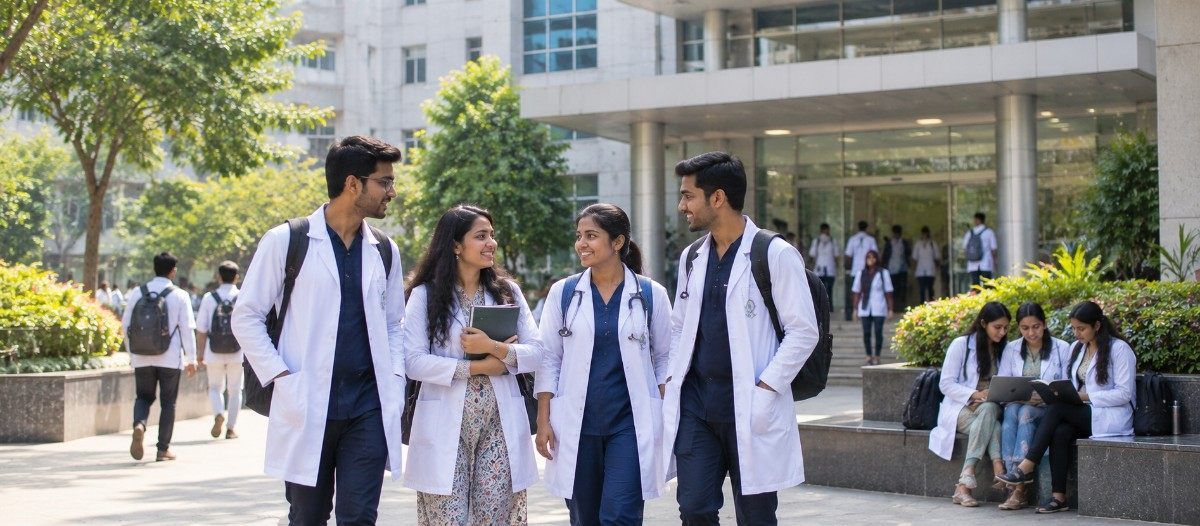
Furnished hostel rooms with Wi-Fi, laundry, 24/7 security, and Indian mess on or near campus.
Indian restaurants and mess facilities serving vegetarian and non-vegetarian home-style food daily.
Strong Indian community with cultural events, festival celebrations, and peer support groups.
Students get hands-on clinical training in government and private hospitals affiliated with the university.
Practical information for students planning to study at MBBS in Kumudini Women's Medical College.
Prepare for all seasons. Thermal wear for winters, light clothing for summers. University provides heating in hostels.
Student visa processed with university invitation letter. Direct and connecting flights from major Indian cities.
Health insurance included in fees. Medical facility on campus plus city hospitals easily accessible.
Local SIM cards available. WhatsApp and video calls keep you connected with family back home.
Average monthly expenses of $150–$250 covering food, transport, and personal needs.
University library, online databases, and study groups. Seniors mentor juniors through academic challenges.
Our team guides you through every step — from application to arriving on campus.
DGME publishes the foreign-student MBBS/BDS admission circular for the upcoming session, usually around November, separately for SAARC/non-SAARC applicants and government/private colleges.
• Confirm your PCB percentage/GPA and NEET status against the circular's stated minimums. • Gather passport, academic transcripts, NEET scorecard, birth certificate, medical fitness certificate, and other listed documents, with mandatory two-step attestation.
• Shortlist government and/or private colleges based on budget, GPA/NEET strength, and location preference, comparing on recognition status and FMGE track record, not just the lowest fee. • Register on DGME's foreign-student portal, fill in details, and upload documents.
Pay the standard equivalence-certification fee (commonly around USD 100) via bank transfer (TT/SWIFT), not cash.
DGME evaluates your academic equivalence against Bangladeshi grading standards.
• Based on merit, quota category (SAARC/non-SAARC/reserved), and seat availability. • Receive a formal offer/admission letter from the allocated college.
Pay the first-installment tuition and hostel fee, per the college's own schedule.
• Apply at the Bangladesh High Commission/Mission with the admission letter and financial proof; realistic processing time varies by season. • In the final weeks, finalize documents, arrange travel/health insurance, book flights, and confirm hostel allotment in writing.
Fly to Bangladesh and complete airport formalities; many colleges arrange airport pickup for new students on specified reporting dates.
Complete physical document verification and hostel allotment at the college, and register with the Indian High Commission in Dhaka shortly after arrival, an important, non-optional step for consular support.
Admission Helpline — Contact our counsellors for step-by-step assistance.
“The faculty here is incredibly supportive. The clinical training during hospital rotations has given me real confidence in patient care.”
“Affordable fees without compromising on quality. The campus facilities and hostel life made my transition abroad very smooth.”
“English medium instruction and WHO-recognized curriculum were the deciding factors for me. No regrets so far — excellent experience overall.”
“The university helped with everything from visa to accommodation. Hospital exposure from year three has been invaluable for my FMGE prep.”
“Just cleared my licensing exam on the first attempt. The structured coaching and mock exams during final year were a game-changer.”
“Safe campus, good food options, and a strong Indian student community. The teaching methodology is very practical and hands-on.”
Founded in 1947, Kumudini Welfare Trust launched the college in 2001.
Yes, it is one of the very few medical institutes in the region to admit only women.
Of course, the NEET-UG qualified candidates must be admitted as per the DGME circular.
Five years plus one year internship.
About USD 44,900 to 45,300 or Rs. 35 to 38 lakhs.
According to NBEMS reports, the college's percentage was 55.81% in 2019 and 34.29% in 2020.
Based on current safety statistics, safety levels are relatively good, although the recent political riots following 2024 emphasise the importance of the current safety advisory.
We have our clinical training at Kumudini Hospital, which is located on campus.
Yes, keeping the FMGE/NExT licensing route open for Indian graduates.
There is no donation model, unlike at most private medical colleges in India.
In Mirzapur, Tangail district, about 70 km northwest of Dhaka.
Merit- and need-based aid is stated, but exact figures aren't published; ask directly during admission.
Our expert counsellors will guide you through the complete admission process — from documents to airport pickup.