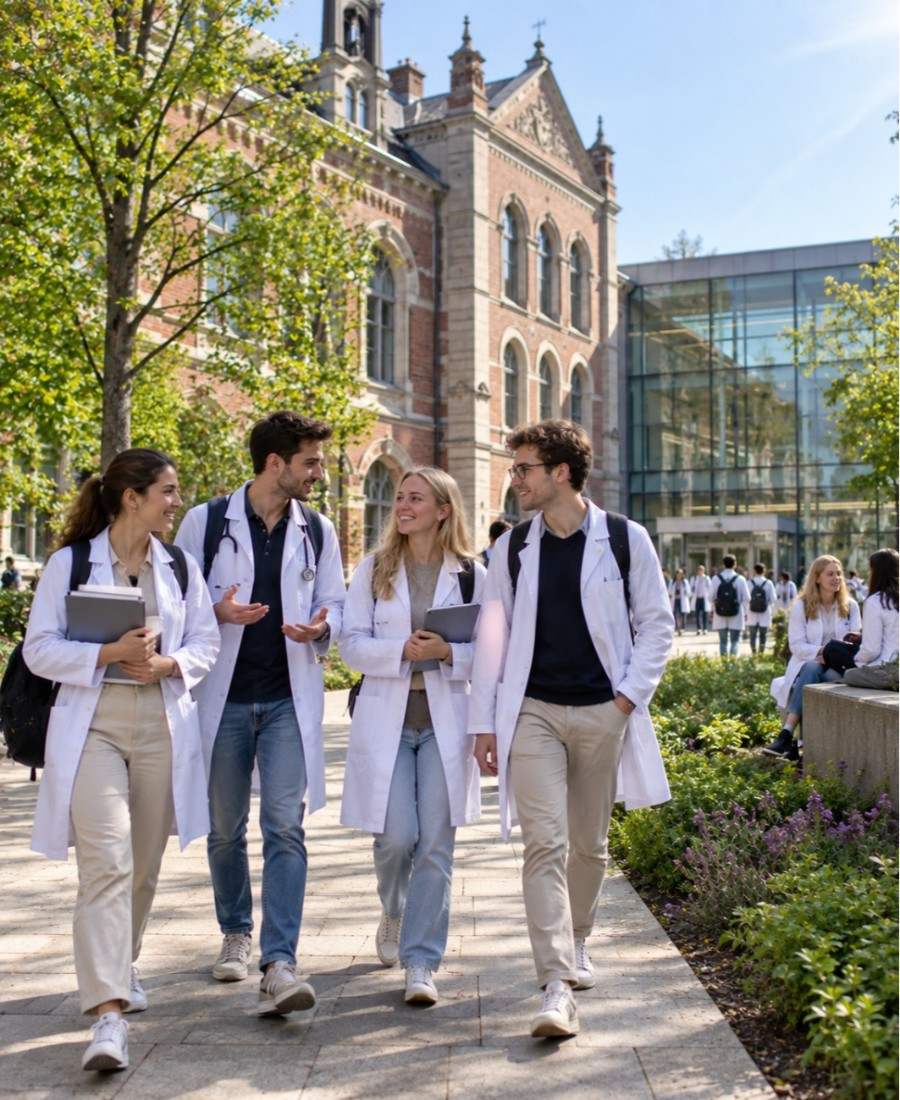
The Faculty of Medicine at Lund University is one of the oldest and most respected medical institutions in Scandinavia. Located in southern Sweden, the faculty has played a major role in medical education, healthcare development, and scientific research for more than three centuries. It is particularly known for its contributions to diabetes research, neuroscience, stem cell science, and clinical medicine. What makes the faculty unique is its connection to some of Sweden's most important medical discoveries and its close collaboration with Skåne University Hospital, one of the largest university hospitals in the Nordic region.
Lund University was founded in 1666 by King Charles XI following the Treaty of Roskilde, which transferred the region of Scania from Denmark to Sweden in 1658. The Swedish government established the university to strengthen education and administration in the newly acquired territory. Medical education became part of the university's academic structure during its early years, although the Faculty of Medicine was formally organised and expanded over time as healthcare education developed.
The first medical teaching activities began in the late seventeenth century. During the eighteenth century, the faculty gradually increased its academic responsibilities as Sweden's healthcare system evolved. New chairs in anatomy, physiology, and clinical medicine were introduced to support physician training and medical research.
The nineteenth century marked a period of significant growth. Advances in medical science created demand for specialised teaching and research facilities. The faculty expanded its laboratories, clinical departments, and academic programmes. Medical education became more structured, with greater emphasis on scientific investigation and clinical practice.
During the twentieth century, Lund University emerged as one of Sweden's leading research institutions. The Faculty of Medicine benefited from increased investment in healthcare research and university infrastructure. New departments were established in microbiology, pathology, pharmacology, genetics, and public health.
One of the faculty's most important milestones came through its contributions to diabetes research. Scientists associated with Lund University have played a significant role in advancing understanding of metabolic diseases and improving treatment approaches. Research in endocrinology continues to be one of the faculty's strongest areas.
Another major development occurred through advances in stem cell science and regenerative medicine. Researchers at Lund University gained international recognition for studies involving cell therapies, neurological disorders, and tissue regeneration. These projects strengthened the faculty's position within global medical research networks.
Today, the Faculty of Medicine is one of eight faculties within Lund University. It includes numerous departments, institutes, and research centres covering clinical medicine, experimental medicine, public health, neuroscience, cancer research, medical technology, and health sciences. Thousands of students study medicine and related healthcare disciplines at undergraduate, postgraduate, and doctoral levels.
The faculty maintains strong partnerships with healthcare institutions throughout southern Sweden. The most important of these is Skåne University Hospital, which serves as the primary teaching hospital. Formed through the merger of university hospitals in Lund and Malmö, it is one of Sweden's largest healthcare organisations and provides advanced medical services across a wide range of specialties.
Medical students benefit from early clinical exposure and progressive patient interaction throughout their education. Training combines theoretical knowledge with practical healthcare experience. Students develop competencies in diagnosis, treatment planning, communication, ethics, and evidence-based medicine.
Research remains a central part of the faculty's identity. Scientists contribute to internationally recognised work in diabetes, cardiovascular disease, neuroscience, oncology, immunology, infectious diseases, genetics, and ageing research. Many projects involve collaboration with hospitals, research institutes, and universities across Europe and beyond.
The faculty has developed strong links with international organisations and research networks. Academic partnerships support scientific collaboration, student mobility, and professional development opportunities. These connections help maintain high educational and research standards.
Medical education in Sweden follows a comprehensive curriculum that integrates scientific foundations with clinical practice. Students study anatomy, physiology, pathology, pharmacology, microbiology, medical ethics, communication skills, and clinical medicine. The programme prepares graduates for medical licensing and professional practice within Sweden and internationally.
The medicine programme is primarily taught in Swedish because students interact directly with patients during clinical placements. Advanced Swedish language proficiency is therefore required for admission and successful completion of the programme.
Lund itself is one of Sweden's most famous university cities. With a population of approximately 95,000 people, it combines a rich academic tradition with a welcoming student environment. Nearly half of the city's population is connected to higher education, research, or related activities.
Student life is a defining feature of Lund. The city is known for its student nations, academic societies, cultural events, and social traditions. These organisations provide opportunities for networking, leadership development, recreation, and community involvement.
The climate is generally mild compared with northern Sweden. Students experience cool winters and pleasant summers. Lund's compact size makes it easy to navigate by bicycle, which is one of the most popular modes of transportation in the city.
Public transport links connect Lund to Malmö, Copenhagen, and other major Scandinavian destinations. Copenhagen Airport can be reached in less than an hour, making international travel convenient for students and researchers.
Accommodation is available through student housing organisations and private providers. International students receive support with housing, orientation programmes, and academic integration. Although admission to the Swedish-language medicine programme requires language proficiency, the university hosts a large international student community through other programmes and research initiatives.
What makes the Faculty of Medicine at Lund University unique is its combination of historical significance, internationally recognised medical research, leadership in diabetes and stem cell science, and access to one of Scandinavia's largest university hospital systems. These strengths continue to place the faculty among the most respected medical institutions in Northern Europe.