Q. Is the MD programme really taught fully in English?
+Yes, the entire six-year MD programme is taught in English with no separate language preparation year required before starting.
 dubai | Est. 2014
dubai | NMC (India); verify current listing at nmc.org.in; UAE Ministry of Education (Commission for Academic Accreditation); WHO-listed; WDOMS listed; American College of Surgeons (ACS) Comprehensive Education Institute accreditation | Not required; English is the sole medium of instruction throughout, and no separate preparation year is needed medium
Expert will call you within 2 hours
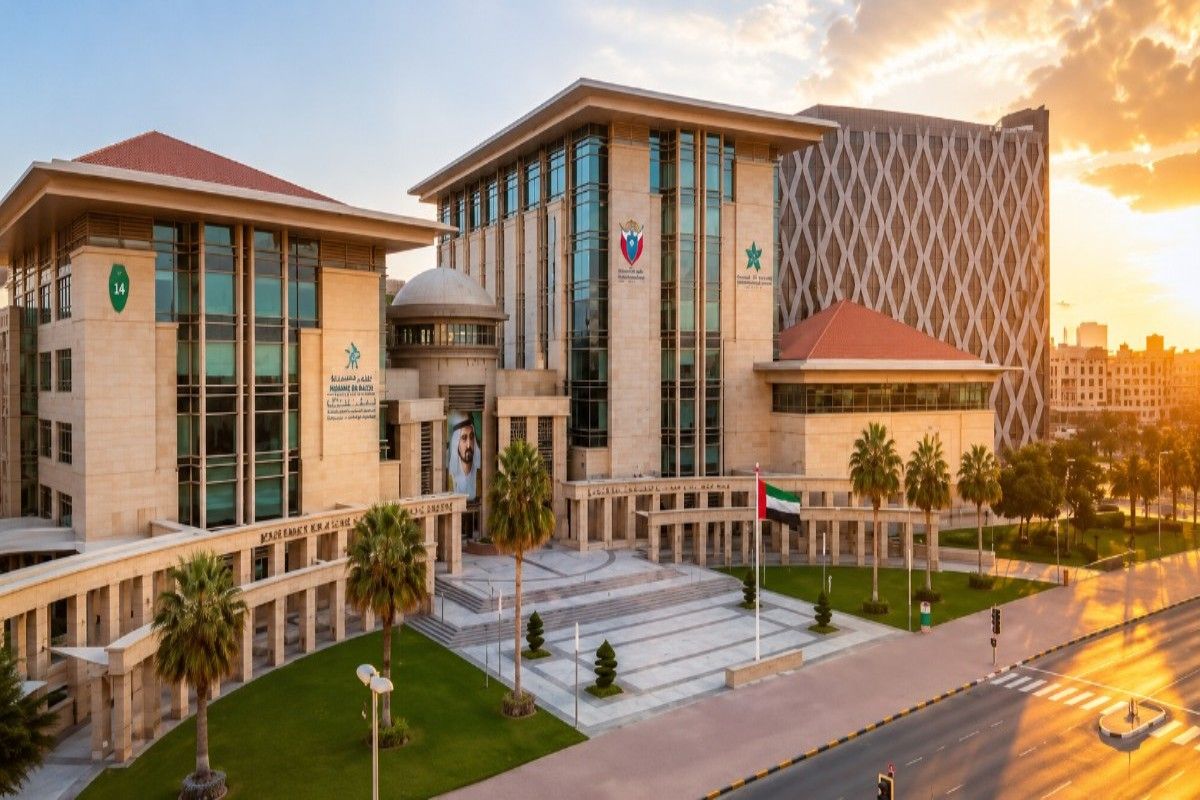
Tucked inside Dubai Healthcare City, Mohammed Bin Rashid University of Medicine and Health Sciences is a fairly young school by global standards. It was set up in 2016. The order came by royal decree from Sheikh Mohammed Bin Rashid Al Maktoum, the ruler of Dubai himself. So this isn't a school with centuries of history behind it. What it offers instead is something different. Brand-new buildings, modern labs, and a clinical setup built fresh around how medicine works today. It wasn't bolted onto an older campus.
MBRU sits at the heart of Dubai Health. That's the emirate's first fully joined-up academic health system. In simple terms, the university isn't separate from the hospitals it works with. It's plugged straight into a real, working healthcare network across the city. Students rotate through Rashid Hospital, Latifa Hospital, and Dubai Hospital. These are three of Dubai's major public hospitals. There's also Al Jalila Children's Specialty Hospital. It's the first dedicated children's hospital in the whole country. Students train there for paediatric care. This isn't a small, isolated medical school stuck onto one clinic. It's tied into a city-wide system that sees real patients every single day.
The MD course runs for six years. It's taught fully in English. That's a genuinely simple, useful point for Indian students. There's no language wall to climb before lectures make sense. There's no separate language year needed first, unlike some other study spots abroad. Clinical work also starts from Year 1. Many other schools make students wait until year three or four. Here, students step into real clinical settings early. They stay close to patient care all the way through. They don't spend years stuck purely in textbooks first.
On academics, MBRU is upfront about where it stands. It isn't chasing centuries of fame, and it doesn't pretend otherwise. What it does have is a real academic partnership with Queen's University Belfast in the UK. That helps keep its course and standards in line with established global norms. The school has also put out more than 2,000 peer-reviewed research papers. That's a strong output for a school less than a decade old. It also sits in Group 1 of the UAE's own national university list, the country's top tier. For Indian students eyeing newer medical schools abroad, this kind of backing matters, even without a long track record behind it.
Here's the part that matters most for planning, though. MBRU costs a lot. Tuition for the MD course runs at AED 160,000 a year. That works out to roughly ₹36 lakh a year at current rates. Across all six years, that adds up to close to ₹2.2 crore in tuition alone. Add housing, food, insurance, and daily costs on top of that. This puts MBRU in a very different cost bracket than most European medical schools you'd see in this kind of list. It's one of the priciest English-taught MD routes open to Indian students anywhere right now. Scholarships do exist. Merit-based discounts can reach 30 percent for top applicants. Need-based help exists too, for verified cases. Even so, this stays a premium-tier pick, not a budget one.
For Indian students, the entry process runs through familiar steps. A valid NEET score is required, in line with NMC rules. Strong marks in Physics, Chemistry, and Biology at the 12th-grade level also matter. On top of that, MBRU adds its own layer. There's a school entrance exam covering Biology, Chemistry, Physics, and Maths. Then comes a Multiple Mini Interview, often called an MMI for short. Candidates move through several short stations. Each one tests things like communication, judgement, and motivation, not just textbook facts. This isn't a school that picks students on paper scores alone. It wants to see how people think and talk under pressure. That means real prep beyond standard exam revision.
Life in Dubai brings real perks beyond the degree itself. It's a famously safe, modern city. It has strong infrastructure, a huge international crowd, and a setting that feels easy for Indian families specifically. That's thanks to the large Indian community already living and working there. The flip side is cost. Dubai isn't cheap to live in. Housing, food, and daily costs run noticeably higher than most of the European options in this kind of list. MBRU doesn't run its own student housing either. Students arrange their own place through recommended private options nearby. That adds one more thing to plan before arrival.
For Indian families weighing MBRU against other choices, here's the honest picture. It offers something genuinely hard to find elsewhere. That's a fully English-taught MD with early clinical work, built inside a real, joined-up hospital system, in one of the world's most modern cities, with WHO and NMC backing already in place. None of that comes cheap, though. This fits families who can comfortably handle a high price tag in return for English-medium ease, modern facilities, and closeness to home. It suits that group far more than families hunting for the cheapest route into a medical degree abroad.
It also helps to picture daily life around campus. Dubai Healthcare City sits close to the rest of the city, so getting around for shopping, food, or weekend plans is fairly simple. Public transport in Dubai is clean, modern, and easy to use, even for students new to the city. The weather runs hot for much of the year, so most daily life shifts indoors or into the evening hours during summer months. For students used to Indian cities, the pace and structure of Dubai often feels familiar fairly fast, especially with so many fellow Indian students and professionals already part of daily life there.
One more thing worth flagging clearly. Since MBRU only opened in 2016, it hasn't yet built up decades of graduate outcomes the way older medical schools have. That's not a flaw exactly, just a fact worth knowing going in. Families should treat MBRU as a strong, modern, well-connected choice rather than a long-proven one, and weigh that honestly against schools with a much longer history of sending graduates into practice worldwide.
No hidden charges, no donation. The full picture of costs at MBBS in Mohammed Bin Rashid University.
Tuition Fee
AED 160,000/year (approx. ₹36 lakh/year); Total 6-year tuition approx. AED 960,000 / ₹2.16–2.2 crore; merit scholarships up to 30% and need-
AED 160,000 per year (approx. ₹36 lakh/year); Total 6-year tuition approx. AED 9
Hostel Fee
AED 25,000 and AED 40,000 (roughly ₹5.5 Lakhs to ₹9 Lakhs) per year
MBRU does not provide direct housing; recommended private options include UniNes
Food & Meals
AED 1,200–2,000/month (₹27,000–45,000/month); Dubai offers a wide range of dining options though daily costs run higher than most other stud
per month
Insurance
AED 1,500–3,000/year; health insurance mandatory for the UAE student visa process
per year
Donation
No donation required
No other hidden charges beyond published tuition.
Total Estimated Cost
Approx. AED 1,150,000–1,300,000 all-inclusive (₹2.6–2.9 crore) including tuition, accommodation, food, insurance, and personal expenses. One
6 year
25–35%
Average FMGE first-attempt pass rates for students from many overseas medical universities. Students from structured programs consistently score higher.
Students returning to India need to clear the FMGE/NExT exam. MBBS in Mohammed Bin Rashid University integrates exam-oriented coaching into the regular curriculum so students are prepared from day one.
A structured program that takes you from foundational sciences to clinical mastery.
biomedical sciences. Early clinical exposure begins immediately, with structured patient-interaction training alongside classroom science, a distinctive feature of MBRU's "spiral curriculum" design.
Anatomy, Physiology, Biochemistry, Cell & Molecular Biology, Introduction to Clinical Skills, Communication & Professionalism Single foundation year covering core
science topics at deeper levels while introducing structured hospital observerships. Research opportunities on campus begin here, a feature MBRU specifically promotes for undergraduate medical students.
Systems-based Pathology & Pharmacology, Microbiology & Immunology, Clinical Skills II, Research Methods, Early Hospital Observerships Two-year phase revisiting core
Students complete supervised rotations across all major specialities before graduation, followed by a mandatory internship year to satisfy NMC requirements for Indian licensing eligibility.
Internal Medicine, Surgery, Obstetrics & Gynaecology, Paediatrics, Psychiatry, Family Medicine, Emergency Medicine, Electives Three-year clinical phase across Rashid Hospital, Latifa Hospital, Dubai Hospital, and Al Jalila Children's Specialty Hospital.

Furnished hostel rooms with Wi-Fi, laundry, 24/7 security, and Indian mess on or near campus.
Indian restaurants and mess facilities serving vegetarian and non-vegetarian home-style food daily.
Strong Indian community with cultural events, festival celebrations, and peer support groups.
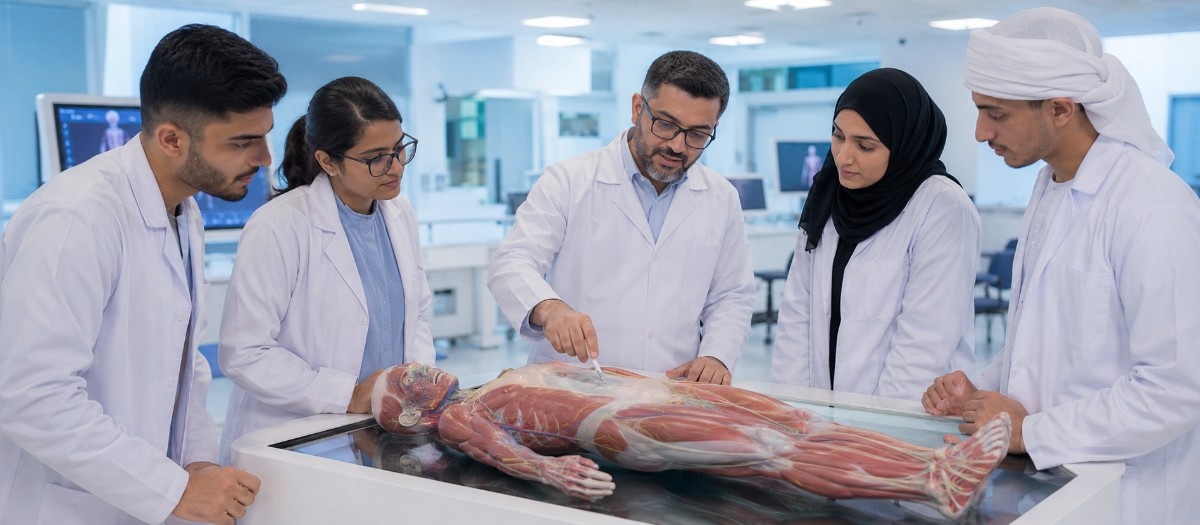
Students get hands-on clinical training in government and private hospitals affiliated with the university.
Practical information for students planning to study at MBBS in Mohammed Bin Rashid University.
Prepare for all seasons. Thermal wear for winters, light clothing for summers. University provides heating in hostels.
Student visa processed with university invitation letter. Direct and connecting flights from major Indian cities.
Health insurance included in fees. Medical facility on campus plus city hospitals easily accessible.
Local SIM cards available. WhatsApp and video calls keep you connected with family back home.
Average monthly expenses of $150–$250 covering food, transport, and personal needs.
University library, online databases, and study groups. Seniors mentor juniors through academic challenges.
Our team guides you through every step — from application to arriving on campus.
Our Dubai specialist provides an honest MBRU overview of the clinical environment, total cost, career pathways, and comparisons with Ireland and Australia.
Full MBRU application document package, academic transcripts, NEET scorecard, character certificates.
Our team submits directly to the MBRU College of Medicine admissions office. Offer letter typically within 10–14 days.
Receives offer, explains acceptance terms, and manages initial tuition deposit.
Our team liaises with MBRU student affairs for the student visa sponsorship process significantly smoother than embassy visa applications.
Dubai orientation, MBRU campus, accommodation, transport, banking, Nol card for Dubai Metro, SIM card.
We advise on routing to Dubai International Airport (DXB). Multiple daily flights from Delhi, Mumbai, and all major Indian cities.
Our local Dubai team coordinates arrival, MBRU registration, and first-week onboarding.
Our team manages the Emirates ID (national ID for UAE residents) application, which is mandatory for all UAE residents within the first weeks.
We map your 5-year FMGE preparation and post-graduation career plan from Day 1, UAE practice, USMLE, or India FMGE.
Admission Helpline — Contact our counsellors for step-by-step assistance.
“The faculty here is incredibly supportive. The clinical training during hospital rotations has given me real confidence in patient care.”
“Affordable fees without compromising on quality. The campus facilities and hostel life made my transition abroad very smooth.”
“English medium instruction and WHO-recognized curriculum were the deciding factors for me. No regrets so far — excellent experience overall.”
“The university helped with everything from visa to accommodation. Hospital exposure from year three has been invaluable for my FMGE prep.”
“Just cleared my licensing exam on the first attempt. The structured coaching and mock exams during final year were a game-changer.”
“Safe campus, good food options, and a strong Indian student community. The teaching methodology is very practical and hands-on.”
Yes, the entire six-year MD programme is taught in English with no separate language preparation year required before starting.
Tuition runs at AED 160,000 a year, or roughly ₹36 lakh annually, adding up to close to ₹2.2 crore in tuition alone across the full six years.
Primarily Rashid Hospital, Latifa Hospital, and Dubai Hospital, along with Al Jalila Children's Specialty Hospital for paediatric training.
Yes, a valid NEET score is mandatory for Indian applicants under NMC guidelines, alongside MBRU's own entrance exam and Multiple Mini Interview.
It is listed in the World Directory of Medical Schools and recognised by the WHO; applicants should verify current NMC status directly at nmc.org.in before applying.
Clinical exposure begins from Year 1, with structured hospital rotations expanding through Phase 2 and a full three-year clinical phase across affiliated Dubai hospitals in Years 4 through 6.
Yes, merit-based scholarships of up to 30% are available for top applicants, along with need-based scholarships of up to 50% for verified financial cases.
No, Dubai is considerably more expensive than most other international medical study destinations, with monthly living costs typically running AED 4,000–6,000.
Applicants for the 6-year programme must pass MBRU's own entrance exam covering Biology, Chemistry, Physics, and Maths, followed by a Multiple Mini Interview (MMI).
Roughly AED 1,150,000–1,300,000 all-inclusive, or about ₹2.6–2.9 crore, covering tuition, accommodation, food, insurance, and personal expenses.
Our expert counsellors will guide you through the complete admission process — from documents to airport pickup.