
Q1. Is there an affiliation between WHO, NMC India and NGMC?
+Yes. WHO, NMC India, and NGMC recognise each other. Check from wdoms.org before registration.

 nepal | Est. 1996
nepal | Listed by WHO, NMC India, Nepal Medical Council, KU, WDOMS, FAIMER, and Sri Lanka Medical Council | All teaching is in English; no IELTS or TOEFL is needed from any applicant at any stage medium
Expert will call you within 2 hours
There are many blogs about NGMC. But most of them say the same things. WHO listed. NMC approved. 750 beds. So let me tell you the parts they skip.
Nepalgunj Medical College was set up in 1996. Lord Buddha Educational Academy Ltd founded it. A group of doctors, teachers, and community leaders came together for one reason. Western Nepal had a serious shortage of qualified doctors. NGMC was their answer to that problem.
The college started its MBBS programme in December 1997. That makes it one of Nepal's oldest private medical colleges. Over 5,000 students have studied here since then. Many of them now work in Nepal, India, the UK, the US, and Australia.
One thing almost no blog explains clearly is the two-campus system. Years 1 and 2 are taught at the Chisapani campus. It is a 70-hectare campus in a clean, green, pollution-free area near the Karnali River. The famous Bardia Wildlife Sanctuary is also nearby. It is a quiet place to study and focus. Then, from Year 3, students shift to the Kohalpur campus. That is where the teaching hospital is. So, students go from quiet study to full clinical action at exactly the right time.
The teaching hospital at Kohalpur has 750 beds. But here is what most pages miss. It also has a cath lab for heart procedures. It has 128-slice CT scanning and full MRI. The lab is automated. The ICU, CCU, and NICU are large. And a second hospital in Nepalgunj city adds 250 more beds. Students rotate through both. That means 1,000 beds of total clinical access. No other college in western Nepal comes close to that number.
NGMC is linked to Kathmandu University. KU is stricter than Tribhuvan University. It runs its own exams and keeps its own standards. As a result, the degree carries real weight. Graduates have a strong base when they appear for FMGE and NExT.
For Indian students, the location is also a big practical plus. Nepalgunj sits right on the Indo-Nepal border. The Rupaidiha border crossing in Uttar Pradesh is just 5 km away. Students from UP, Bihar, MP, and Rajasthan can reach the college by train or bus, without flying. There is no visa. Aadhaar or voter ID works at the border. Nepali is also very close to Hindi. So, the language in the wards, the market, and the hostel all feel familiar from day one.
The hostel has separate blocks for boys and girls at both campuses. Rooms are twin or triple sharing. Each room has a study table, a chair, a bookshelf, and a cupboard. The mess serves Indian food every day. WiFi, gym, indoor games, and CCTV are all in place.
The total cost for 5.5 years is around INR 55-60 lakhs. There is no donation. There is no capitation fee. No hidden charge is added at any stage. For a college with two hospitals, a KU affiliation, and a 28-year track record, that cost is very fair.
Quick Overview
Parameter | Details |
Established | 1996 (MBBS started December 1997) |
Location | Chisapani & Kohalpur, Banke District, Nepal |
Affiliated University | Kathmandu University (KU) |
Teaching Hospitals | Kohalpur — 750 Beds | Nepalgunj — 250 Beds (Total 1,000 Beds) |
Course Duration | 5.5 Years (4.5 Years Study + 1 Year Internship) |
Total Seats | 100 MBBS Seats per Year |
Medium of Instruction | English |
Annual Tuition Fee | Approx. USD 9,000–10,000 (INR 7.5–8.5 Lakhs/Year) |
Fee Structure (2025–26)
Fee Component | Per Year (Approx.) | 5.5-Year Total (Approx.) |
Tuition Fee | USD 9,000–10,000, INR 7.5–8.5 Lakhs | INR 41–46.75 Lakhs |
Hostel Fee | USD 600, INR 45,000–50,000 | INR 2.47–2.75 Lakhs |
Food & Meals | NPR 6,000–8,000/month, INR 54,000–72,000/yr | INR 2.97–3.96 Lakhs |
Insurance | NPR 5,000–15,000, INR 3,750–11,250 | INR 20,000–61,000 |
Donation | NIL | NIL |
Total Estimated | — | INR 55–60 Lakhs (All Inclusive) |
Note: USD figures use approx. INR 84–86 per USD. Fees may vary by year.
Why Nepalgunj Medical College Deserves a Harder Look Than You've Given It
Most ranking pages put NGMC in Nepal's top colleges and move on. But they do not tell you why it has held that spot for nearly 28 years. So here is the real story.
First, think about the two-campus system. Years 1 and 2 are at the Chisapani campus. It is quiet, green, and near the Karnali River. Students focus without city distractions. Then, from Year 3, they move to Kohalpur. That is where the 750-bed hospital is. This phased shift is something most blogs never explain. But it matters. Students build their base first, then enter the clinic fully ready.
Second, the hospital setup is stronger than any blog suggests. NGMC runs 1,000 beds across two hospitals. Not many colleges in all of Nepal can say that. Also, the Kohalpur hospital has a cath lab, 128-slice CT, and full MRI. Students see cardiac, neuro, trauma, and complex surgical cases. Since western Nepal has few specialists, referral cases come from a huge region. That means more variety and more volume for clinical training.
Third, the Kathmandu University link is a real advantage. KU is not the same as TU. It holds its own tests and keeps stricter standards. As a result, students are pushed harder academically. And when they sit for FMGE, NExT, or USMLE, that pressure pays off.
Also, here is a point that almost no other blog mentions. The Rupaidiha border in UP is just 5 km from Nepalgunj. For students from UP, Bihar, MP, and Rajasthan, this is the easiest Nepal college to reach. No flight is needed. A direct train or bus brings them right to the border. No other college in Nepal is this close to a major Indian rail and road connection.
Finally, the campus environment at Chisapani is genuinely different. It sits next to the Bardia Wildlife Sanctuary. The air is clean. There is no city noise. Over 5,000 students have studied here for over 28 years. That kind of long track record is not something a new college can fake.
No hidden charges, no donation. The full picture of costs at MBBS in Nepalgunj Medical College (NGMC).
Tuition Fee
Annual tuition is USD 9,000 to 10,000; that is around INR 7.5 to 8.5 lakhs per year
USD 9,000 to 10,000, around INR 7.5 to 8.5 lakhs per year
Hostel Fee
Hostel fee is around USD 600 per year; separate blocks for boys and girls at both campuses
USD 600, around INR 45,000 to 50,000 per year at both campuses
Food & Meals
NPR 6,000 to 8,000, Indian mess runs daily at the hostel
per month
Insurance
NPR 5,000 to 15,000, around INR 3,750 to 11,250
per year
Donation
No donation
no capitation fee
Total Estimated Cost
Affordable
Contact us
25–35%
Average FMGE first-attempt pass rates for students from many overseas medical universities. Students from structured programs consistently score higher.
Students returning to India need to clear the FMGE/NExT exam. MBBS in Nepalgunj Medical College (NGMC) integrates exam-oriented coaching into the regular curriculum so students are prepared from day one.
A structured program that takes you from foundational sciences to clinical mastery.
• Medical Informatics and basic clinical orientation also begin from the very first semester itself
• Anatomy, Histology, Biochemistry, and Biophysics build the complete pre-clinical base this year
• Kathmandu University holds formal end-of-year exams with standard grading for all students
• Physiology, Microbiology, Pharmacology, and Pathological Anatomy are the core subjects in Year 2
• Ward rounds at the 750-bed Kohalpur Teaching Hospital also begin for all students this year
• Students shift to Kohalpur; Pathology, Pathophysiology, and Forensic Medicine are taught here
• Emergency postings and Skin department exposure are also added at both teaching hospitals
• Full rotations run in Medicine, Surgery, Paediatrics, OB-GYN, ENT, Eye, and Radiology departments
• FMGE and NExT coaching also begins this year alongside all regular clinical postings
• Advanced postings run in Cardiology, Neurology, Urology, and Oncology under senior consultants
• Rural postings are required; FMGE and NExT mock tests are held throughout the internship year
• A full 12-month internship covers Medicine, Surgery, Paediatrics, OB-GYN, Trauma, and more


Furnished hostel rooms with Wi-Fi, laundry, 24/7 security, and Indian mess on or near campus.
Indian restaurants and mess facilities serving vegetarian and non-vegetarian home-style food daily.
Strong Indian community with cultural events, festival celebrations, and peer support groups.
Students get hands-on clinical training in government and private hospitals affiliated with the university.
Practical information for students planning to study at MBBS in Nepalgunj Medical College (NGMC).
Prepare for all seasons. Thermal wear for winters, light clothing for summers. University provides heating in hostels.
Student visa processed with university invitation letter. Direct and connecting flights from major Indian cities.
Health insurance included in fees. Medical facility on campus plus city hospitals easily accessible.
Local SIM cards available. WhatsApp and video calls keep you connected with family back home.
Average monthly expenses of $150–$250 covering food, transport, and personal needs.
University library, online databases, and study groups. Seniors mentor juniors through academic challenges.
Our team guides you through every step — from application to arriving on campus.
AMW's Nepal specialist compares BPKIHS, Manipal, KMC, Nobel, and National. FMGE rates, fees, city, and clinical quality within 24 hours of your first enquiry.
AMW sends your Nepal-specific checklist. A passport is recommended, though not mandatory. All documents verified before submission
AMW submits directly to your shortlisted partner college. Offer letters are typically received within 5–10 working days
AMW receives your offer letter, walks you through the terms, and advises on fee payment and seat confirmation
Initial deposit secures your September–October 2026 seat. AMW advises on INR transfer to Nepal is straightforward given bilateral banking relations
AMW orients you on Kathmandu or Pokhara city logistics, hostel setup, what to carry, and first-week expectations at your college.
Fly Delhi–Kathmandu (1.5–2 hrs) or use a land route if geographically convenient. No visa, no passport required, just your voter ID.
AMW's local Nepal team coordinates your hostel check-in and college registration. You are not navigating this alone
College orientation, campus familiarisation, and early settling-in support from AMW's Nepal team during your first week.
AMW maps out your 5.5-year FMGE preparation plan from Day 1. Year 4 coaching begins formally, but the preparation strategy starts at enrolment.
Admission Helpline — Contact our counsellors for step-by-step assistance.
“The faculty here is incredibly supportive. The clinical training during hospital rotations has given me real confidence in patient care.”
“Affordable fees without compromising on quality. The campus facilities and hostel life made my transition abroad very smooth.”
“English medium instruction and WHO-recognized curriculum were the deciding factors for me. No regrets so far — excellent experience overall.”
“The university helped with everything from visa to accommodation. Hospital exposure from year three has been invaluable for my FMGE prep.”
“Just cleared my licensing exam on the first attempt. The structured coaching and mock exams during final year were a game-changer.”
“Safe campus, good food options, and a strong Indian student community. The teaching methodology is very practical and hands-on.”
Yes. WHO, NMC India, and NGMC recognise each other. Check from wdoms.org before registration.
No. An Aadhaar or Voter ID is sufficient. The Rupaidiha Border in UP is only 5 km away from Nepalgunj.
Rs. 55-60 lakh for 5.5 years, including tuition fee, boarding expense, food and all other expenses.
Yes. It is mandatory as per NMC India rules. Indian candidates cannot give any other test.
Kathmandu University. KU is stricter than TU and runs its own standard exams every year.
Ward rounds begin from Year 3 at the 750-bed Kohalpur hospital. Students also rotate to Nepalgunj.
1,000 beds total. Kohalpur Hospital has 750 beds, and the Nepalgunj Hospital has 250 beds.
Yes, 100% English. Nepali is close to Hindi, so ward communication is easy from week one.
Yes. Separate blocks at both campuses. Indo problems with WiFi, Gym, CCTV, and a 24x7 security facility provided.
Yes. MD, MS, BDS, B.Sc. Nursing and paramedical programmes all run alongside the MBBS course.
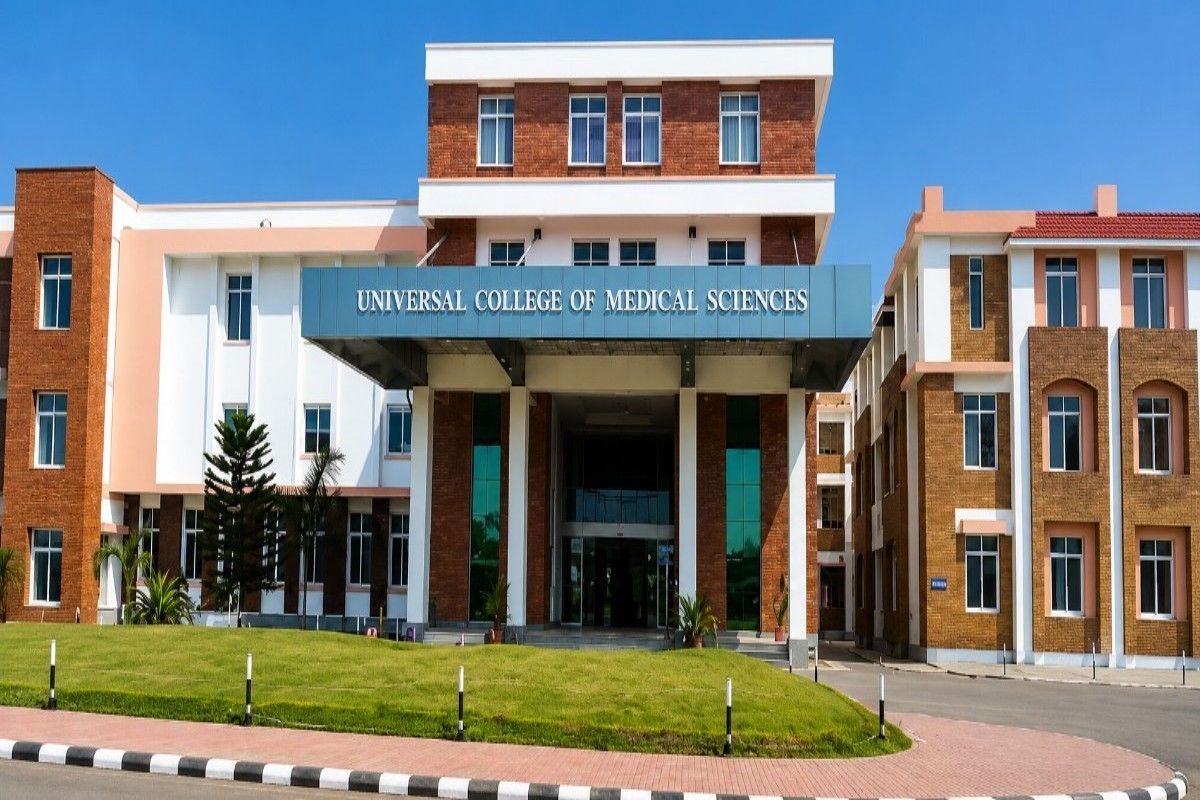


Our expert counsellors will guide you through the complete admission process — from documents to airport pickup.