Q1. Is the RSU MD recognised in India for NExT eligibility?
+Yes. RSU is WDOMS-listed and NMC-recognised. Always confirm the current status at nmc.org.in before applying, since recognition is reviewed periodically.
 Latvia | Est. 1950
Latvia | NMC India (verify at nmc.org.in); Ministry of Education & Science Latvia; WDOMS; ECFMG; GMC UK; EU Regulated Professions Directive; Bologna Process compliant; EUA member | English throughout; Latvian included in curriculum, not required for admission medium
Expert will call you within 2 hours
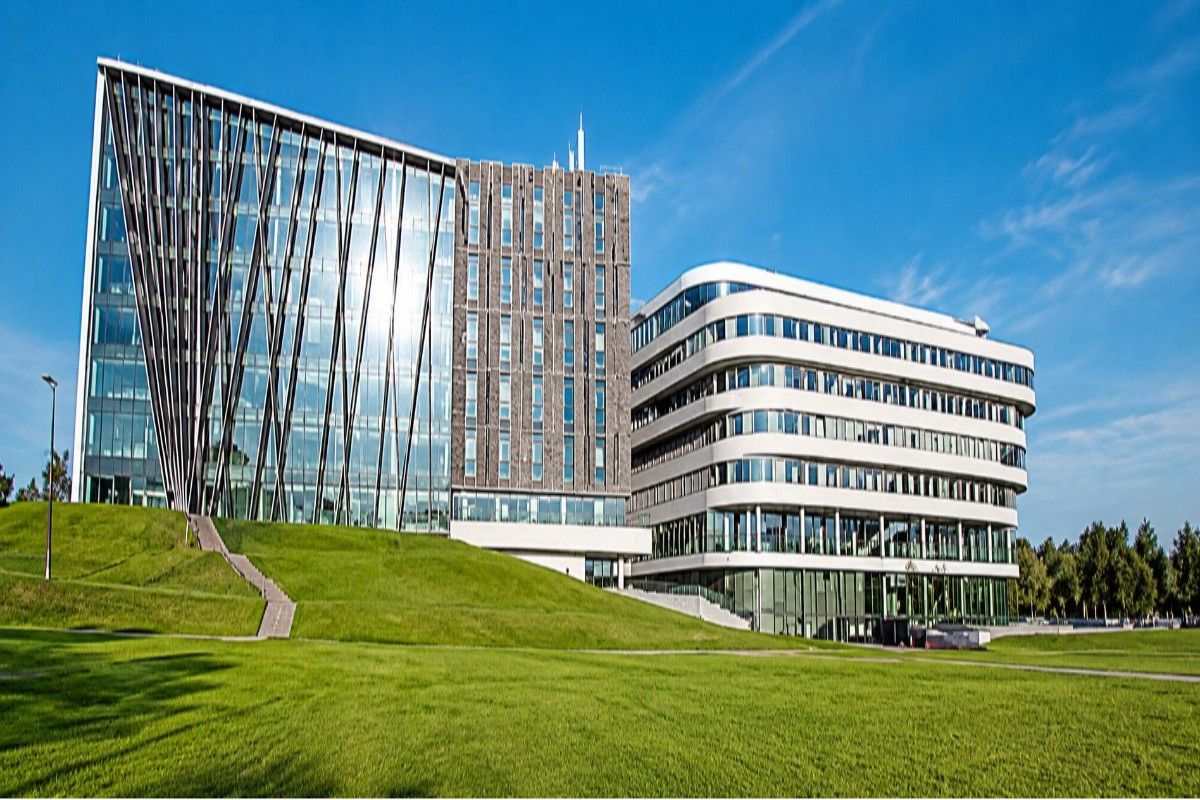
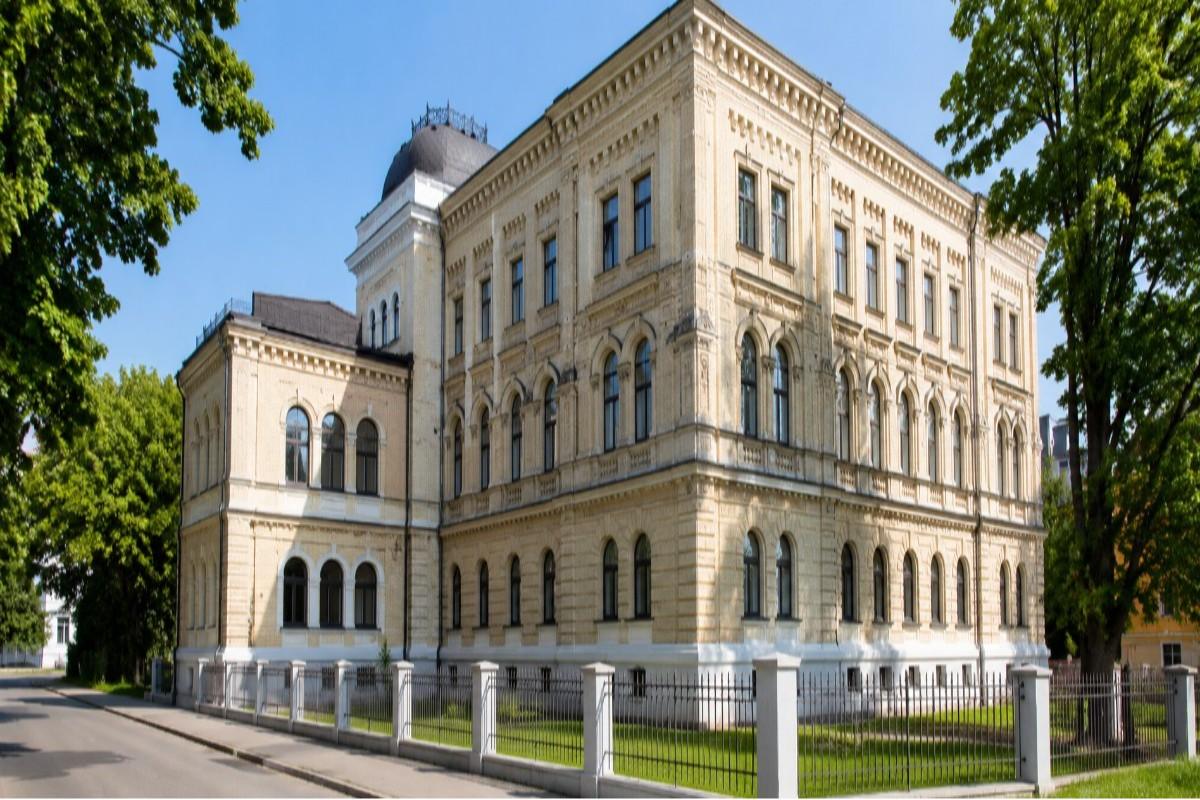
Rīga Stradiņš University; RSU, has been training doctors since 1950, when it opened as the Rīga Medical Institute. Its roots go back further than that, though. The Faculty of Medicine traces its lineage directly to the University of Latvia's medical faculty, which was established in 1919. Over the decades that followed, the institution evolved; briefly known as the Medical Academy of Latvia; before taking its current name in 2002, honouring the Stradiņš family whose influence on Latvian academic and public life stretches across generations. That history is not mentioned as a formality. It matters because it shapes what RSU actually is today: a university with a continuous clinical tradition, built alongside Latvia's healthcare system rather than merely adjacent to it, accumulating depth that newer institutions simply cannot replicate.
The Faculty of Medicine is RSU's oldest and most central academic unit; and the only medical faculty in Latvia that has been continuously, structurally integrated with the national healthcare system since its founding. That integration is not incidental. It defines how clinical training is delivered here. Students are not sent to hospitals for brief rotations and then returned to campus. They train inside the same institutions where their professors hold active clinical appointments and see patients every working day. The main affiliated hospitals include Pauls Stradiņš Clinical University Hospital; one of the largest and most technically equipped hospitals in the Baltic region; alongside the Children's Clinical University Hospital, Riga East University Hospital, and the Hospital of Traumatology and Orthopaedics. These are not peripheral teaching attachments. They are fully functioning, high-volume clinical environments, and RSU students are trained within them from the point clinical exposure begins.
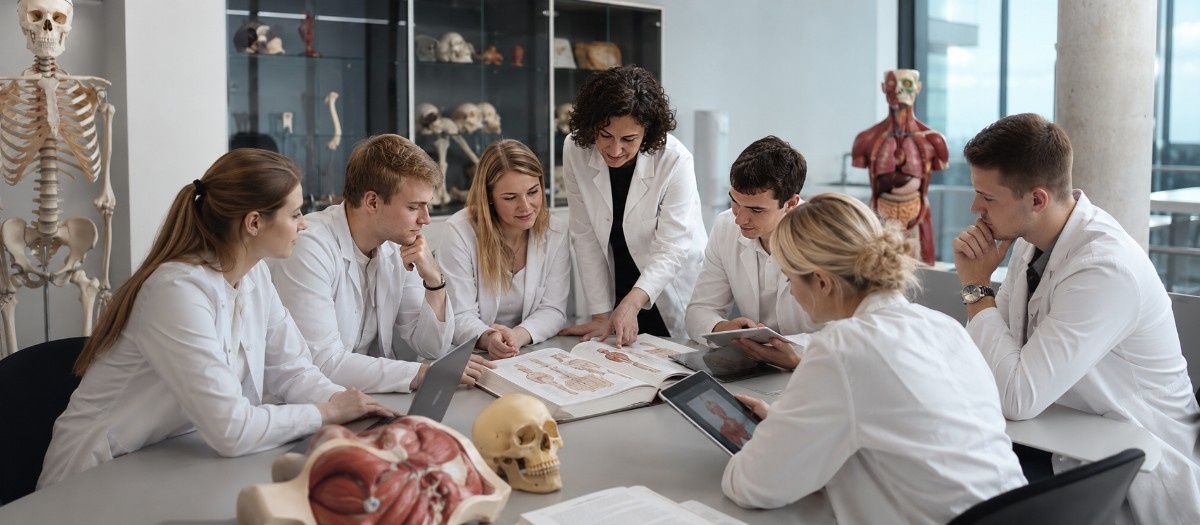
The six-year MD programme is delivered entirely in English. There is no Latvian language requirement for admission; Latvian classes are included in the curriculum to help students manage day-to-day life in the city, but the programme itself requires no prior Latvian proficiency, and admission is not conditional on a language test beyond standard English proficiency. The structure follows a clear and deliberate progression. Years 1 and 2 build biomedical foundations: anatomy taught with cadaveric dissection, physiology, biochemistry, genetics, microbiology, and introductory psychology. Year 3 is the bridge; pathology, pharmacology, and clinical semiology converge, and students begin supervised patient-facing contact for the first time, learning to take histories, examine patients, and think in clinical terms before full rotations begin. Years 4 and 5 are dedicated clinical years across RSU's hospital network in Riga, rotating through internal medicine, surgery, obstetrics and gynaecology, paediatrics, psychiatry, neurology, emergency medicine, ophthalmology, ENT, dermatology, and orthopaedics. Year 6 is a comprehensive supervised internship across all core disciplines, concluding with the State Examination; a formal clinical and theoretical assessment under Latvian law that converts the degree into a licence to practise. It is not a formality; it is what the degree means in practice.
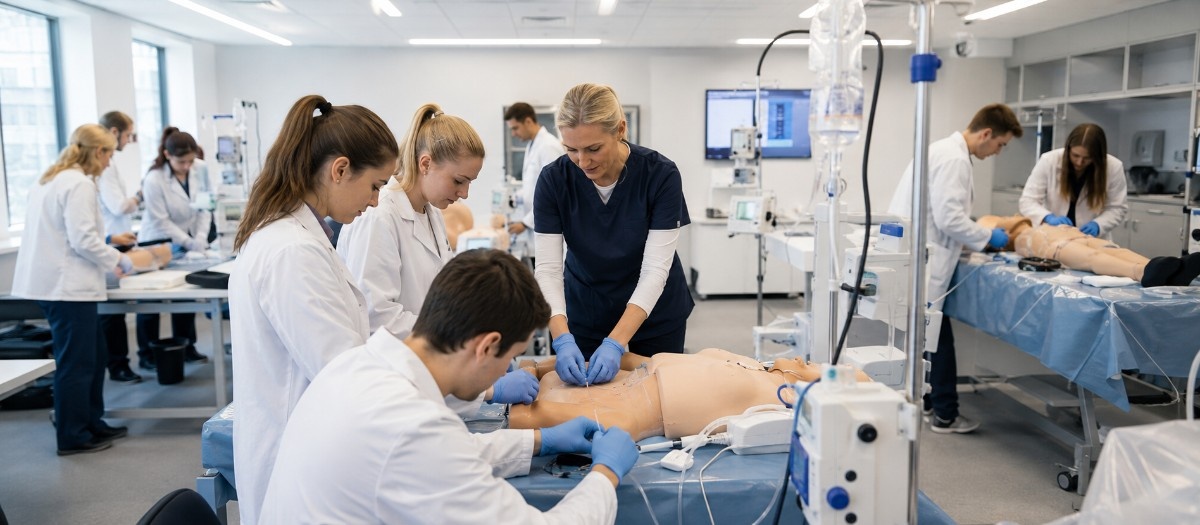
One facility that genuinely sets RSU apart from most of its regional competitors is the Medical Education and Technology Centre; the METC. It is the largest medical simulation centre in the Baltic states, housed on the RSU campus, and it gives students structured, supervised access to advanced clinical simulators before they work with real patients in real pressure situations. Team-based scenario training, procedural skill practice, and emergency simulations are all part of what is available here. This kind of resource matters. It means students arrive at their clinical rotations having already rehearsed clinical decision-making in controlled conditions, which changes the quality and confidence of their patient-facing work from the moment rotations begin.
RSU's international standing is well established. Current metrics put RSU in the 1001–1200 band for the QS World University Rankings and the 1201–1500 band for Times Higher Education. The Kantar reputation data remains accurate for its historical timeframe. Within Latvia, RSU has consistently held the top reputation ranking across multiple surveys conducted by Kantar TNS between 2017 and 2021, and it ranks second overall among universities across the Baltic states. It is a member of the European University Association and participates in Erasmus+, with partner institutions spread across Europe. During Year 5, eligible students can pursue exchange placements at partner hospitals in Germany, Italy, or Israel, extending their clinical exposure beyond Latvia before graduating.
For students from India specifically, RSU is listed in the World Directory of Medical Schools and holds NMC recognition, making graduates eligible to sit the NExT examination required for practice in India. As with all overseas institutions, current recognition status should be confirmed directly at nmc.org.in before applying; listings are subject to periodic review and the information at point of application is what counts. RSU is also ECFMG-recognised, which opens the USMLE pathway for graduates pursuing US residency. The university has close to 200 graduates currently registered with the UK General Medical Council; a meaningful data point, not a marketing claim. It indicates that the degree translates into real licensure outcomes in major English-speaking markets, via both the PLAB route and portfolio assessment.
Riga itself is a genuinely liveable European capital. It has the infrastructure, safety, and urban quality of an EU city, with living costs that are substantially lower than what students face in Western Europe. Monthly expenses covering accommodation, food, transport, and personal costs are well within manageable range; typically between €600 and €900; without the compromises in quality of life that come with cheaper study destinations in other parts of the world. RSU operates two student hostels in Riga. One sits directly alongside the main campus, which makes the first weeks of adjustment considerably more straightforward for students arriving from abroad without established local networks. For students who prefer private accommodation, shared apartments in Riga are widely available and affordable by any European standard.
The degree awarded is an EU-standard Doctor of Medicine, developed in line with European directives on regulated professions and fully Bologna Process compliant. Latvia has been a member of the European Union since 2004, which means graduates can seek registration across EU member states under the Lisbon Convention; a practical, legally grounded advantage that extends well beyond what non-EU medical degrees can offer.
No hidden charges, no donation. The full picture of costs at MBBS In Rīga Stradiņš University Medicīnas Fakultāte.
Tuition Fee
€13,500/year (approx. ₹12–12.8 lakh); 6-year total €81,000 / ₹72–76 lakh
€13,500/year; 6-year total €81,000 / ₹72–76 lakh; application €100
Hostel Fee
RSU hostel €200–350/month; shared apartment €350–550/month; private studio €500–700/month
RSU hostel €200–350/month; shared apartment €350–550/month
Food & Meals
€200–300
Per Month
Insurance
€300–500
Per Year
Donation
No donation
No hidden charges
Total Estimated Cost
€95,000–105,000 all-inclusive / ₹85–94 lakh
6 Year
25–35%
Average FMGE first-attempt pass rates for students from many overseas medical universities. Students from structured programs consistently score higher.
Students returning to India need to clear the FMGE/NExT exam. MBBS In Rīga Stradiņš University Medicīnas Fakultāte integrates exam-oriented coaching into the regular curriculum so students are prepared from day one.
A structured program that takes you from foundational sciences to clinical mastery.
Cadaveric dissection from the start; ethics and doctor-patient relationship introduced early.
Anatomy I, Medical Chemistry, Biochemistry I, Cell & Molecular Biology, Physiology I, Philosophy, Introduction to Medicine
Genetics & Molecular Medicine, Microbiology I, Psychology, Latin Medical Terminology. Systems-based approach; psychology treated as a core subject.
Anatomy II (Neuroanatomy & Topographic), Physiology II, Biochemistry II,
Hospital practical sessions begin semester four; science shifts into clinical thinking.
General Pathology, Pathophysiology, Pharmacology I & II, Microbiology II & Immunology, Epidemiology & Biostatistics, Clinical Semiology, Evidence-Based Medicine.
First full clinical year; ward rounds and patient clerking under consultant supervision.
Internal Medicine I, Surgery I, O&G, Paediatrics I, Psychiatry, Radiology
Exchange placements available in Germany, Italy, or Israel; Erasmus+ possible.
Internal Medicine II, Surgery II, Neurology, Family Medicine, ENT, Ophthalmology, Dermatology, Orthopaedics, Emergency Medicine
Indian graduates must additionally clear NExT and fulfil NMC internship requirements.
All core disciplines plus elective; concludes with State Examination, converting the degree into a Latvian medical licence.
Furnished hostel rooms with Wi-Fi, laundry, 24/7 security, and Indian mess on or near campus.
Indian restaurants and mess facilities serving vegetarian and non-vegetarian home-style food daily.
Strong Indian community with cultural events, festival celebrations, and peer support groups.
Students get hands-on clinical training in government and private hospitals affiliated with the university.
Practical information for students planning to study at MBBS In Rīga Stradiņš University Medicīnas Fakultāte.
Prepare for all seasons. Thermal wear for winters, light clothing for summers. University provides heating in hostels.
Student visa processed with university invitation letter. Direct and connecting flights from major Indian cities.
Health insurance included in fees. Medical facility on campus plus city hospitals easily accessible.
Local SIM cards available. WhatsApp and video calls keep you connected with family back home.
Average monthly expenses of $150–$250 covering food, transport, and personal needs.
University library, online databases, and study groups. Seniors mentor juniors through academic challenges.
Our team guides you through every step — from application to arriving on campus.
Latvia specialist explains RSU, EU licence, Baltic region comparison, and total cost versus Estonia and Slovakia.
Full RSU application and Latvian visa document package prepared.
Direct submission to Riga Stradiņš University. Offer letter typically within 10–14 days.
Our team receives the offer, explains the terms, and manages the initial fee payment.
Full documentation submitted to the Latvian Embassy in New Delhi. Begin at least 2 months before departure.
Riga city orientation, RSU campus, accommodation, Baltic transport, banking, SIM card, first-week logistics.
We advise on routing to Riga International Airport (RIX). Confirms arrival with the local team.
Our local Riga coordinator meets you and handles the transfer.
RSU registration and dormitory check-in handled by AMW's local team.
Our team manages the Temporary Residence Permit for Studies application and annual renewal.
Admission Helpline — Contact our counsellors for step-by-step assistance.
“The faculty here is incredibly supportive. The clinical training during hospital rotations has given me real confidence in patient care.”
“Affordable fees without compromising on quality. The campus facilities and hostel life made my transition abroad very smooth.”
“English medium instruction and WHO-recognized curriculum were the deciding factors for me. No regrets so far — excellent experience overall.”
“The university helped with everything from visa to accommodation. Hospital exposure from year three has been invaluable for my FMGE prep.”
“Just cleared my licensing exam on the first attempt. The structured coaching and mock exams during final year were a game-changer.”
“Safe campus, good food options, and a strong Indian student community. The teaching methodology is very practical and hands-on.”
Yes. RSU is WDOMS-listed and NMC-recognised. Always confirm the current status at nmc.org.in before applying, since recognition is reviewed periodically.
Yes, fully. Latvian is part of the curriculum but not a condition of admission or graduation.
Yes. A valid NEET score is mandatory for Indian applicants under NMC regulations.
Pauls Stradiņš Clinical University Hospital, Children's Clinical University Hospital, Riga East University Hospital, and the Hospital of Traumatology and Orthopaedics; all in Riga.
Yes. Around 200 RSU graduates are currently GMC-registered. The PLAB and portfolio assessment routes are both available.
Yes. RSU is ECFMG-recognised, making graduates eligible for USMLE Steps 1, 2, and 3 for US residency matching.
No. Admission is based on Biology and Chemistry transcripts, a motivation letter, and sometimes an interview. Applications run February to May for the September intake.
The Medical Education and Technology Centre is the largest simulation facility in the Baltics. Students practise procedures and clinical scenarios on advanced simulators before working with real patients; which genuinely changes how prepared they feel when rotations begin.
Yes. RSU offers merit-based tuition reductions of 10–20% per year, applied on the basis of the previous year's academic results. Over six years, these can add up to a meaningful saving.
Roughly €95,000–105,000 (₹85–94 lakh) covering tuition, accommodation, food, insurance, and personal expenses; placing RSU among the more affordable English-medium EU medical programmes open to international students.
Our expert counsellors will guide you through the complete admission process — from documents to airport pickup.