
1. Is there a graduate-entry option here?
+No, Carol Davila does not accept students after they have completed a bachelor's degree. There is no graduate-entry route.

 Romania | Est. 1857
Romania | Listed in the World Health Organisation's World Directory of Medical Schools. Recognised for postgraduate licensing pathways including USMLE (USA), PLAB (UK), and NExT/FMGE (India). | English (a separate Romanian-language track exists for domestic students). medium
Expert will call you within 2 hours
Bucharest holds one of Europe's oldest medical schools. Its name still carries real weight. People call it Universitatea de Medicină și Farmacie Carol Davila. Most just say UMF Carol Davila for short. It dates back to 1857. A Romanian doctor named Carol Davila built it. He worked with a fellow doctor named Nicolae Kretzulescu. Their first school was called the National School of Medicine and Pharmacy. Today, most people just call it Carol Davila University. The Faculty of Medicine remains the main part of the school.
The path from 1857 to today ran through several name changes. In 1869, the medical school joined the University of Bucharest. It became that school's Faculty of Medicine. The first doctoral degrees were conferred in 1873. By 1948, the school split off on its own. It became the Institute of Medicine and Pharmacy, a full state medical school. In 1991, after communism fell in Romania, it took on its current name. This long, steady path built deep roots in Romanian and European medicine. Few schools in Eastern Europe can match this kind of history.
The school's research history stands out, too. Nicolae Paulescu worked here when he first isolated insulin, back in 1921. That work later fed into a well-known fight over the 1923 Nobel Prize in medicine. George Emil Palade also studied at this school early in his career. He later won the Nobel Prize in Medicine in 1974. He still holds the title of honorary president at the university today. Few medical schools anywhere can point to a Nobel winner among their own graduates.
The Faculty of Medicine now runs a six-year Doctor of Medicine program. Most people call it an MD. This sits at the same level as an MBBS in other countries. The course splits into clear stages. The first two years cover core sciences. This means anatomy, tissue study, how the body works, and body chemistry. Years three and four move into applied medical topics. These include disease study, drug science, germ science, and public health. Heavy lab and seminar work backs all of this up. The final two years shift almost fully into clinical work. Students train in general medicine, surgery, child health, women's health, mental health, and other core fields. Hospital time does not wait until the final years, though. Students see real hospital settings early on. This starts well before most Western medical schools allow this kind of contact.
Hospital access is one of the school's biggest strengths. The university links to more than twenty major teaching hospitals across Bucharest. Some counts run even higher once smaller clinical sites get added in. This gives students a very wide range of patients and cases to learn from, right inside a large European capital city. Training does not sit in one quiet corner of the city. It spans public hospitals that cover nearly every branch of medicine and surgery. Some of these centres are known across Romania for advanced care.
Research runs deep here too, well past the famous work of Paulescu and Palade. The university runs about twenty active research centres. These cover fields such as heart emergencies, brain science, and joint disease. Students with a research bent can join these teams directly. They work next to senior staff on live projects, not just read about past ones. Long-running student groups add another layer to campus life. The Medical Students' Society of Bucharest has run for more than 150 years. This makes it one of the oldest student groups of its kind in Europe.
Getting in works in a different way here than at graduate-entry schools in places like Australia or the Gulf. Carol Davila does not offer a graduate-entry route. It also does not accept transfers partway through the course. Applicants apply straight after finishing high school. They need strong marks in core science subjects, usually biology, chemistry, and physics. Since the English-taught program serves students from abroad, English matters just as much as science. Most applicants sit some form of English test or have a talk. Many schools that guide students here call this step strict and final, with little room for a second try. A high school diploma, birth certificate, health certificate, and a passport valid for at least eighteen months round out the usual paperwork.
Cost sits well below many Western European or Gulf medical schools. Tuition for the English-taught MD runs at roughly ten thousand euros a year. This figure can shift slightly year to year and may vary by intake. On top of tuition, most students rent their own housing. Campus dorms mostly go to Romanian students on state grants. A private one-bedroom flat in Bucharest typically runs between one hundred fifty and three hundred euros a month. That is a modest cost by the standards of most European capital cities. Strong first-year students can also compete for a twenty per cent scholarship, based on how they rank among their peers.
Recognition extends well beyond the limits of Romania, demonstrating the degree's credibility. The institution is included in the World Directory of Medical Schools, which is maintained by the World Health Organisation. The global list that is utilised by health regulators all over the world is this one. In addition, Indian agencies acknowledge the degree, subject to the typical national regulations that apply to medical graduates from other countries. There are major licensing tests that graduates can take after graduation, depending on where they intend to work. The NExT or FMGE routes in India, the PLAB route in the United Kingdom, and the USMLE route in the United States are all included in this description. Every nation establishes its own unique regulations for this particular procedure.
The importance of life in Bucharest extends far beyond the limits of the classroom. It is around sixty kilometres north of the Danube River, and the city is located considerably inland. It is considered to be one of the most secure capitals in Eastern Europe. More than fifty different countries constitute the student body. In spite of its long history and deep roots in Romania, the campus has a very diverse atmosphere as a result of this. At the university, in addition to academics, there is a sports centre. This encompasses activities such as swimming, table tennis, basketball, and aerobics. Six clay courts and a small football pitch are new additions to an outdoor location. Nearby are a number of attractions, including parks, museums, and Bucharest's famous old town. Students are able to take a vacation from the hospital wards and lecture halls thanks to these.
Some students are interested in receiving a medical education that is authentically European and profoundly rooted in history. They want it underpinned by Nobel-level history and true hospital access from the early years. For these students, Carol Davila offers a clear, unambiguous path. It will not suit students who want a graduate-entry route or a mid-course switch, since neither exists here. For everyone else drawn to low cost, strong hospital time, and a long research history, UMF Carol Davila stands as one of the most settled names in Eastern European medical training.
No hidden charges, no donation. The full picture of costs at MBBS in Universitatea de Medicină și Farmacie Carol Davila - Faculty of Medicine.
Tuition Fee
Approx. USD 10,800 per year (approx. INR 9.40 lakh).
USD 10,800, INR 9.40 lakh
Hostel Fee
average annual cost is USD 2,920 (around INR 2.54 lakh)
USD 2,920, INR 2.54 lakh
Food & Meals
USD 1,940, INR 1.69 lakh
per month
Insurance
USD 220, INR 0.19 lakh
per month
Donation
No donation
No capitation fees
Total Estimated Cost
USD 15,880 (INR 13.82 lakh)
6 year
25–35%
Average FMGE first-attempt pass rates for students from many overseas medical universities. Students from structured programs consistently score higher.
Students returning to India need to clear the FMGE/NExT exam. MBBS in Universitatea de Medicină și Farmacie Carol Davila - Faculty of Medicine integrates exam-oriented coaching into the regular curriculum so students are prepared from day one.
A structured program that takes you from foundational sciences to clinical mastery.
Supporting Disciplines: The curriculum includes Medical Informatics, Biostatistics, Medical Sociology, Psychology, and Romanian Language to prepare students for clinical communication and research.
Core Subjects: Students study Anatomy, Histology, Physiology, and Biochemistry to establish foundational knowledge of human structure and function.
Clinical Foundations: Students learn Medical Semiology and Surgical Semiology alongside Primary Health Care and Medical Research Methodology.
Disease Mechanisms: The focus shifts to General Pathology, Microbiology, and Pharmacology, introducing the study of disease processes and drug actions
Clinical Introduction: Students begin early clinical exposure through Pediatrics and further studies in Pharmacology and Pathology.
Systemic Study: The curriculum covers Pathology, Microbiology, and Forensic Medicine, deepening understanding of systemic diseases and legal medical aspects.
Diagnostic Skills: The year emphasizes Primary Care Medicine, Emergency Medicine, and Cardiology alongside Otolaryngology and Psychology.
Major Specialties: Core clinical training includes Internal Medicine, General Surgery, Pediatrics, Neurology, and Oncology.
Community and Mental Health: The curriculum includes Psychiatry, Community Medicine, and Clinical Medicine, focusing on holistic patient care.
Surgical and Emergency Care: Students undergo rotations in General Surgery, Obstetrics & Gynecology, and Emergency Medicine.
Professional Preparation: Students complete mandatory internships in Obstetrics & Gynecology, Pediatrics, and Community Medicine to gain comprehensive practical experience.
Hands-On Practice: The final year is dedicated to Clinical Rotations across all major departments, including Internal Medicine and General Surgery.

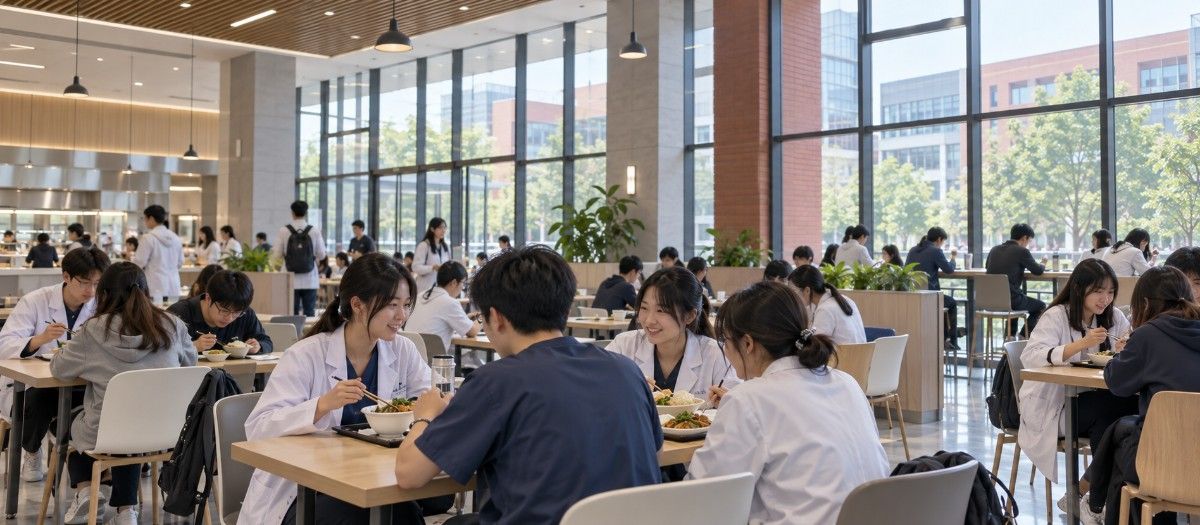
Furnished hostel rooms with Wi-Fi, laundry, 24/7 security, and Indian mess on or near campus.
Indian restaurants and mess facilities serving vegetarian and non-vegetarian home-style food daily.
Strong Indian community with cultural events, festival celebrations, and peer support groups.
Students get hands-on clinical training in government and private hospitals affiliated with the university.
Practical information for students planning to study at MBBS in Universitatea de Medicină și Farmacie Carol Davila - Faculty of Medicine.
Prepare for all seasons. Thermal wear for winters, light clothing for summers. University provides heating in hostels.
Student visa processed with university invitation letter. Direct and connecting flights from major Indian cities.
Health insurance included in fees. Medical facility on campus plus city hospitals easily accessible.
Local SIM cards available. WhatsApp and video calls keep you connected with family back home.
Average monthly expenses of $150–$250 covering food, transport, and personal needs.
University library, online databases, and study groups. Seniors mentor juniors through academic challenges.
Our team guides you through every step — from application to arriving on campus.
Compare universities based on fees, city, and availability of non-EU seats, not just the cheapest option.
Submit the application, along with academic transcripts, to the university, either directly or through a registered admission partner.
The university's international admissions office verifies documents and publishes a merit-based ranking list.
Issued by the Romanian Ministry of Education after the university confirms your place on the ranking list.
Pay the first-year tuition fee (or the required deposit percentage) to confirm the seat.
Apply for the Type D student visa at the Romanian Embassy/Consulate in India; realistic processing time is 2–8 weeks.
Book travel and plan arrival dates ahead of the late-September start of the academic year.
In the final weeks, finalize documents, arrange winter clothing and travel/health insurance, book flights, arrange currency exchange, and confirm hostel allotment in writing.
Complete local registration (residence permit steps) with the relevant Romanian authorities within the required window after arrival; the university usually assists with this during orientation.
Open a local bank account, get a local SIM card, attend orientation sessions, get the class schedule, and begin building a grocery/cooking routine and connections with the Indian student community.
Admission Helpline — Contact our counsellors for step-by-step assistance.
“The faculty here is incredibly supportive. The clinical training during hospital rotations has given me real confidence in patient care.”
“Affordable fees without compromising on quality. The campus facilities and hostel life made my transition abroad very smooth.”
“English medium instruction and WHO-recognized curriculum were the deciding factors for me. No regrets so far — excellent experience overall.”
“The university helped with everything from visa to accommodation. Hospital exposure from year three has been invaluable for my FMGE prep.”
“Just cleared my licensing exam on the first attempt. The structured coaching and mock exams during final year were a game-changer.”
“Safe campus, good food options, and a strong Indian student community. The teaching methodology is very practical and hands-on.”
No, Carol Davila does not accept students after they have completed a bachelor's degree. There is no graduate-entry route.
No, the university does not accept mid-course transfers in any circumstances
Approx USD 10,800, though this figure can shift slightly year to year depending on the intake.
Campus dormitories are mostly reserved for Romanian students on state scholarships. Instead, most international students rent private one-bedroom apartments which usually cost €150 to €300 a month.
Yes, the general rule applies broadly to foreign medical degrees for the purpose of studying medicine abroad as required by the National Medical Commission.
A true rarity among the world’s medical schools. Honorary president George Emil Palade was awarded the Nobel Prize in Physiology or Medicine in 1974 and researcher Nicolae Paulescu was the first to isolate insulin here in 1921.
Across more than 20 major teaching hospitals spread throughout Bucharest, students are given exposure to a wide range of patients and conditions within a large European capital.
Yes, strong first-year students can compete for a 20% tuition scholarship, based on their academic ranking among peers.
Yes, it's listed in the WHO's World Directory of Medical Schools, and graduates can pursue USMLE, PLAB, or NExT/FMGE, subject to each country's own requirements.
Genuinely international, with students from more than 50 countries. The university runs a sports centre with aerobics, table tennis, basketball, and swimming, plus an outdoor complex with clay courts and a football pitch, alongside easy access to Bucharest's museums, parks, and historic old town.


Our expert counsellors will guide you through the complete admission process — from documents to airport pickup.