Q1: Do Indian students need a NEET score to apply?
+Yes. NEET is not part of the Pécs admissions process. However, Indian students need a valid NEET score to meet NMC requirements and to practise medicine in India after graduation.
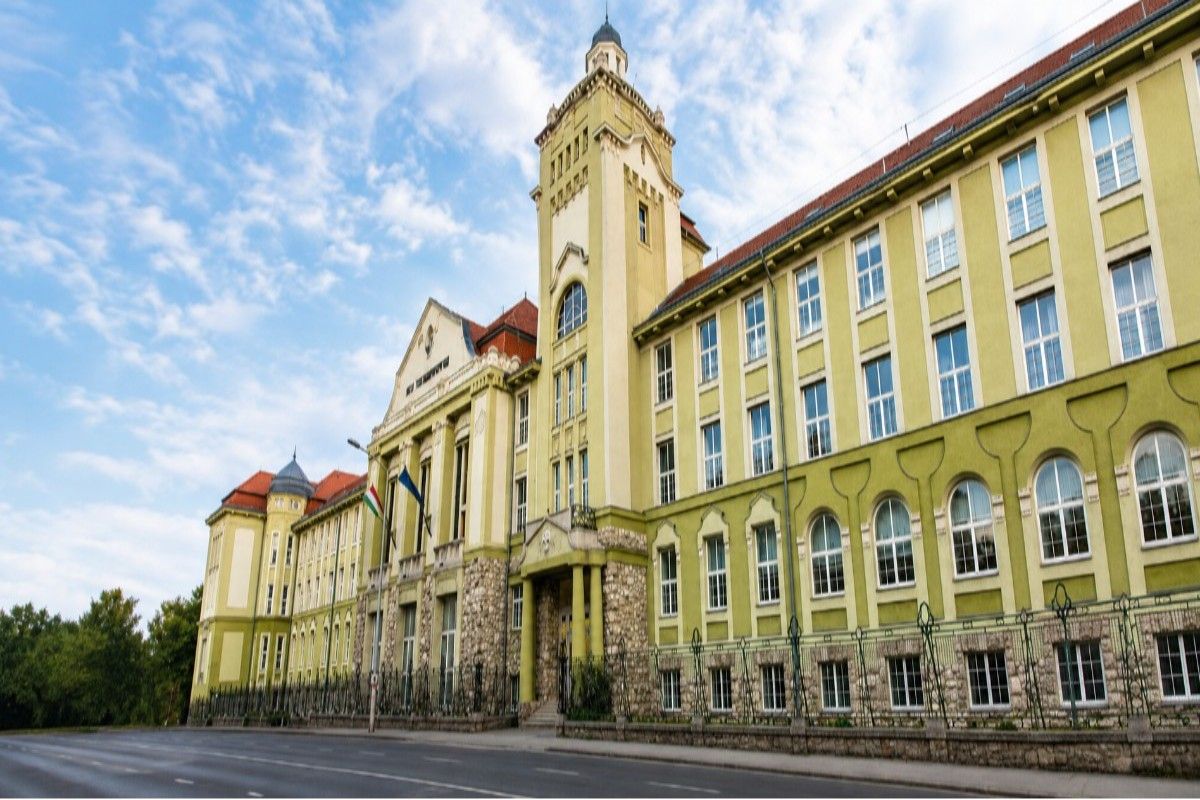
 Hungary | Est. 1367
Hungary | NMC (India); verify current status at nmc.org.in; MAB (Hungarian Accreditation Committee); WFME accredited until 2030; EU Directive 2005/36/EC; WDOMS listed; GMC (UK) recognised; ECFMG eligible (USMLE pathway) | English (full medium from Year 1); German programme also available; no Hungarian required for English-track students medium
Expert will call you within 2 hours
The University of Pécs is the oldest university in Hungary. King Louis the Great founded it in 1367. That makes it one of the oldest continuously operating universities in Central Europe; over 650 years of unbroken academic history. Very few institutions anywhere in the world can say the same.
Teaching stopped during the Ottoman rule of Pécs. It resumed in 1921 when the university re-established itself as a state institution. The Faculty of Medicine has been training doctors ever since. The English-medium medical programme launched in 1984. That makes it one of the earliest English-taught medical programmes in Europe. Today, the Faculty of Medicine hosts around 3,500 students from more than 67 countries.
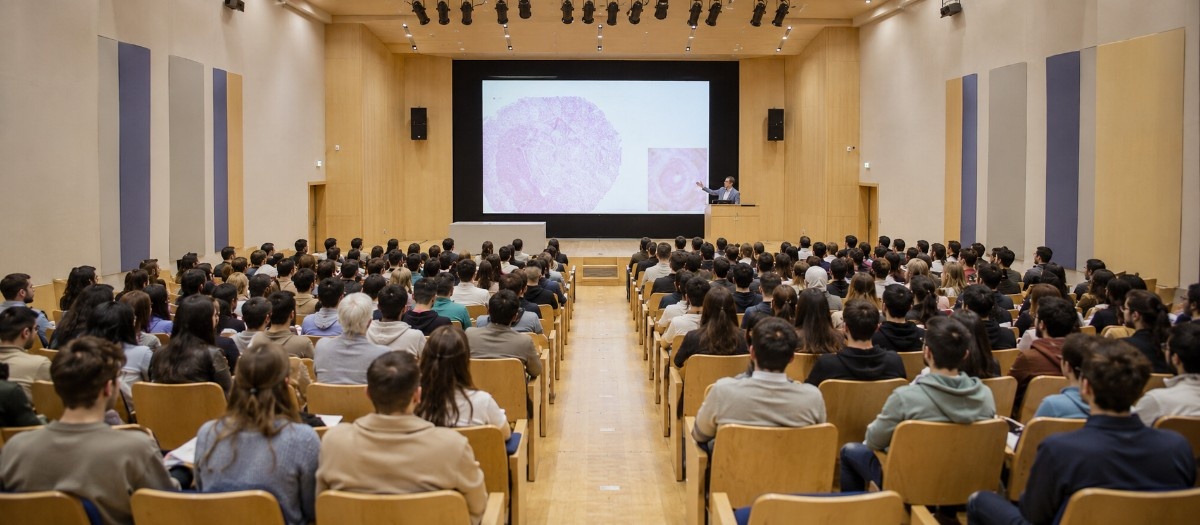
The university itself is one of the largest in Hungary. It has 10 faculties, over 25,000 students, and more than 2,400 teaching and research staff. The Faculty of Medicine is its most prominent unit. It offers General Medicine, Dentistry, Pharmacy, and Nursing. All programmes are available in English. General Medicine and Dentistry are also available in German. For international students, that kind of flexibility is a real advantage.
The clinical training here is built differently. The UP Clinical Centre sits right next to the Faculty of Medicine. It is one of the largest healthcare providers in Hungary. It has 28 clinics and nearly 3,000 staff. It handles complex cases referred from across Southern Hungary and beyond. Students do not travel to a distant hospital for their rotations. They walk across campus into a fully functioning tertiary care centre. That physical closeness matters. It means students are part of real clinical life from the day they begin hospital work.
Clinical exposure does not wait until the final year. The six-year General Medicine programme is divided into clear phases. Years one and two cover the theoretical foundation; anatomy, biochemistry, physiology, and cell biology. Years three and four introduce pre-clinical and core clinical subjects. This includes pathology, pharmacology, and the first supervised patient contact. Years five and six are fully clinical. Students rotate through all major specialties. They work in active wards, clerk patients, and present cases under supervision. The programme ends with a State Board Examination. Students who pass receive the Doctor of Medicine (M.D.) degree. This is equivalent to an MBBS in India and most other countries.
Research is taken seriously here. The Szentágothai Research Centre is the university's hub for advanced scientific and medical research. It supports interdisciplinary work across neuroscience, oncology, and cardiovascular medicine. Students interested in academic medicine can join research projects before they graduate. The Faculty of Medicine runs 22 doctoral schools. It also maintains partnerships with over 700 accredited institutions worldwide.
The university holds WFME accreditation; World Federation for Medical Education; until 2030. This matters for graduates who want to pursue US residency. WFME accreditation combined with ECFMG eligibility keeps that pathway open. The university is also recognised by the NMC of India and the GMC in the UK. It is listed in the World Directory of Medical Schools (WDOMS). The degree complies fully with EU Directive 2005/36/EC. This means graduates can seek medical registration in any of the 27 EU member states. No additional licensing exams are required.
For Indian students, the path is clear. The entire programme is taught in English. There is no language barrier; not in class and not in clinical settings. The NMC of India recognises the University of Pécs. Graduates can sit for the NExT examination after completing the full six-year programme, including the internship in Hungary. The EU-recognised degree also opens the UK pathway via PLAB and the US pathway via ECFMG and USMLE. Most institutions cannot offer all three options. Having them available from a single degree is a genuine and rare advantage.
Pécs is a city worth choosing. It is the fifth largest city in Hungary, with around 143,000 residents. It was named the European Capital of Culture in 2010. In 2017, it received the UNESCO Global Learning City Award. The city carries over 2,000 years of layered history; Roman, Ottoman, and Austro-Hungarian; and that history is visible in every corner of the old town. Pécs is multicultural, compact, and very student-friendly. It is also far more affordable than Budapest or any Western European city. Monthly living costs typically fall between €600 and €800. That covers accommodation, food, transport, and everyday expenses.
The University of Pécs is not the easiest route into medicine. The entrance exam is competitive. The coursework is demanding. The clinical years are intensive. But for students who are ready, it offers something that is genuinely difficult to find anywhere else. It is a full EU medical degree. It is taught entirely in English. It comes from one of Europe's oldest universities. It has a major teaching hospital on campus. And it opens multiple international licensing pathways at the end of six years.
No hidden charges, no donation. The full picture of costs at MBBS in University of Pécs.
Tuition Fee
USD 16,750/year (2025/2026); total 6-year tuition approx. USD 100,500; living costs in Pécs approx. €600–800/month
USD 16,750/year (2025/2026); total 6-year tuition approx. USD 100,500 (approx. ₹
Hostel Fee
64,000 to 94,100 HUF (approx. $170 to $260 USD or €150 to €235) per month
64,000 to 94,100 HUF (approx. $170 to $260 USD or €150 to €235) per month
Food & Meals
€150–250/month; university canteen meals from €2–4 (subsidised); Pécs is one of Hungary's most affordable cities for food and daily expenses
per month
Insurance
€200–400/year; mandatory for student visa in Hungary; basic public healthcare partially accessible to enrolled students
per year
Donation
No donation or capitation fees.
No hidden costs beyond listed tuition, application, and registration fees
Total Estimated Cost
Approx. USD 120,000–140,000 all-inclusive (approx. ₹99 lakh–₹1.16 crore) covering tuition, accommodation, food, insurance, and personal expe
6 Years
25–35%
Average FMGE first-attempt pass rates for students from many overseas medical universities. Students from structured programs consistently score higher.
Students returning to India need to clear the FMGE/NExT exam. MBBS in University of Pécs integrates exam-oriented coaching into the regular curriculum so students are prepared from day one.
A structured program that takes you from foundational sciences to clinical mastery.
Year 1 lays the foundation. Students study anatomy through cadaveric dissection and histology lab work. Medical Biology introduces genetics and how cells function. Biophysics connects physical principles to diagnostic tools. Small group practicals run alongside lectures from the very first semester.
Anatomy I (Gross Anatomy & Histology), Cell Biology, Medical Chemistry I, Biophysics, Medical Biology, Introduction to Medicine
Year 2 goes deeper. Students take a systems-based approach to the human body. Neuroanatomy is taught with surgical relevance. Physiology covers the cardiovascular, respiratory, renal, and endocrine systems. Biochemistry connects molecular biology to how diseases develop. Lab and small group work continue through both semesters.
Anatomy II (Neuroanatomy & Topographic), Physiology I & II, Biochemistry, Medical Chemistry II, Genetics, Immunology I
Year 3 connects science to clinical medicine. Pathology runs across both semesters and links disease mechanisms to real patient presentations. Semiology introduces clinical signs and symptoms through structured patient-encounter sessions. Students begin supervised patient contact for the first time. Evidence-Based Medicine teaches students how to read and assess research critically.
Pathology I & II, Pharmacology I, Microbiology & Immunology II, Epidemiology & Biostatistics, Semiology & Physical Examination, Evidence-Based Medicine
Year 4 is the first full clinical year. Students rotate through the UP Clinical Centre — 28 clinics, nearly 3,000 staff, and a wide range of complex tertiary cases. Work includes ward rounds, patient clerking, case presentations, and structured clinical assessments. The focus is on building clinical reasoning skills under close supervision.
Internal Medicine I, General Surgery I, Obstetrics & Gynaecology I, Paediatrics I, Psychiatry & Mental Health, Diagnostic Radiology
Year 5 widens the scope. Family medicine adds primary care to hospital-based rotations. Emergency medicine training happens in active hospital departments. Students can also take part in research through the Faculty's scientific student programmes during this year.
Internal Medicine II, Surgery II, Family & Community Medicine, Neurology, ENT, Ophthalmology, Dermatology, Orthopaedics & Traumatology, Emergency Medicine
Year 6 is a full supervised clinical clerkship. Students rotate through all core disciplines at UP-affiliated hospitals in Pécs. A State Board Examination is held at the end of the year. Students who pass receive the Doctor of Medicine (M.D.) degree. Indian students must complete the full internship in Hungary before they can sit for the NExT examination in India.
Internal Medicine, Surgery, Obstetrics & Gynaecology, Paediatrics, Psychiatry, Emergency Medicine, Community Medicine, Elective
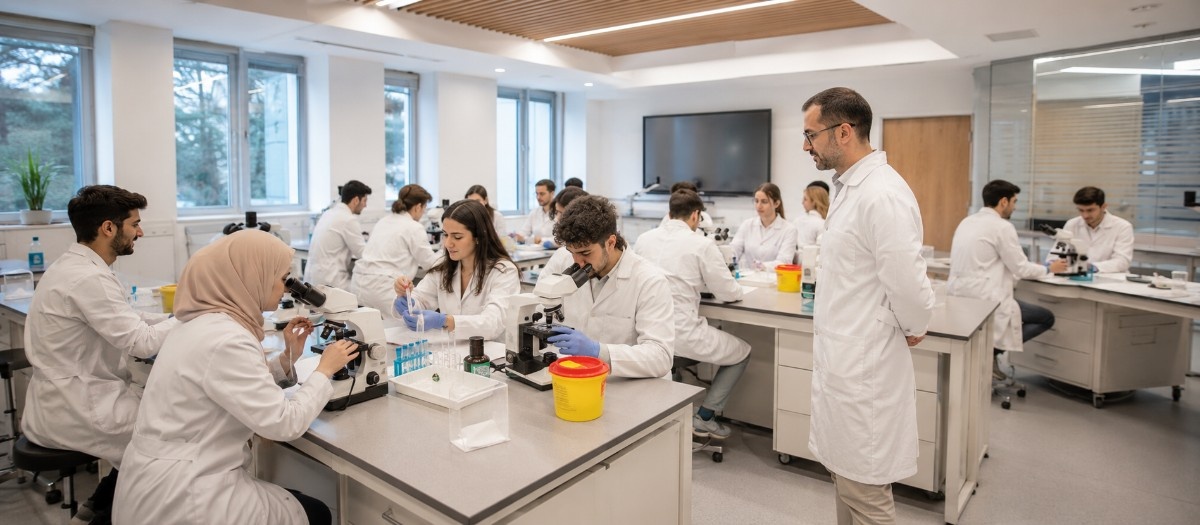
Furnished hostel rooms with Wi-Fi, laundry, 24/7 security, and Indian mess on or near campus.
Indian restaurants and mess facilities serving vegetarian and non-vegetarian home-style food daily.
Strong Indian community with cultural events, festival celebrations, and peer support groups.
Students get hands-on clinical training in government and private hospitals affiliated with the university.
Practical information for students planning to study at MBBS in University of Pécs.
Prepare for all seasons. Thermal wear for winters, light clothing for summers. University provides heating in hostels.
Student visa processed with university invitation letter. Direct and connecting flights from major Indian cities.
Health insurance included in fees. Medical facility on campus plus city hospitals easily accessible.
Local SIM cards available. WhatsApp and video calls keep you connected with family back home.
Average monthly expenses of $150–$250 covering food, transport, and personal needs.
University library, online databases, and study groups. Seniors mentor juniors through academic challenges.
Our team guides you through every step — from application to arriving on campus.
Hungary specialist compares Semmelweis, Pécs, Debrecen, and Szeged FMGE rates, fees, city quality, and entrance requirements. Our most comprehensive EU university comparison.
Full Hungarian admission and visa document package prepared.
AMW provides preparation support for university entrance examinations or interviews.
Direct submission to your selected Hungarian partner. Offer letter typically within 10–14 days.
AMW receives offer, explains terms, manages initial fee payment.
Full visa documentation submitted to the Hungarian Embassy in New Delhi. Begin at least 2 months before departure.
City-specific orientation: Budapest/Pécs/Debrecen logistics, accommodation, thermal baths introduction, transport, banking.
AMW advises on routing to Budapest Ferenc Liszt (BUD), Pécs (closest airport is Budapest or Vienna), or Debrecen (DEB).
AMW's local Hungary team meets you at your arrival airport.
AMW files Temporary Residence Permit at the Hungarian OIF. Managed through to issuance and renewed annually.
Admission Helpline — Contact our counsellors for step-by-step assistance.
“The faculty here is incredibly supportive. The clinical training during hospital rotations has given me real confidence in patient care.”
“Affordable fees without compromising on quality. The campus facilities and hostel life made my transition abroad very smooth.”
“English medium instruction and WHO-recognized curriculum were the deciding factors for me. No regrets so far — excellent experience overall.”
“The university helped with everything from visa to accommodation. Hospital exposure from year three has been invaluable for my FMGE prep.”
“Just cleared my licensing exam on the first attempt. The structured coaching and mock exams during final year were a game-changer.”
“Safe campus, good food options, and a strong Indian student community. The teaching methodology is very practical and hands-on.”
Yes. NEET is not part of the Pécs admissions process. However, Indian students need a valid NEET score to meet NMC requirements and to practise medicine in India after graduation.
Yes. The English-medium General Medicine programme has been running since 1984. All lectures, labs, and clinical sessions are in English. No Hungarian is required at any stage.
The written test has four sections; Biology, Chemistry, General English, and Biomedical English. After the written test, there is a Zoom interview. The interview checks motivation and English communication skills.
Yes. The University of Pécs is recognised by the NMC of India. Graduates who complete the full six-year programme, including the internship in Hungary, can sit for the NExT examination. Always verify current NMC status at nmc.org.in before applying.
The UP Clinical Centre has 28 clinics and nearly 3,000 staff; all on campus. The Szentágothai Research Centre supports advanced medical research. The Medical Simulation Centre is one of the most advanced in Central Europe.
Yes. The GMC recognises the University of Pécs. Graduates can register in the UK via PLAB or the portfolio route. For the US, graduates are ECFMG-eligible. This opens the USMLE pathway and access to US residency programmes. WFME accreditation until 2030 strengthens this pathway further.
Tuition is USD 16,750 per year. Over six years, that totals approximately USD 100,500. Adding living costs in Pécs, the full six-year budget is roughly USD 120,000–140,000 (approx. ₹99 lakh–₹1.16 crore).
Yes. The university has 10 dormitories. Four of them are specifically for international students. Costs start at around €130 per month, including utilities. Private apartments in Pécs are available from around €300 per month.
Supervised patient contact starts in Year 3 through Semiology classes. Full hospital rotations begin in Year 4 at the UP Clinical Centre. Years 5 and 6 are fully clinical and cover all major specialties, including emergency medicine.
For the 2026/2027 intake, the application window opened in November 2025. The deadline is 30 June 2026. Applications go through the university's DreamApply portal. You will need transcripts, a motivation letter, a passport copy, and a CV. The application fee is USD 200 and is non-refundable. Check current deadlines at admissions.medschool.pte.hu.
Our expert counsellors will guide you through the complete admission process — from documents to airport pickup.