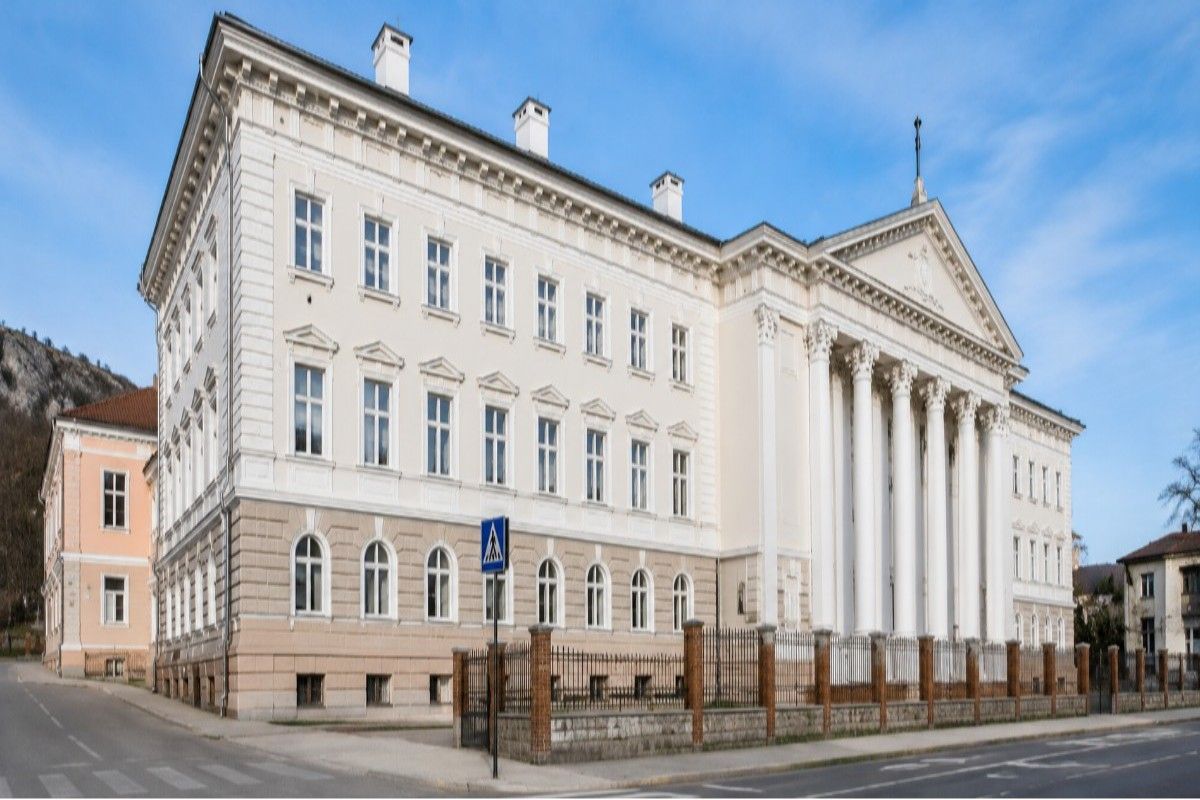
The Faculty of Medicine at the University of Tartu is the oldest and most prestigious medical school in Estonia. It serves as the country's primary centre for medical education, healthcare research, and clinical training. What makes the faculty particularly unique is its long academic history dating back to the seventeenth century and its role as the institution that has educated the majority of Estonia's physicians, dentists, pharmacists, and healthcare specialists.
The University of Tartu was founded on 15 October 1632 by King Gustav II Adolf of Sweden. Originally known as Academia Gustaviana, the university was established while Estonia was under Swedish rule. It became one of the first universities in Northern and Eastern Europe and quickly developed into an important centre for higher learning.
Medicine formed part of the university's academic activities from its earliest years. During the seventeenth and eighteenth centuries, medical education focused on anatomy, physiology, surgery, and the treatment methods available at the time. Although political changes affected the university's operations over the centuries, medical teaching continued to evolve alongside advances in scientific knowledge.
A major milestone occurred in 1802 when Emperor Alexander I of Russia reopened the university as the Imperial University of Dorpat. This marked the beginning of a period of rapid academic growth. The medical faculty expanded significantly, attracting scholars and students from across Europe. New laboratories, clinics, and teaching facilities were established, helping the faculty gain an international reputation.
Throughout the nineteenth century, the Faculty of Medicine became one of the leading medical schools within the Russian Empire. Researchers and physicians associated with the university contributed to important developments in anatomy, pathology, surgery, physiology, and pharmacology. Many scientific discoveries and medical innovations emerged from the university during this period.
The twentieth century brought significant political changes to Estonia. Following Estonian independence in 1918, the university became the national university of Estonia and adopted Estonian as its primary language of instruction. This transition strengthened its role in developing the country's healthcare system and educating future medical professionals.
During the Soviet era, the faculty continued to function as Estonia's principal medical education institution. Research activities expanded, and clinical training infrastructure improved. Following the restoration of Estonian independence in 1991, the university underwent extensive modernisation and strengthened its connections with European and international academic organisations.
Today, the Faculty of Medicine remains Estonia's leading medical education and research institution. It consists of multiple institutes and departments covering medicine, dentistry, pharmacy, sports sciences, rehabilitation, public health, and biomedical sciences. Thousands of students study across undergraduate, postgraduate, and doctoral programmes.
The faculty is organised around modern teaching and research principles. Students receive education that combines scientific knowledge, clinical skills, and practical healthcare experience. Academic staff include physicians, researchers, scientists, and healthcare professionals who contribute to both education and research.
Research is one of the faculty's major strengths. Scientists at the University of Tartu contribute to projects in genetics, personalised medicine, neuroscience, cardiovascular disease, oncology, microbiology, public health, and molecular biology. The university is internationally recognised for its work in genomics and precision medicine, areas that have become increasingly important in modern healthcare.
One of the faculty's most significant achievements is its contribution to Estonia's national biobank. The Estonian Biobank is one of Europe's most advanced population-based genetic research projects. Researchers use this resource to study disease prevention, genetics, and personalised healthcare. This work has attracted international attention and collaboration.
Clinical education is supported by Tartu University Hospital, Estonia's largest healthcare institution and principal teaching hospital. Students gain practical experience across a broad range of specialties including internal medicine, surgery, paediatrics, neurology, cardiology, psychiatry, and emergency medicine. The hospital's close relationship with the university creates a strong connection between teaching, research, and patient care.
The faculty offers internationally recognised medical programmes, including medicine taught in English. This has helped attract students from Europe, Asia, and other regions of the world. The curriculum follows European Union standards and combines theoretical education with extensive clinical training.
Tartu itself is often referred to as Estonia's intellectual capital. With a population of approximately 100,000 people, it is smaller than many European university cities but has a strong academic identity. Nearly one-fifth of the city's population consists of students, creating an environment that is closely linked to education and research.
Student life in Tartu is active and welcoming. The city offers student organisations, academic societies, cultural events, sports clubs, and social activities throughout the year. The compact layout of the city allows students to travel easily between classes, residences, libraries, and recreational facilities.
The cost of living in Tartu is generally lower than in many Western European cities, making it attractive to international students. Public transport, healthcare services, and daily expenses remain relatively affordable compared with larger European capitals.
Accommodation is available through university residences and private housing options. International students receive support through orientation programmes, academic advising, and student services. Indian students have been enrolling at the University of Tartu for several years, and a growing international student community contributes to campus life.
The climate in Tartu is characterised by cold winters and mild summers. Students experience all four seasons, and outdoor activities remain popular throughout the year. The city is well connected to Tallinn and other parts of Estonia through road and rail networks.
What makes the Faculty of Medicine at the University of Tartu truly distinctive is its combination of centuries-old academic tradition, leadership in Estonian healthcare education, internationally recognised genetics research, and access to one of Europe's most advanced population biobanks. These strengths have helped establish the faculty as one of the most respected medical education institutions in the Baltic region.