Q1 Is Polish required to study at MUW?
+The six-year MD course runs fully in English, through the English Division. You do not need Polish to get in. That said, many students pick up some Polish for their clinical years
 Poland | Est. 1809
Poland | Polish Accreditation Committee (PKA); EU Professional Qualifications Directive 2005/36/EC (via Poland's EU membership); WDOMS listed; NMC (India) - verify current status directly at nmc.org.in | English (full medium of instruction, English Division); no formal Polish language requirement for entry medium
Expert will call you within 2 hours
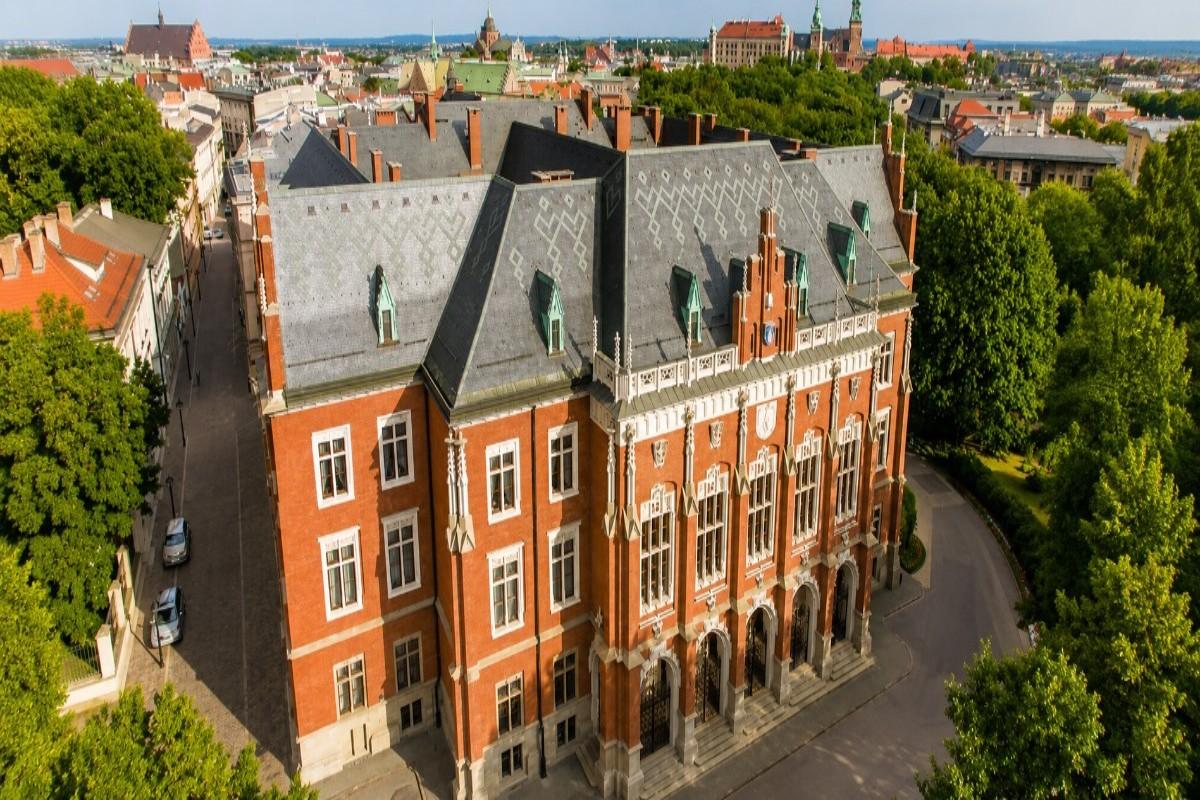
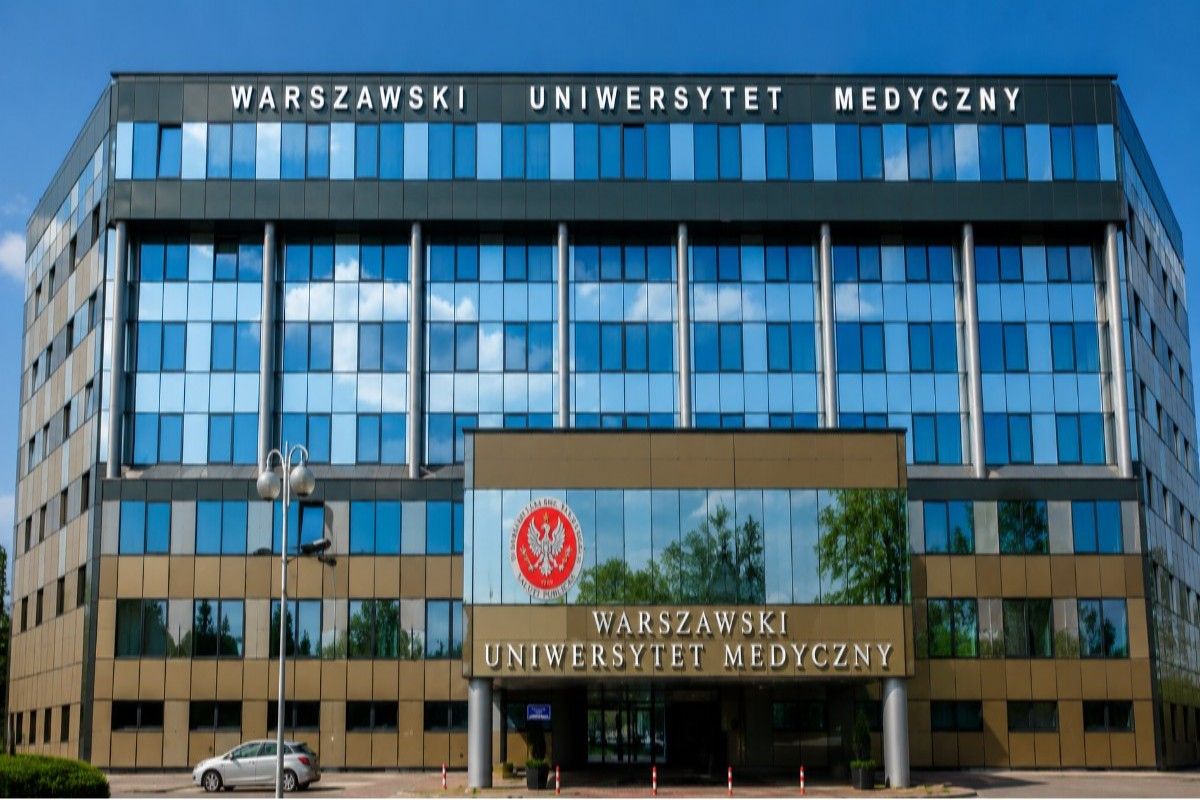
MUW, also known as WUM, is one of Poland's oldest medical schools. Its story starts in 1809. That year, a small group of doctors and a pharmacy assessor set up the Academic-Medical Faculty in Warsaw. Over the next two centuries, the school changed shape and name many times. It became its own independent medical university in 1949. It took its current name, the Medical University of Warsaw, in 2008. This long history places MUW among a small group of long-running European medical schools. That history still shows today, in its hospital network, its research, and its size. MUW now has close to 10,000 students. It has over 2,000 academic staff across its faculties.
Clinical training at MUW does not happen at one single hospital. Instead, it runs through a wide network of hospitals across Warsaw. Students rotate through six university clinical hospitals. They also train at several other affiliated hospitals in the city. This gives students a large and varied group of patients to learn from. Warsaw is one of Central Europe's biggest cities, so this matters. This spread-out hospital model sets MUW apart from schools built around just one teaching hospital. It means students see more departments and more specialities across their clinical years.
MUW's academic standing in Poland is strong. It is often ranked among the top two or three medical universities in the country. In the QS World University Rankings by Subject for Medicine, it has placed in the 401–450 band in recent years. That puts MUW among the higher-ranked Polish schools for this subject. Jagiellonian University is the only Polish school ranked higher for medicine. MUW is a member of the European University Association, or EUA. It also runs research projects with schools across Europe and beyond. Its research covers oncology, heart disease, immunology, and public health. Its staff publish widely in international journals.
The six-year MD course runs through what MUW calls its English Division. It is taught fully in English from day one. There is no Polish language test needed to get in or to graduate. Still, picking up some everyday Polish helps a lot with patients during clinical years. The course follows the same Bologna-style structure used across Polish medical schools. The first three years are pre-clinical. They cover core biomedical science. Years four through six are clinical. The last year is a full, supervised internship. This English-medium path has run at MUW since 1993. That is the year MUW first opened an English track for international students. It has since grown into one of Poland's most established English-taught medical courses. It now draws students from dozens of countries.
Campus life at MUW is spread across a few sites in Warsaw, rather than one closed-off campus. The university runs a Medical Simulation Centre. Here, students practise clinical skills on models and mannequins before they work with real patients. This helps build confidence early, in a safe setting. MUW also has a large library, with hundreds of thousands of books and journal titles, plus reading rooms for quiet study. For housing, the university offers close to 700 places across several student dormitories, spread over a few Warsaw neighbourhoods. Most dorm rooms are shared, with kitchens and common areas on each floor. Many international students choose private rentals instead, especially in later years. Student life beyond class includes sports clubs, a swimming pool, a student choir and orchestra, and over 200 student research clubs. Warsaw is also known as one of the safer capital cities in Europe, which matters a lot to families sending a child abroad for six years.
For Indian students, MUW is a well-known and long-running choice among Polish medical schools. It offers real strengths: a long history, an EU-recognised degree, and a large hospital network in a major European capital. But one rule applies here just as it does everywhere else. The NMC does not keep one fixed, permanent list of approved schools. Recognition status can shift as rules change. So applicants must check MUW's current NMC status themselves, on the official site, nmc.org.in, before they apply. Do not trust third-party claims of guaranteed recognition. Tuition for the English-medium MD course sits close to other established Polish medical schools. The official rate for the linked English-division Faculty of Medicine and Dentistry courses, for the 2025/2026 year, is 19,400 EUR per year. MUW's Rector reviews this rate each year. Warsaw, as Poland's capital, costs more to live in than smaller Polish cities. Even so, it stays far cheaper than cities like London or Amsterdam. It also has strong public transport and a large, established community of international students.
Getting into MUW is not simple, and it should not be treated as a back-up option. Seats on the English Division are limited each year, and demand from international students is high. Most applicants sit MUW's own competency test, which covers Biology, Chemistry, and Physics. Some applicants can submit scores from other recognised tests instead, such as the UCAT or BMAT, but this needs sign-off from the Admissions Board first, before the candidate even sets up their online application. Indian applicants also need a valid NEET-UG score, since this is a fixed NMC requirement and cannot be skipped. Documents typically go through a mix of online submission and physical verification, and timelines can run tight around the application window each spring. Because of this, most Indian families start preparing documents and test registration well ahead of the formal deadline, rather than waiting until the last few weeks.
No hidden charges, no donation. The full picture of costs at MBBS In Medical University of Warsaw.
Tuition Fee
19,400 EUR (2025/2026 intake; reviewed annually)
19,400 EUR per year (2025/2026 intake, per the university's Rector's Order)
Hostel Fee
150–250 EUR/month (shared apartment); higher for private studio; university dormitories cheapest where available
150–250 EUR/month (shared apartment); higher for private studio
Food & Meals
150–200 EUR
Per Month
Insurance
150–300 EUR
per Year
Donation
No donation
No hidden charges
Total Estimated Cost
Approx. 145,000–160,000 EUR all-inclusive
6 Year
25–35%
Average FMGE first-attempt pass rates for students from many overseas medical universities. Students from structured programs consistently score higher.
Students returning to India need to clear the FMGE/NExT exam. MBBS In Medical University of Warsaw integrates exam-oriented coaching into the regular curriculum so students are prepared from day one.
A structured program that takes you from foundational sciences to clinical mastery.
This first year builds the basics. It covers body structure and how the body works. Students learn anatomy through real lab work, including dissection. They also study histology alongside it. Medical ethics starts early too. This fits MUW's focus on training good doctors, not just skilled ones.
Anatomy I (Gross Anatomy & Histology), Biochemistry I, Cell Biology, Medical Physiology I, Introduction to Medicine & Medical Ethics, Biophysics
This year moves into body systems and disease. Students study the brain and nerves in more depth. This sets them up for clinical work later. Genetics and microbiology lay the groundwork too. These topics help students later understand inherited illness and infection.
Anatomy II (Neuroanatomy & Topographic), Physiology II (Systems), Biochemistry II, Genetics, Microbiology & Immunology I, Introduction to Pathology
This is the bridge year. It links basic science to real clinical work. Students learn semiology, the study of symptoms and signs. They also start working with real patients, under supervision.
General Pathology, Pharmacology I & II, Microbiology & Immunology II, Epidemiology & Biostatistics, Semiology & Physical Examination, Evidence-Based Medicine, Research Methods
This is the first full clinical year. Students rotate through MUW's hospitals across Warsaw, under supervision. They join ward rounds. They take patient histories. They present cases. This builds the core skills doctors use every day.
Internal Medicine I, General Surgery I, Obstetrics & Gynaecology I, Paediatrics I, Psychiatry & Mental Health, Radiology & Imaging
Students now cover more specialities. Family medicine introduces primary care settings. Many students also start research or dissertation work this year, alongside their hospital rotations
Internal Medicine II, Surgery II, Family & Community Medicine, Neurology, ENT, Ophthalmology, Dermatology, Orthopaedics & Trauma, Emergency Medicine
The final year is one full internship. It covers every core discipline, under close supervision. This is where students bring everything together before graduation. Indian students should note one thing: this internship must happen in Poland. The NMC checks that this internship is complete before it confirms NExT eligibility back in India.
Comprehensive supervised internship - Internal Medicine, Surgery, O&G, Paediatrics, Psychiatry, Emergency Medicine, Community Medicine, Elective
Furnished hostel rooms with Wi-Fi, laundry, 24/7 security, and Indian mess on or near campus.
Indian restaurants and mess facilities serving vegetarian and non-vegetarian home-style food daily.
Strong Indian community with cultural events, festival celebrations, and peer support groups.
Students get hands-on clinical training in government and private hospitals affiliated with the university.
Practical information for students planning to study at MBBS In Medical University of Warsaw.
Prepare for all seasons. Thermal wear for winters, light clothing for summers. University provides heating in hostels.
Student visa processed with university invitation letter. Direct and connecting flights from major Indian cities.
Health insurance included in fees. Medical facility on campus plus city hospitals easily accessible.
Local SIM cards available. WhatsApp and video calls keep you connected with family back home.
Average monthly expenses of $150–$250 covering food, transport, and personal needs.
University library, online databases, and study groups. Seniors mentor juniors through academic challenges.
Our team guides you through every step — from application to arriving on campus.
Poland specialist compares Warsaw, Krakow, Wroclaw, Poznan, Lublin, and Gdansk, university quality, FMGE rates, city life, and total cost per university.
Full Poland admission and visa document package prepared — translations arranged where required.
Direct submission to your chosen Polish medical university. Offer letter typically within 10–14 working days.
Our team receives the offer, explains the acceptance terms, and advises on the initial fee payment.
Full visa documentation prepared and submitted to the Polish Consulate (Mumbai) or Polish Embassy (New Delhi). Begin at least 3 months before departure.
City-specific orientation, accommodation setup, Polish transport, banking, SIM card, campus layout, and first-week logistics.
We advise on routing to Warsaw Chopin (WAW), Krakow (KRK), Wroclaw (WRO), or other airports in other cities. Confirms arrival with the local team.
Our local Poland coordinator meets you at your arrival airport.
Hostel check-in and university registration handled by AMW's local team during your first week.
We file your Temporary Residence Card application at the Voivodeship Office. Managed through to card collection and renewed annually.
Admission Helpline — Contact our counsellors for step-by-step assistance.
“The faculty here is incredibly supportive. The clinical training during hospital rotations has given me real confidence in patient care.”
“Affordable fees without compromising on quality. The campus facilities and hostel life made my transition abroad very smooth.”
“English medium instruction and WHO-recognized curriculum were the deciding factors for me. No regrets so far — excellent experience overall.”
“The university helped with everything from visa to accommodation. Hospital exposure from year three has been invaluable for my FMGE prep.”
“Just cleared my licensing exam on the first attempt. The structured coaching and mock exams during final year were a game-changer.”
“Safe campus, good food options, and a strong Indian student community. The teaching methodology is very practical and hands-on.”
The six-year MD course runs fully in English, through the English Division. You do not need Polish to get in. That said, many students pick up some Polish for their clinical years
Check this yourself first. Do not assume it. The NMC does not keep one fixed, permanent list. Status can change. Check MUW's current standing at nmc.org.in before you apply.
The official rate is 19,400 EUR per year for the 2025/2026 intake. This comes from the university's own Rector's Order. The rate is reviewed each year, so confirm directly with MUW for future intakes
Yes. You need a valid NEET-UG score under current NMC rules. You also need strong 10+2 grades in Physics, Chemistry, and Biology
Yes. Poland is a full EU member and part of the Schengen Area. This means the degree gets automatic recognition across EU states, under the Professional Qualifications Directive
Most students sit MUW's own competency test. Some recognised test scores, like UCAT, BMAT, MCAT, GAMSAT, or HPAT, may be accepted instead. This needs sign-off from the Admissions Board first.
Students train across six university clinical hospitals. They also use several other affiliated hospitals in Warsaw. This means a broad mix of patients, not just one hospital's caseload
Yes. Past the automatic EU recognition, graduates can usually go for ECFMG certification. That opens the path to the USMLE in the US. A UK path through the GMC is also open, via PLAB or the portfolio route.
Check this directly with the NMC. The internship itself happens in Poland, as part of the degree. Students should confirm NMC's rules on this themselves, rather than assume it is enough on its own.
Students apply through MUW's Online Registration System. They pay the application fee, then send in academic documents and ID. Once they get an offer, they pay a confirmation fee. After that, they move on to visa steps.
Our expert counsellors will guide you through the complete admission process — from documents to airport pickup.