
Q1. Can Indian students apply to Atatürk University's medicine programme straight after high school?
+Yes. This is a direct-entry, six-year MD, taught in English, with no requirement to hold a prior bachelor's degree.
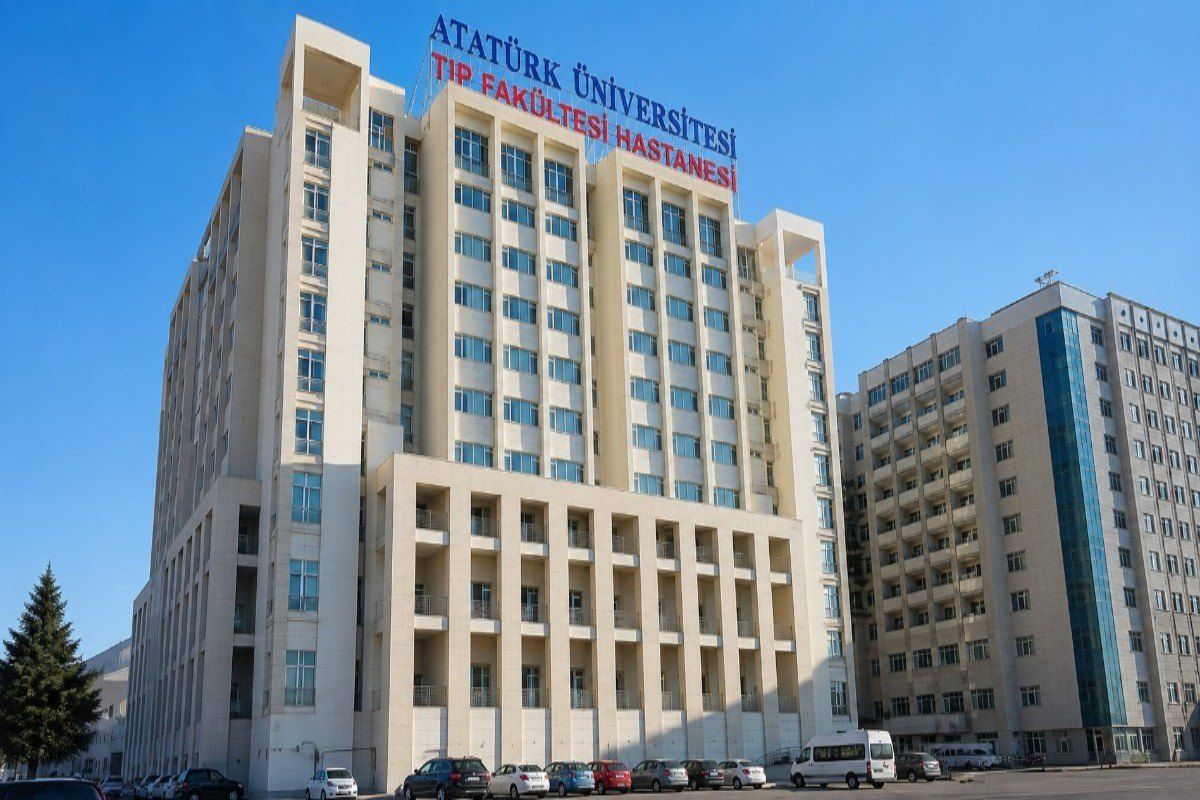
 Turkey | Est. 1957
Turkey | Regulated under Turkey's Council of Higher Education (YÖK); Turkish medical faculties are generally listed in the World Directory of Medical Schools (WDOMS). | English medium
Expert will call you within 2 hours
Most people just call it Atatürk University, after the university's namesake, Mustafa Kemal Atatürk, who first called for a major university in Eastern Anatolia in a 1937 speech to the Grand National Assembly. That vision took twenty years to reach the statute books: the university was officially founded by law on 7 June 1957, built in partnership with the University of Nebraska under a land-grant model, and sited in Erzurum, one of the largest cities in Eastern Anatolia. Unlike Bahçeşehir University in Istanbul, Atatürk University is a public institution, and it has grown into one of Turkey's largest, spanning 23 faculties, 18 colleges, 8 institutes and around 30 research centres, with roughly 90,000 students across the wider university.
The Faculty of Medicine dates back to 1962, one of the university's earliest additions, and it sits inside a genuinely large regional healthcare footprint. The university's own teaching hospital, Atatürk University Research Hospital, has been running since January 1978 and now serves an estimated 4.5 million people across 12 provinces of Eastern Anatolia, including Erzurum, Kars, Ağrı, Ardahan, Artvin, Erzincan and Bayburt. Erzurum itself has since added the separate, government-built Erzurum City Hospital, a roughly 1,600-bed complex that opened in 2021 and ranks among the largest hospital campuses in the country. Between the two, students training here sit inside one of the more genuinely vast concentrations of hospital capacity anywhere in Turkey, a direct product of the region's historic shortage of specialist care rather than a marketing exercise.
Here is the detail that shapes how an Indian applicant should read the rest of this page. Atatürk University's own International Affairs Office confirms that most of its departments teach in Turkish, and that the Faculty of Medicine is one of only a small handful taught in English, alongside a partially English-taught Electrical and Electronic Engineering department. So this is a direct-entry, six-year MD, taught in English, at a public Turkish university, rather than the graduate-entry model used by the UK schools covered elsewhere on this site. A student can apply straight after finishing class 12 in India, without first completing a separate bachelor's degree.
Admission is gated by an actual entrance exam, not simply a high school transcript. Atatürk University runs its own ATAYÖS exam, and also accepts TR-YÖS results and a defined list of recognised international exams such as SAT or the German Abitur. Crucially, the university's own admissions rules explicitly exclude the Faculty of Medicine, along with Dentistry, Pharmacy and Law, from the simpler diploma-score-only placement routes open to less competitive faculties. In other words, Medicine cannot be entered through GPA alone the way some other departments can; a real entrance exam score is required.
Cost is where Atatürk University genuinely differs from the private Istanbul universities covered elsewhere on this site. As a public university, its published international tuition fees have historically started from as little as 1,000 US dollars a year in general terms, and independent trackers place typical Turkish public-university Medicine fees in the 6,000 to 11,000 US dollar range annually, a fraction of the roughly 28,000 US dollars a year charged at Bahçeşehir. That said, a handful of international education agent sites quote a much higher figure, around 25,000 US dollars a year, for Atatürk Medicine specifically, a figure that sits at odds with typical Turkish public-university pricing and has not been verified against the university's own published fee schedule. Given this real discrepancy in publicly available sources, any applicant should treat the numbers on this page as a starting range and confirm the exact current fee directly with Atatürk University's own admissions office before applying.
Life in Erzurum is also a genuinely different proposition from Istanbul. It is a historic, high-altitude city with a cold climate, a smaller international student community than Turkey's major private universities attract, and noticeably lower living costs, a trade-off that can appeal to students who prioritise affordability and a large clinical caseload over big-city amenities.
Cost Item | Amount | Notes |
Tuition Fee (International, typical public-university range) | approx. USD 6,000-11,000/year | Independent trackers place most Turkish public-university Medicine fees in this band, well below private Istanbul universities |
Tuition Fee (International, per some agent listings) | approx. USD 25,000/year | Quoted by a handful of study-abroad agent sites; this figure sits well above typical public-university pricing and is unverified against Atatürk University's own published schedule |
General University-Wide Baseline Fee | from approx. USD 1,000/year | Lower-cost non-medical departments; Medicine, Dentistry, Pharmacy and Law are priced and admitted separately |
Living Costs | approx. USD 3,000-5,000/year | Erzurum has a notably lower cost of living than Istanbul or Ankara |
Approximate Total Tuition (International, full 6-year MD, low estimate) | USD 36,000-66,000 | Based on the USD 6,000-11,000/year public-university range, held flat; real figures will vary with annual fee revisions |
Note: given the wide spread between sources, treat every figure above as indicative rather than final, and request a written fee confirmation from Atatürk University's own International Affairs Office before committing to an application.
Most Turkey-focused MBBS-abroad guides either lump Atatürk University in with generic 'study medicine in Turkey' listings, or repeat a single agent-supplied fee figure without flagging how far it sits from typical public-university pricing. Neither approach helps an applicant weigh this option honestly.
The clearest point in Atatürk University's favour is structural, not promotional: unlike the UK's graduate-entry schools covered elsewhere on this site, this is a direct-entry, English-taught MD open straight after high school, at public-university pricing rather than private international rates. That combination, direct entry plus English medium plus public-university cost, is genuinely uncommon in Turkey, where most public medical faculties outside a handful of English-track exceptions teach in Turkish.
Guides also tend to skate past the entrance exam requirement. Because Medicine, Dentistry, Pharmacy and Law are deliberately excluded from Atatürk University's simpler diploma-score-only placement routes, a strong high school GPA alone will not secure a place. Applicants need a genuine ATAYÖS, TR-YÖS, or accepted equivalent international exam result, and should prepare for that exam specifically rather than assuming general academic strength will carry them through.
Finally, the fee discrepancy deserves to be stated plainly rather than buried in a footnote. Some agent sites quote a Medicine fee close to what a private Istanbul university would charge, roughly 25,000 US dollars a year, while independent trackers and the university's own general fee structure suggest public-university Medicine in Turkey typically runs closer to 6,000 to 11,000 US dollars a year. That is a large enough gap to change a family's entire budget planning, and it is exactly the kind of detail a quick comparison table tends to smooth over rather than flag.
No hidden charges, no donation. The full picture of costs at MBBS in Ataturk University Faculty of Medicine.
Tuition Fee
USD 6,000-11,000/year
USD $5,600 – $11,000 per year ( INR: ₹4,70,000 – ₹9,20,000 )
Hostel Fee
3,000 TL to 7,000 TL per month
3,000 TL to 7,000 TL per month
Food & Meals
37 TL to 50 TL per meal
per meal
Insurance
USD $3,20 – $4,00 ( INR: ₹ 30699.36 – ₹38374.20 )
per year
Donation
No Donation
No hidden fee
Total Estimated Cost
roughly USD 36,000-66,000 in tuition alone,
6 year
25–35%
Average FMGE first-attempt pass rates for students from many overseas medical universities. Students from structured programs consistently score higher.
Students returning to India need to clear the FMGE/NExT exam. MBBS in Ataturk University Faculty of Medicine integrates exam-oriented coaching into the regular curriculum so students are prepared from day one.
A structured program that takes you from foundational sciences to clinical mastery.
• In addition, early coursework introduces clinical skills and terminology ahead of hospital-based training.
• First, students work through foundational biomedical sciences, delivered in English, building the base for later clinical study.
• Furthermore, the breadth and volume of cases across a 12-province referral region gives students exposure to a wide range of specialities and patient presentations.
• Next, clinical rotations draw on Atatürk University Research Hospital, which has served the wider Eastern Anatolia region since 1978, alongside access to the large-scale capacity of the newer Erzurum City Hospital complex.
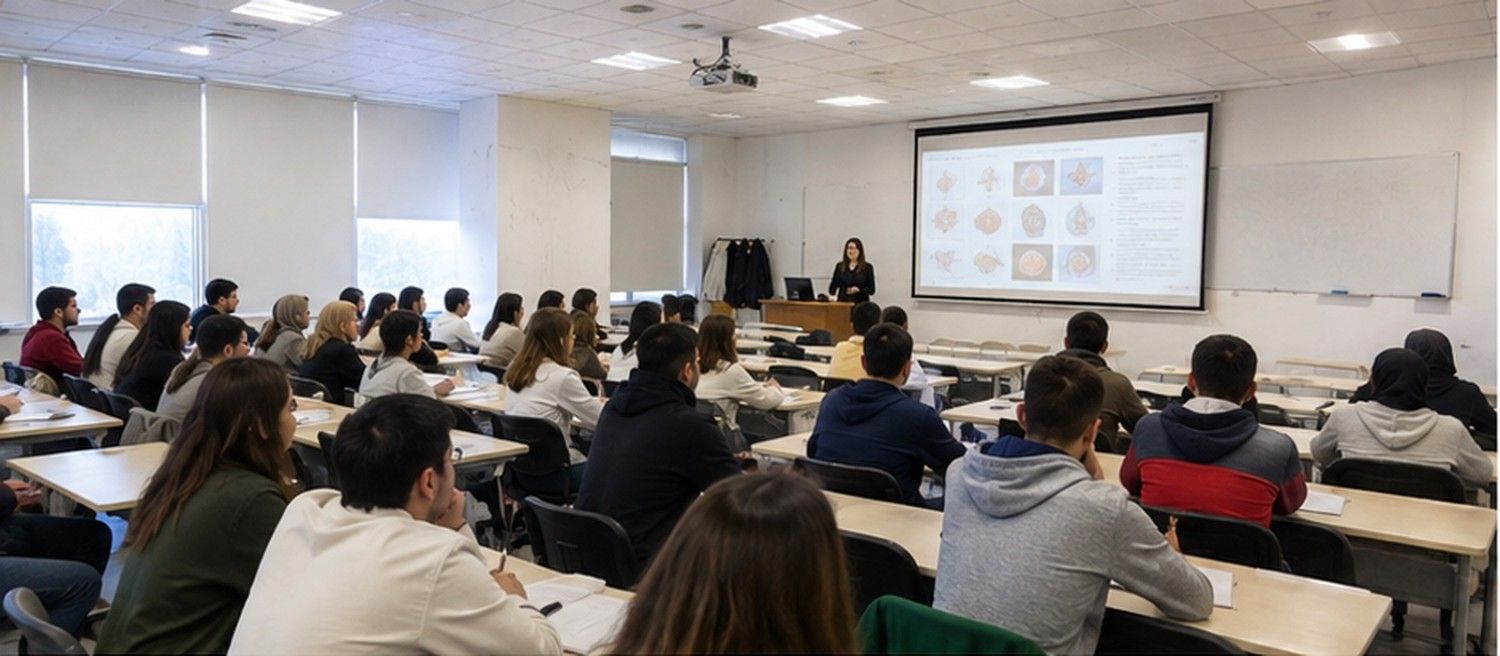
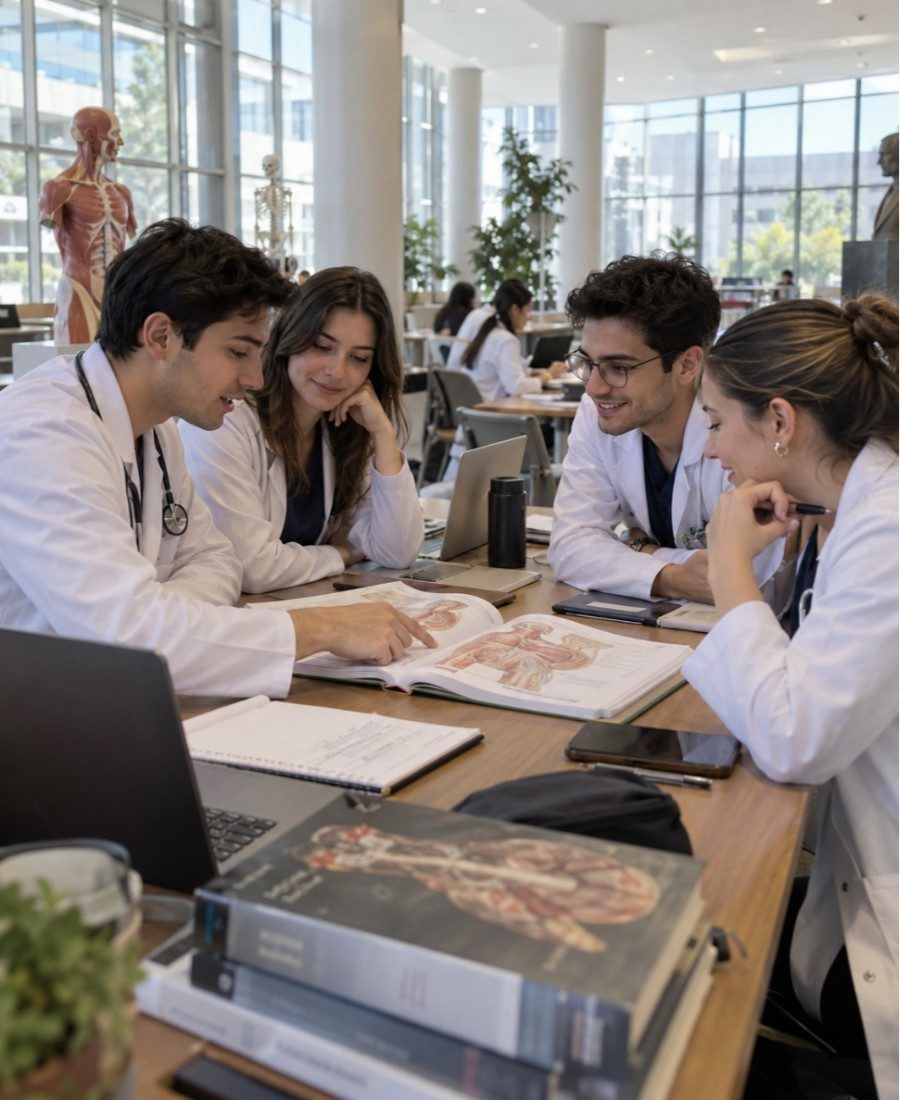
Furnished hostel rooms with Wi-Fi, laundry, 24/7 security, and Indian mess on or near campus.
Indian restaurants and mess facilities serving vegetarian and non-vegetarian home-style food daily.
Strong Indian community with cultural events, festival celebrations, and peer support groups.
Students get hands-on clinical training in government and private hospitals affiliated with the university.
Practical information for students planning to study at MBBS in Ataturk University Faculty of Medicine.
Prepare for all seasons. Thermal wear for winters, light clothing for summers. University provides heating in hostels.
Student visa processed with university invitation letter. Direct and connecting flights from major Indian cities.
Health insurance included in fees. Medical facility on campus plus city hospitals easily accessible.
Local SIM cards available. WhatsApp and video calls keep you connected with family back home.
Average monthly expenses of $150–$250 covering food, transport, and personal needs.
University library, online databases, and study groups. Seniors mentor juniors through academic challenges.
Our team guides you through every step — from application to arriving on campus.
Share your NEET score, academic record, and budget. Our Turkey specialist provides an honest assessment comparing Turkey with Georgia, Armenia, and Russia and, within Turkey, identifies the right university based on NMC recognition status, clinical quality, preferred city, and total cost. NMC status verification is the first step for every Turkey recommendation.
AMW submits your application to the selected university with all required documents. Most Turkish private medical universities for English-medium programmes do not require a separate university entrance exam beyond NEET, though some require YÖS. AMW advises on this for each specific university. Offer letters are typically issued within 2–4 weeks.
AMW assists with your Turkish student visa application a straightforward process for Indian nationals. Required documents include a university acceptance letter, financial means documentation, health insurance, and a biometric appointment at the Turkish Embassy in India. Processing typically takes 3–6 weeks.
AMW coordinates travel planning and arranges airport pickup in Istanbul or Ankara. Our local Turkey representative handles hostel check-in, university registration, and city orientation. Support continues throughout the first month.
Admission Helpline — Contact our counsellors for step-by-step assistance.
“The faculty here is incredibly supportive. The clinical training during hospital rotations has given me real confidence in patient care.”
“Affordable fees without compromising on quality. The campus facilities and hostel life made my transition abroad very smooth.”
“English medium instruction and WHO-recognized curriculum were the deciding factors for me. No regrets so far — excellent experience overall.”
“The university helped with everything from visa to accommodation. Hospital exposure from year three has been invaluable for my FMGE prep.”
“Just cleared my licensing exam on the first attempt. The structured coaching and mock exams during final year were a game-changer.”
“Safe campus, good food options, and a strong Indian student community. The teaching methodology is very practical and hands-on.”
Yes. This is a direct-entry, six-year MD, taught in English, with no requirement to hold a prior bachelor's degree.
Atatürk University itself does not ask for a NEET score in its admissions process. However, Indian regulations still require a valid NEET qualification for any medical degree studied abroad.
Independent trackers put typical public-university Medicine fees in Turkey at roughly USD 6,000 to 11,000 a year, which would put a six-year course at somewhere between USD 36,000 and 66,000 in tuition. Some agent sites quote a much higher figure near USD 25,000 a year, so applicants should confirm the exact current fee directly with the university.
Yes. The university's own International Affairs Office confirms the Faculty of Medicine is one of the few departments taught fully in English, while most other departments at the university teach in Turkish.
Applicants need a genuine entrance exam result, either Atatürk University's own ATAYÖS exam, a TR-YÖS score, or an accepted equivalent international exam such as SAT or the Abitur. A strong GPA alone is not sufficient, since Medicine is excluded from the university's simplified diploma-score-only placement routes.
Six years in total, moving from preclinical biomedical sciences in the early years, taught in English, through to clinical rotations across Atatürk University Research Hospital and the wider Erzurum hospital network.
Students train across Atatürk University Research Hospital, which has served the region since 1978 and covers an estimated 4.5 million people across 12 provinces, alongside proximity to the large, newer Erzurum City Hospital complex.
It placed in the #1201-1400 band of the QS World University Rankings 2027, and in the 1001+ band of the Times Higher Education World University Rankings.
Turkish MD degrees are generally accepted for India's FMGE or NExT licensing route, but recognition rules can change, so applicants should independently confirm current status with India's National Medical Commission before enrolling.
Yes. It is a direct-entry route open straight after high school, at public-university pricing well below Turkey's private universities, provided the applicant can clear the required entrance exam and independently confirm the current tuition fee and NMC recognition status before applying.
Our expert counsellors will guide you through the complete admission process — from documents to airport pickup.