
Q1 Is Medicine at UB taught in English?
+No, it's taught mainly in Catalan with Spanish also used throughout; only a limited number of courses include English, so strong Catalan or Spanish is essential before starting.
 Spain | Est. 1451
Spain | NMC (India); verify current status at nmc.org.in; ANECA (Spain's national quality assurance agency); EU Professional Qualifications Directive 2005/36/EC; WDOMS listed; member, European University Association (EUA) and LERU | Catalan (primary medium of instruction); Spanish also used throughout; limited English in select courses medium
Expert will call you within 2 hours
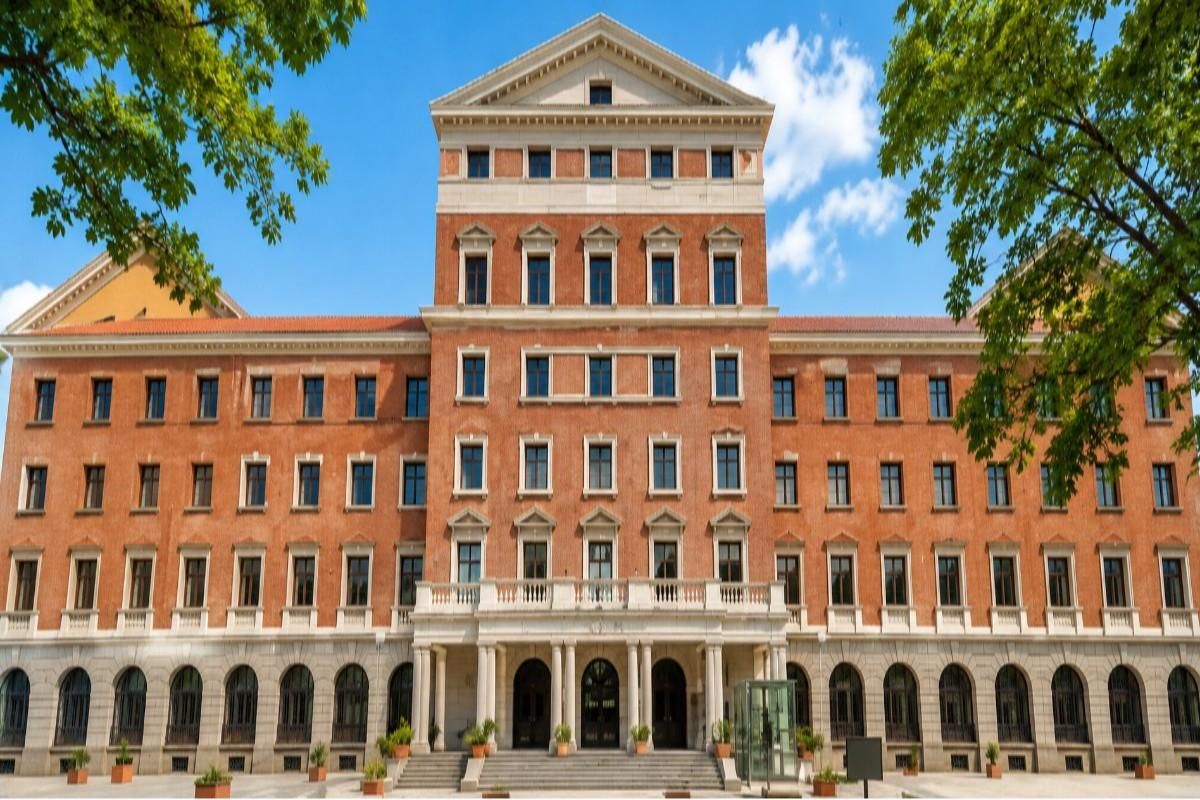
If you walk through the old town of Barcelona, you'll find a university that's been training doctors and scholars since before Columbus sailed. The University of Barcelona was founded in 1450. That makes it one of the oldest universities anywhere in Europe. Its Faculty of Medicine has been part of that long history for well over a hundred years. It has trained class after class of doctors. Many went on to work across Spain and beyond. This isn't a school chasing a fresh name. It's one built slowly, over a long time. That kind of depth only comes from real time.
Today, the numbers tell their own story. UB has nearly 63,000 students. They're spread across four campuses and sixteen schools. Among Spanish schools, UB usually comes out on top for Medicine. In the QS World Rankings by Subject, UB's Medicine course sits inside the global top 50. The school as a whole often lands in the world's top 150 to 200 overall. It's also the most-ranked Spanish school across subject areas. That says a lot about how strong the place really is. It isn't just one or two top departments carrying the rest.
Here's something worth knowing, though, before going further. Medicine at UB is taught mainly in Catalan. Spanish gets used a lot too. A small bit of English shows up in select courses. This is quite different from English-medium courses you might find elsewhere in Europe. If you're from India and your only language is English, you face a real climb first. Lectures won't make sense right away. Most Indian students who pick this path spend real time on language prep. Often that means a full year before first-year classes even begin. That step is the single biggest hurdle between someone and a UB medical degree. It's worth being honest about that upfront.
The actual medical training runs across three campuses. That's a bit different from some other European schools. The Casanova Campus sits right next to Hospital Clínic de Barcelona. This is one of the most respected hospitals in the whole country. Newsweek named it among the best hospitals in the world. It's been named one of Spain's top twenty hospitals more than once. The Bellvitge Campus sits inside Bellvitge University Hospital itself. This is a large, complex hospital. It handles tough cases across nearly every field. There's also a third site, the Sant Joan de Déu Campus. It's based at a children's hospital well known across Catalonia for child care. Students rotate through all this real hospital work. They don't rely on just one building.
On the money side, Spain works differently from most other study spots in Europe. This matters a lot for planning ahead. Public schools in Catalonia, including UB, charge by the credit. They don't use one flat yearly number. Non-EU students pay a higher rate per credit than EU students do. The exact number can shift a bit from year to year. That's because the local government sets it fresh every year. Based on the latest rates, non-EU studentscan expect to pay between €2,500 and €3,000 a year for a full Medicine load. Medicine can sit a bit higher than other courses. That's due to its lab and clinical work. Even so, this costs less than many private European medical schools. That holds true even after you add in the language prep most Indian students will need first.
Living in Barcelona brings its own value too. It's a real, major European city. That means a solid public transport system, a huge student crowd, beaches close to campus, and a busy cultural calendar all year. By Western European standards, it's also a fairly easy and fair-priced place to spend six years. That's especially true next to cities like London, Paris, or even parts of Madrid.
For Indian students weighing this against other options, UB sits in its own spot. It isn't a budget-first pick the way some Eastern European schools are. It also isn't chasing international students the way English-medium courses often do. What it offers instead is real academic weight. That means a top-50-in-the-world Medicine rank, centuries of school history, and direct access to some of Spain's most respected hospitals. The tradeoff is real, though. You need real commitment to learning Catalan and Spanish before you can properly start. The fee setup also takes more digging to grasp than one flat number would.
So who does this actually suit? Probably not someone hunting for the fastest, simplest English-medium path into a medical degree. But for a student truly willing to spend a year or more on language prep, someone who values long-standing prestige and direct hospital access over speed, UB offers something hard to match elsewhere in Europe at this price. It rewards patience and real effort. It doesn't hand you a shortcut. For the right student, that trade is well worth making.
One more thing worth knowing. Entry for Indian students usually runs through credential checks and language tests, not one single national exam. A valid NEET score still matters for later recognition back home, even though it isn't the direct entry route into UB itself. Students should check both Spanish entry rules and Indian recognition rules closely before committing, since the two run on separate paths.
It also helps to know what daily life looks like once classes start. Most students live in shared flats near campus, since dorm space is tight and not the norm in Spain the way it is in some other places. Public transport in Barcelona is cheap and easy to use, so getting between campuses and hospitals rarely causes trouble. Food costs stay fair too, especially if you cook at home and shop at local markets instead of eating out every day. None of this removes the language hurdle. But once that hurdle is cleared, daily life in Barcelona tends to feel easy fairly fast for most international students.
One last point worth a mention. Spain doesn't run on a single national medical entrance test the way some other countries do. So a lot of the early steps for international students centre on paperwork and language checks instead of one big exam day. That can feel less stressful for some students, since there's no single make-or-break test date hanging over the whole process. It does mean more forms and more waiting, though, so it pays to start the admission steps early rather than leaving them for the last few months before the term starts.
No hidden charges, no donation. The full picture of costs at MBBS In University of Barcelona.
Tuition Fee
Approx. €2,500–3,000/year for non-EU students at the standard public rate
€2,500–3,000 / approx. ₹2.3–2.7 lakh (subject to annual revision)
Hostel Fee
Shared flats near campus approx. €400–650/month; private studio approx. €600–900/month
Shared flats near campus approx. €400–650/month
Food & Meals
€200–350
Per Month
Insurance
€150–300
Per Year
Donation
No donation
No hidden charges
Total Estimated Cost
Approx. €42,000–56,000 all-inclusive (₹38–50 lakh) including tuition, accommodation, food, insurance, and personal expenses.
6 Years
25–35%
Average FMGE first-attempt pass rates for students from many overseas medical universities. Students from structured programs consistently score higher.
Students returning to India need to clear the FMGE/NExT exam. MBBS In University of Barcelona integrates exam-oriented coaching into the regular curriculum so students are prepared from day one.
A structured program that takes you from foundational sciences to clinical mastery.
Anatomy is taught with cadaveric dissection. Medical ethics and doctor-patient communication are introduced early, alongside Catalan/Spanish medical terminology for students still building language fluency.
Subjects: Anatomy I, Histology, Biochemistry I, Cell Biology, Physiology I, Medical Ethics & Communication Foundation year built on structural and functional biology.
Systems-based deepening of the basic sciences. Genetics and molecular medicine are introduced, alongside early pathology concepts that begin linking structure to disease mechanisms.
Subjects: Anatomy II, Physiology II, Biochemistry II, Genetics, Microbiology & Immunology I, Introduction to Pathology
Bridge year between classroom science and patient care. Structured clinical-skills sessions introduce history-taking and basic physical examination ahead of formal hospital rotations.
Subjects: General Pathology, Pharmacology I, Microbiology & Immunology II, Epidemiology & Biostatistics, Introduction to Clinical Skills
First full year of hospital-based rotations across the Casanova, Bellvitge, and Sant Joan de Déu campuses. Supervised ward rounds and case presentations begin across core specialities.
Subjects: Internal Medicine I, General Surgery I, Obstetrics & Gynaecology I, Paediatrics I, Psychiatry, Radiology
Expanded speciality exposure across UB's three hospital-linked campuses. Family medicine placements introduce primary care settings alongside hospital-based specialities.
Subjects: Internal Medicine II, Surgery II, Family Medicine, Neurology, Dermatology, Orthopaedics, Emergency Medicine.
Final year of supervised clinical training across all major disciplines, completed at Hospital Clínic, Bellvitge University Hospital, and Sant Joan de Déu before graduation and entry into Spain's MIR residency system.
Subjects: Comprehensive clinical rotations; Internal Medicine, Surgery, O&G, Paediatrics, Psychiatry, Emergency, Elective

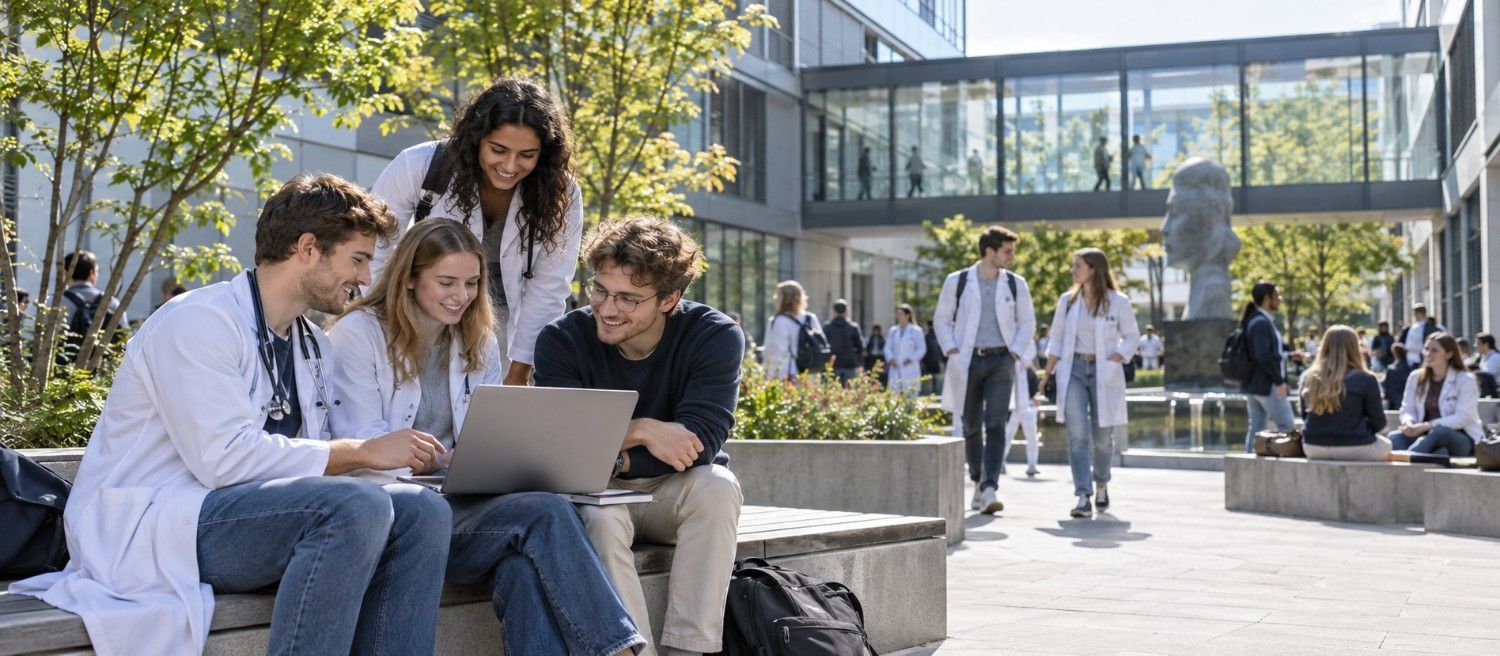
Furnished hostel rooms with Wi-Fi, laundry, 24/7 security, and Indian mess on or near campus.
Indian restaurants and mess facilities serving vegetarian and non-vegetarian home-style food daily.
Strong Indian community with cultural events, festival celebrations, and peer support groups.
Students get hands-on clinical training in government and private hospitals affiliated with the university.
Practical information for students planning to study at MBBS In University of Barcelona.
Prepare for all seasons. Thermal wear for winters, light clothing for summers. University provides heating in hostels.
Student visa processed with university invitation letter. Direct and connecting flights from major Indian cities.
Health insurance included in fees. Medical facility on campus plus city hospitals easily accessible.
Local SIM cards available. WhatsApp and video calls keep you connected with family back home.
Average monthly expenses of $150–$250 covering food, transport, and personal needs.
University library, online databases, and study groups. Seniors mentor juniors through academic challenges.
Our team guides you through every step — from application to arriving on campus.
Shortlist based on public vs private, the MBBS fee in Spain you’re comfortable with, city, and whether a partial-English track matters to you.
Begin DELE/SIELE B2 preparation well ahead of application deadlines.
Submit application; sit BMAT or a university-specific test where required.
Academic transcripts, NEET scorecard, language certificates, passport, and supporting documents.
Formal offer issued upon successful evaluation.
Initial steps toward having your Indian academic credentials recognised in the Spanish system.
Apply at the Spanish consulate with your offer letter, financial proof, and insurance documentation.
After arrival, register at your local town hall (ayuntamiento), a mandatory municipal registration step that most competitor guides skip entirely, but one you’ll need for everything from opening a bank account to enrolling in local healthcare.
Admission Helpline — Contact our counsellors for step-by-step assistance.
“The faculty here is incredibly supportive. The clinical training during hospital rotations has given me real confidence in patient care.”
“Affordable fees without compromising on quality. The campus facilities and hostel life made my transition abroad very smooth.”
“English medium instruction and WHO-recognized curriculum were the deciding factors for me. No regrets so far — excellent experience overall.”
“The university helped with everything from visa to accommodation. Hospital exposure from year three has been invaluable for my FMGE prep.”
“Just cleared my licensing exam on the first attempt. The structured coaching and mock exams during final year were a game-changer.”
“Safe campus, good food options, and a strong Indian student community. The teaching methodology is very practical and hands-on.”
No, it's taught mainly in Catalan with Spanish also used throughout; only a limited number of courses include English, so strong Catalan or Spanish is essential before starting.
Non-EU students pay a separate, higher per-credit rate set annually by the Catalan government, working out to roughly €2,500–3,000 a year for a full Medicine course load, though this can shift slightly year to year.
Primarily Hospital Clínic de Barcelona and Bellvitge University Hospital, both large, high-complexity facilities, along with the Sant Joan de Déu children's hospital for paediatric training.
Yes, it sits inside the QS World University Rankings by Subject's global top 50 for Medicine and is consistently ranked first in Spain for the field.
NEET isn't the direct entry route into UB itself, but a valid NEET score remains relevant for later medical recognition back in India.
It's listed in the World Directory of Medical Schools; applicants should verify current NMC status directly at nmc.org.in before applying.
Most Indian students spend around a year reaching the Catalan or Spanish level needed for first-year coursework before formally beginning the programme.
It's reasonably priced by Western European standards, with most students spending roughly €700–1,000 a month including rent, food, and transport.
It falls under EU Directive 2005/36/EC, allowing registration across all 27 EU member states without extra licensing exams.
Roughly €15,000–20,000 in tuition alone at current estimated rates, plus living costs and separate language preparation fees beforehand.
Our expert counsellors will guide you through the complete admission process — from documents to airport pickup.