
1. Is all teaching in English?
+Yes; medicine is taught entirely in English across all six years. Slovak is a compulsory support subject only in Years 1–2, specifically to help with clinical communication.

 Slovakia
Slovakia | NMC (India); verify at nmc.org.in; WDOMS listed; EU Directive 2005/36/EC; ECTS-compatible; ECFMG eligible; GMC (UK); 250+ registered graduates. | English throughout all six years. Slovak taught as a compulsory subject in Years 1–2 only ;no prior Slovak knowledge nee medium
Expert will call you within 2 hours
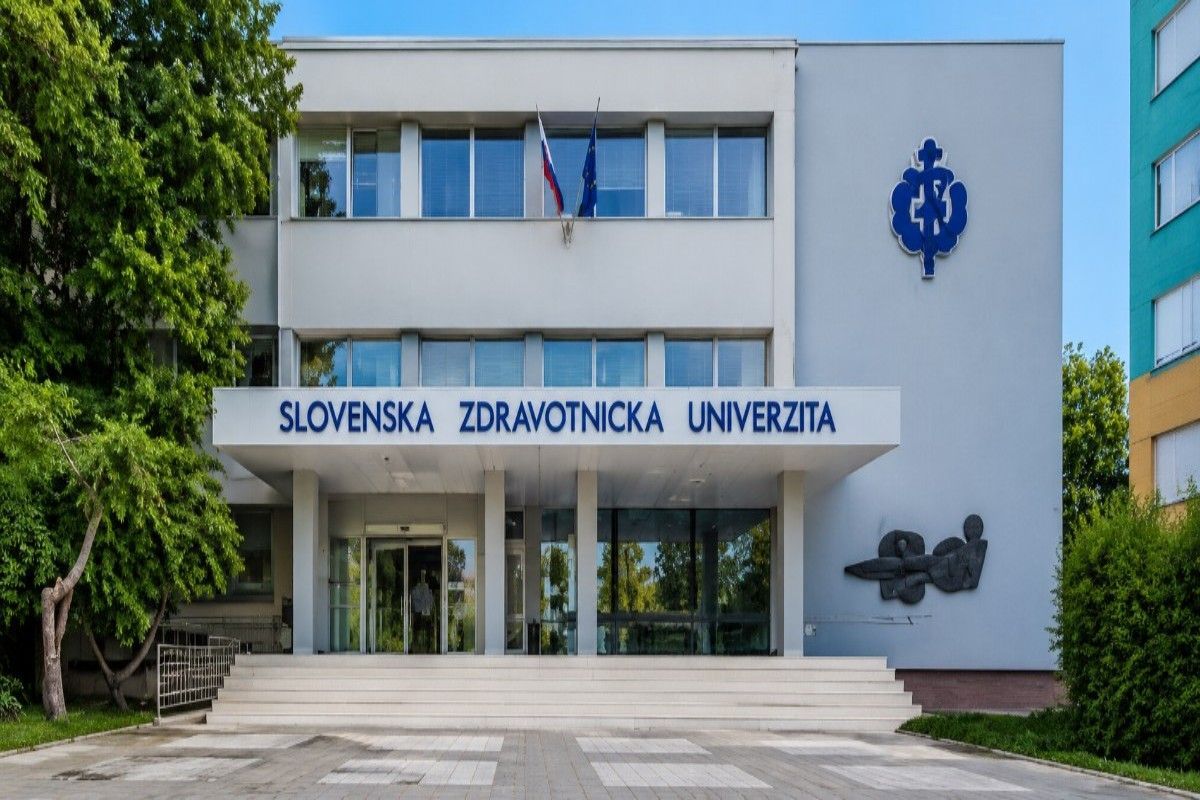
The Faculty of Medicine at Comenius University in Bratislava; known in Slovak as Lekárska Fakulta Univerzity Komenského v Bratislave; is the oldest faculty of Slovakia's oldest and largest university, established on 21 September 1919, the very same year the university itself was founded. For over a century, it has trained physicians and contributed to medical research in Central Europe, making it one of the region's most established and respected medical institutions. Its history is not merely administrative; the faculty has produced generations of clinicians, researchers, and professors who have shaped modern medicine in Slovakia and beyond.
Comenius University itself is Slovakia's leading university and the only Slovak institution regularly ranked among the world's top universities. It takes its name from the 17th-century scholar and educator Jan Amos Comenius, widely regarded as the father of modern education, which speaks to the institution's deep-rooted commitment to intellectual rigour and the advancement of learning. The university draws on a tradition reaching back to the Academia Istropolitana, founded in Bratislava in 1465, making the academic heritage of the city genuinely ancient even if the university's current structure dates from 1919.
The Faculty of Medicine is the oldest of Comenius University's thirteen faculties and has been, since its founding, a recognised centre of scientific, research, and educational activity of particular importance for Slovak clinical medicine. Its English-medium programme for international students has been running since the academic year 1992/93, giving it over three decades of experience in teaching medicine to non-Slovak students. This is not a recently launched international track; the faculty has refined its English-language curriculum across multiple student generations, and its international faculty and administrative systems reflect that maturity.
Academically, Comenius University is ranked 684th globally in the QS World University Rankings 2026, making it the highest-ranked university in Slovakia and one of the top-ranked universities in Central and Eastern Europe. For Medicine specifically, EduRank places it 1st in Slovakia and 722nd in the world for research output and citations in the medical field. The faculty is a member of the European University Association (EUA) and participates in the Erasmus+ programme with over 340 partner universities across 30 countries.
The General Medicine programme at the Faculty of Medicine in Bratislava is a six-year integrated programme (twelve semesters) taught entirely in English. It is structured in accordance with EU Bologna Process standards and the European Credit Transfer System (ECTS), with students required to accumulate 360 credits in total; 60 per academic year; to graduate. The programme leads to the degree of MUDr. (Medicinae Universae Doctor), which is equivalent to an MD under EU standards and is fully recognised under the EU Professional Qualifications Directive 2005/36/EC, giving graduates automatic eligibility to seek medical registration in any of the 27 EU member states.
The first three years are devoted to theoretical and pre-clinical training, covering anatomy, physiology, biochemistry, histology, pathology, pharmacology, microbiology, immunology, and related foundational sciences. From Year 4 onward, students move into clinical rotations at the Faculty's affiliated teaching hospitals, including the University Hospital of Bratislava (Univerzitná nemocnica Bratislava), the National Institute for Cardiovascular Diseases, the University Hospital of Brothers of Mercy (Nemocnica Milosrdných bratov), and the Children's Hospital Bratislava. This broad network of clinical training institutions gives students meaningful exposure to a wide range of specialities and patient populations. Teaching in clinical years happens in small groups of approximately 10 students, which ensures close interaction with attending physicians and hands-on patient exposure that larger cohorts rarely achieve.
One aspect international students should know upfront is the Slovak language requirement. While all medical instruction is in English, Slovak is a compulsory subject in the first two years of the programme. This is a practical measure: clinical-year students work in Slovak hospital settings with Slovak-speaking patients, and basic communication competency is necessary. The faculty provides language classes as part of the curriculum, so this is a structured and supported process rather than something students are expected to manage on their own before arrival.
For Indian students, the Faculty of Medicine at Comenius University is one of the more straightforward European pathways. The programme is English-medium, making the language barrier significantly lower than at Portuguese, Czech, or Slovak-only institutions. The degree carries full EU recognition and is listed in the World Directory of Medical Schools (WDOMS), which is the prerequisite for NMC eligibility verification in India. The NMC of India recognises the institution; Indian students should verify the current listing at nmc.org.in before applying, as NMC status must be confirmed annually. Graduates who complete their studies are eligible to appear for the NExT examination in India, subject to compliance with NMC internship requirements. The degree is also ECFMG-eligible for the USMLE pathway to US residency, and the GMC in the UK has registered over 250 Comenius graduates, confirming the practical international portability of the qualification.
Bratislava, the capital of Slovakia, is a compact, walkable, and genuinely European city located on the Danube, directly bordering Austria and Hungary. It is one of the most accessible capital cities in Europe; Vienna is 60 kilometres away and reachable in under an hour by train or bus. The city has a lively student culture, a historic old town, and living costs that are meaningfully lower than Western European capitals, though higher than smaller Slovak or Eastern European cities. For international students, the combination of English-medium instruction, EU-standard education, a safe and well-connected city, and an internationally recognised medical degree makes Comenius University's Faculty of Medicine one of the most practically sensible options in Central Europe.
No hidden charges, no donation. The full picture of costs at MBBS in Comenius University in Bratislava Faculty of Medicine.
Tuition Fee
Contact Us
€13,000 / ₹11.8–12 lakh (fixed, no annual escalation) / Year
Hostel Fee
Contact Us
€200–700/month (university hostel to private studio)
Food & Meals
€200–350/month (canteen meals from €2–4)
Per Month
Insurance
€200–400
Per Year
Donation
NA
NA
Total Estimated Cost
€108,600 – €157,200~₹97.7 Lakh – ₹1.41 Crore
Total 6-Year Estimate
25–35%
Average FMGE first-attempt pass rates for students from many overseas medical universities. Students from structured programs consistently score higher.
Students returning to India need to clear the FMGE/NExT exam. MBBS in Comenius University in Bratislava Faculty of Medicine integrates exam-oriented coaching into the regular curriculum so students are prepared from day one.
A structured program that takes you from foundational sciences to clinical mastery.
The structural and biochemical foundation of medicine; built rigorously from day one, with Slovak language introduced immediately to prepare students for clinical settings ahead.
Anatomy (cadaveric dissection, histology and embryology), Medical Chemistry & Biochemistry, Biophysics, Cell Biology, Medical Biology & Genetics, Introduction to Medicine, Slovak Language I
Systems physiology and neuroanatomy deepen the biomedical base. Topographic anatomy carries direct surgical relevance. Slovak language instruction completes at the end of Year 2.
Neuroanatomy, Topographic Anatomy, Physiology I, Biochemistry II, Genetics II, Microbiology & Immunology I, Slovak Language II.
The bridge year. Semiology; reading clinical signs and symptoms; is taught through structured patient encounters. Pharmacology is framed around prescribing logic from the outset. Supervised patient-facing activities begin here.
General Pathology, Physiology II, Pharmacology I, Microbiology & Immunology II, Epidemiology & Public Health, Semiology & Physical Examination, Biostatistics & EBM.
First full clinical year across University Hospital Bratislava and affiliated sites. Teaching happens in small groups of around 10 students; genuine hands-on involvement, not observation from the back of the room.
Internal Medicine, General Surgery, Obstetrics & Gynaecology, Paediatrics, Psychiatry & Medical Psychology, Radiology & Diagnostic Imaging, Systemic Pathology.
Specialist exposure expands across the faculty's hospital network, including cardiology and cardiac surgery at the National Institute for Cardiovascular Diseases. Clinical reasoning and independent patient management skills are progressively built.
Internal Medicine II, Surgery II, Neurology, ENT, Ophthalmology, Dermatology, Orthopaedics & Traumatology, Emergency Medicine, Forensic Medicine.
Successful completion awards the MUDr. degree. Internship must be completed in Slovakia before Indian graduates can sit NExT.
Comprehensive supervised internship across Internal Medicine, Surgery, Obstetrics & Gynaecology, Paediatrics, Psychiatry, Community & Family Medicine, and an Elective; followed by State Examinations across all core disciplines.


Furnished hostel rooms with Wi-Fi, laundry, 24/7 security, and Indian mess on or near campus.
Indian restaurants and mess facilities serving vegetarian and non-vegetarian home-style food daily.
Strong Indian community with cultural events, festival celebrations, and peer support groups.
Students get hands-on clinical training in government and private hospitals affiliated with the university.
Practical information for students planning to study at MBBS in Comenius University in Bratislava Faculty of Medicine.
Prepare for all seasons. Thermal wear for winters, light clothing for summers. University provides heating in hostels.
Student visa processed with university invitation letter. Direct and connecting flights from major Indian cities.
Health insurance included in fees. Medical facility on campus plus city hospitals easily accessible.
Local SIM cards available. WhatsApp and video calls keep you connected with family back home.
Average monthly expenses of $150–$250 covering food, transport, and personal needs.
University library, online databases, and study groups. Seniors mentor juniors through academic challenges.
Our team guides you through every step — from application to arriving on campus.
Compare Comenius, Jessenius, and UPJŠ on tuition, city, entrance exam format, and intake size — not just which one costs the least.
Submit your application along with academic transcripts and NEET scorecard through the university’s official online admissions portal.
The university’s international admissions office reviews and verifies your submitted documents.
Sit the university’s Biology and Chemistry entrance exam, online (Jessenius) or on-campus (Comenius, UPJŠ), depending on your chosen faculty.
Universities issue offer letters after entrance exam results are finalized; timing varies by university and exam session.
Pay the first tuition installment or agreed deposit to confirm your seat.
Apply for the National (D-type) visa at the Slovak Embassy in New Delhi; realistic processing time is 15–45 working days.
Book flights and coordinate arrival timing with the university’s international office ahead of the September intake.
In the final weeks, finalize documents, arrange winter clothing and health insurance, confirm dormitory allotment in writing, and set up currency exchange.
Complete on-arrival residence registration with local authorities, open a local bank account, get a local SIM card, attend orientation, and begin settling into your dormitory and academic schedule.
Admission Helpline — Contact our counsellors for step-by-step assistance.
“The faculty here is incredibly supportive. The clinical training during hospital rotations has given me real confidence in patient care.”
“Affordable fees without compromising on quality. The campus facilities and hostel life made my transition abroad very smooth.”
“English medium instruction and WHO-recognized curriculum were the deciding factors for me. No regrets so far — excellent experience overall.”
“The university helped with everything from visa to accommodation. Hospital exposure from year three has been invaluable for my FMGE prep.”
“Just cleared my licensing exam on the first attempt. The structured coaching and mock exams during final year were a game-changer.”
“Safe campus, good food options, and a strong Indian student community. The teaching methodology is very practical and hands-on.”
Yes; medicine is taught entirely in English across all six years. Slovak is a compulsory support subject only in Years 1–2, specifically to help with clinical communication.
Yes. Always verify the current listing at nmc.org.in before applying, as recognition status is reviewed periodically.
An online Biology and Chemistry exam via the SCIO platform; held in March, June, and August. No interview. Admission is based on exam performance and submitted documents.
University Hospital Bratislava, the National Institute for Cardiovascular Diseases, Children's Hospital Bratislava, and University Hospital of Brothers of Mercy; all used from Year 4 onward.
€13,000 per year for 2026/27, fixed for the full standard study duration; no annual fee increases.
Yes. The degree is ECFMG-eligible for the USMLE pathway. Over 250 Comenius graduates are already registered with the GMC in the UK.
Yes; a valid NEET score is required for all Indian students under NMC regulations.
Around 240 places are available annually. The SCIO entrance exam is the primary selection criterion and competition among international applicants is real.
Roughly €500–800/month covering accommodation, food, transport, and personal expenses; lower than Vienna, though slightly higher than some Eastern European cities.
No prior Slovak knowledge is needed. The language is taught as part of the curriculum in Years 1 and 2; a significant advantage over programmes where the medium itself is not English.


Our expert counsellors will guide you through the complete admission process — from documents to airport pickup.