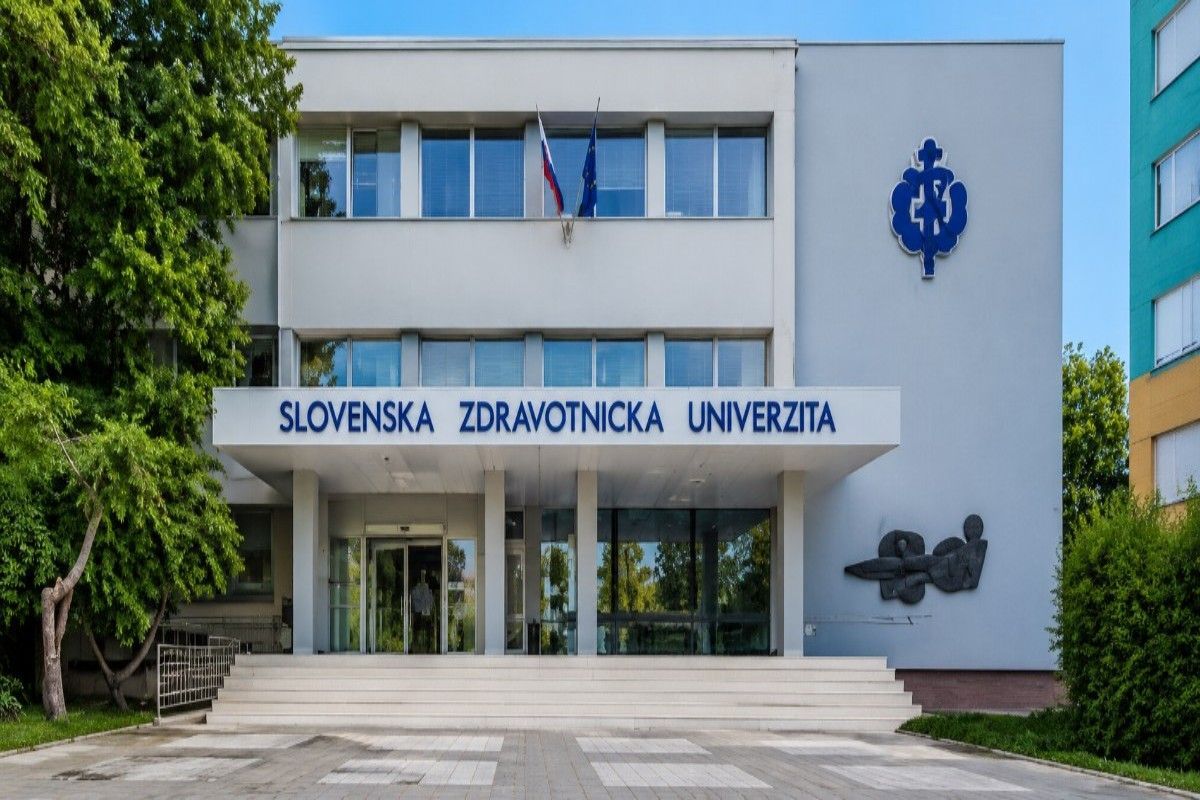
The Faculty of Medicine of Pavol Jozef Šafárik University in Košice; known in Slovak as Lekárska Fakulta UPJŠ; is one of Slovakia's most established and respected medical institutions. Founded in 1948, it predates the formal establishment of the university itself, which was constituted in 1959. That detail alone tells you something about how central the Faculty of Medicine is to the identity of UPJŠ: medicine came first. Over more than seven decades of operation, the Faculty has produced over 12,000 graduates who now practise across Slovakia, the European Union, and beyond. For Indian students exploring MBBS in Europe, UPJŠ Košice represents one of the more serious and academically grounded options available; a public institution, EU-regulated, with a long track record of graduating international students since the English-medium programme was introduced in 1992.
Košice is Slovakia's second-largest city, located in the east of the country, with a population of approximately 240,000. It is a university city with a walkable historic centre, strong public transport links, and one of the lower costs of living among EU capitals. The city is accessible by direct train connections to Vienna, Budapest, and Prague, and has its own international airport. For students coming from India, Košice does not have the chaos or cost of a major capital city; it has a settled, manageable pace of life that suits long-duration academic study. Winter is cold, with January temperatures regularly dropping below minus five degrees Celsius, which is a realistic consideration for students from warmer climates.
The Faculty's most important structural asset is its relationship with the L. Pasteur University Hospital in Košice, which is located in close proximity to the Faculty building. Students do not travel far for clinical training; the hospital is effectively the teaching base from the earliest clinical years. Beyond the Pasteur Hospital, the Faculty's teaching network spans eleven medical institutions across Košice and the surrounding region, giving students direct patient contact across a broad range of specialities and case types. This is not a small teaching hospital with a narrow caseload; it is a full tertiary referral centre handling complex cases from across eastern Slovakia, which means clinical years have real academic and practical weight.
UPJŠ Faculty of Medicine is ranked among the top medical faculties in Slovakia; consistently cited as the second-best medical faculty in the country. At the university level, UPJŠ is ranked in the QS World University Rankings 2026 at position 1001–1200 globally, and is a member of the European University Association (EUA). The Faculty has active research cooperation with institutions across Europe through the Erasmus+ programme and participates in collaborative research in areas including clinical medicine, biomedical science, and public health. The degree awarded; MUDr. (Medicinae Universae Doctor); is equivalent to the MD degree under EU norms and is fully recognised across all 27 EU member states under the Professional Qualifications Directive 2005/36/EC. This matters enormously for Indian students: an EU-recognised medical degree carries licensing eligibility across Europe, the United States via ECFMG and USMLE, and the UK via GMC registration pathways.
The English-medium General Medicine programme was introduced in 1992, making UPJŠ Košice one of the earlier Eastern European medical schools to create a dedicated international track. Over thirty years, students from more than 40 countries have enrolled and graduated. The teaching language is English throughout, and unlike some Eastern European institutions where English instruction exists nominally but clinical environments operate in the local language, UPJŠ has structured its English programme with sufficient depth and long enough standing that it functions as a real English-medium medical education. Classes are conducted in small groups; approximately ten students per group; which means students have consistent, direct access to professors and clinical instructors in a way that large-batch programmes simply cannot replicate.
The curriculum spans six years, structured as three pre-clinical years followed by three clinical years, with the final clinical year dedicated largely to supervised internship-style rotations across all major disciplines. The ECTS credit system is used throughout, consistent with Bologna Process standards across European higher education. Students are assessed on a per-semester basis with a minimum of 30 ECTS credits required per semester to progress. The teaching structure emphasises regular assessment through small weekly tests and structured examinations rather than end-year-only evaluation, which builds consistent academic engagement and reduces the kind of cramming-dependent performance that characterises some other systems.
For Indian students, UPJŠ Košice has the NMC listing status required for NExT eligibility verification, and the six-year degree satisfies the duration and structure requirements that the NMC specifies for foreign medical graduates. Tuition fees for the 2025/26 academic year are approximately €13,000 per year for General Medicine, with an annual increment of €500 per year, making the total six-year cost around €78,000–81,000. This is significantly more affordable than UK or US medical programmes while delivering EU-regulated, internationally recognised training. Living costs in Košice are low by European standards: university dormitories are available from approximately €63–67 per month in shared rooms, and the broader cost of living including food, transport, and personal expenses runs to approximately €400–600 per month.