
Q1. Can international students, including those from India, apply to Ege University's Medicine course?
+Yes. Ege University is genuinely open to international applicants. NEET is required for Indian applicants.
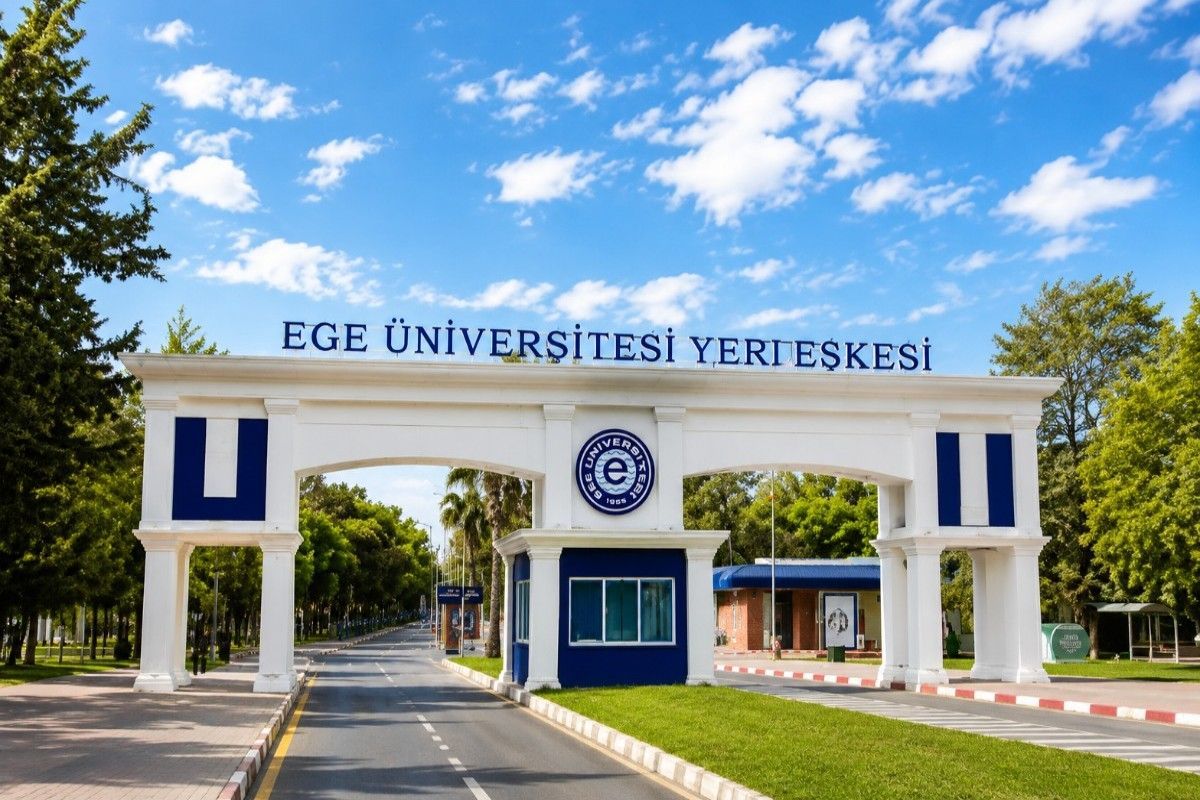
 Turkey | Est. 1955
Turkey | Turkey's Higher Education Council (YÖK) | Primarily Turkish; English available for Medicine specifically; German for some specialties medium
Expert will call you within 2 hours
People mostly just call it Ege for short, the Turkish word for Aegean, directly reflecting the university's own regional identity. It was established on 20 May 1955, under Law No. 6595, becoming Turkey's fourth founded university nationally, and the very first and oldest university in the entire Aegean region. So, this university's founding carries a genuine, specific regional distinction, not just a national one.
Here is a fact most guides skip entirely, and it is genuinely specific. The Faculty of Medicine's own founders were formally assigned in August 1955, and organised their teaching programme quickly enough that education actually began on 5 November 1955, with 90 students in that very first cohort, twenty of them international students from outside Turkey. So, this faculty carries a genuinely international character right from its founding day, not as a later development. Ord. Professor Dr. Muhiddin Erel served as the faculty's first dean, and Ege graduated its first cohort of Medical Doctors in 1961.
The faculty's own academic structure developed steadily. Preclinical and clinical departments began forming in 1958, and today the faculty comprises 44 separate departments in total. Teaching itself has evolved through documented curriculum reforms too, moving to an Integrated Medical Education Programme in 1990, before being further updated to a Vertical Integration Programme in the 2003-2004 academic year, a specific, traceable evolution in teaching philosophy rather than a single unchanged curriculum since 1955.
Here is a genuinely remarkable fact worth knowing in full. Ege University did not just grow on its own. It effectively seeded several entirely new Turkish universities. In 1982, the bisection of Ege University directly facilitated the founding of Dokuz Eylül University, through the handover of many pre-established faculties and graduate schools. Beyond that, Ege's own faculties and graduate schools in various provinces and districts were later assigned to become the founding faculties of four further universities. These are Afyon Kocatepe University, Pamukkale University, Celal Bayar University, and Adnan Menderes University. So, across its history, Ege University has directly contributed to the creation of five separate Turkish universities, a genuinely significant, specific institutional legacy most guides never mention. Very few universities anywhere in the world can point to such a specific, documented role in the founding of five separate sister institutions.
Ege University's main campus sits in Bornova, in the northern part of İzmir, positioned right by the main roads connecting to both Istanbul and Ankara, Turkey's two largest cities, making travel between them genuinely convenient. İzmir itself sits on the Aegean Sea coast, offering students access to beautiful beaches and scenic coastal landscapes alongside the city's rich historical and cultural character. Clinical training runs through Ege University's own affiliated hospital and its clinical departments based in Bornova, giving students access to a genuinely long-established teaching hospital network, one that has been building its own clinical reputation continuously since the university's own 1955 founding.
Ege University's Human Medicine programme runs six years, the standard length across Turkish medical education, taught primarily in Turkish, with English available specifically for Medicine and other select programmes, and German offered for some specialties. International students can enrol in a preparatory year to learn Turkish before beginning their academic studies, and Turkish language courses are also available through the university's own Tomer language centres.
Admission requires the university's own specific YÖS certificate, Ege's Foreign Student Examination, held annually in centres both inside and outside Turkey, a genuinely more restrictive requirement than at some comparable Turkish universities that accept other institutions' YÖS certificates interchangeably. NEET remains a genuine requirement for Indian applicants here, and Indian graduates would still need to clear the FMGE or NExT exam to practise medicine back in India.
İzmir itself offers a genuinely distinctive setting compared to Turkey's other major university cities, since it combines a real, working Aegean port city character with a long, layered history stretching back to ancient Smyrna. The city's own waterfront promenade, the Kordon, gives students a genuinely pleasant place to relax between lectures and exams, while İzmir's Mediterranean climate means winters here run considerably milder than in Ankara or many other parts of Turkey. This combination of history, coastline, and climate makes İzmir a genuinely popular choice among both domestic and international students, not just those specifically drawn to Ege University's own medical programme.
Ege University's own research output extends well beyond teaching alone, with the university maintaining active research centres across a genuinely wide range of medical specialties, agricultural sciences, and engineering disciplines, reflecting its status as one of Turkey's oldest and most comprehensive research universities. Medical students at Ege genuinely benefit from this research-active environment, since many of their own teaching staff combine clinical practice with ongoing research work, giving students real exposure to current medical developments throughout their six years of study, rather than relying solely on established textbook knowledge alone.
Fee figures here genuinely require real care, since the reported range is unusually wide. Both figures are shown below, along with the likely explanation for the gap between them.
Cost Item | Amount | Notes |
Tuition Fee (Human Medicine, lower reported estimate) | Approx. USD 2,000/year | Likely reflects an older figure or the Turkish-medium track specifically |
Tuition Fee (Medicine, broader reported range) | Up to approx. USD 17,000/year | International student costs at Ege range roughly USD 1,000-17,000, with Medicine typically toward the higher end |
Total Tuition (6 years, low estimate) | Approx. USD 12,000 | Based on the lower reported rate; likely understates current costs |
Total Tuition (6 years, high estimate) | Approx. USD 102,000 | Based on the higher reported rate; treat both as estimates pending direct confirmation |
Scholarships | Tuition waivers, accommodation support, and a stipend reported | Competitive, based on academic merit; confirm current eligibility directly |
Total 6-Year Estimate (range) | — | Approx. USD 12,000-102,000, a genuinely wide reported range; confirm directly |
Note: no capitation fee is confirmed at any stage. Given this genuinely wide spread, request Ege University's own current, official international fee schedule directly before budgeting.
Most lists mention Ege as just another established Turkish public university. However, they do not explain how much it has genuinely shaped Turkey's wider higher education system, or how international it was from day one. The reason is simple. It is about a university that quietly seeded five others.
Ege is not like most other established Turkish public universities when it comes to its own legacy. In fact, its own history includes directly facilitating the founding of Dokuz Eylül University in 1982, and separately contributing its own faculties toward the founding of four more universities. Furthermore, this is a genuinely remarkable, specific institutional legacy extending well beyond its own campus. As a result, Ege's influence on Turkish higher education runs considerably deeper than its own student numbers suggest. Graduates prove this legacy is real by training at an institution central to the country's own academic development.
The international character also matters more than most guides let on. For example, most guides describing a medical faculty's international character treat it as a recent development. Ege's Faculty of Medicine welcomed twenty international students among its first cohort of just ninety, on the very day teaching began, 5 November 1955. Moreover, this is a genuine, documented feature of its founding, not something added decades later.
One thing most other blogs miss is just how wide the reported fee range genuinely is here. In addition to a lower reported figure of roughly USD 2,000 a year, a separate source describes costs reaching as high as USD 17,000, with Medicine specifically noted as toward the higher end. Since this genuine spread likely reflects the difference between Turkish-medium and English-medium tracks, applicants should confirm which rate applies to their own specific programme before budgeting.
No hidden charges, no donation. The full picture of costs at MBBS in Ege University Faculty of Medicine.
Tuition Fee
Approx. USD 2,000-17,000
Approx. USD 2,000/year
Hostel Fee
$150 and $500 USD per month
$150 and $500 USD per month
Food & Meals
150 to $200 USD
per month
Insurance
$100 to $150 USD
per year
Donation
no donation
no hidden fee
Total Estimated Cost
Approx. USD 12,000-102,000
6 year
25–35%
Average FMGE first-attempt pass rates for students from many overseas medical universities. Students from structured programs consistently score higher.
Students returning to India need to clear the FMGE/NExT exam. MBBS in Ege University Faculty of Medicine integrates exam-oriented coaching into the regular curriculum so students are prepared from day one.
A structured program that takes you from foundational sciences to clinical mastery.
● In addition, this structure has been in place since the 2003-2004 academic year
● First, Anatomy, Physiology, and Biochemistry are taught within the Vertical Integration Programme structure
● Furthermore, these departments developed progressively since 1958
● Next, Pathology, Microbiology, and Pharmacology draw on the faculty's 44 individual departments
● Moreover, students benefit from one of Turkey's longest-established medical teaching hospital networks
● Then, Medicine, Surgery, and allied clinical subjects run through hands-on training at Ege's own affiliated hospital
● Also, Indian graduates would still need to clear the FMGE or NExT exam to practise medicine in India
● Finally, graduates receive a Physician qualification, equivalent to an MD or MBBS
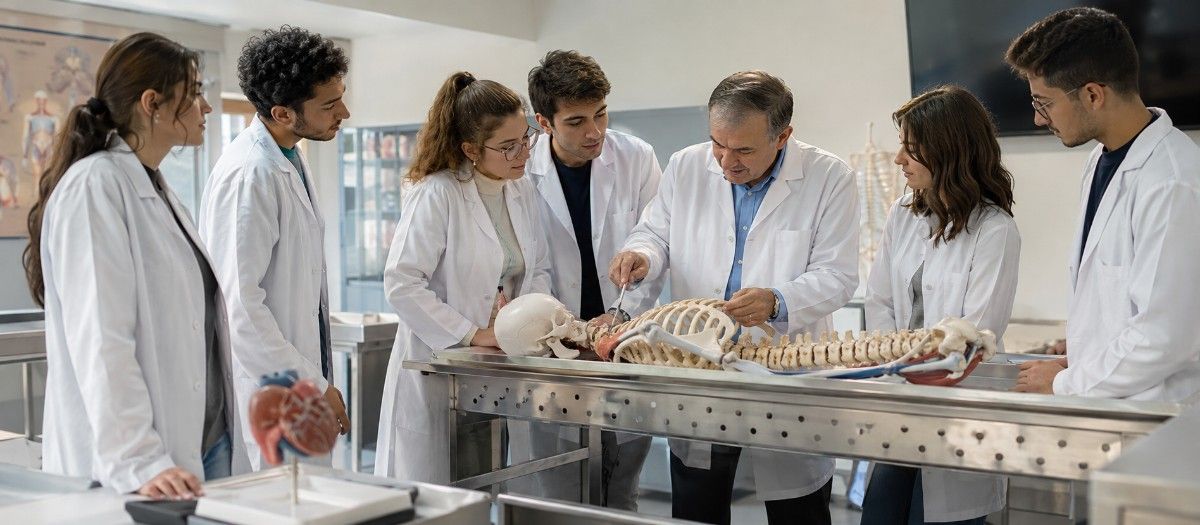
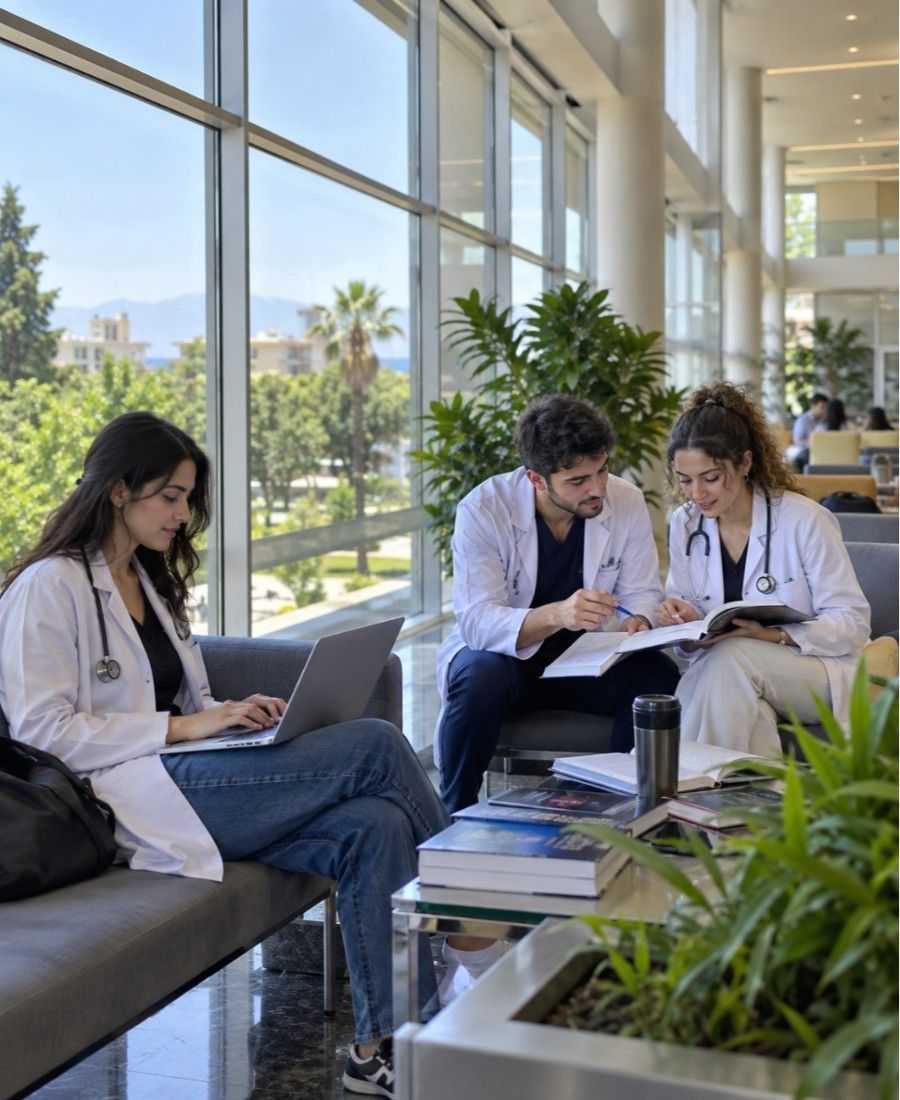
Furnished hostel rooms with Wi-Fi, laundry, 24/7 security, and Indian mess on or near campus.
Indian restaurants and mess facilities serving vegetarian and non-vegetarian home-style food daily.
Strong Indian community with cultural events, festival celebrations, and peer support groups.
Students get hands-on clinical training in government and private hospitals affiliated with the university.
Practical information for students planning to study at MBBS in Ege University Faculty of Medicine.
Prepare for all seasons. Thermal wear for winters, light clothing for summers. University provides heating in hostels.
Student visa processed with university invitation letter. Direct and connecting flights from major Indian cities.
Health insurance included in fees. Medical facility on campus plus city hospitals easily accessible.
Local SIM cards available. WhatsApp and video calls keep you connected with family back home.
Average monthly expenses of $150–$250 covering food, transport, and personal needs.
University library, online databases, and study groups. Seniors mentor juniors through academic challenges.
Our team guides you through every step — from application to arriving on campus.
Share your NEET score, academic record, and budget. Our Turkey specialist provides an honest assessment comparing Turkey with Georgia, Armenia, and Russia and, within Turkey, identifies the right university based on NMC recognition status, clinical quality, preferred city, and total cost. NMC status verification is the first step for every Turkey recommendation.
AMW submits your application to the selected university with all required documents. Most Turkish private medical universities for English-medium programmes do not require a separate university entrance exam beyond NEET, though some require YÖS. AMW advises on this for each specific university. Offer letters are typically issued within 2–4 weeks.
AMW assists with your Turkish student visa application a straightforward process for Indian nationals. Required documents include a university acceptance letter, financial means documentation, health insurance, and a biometric appointment at the Turkish Embassy in India. Processing typically takes 3–6 weeks.
AMW coordinates travel planning and arranges airport pickup in Istanbul or Ankara. Our local Turkey representative handles hostel check-in, university registration, and city orientation. Support continues throughout the first month.
Admission Helpline — Contact our counsellors for step-by-step assistance.
“The faculty here is incredibly supportive. The clinical training during hospital rotations has given me real confidence in patient care.”
“Affordable fees without compromising on quality. The campus facilities and hostel life made my transition abroad very smooth.”
“English medium instruction and WHO-recognized curriculum were the deciding factors for me. No regrets so far — excellent experience overall.”
“The university helped with everything from visa to accommodation. Hospital exposure from year three has been invaluable for my FMGE prep.”
“Just cleared my licensing exam on the first attempt. The structured coaching and mock exams during final year were a game-changer.”
“Safe campus, good food options, and a strong Indian student community. The teaching methodology is very practical and hands-on.”
Yes. Ege University is genuinely open to international applicants. NEET is required for Indian applicants.
Yes, a valid, qualifying NEET score is required for Indian applicants under NMC guidelines.
Ege University's own specific YÖS certificate, obtained through its annual entrance exam held in centres inside and outside Turkey.
Reports genuinely conflict, ranging from roughly USD 2,000 to USD 17,000 a year depending on the source and likely the specific language track; confirm directly.
English is available specifically for Medicine and other select programmes, though Turkish remains the primary medium overall.
Ege University's own affiliated hospital and clinical departments based in Bornova, İzmir.
It runs six years, the standard length across Turkish medical education.
Yes, it directly facilitated the founding of Dokuz Eylül University in 1982, and its own faculties helped found four further universities.
In Bornova, in the northern part of İzmir, directly on the main roads connecting to Istanbul and Ankara.
Yes, Ege University reports offering tuition waivers, accommodation support, and monthly stipends, described as competitive and based on academic merit.
Our expert counsellors will guide you through the complete admission process — from documents to airport pickup.