European University Brčko District sits in a truly odd spot on the map. Brčko is not part of either of Bosnia and Herzegovina's two main areas. It is not part of the Federation of Bosnia and Herzegovina. It is not part of Republika Srpska either. Brčko is its own self-run district. This special status came about after the Bosnian War. It was part of a deal. The deal aimed to keep the district neutral between the country's two main areas. The district sits at what people often call a "triple border." Croatia sits close by. Croatia is both an EU and a Schengen member. Serbia sits close by too. For a student here, that means easy weekend trips to three different countries. It is a small perk, but a real one.
The university was set up in 2011. This makes it a much newer school than some of Bosnia's older public universities. The University of Sarajevo and the University of Tuzla both go back decades earlier. European University is a private, for-profit school. It holds official recognition from the Department of Education of the Brčko District. It also holds accreditation from Bosnia's Ministry of Education. The university runs six broad faculties. These cover law, medicine and health sciences, political and social sciences, natural and social sciences with education, business and economics, and engineering. This gives it a wide academic spread for a fairly young school. Inside its Faculty of Medicine, the school also runs programs in pharmacy, nursing, dentistry, sanitary engineering, sports science, and radiology. So medicine sits inside a wider health sciences group, not on its own.
The MBBS-equal program sits under the Faculty of Medicine and Pharmacy. It is a Doctor of Medicine, or MD, degree. It takes six years to finish. The degree holds 360 ECTS credits in total. This matches the usual pace seen across Europe, at about sixty credits a year. ECTS stands for the European Credit Transfer and Accumulation System. Most higher-education schools across the EU use this shared credit system. Its main goal is simple. It lets a degree from one European country get judged fairly in another European country. The whole program is taught in English. It was built with students from other countries in mind. The goal was to let them study medicine in Europe, with no language wall in the way. The Faculty also runs a separate nursing course, taught in English too. This course costs far less, at about USD 2,160 a year, or roughly €2,000, for those who want that path instead of full medical training.
Unlike the majority of Croatian medical schools listed in this book, the process of getting into this institution is different. In no way does there exist a formal entrance examination. Places are awarded to students depending on their achievement in the 12th grade, particularly in the subjects of biology, chemistry, and physics. The most closely related to the study of medicine are these subjects. In contrast to the written knowledge tests that are utilized in such locations as Zagreb and Rijeka, this one is not. Before they can even be evaluated, pupils are required to take a timed examination that consists of multiple parts. This particular element is quite important for kids from India. In order to compete for a position here, your NEET rating is not taken into consideration. Simply passing the NEET is sufficient to satisfy the requirement. Nevertheless, it is imperative that Indian students have a legitimate NEET scorecard, regardless of the country that they choose to study in. This is because it is the document that is required in order to obtain an eligibility notice from the National Medical Commission. Before going somewhere else in the world to study medicine, students need to have this note in their possession.
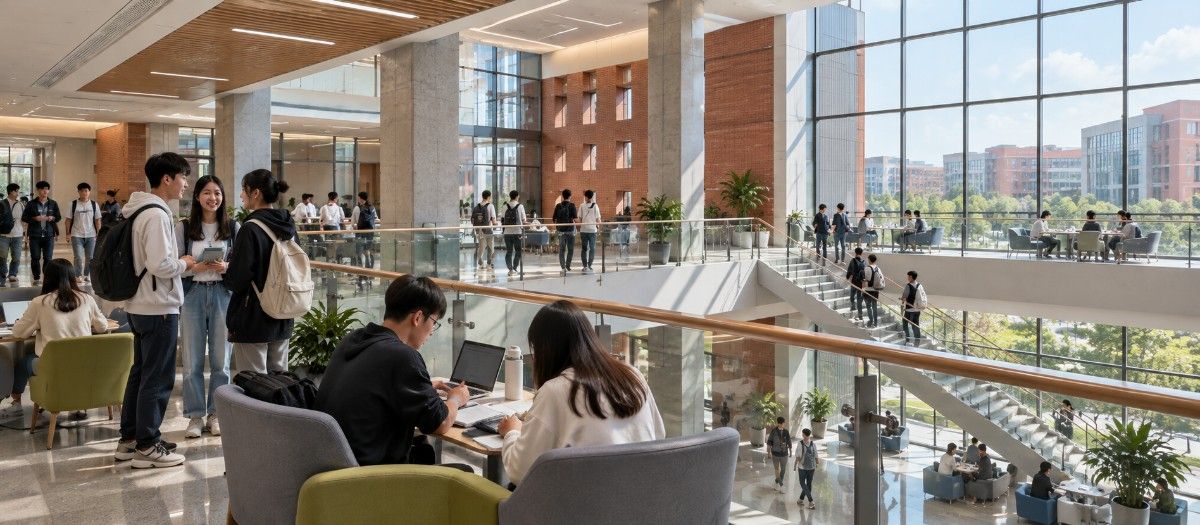
Clinical work starts early here. Students get real, hands-on time inside the school's linked hospitals from their early terms. They do not wait until the later clinical years to see real patients for the first time. This early start builds skill and confidence step by step, across the whole degree. It avoids cramming all clinical learning into a rushed final stretch. Facilities are said to include modern smart classrooms, dedicated skills labs, and digital libraries, alongside this hands-on hospital training. On-campus dorm housing is open directly through the university. Students from other countries now have a straightforward and uncomplicated housing option. They are not required to make their own arrangements for private rentals in a nation that is new to them. The very fact that they have to do that chore might be quite difficult for a first-year student who is moving to a completely new location.
On recognition, this is a genuinely well-documented, credible program for its size and age. The Faculty of Medicine is listed in the World Directory of Medical Schools. This list is jointly run by the World Federation for Medical Education and FAIMER. It works as the master global list of real, legal medical schools. The university gains World Health Organisation recognition through that same listing. The course follows the Bologna Process. This gives it standard EU credit match-up. This helps any student who may later want to move credits, or study on, elsewhere in Europe. The degree is said to fully meet India's Foreign Medical Graduate rules from 2021. This means graduates can sit the FMGE, now called NExT. This lets them practise medicine in India after they finish their degree abroad. Graduates are also generally said to be able to sit the USMLE in the US and PLAB in the UK. Both of these depend fully on meeting each country's own rules at the time you apply.
Tuition is set at USD 5,400 a year, or roughly €5,000. This rate stays fixed across all six years of study. That is a genuinely useful planning perk. It removes the risk of surprise yearly fee hikes partway through the degree, something that does happen at other medical schools once students are already committed and halfway through. Total tuition across all six years comes to roughly USD 32,400. Living costs are estimated at a fairly modest level overall. This reflects Bosnia and Herzegovina's generally low cost of living, compared to Western Europe. These figures come from outside consultancy estimates, not the university's own full cost breakdown. So treat them as a solid planning guide, not a locked-in number.
In plain terms, this is a real, WHO-recognised, English-medium medical degree in a low-cost European spot. It comes with a notably simpler path in than several of its regional rivals. There is no formal entrance exam here. Choices are made through plain document review instead. Tuition stays fixed for the full six years too. This suits students who want a European medical degree, but do not want the added stress of a tough written entrance test. It also suits students who are fine with a newer, private university, rather than one of Bosnia's older, more set public schools, like Sarajevo or Tuzla. Beyond the more usual choices in the country, this is a program well worth a close look for any family weighing cost, ease, and real global recognition all at once.