Q1. Is Gulistan State University's medical programme taught in English?
+Yes, the international-track MD-equivalent programme is taught in English, with local-language preparation offered for clinical-year patient interaction.
 Uzbekistan | Est. 1965
Uzbekistan | Public university recognized by the Ministry of Higher Education, Science and Innovation of Uzbekistan. The Faculty of Medicine is listed in the World Directory of Medical Schools (WDOMS), making graduates eligible to pursue ECFMG certification subject to appl | English medium
Expert will call you within 2 hours
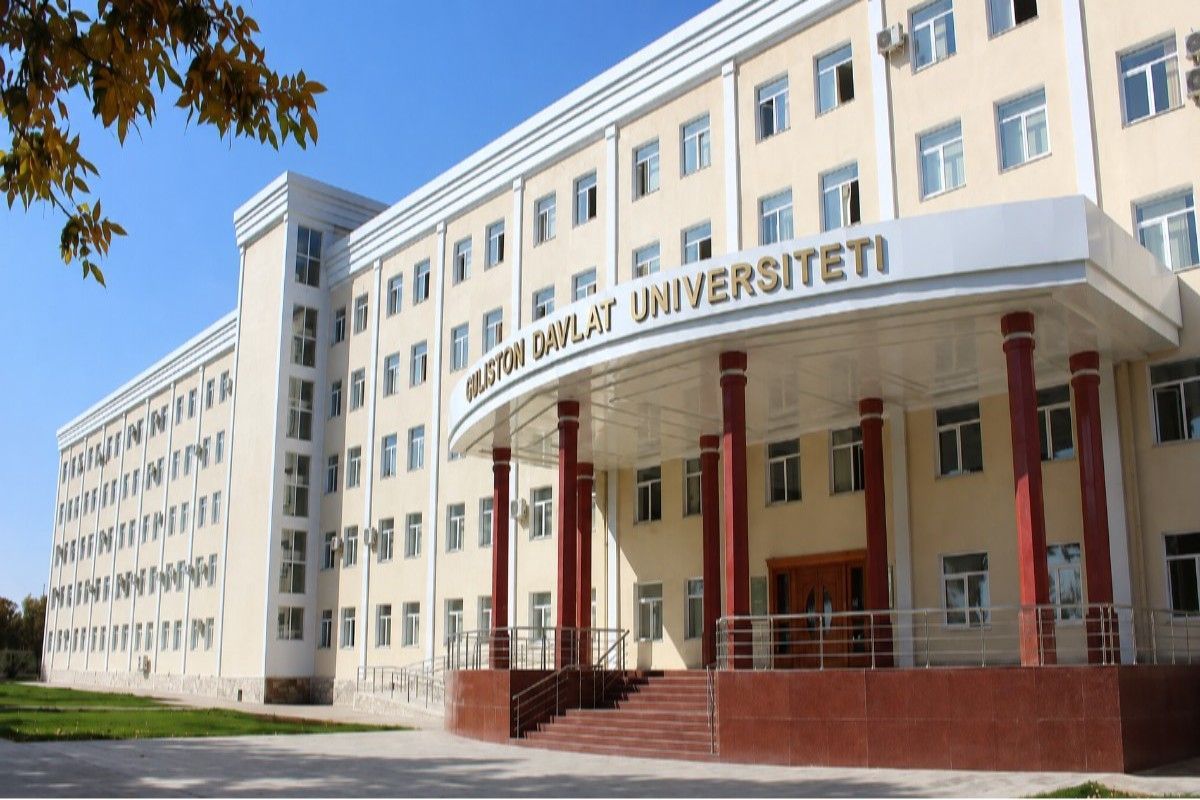
Gulistan State University (locally Guliston Davlat Universiteti, GulDU) is a public university in Guliston, the small regional capital of Syrdaryo region, about 120 km southeast of Tashkent. The parent university traces back to 1965 as a pedagogical institute, and most agent pages simply carry that 1965 date over to describe the medical faculty itself. That's misleading. The Faculty of Medicine is new: its dedicated academic building opened only in the 2021 academic year, following a November 2020 presidential decree on reforming primary healthcare, which allocated the university 50 state-funded places across two directions, general medicine and paediatrics. Anyone comparing Gulistan to Uzbekistan's older medical institutes, Tashkent Medical Academy (est. 1919) or Samarkand State Medical Institute (est. 1930), should treat it as a genuinely young medical programme riding on an old university's name, not a decades-old medical school.
That matters for due diligence, not just trivia. A newer faculty means a shorter track record of graduating classes, less time for teaching-hospital partnerships to mature, and less publicly documented outcome data (FMGE pass rates, NEXT readiness, alumni licensing history) than at Uzbekistan's established institutes. None of that makes it a bad option by default, but it does mean claims of a 'rich medical heritage since 1965' on agent sites conflate the university's founding with the medical faculty's, and that gap is worth naming plainly rather than smoothing over.
Guliston is a small, quiet administrative city (roughly 60,000–70,000 residents) in the Syrdaryo region of eastern Uzbekistan, a couple of hours by road or rail from Tashkent. It isn't a major student city in the way Tashkent or Samarkand is, and the medical faculty operates largely through Syrdaryo region's public healthcare network, including Gulistan City Central Hospital, for clinical exposure, rather than a large multi-hospital teaching complex.
The MD-equivalent programme runs 6 years: broadly 5 years of theoretical and pre-clinical/clinical coursework followed by a 1-year compulsory rotating internship, the standard Uzbekistan model. Medium of instruction for the international cohort is English, with the university noting local-language (Uzbek/Russian) preparation for ward-level patient interaction, since clinical years necessarily involve Uzbek- or Russian-speaking patients.
Uzbekistan's international-track medical admissions don't run a centralised entrance exam comparable to Georgia's or Belgium's; entry is typically document-based (10+2 with Physics, Chemistry, Biology, minimum marks as set by the university) plus, for Indian applicants, NEET qualification as required under NMC's 2021 Foreign Medical Graduate Licentiate (FMGL) regulations for any student going on to practise in India. This is a materially lower-friction admission gate than a competitive national exam, and prospective students should understand that low entry friction is a function of Uzbekistan's system generally, not a Gulistan-specific advantage marketed by consultancie
Myth: "GSU has offered medical education since 1965" — The university was founded in 1965, but the Faculty of Medicine's own building opened in the 2021 academic year under a 2020 presidential healthcare-reform decree, with an initial state quota of 50 places split between general medicine and paediatrics. The medical programme's actual track record is a handful of years, not six decades.
Myth: "Listed in the World Directory of Medical Schools (WDOMS) means it's NMC/WHO-approved" — WDOMS itself states plainly that a listing confirms a school exists; it is not, by itself, recognition, accreditation, or endorsement by WDOMS, WFME, or FAIMER. Several agent pages present a WDOMS listing as if it were a global stamp of approval, which overstates what the listing actually certifies. Genuine recognition status for Indian applicants depends on NMC's own screening and FMGL rules, not a directory entry.
Myth: "NMC-recognised" means unconditionally safe to enrol — NMC recognition (via the FMGL route) lets a graduate sit India's licensing exam; it says nothing about the specific institution's clinical training quality, faculty depth, or hospital partnerships, all of which vary widely between Uzbekistan's dozens of medical faculties, old and new.
Gulistan State University's Faculty of Medicine is a real, government-backed programme operating under a recent national push to expand medical training capacity outside Tashkent, not a diploma mill. But it's a young faculty attached to an older, non-medical university, in a small regional city with limited independent English-language documentation of outcomes, faculty strength, or hospital infrastructure. Students weighing it against Uzbekistan's older, Tashkent- or Samarkand-based institutes should ask directly, in writing, for graduate FMGE pass-rate data, current faculty-to-student ratios, and the specific teaching hospitals used for clinical rotations, since almost none of this is independently verifiable online at the time of writing.
Campus-level — A newly built medical faculty building on the main GulDU campus in Guliston, with the university reporting dormitory accommodation for international students; specific hostel capacity for medical students isn't independently documented.
City-level — Guliston is a small, low-cost regional town rather than a major city; day-to-day amenities, restaurants, and expatriate infrastructure are far more limited than in Tashkent.
Transport — Regional trains and shared taxis connect Guliston to Tashkent in roughly 2–2.5 hours; there's no metro or extensive public transit within the town itself.
Visa and Registration — International students need an Uzbekistan student visa (typically type ST-1 or similar for degree programmes) and must register with local migration authorities shortly after arrival, per standard Uzbekistan rules for all foreign students.
Expense Head | Approx. Monthly (USD) | Notes |
Housing (hostel/private) | USD 60–120 | University hostel is cheaper; private rentals in Guliston run somewhat higher but still low by regional standards. |
Food / Groceries | USD 80–130 | Local Uzbek cuisine and market produce keep costs low; imported/Western items cost more. |
Local Transport | USD 10–20 | Shared taxis and marshrutkas within Guliston; add intercity travel to Tashkent as needed. |
No hidden charges, no donation. The full picture of costs at MBBS in Gulistan State University Faculty of Medicine.
Tuition Fee
USD 3,500 per year
USD 3,500 per year.
Hostel Fee
USD 600
USD 600 per year.
Food & Meals
800–1,200 per year
Per Year
Insurance
USD 300 per year.
Per Year
Donation
No Donation
No Hidden fee
Total Estimated Cost
USD 5,200–5,600 per year
6 Year
25–35%
Average FMGE first-attempt pass rates for students from many overseas medical universities. Students from structured programs consistently score higher.
Students returning to India need to clear the FMGE/NExT exam. MBBS in Gulistan State University Faculty of Medicine integrates exam-oriented coaching into the regular curriculum so students are prepared from day one.
A structured program that takes you from foundational sciences to clinical mastery.
Foundation in communication skills, English for Medicine, and introduction to clinical medicine.
Human Anatomy, Histology, Medical Biology, Chemistry, Medical Physics, and Medical Terminology.
Early practical laboratory training and introductory patient interaction.
Physiology, Biochemistry, Microbiology, Immunology, Pathology, and Pharmacology.
Development of clinical reasoning through hospital-based practical sessions.
Pathophysiology, Internal Medicine, General Surgery, Diagnostic Methods, and Medical Imaging.
Supervised hospital rotations in affiliated teaching hospitals.
Clinical training in Internal Medicine, Surgery, Pediatrics, Obstetrics & Gynecology, Psychiatry, and Infectious Diseases.
Increased clinical responsibilities with patient management and case presentations.
Rotations in Emergency Medicine, Neurology, Cardiology, Orthopedics, Oncology, Family Medicine, and other specialties.
Final clinical assessments, practical examinations, and preparation for medical licensure and postgraduate training.
Comprehensive clinical internship across major specialties.
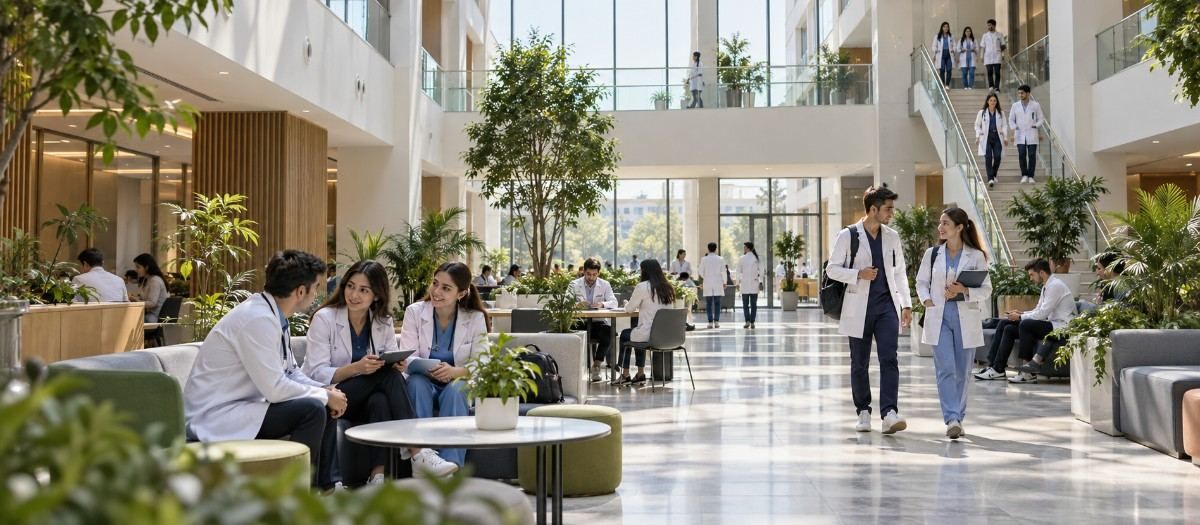
Furnished hostel rooms with Wi-Fi, laundry, 24/7 security, and Indian mess on or near campus.
Indian restaurants and mess facilities serving vegetarian and non-vegetarian home-style food daily.
Strong Indian community with cultural events, festival celebrations, and peer support groups.
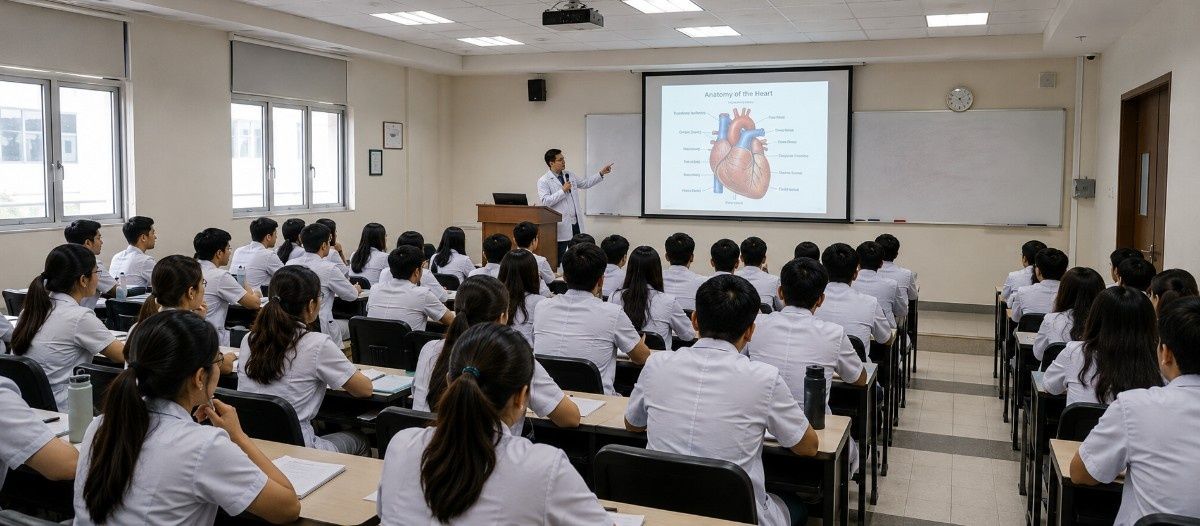
Students get hands-on clinical training in government and private hospitals affiliated with the university.
Practical information for students planning to study at MBBS in Gulistan State University Faculty of Medicine.
Prepare for all seasons. Thermal wear for winters, light clothing for summers. University provides heating in hostels.
Student visa processed with university invitation letter. Direct and connecting flights from major Indian cities.
Health insurance included in fees. Medical facility on campus plus city hospitals easily accessible.
Local SIM cards available. WhatsApp and video calls keep you connected with family back home.
Average monthly expenses of $150–$250 covering food, transport, and personal needs.
University library, online databases, and study groups. Seniors mentor juniors through academic challenges.
Our team guides you through every step — from application to arriving on campus.
Filter by current NMC advisory status first, then fees, city, and FMGE track record, immediately after the NEET result (May–June).
Mark sheets, NEET scorecard, and passport scans are submitted online (June–July), taking roughly 1–2 weeks.
The university checks eligibility and issues the admission/invitation letter, typically within 1–3 weeks.
Year 1 tuition and hostel fee are paid in USD, typically before visa processing begins.
Filed with the invitation letter, passport, and photographs; realistic processing time is 2–4 weeks (July–August).
Winter clothing, document folder, travel/health insurance, and confirmed airport-pickup arrangements finalized directly with the university’s international office in the final weeks before departure.
Travel to Uzbekistan (direct Delhi–Tashkent flight, 3–3.5 hours), airport pickup, and onward travel to the university city, by Afrosiyob high-speed train for Samarkand/Bukhara, or road transfer for Fergana Valley cities, followed by hostel check-in, timed to the intake date (August–September for the main intake, January–February for the smaller spring intake at select universities).
Residence permit and local registration with local authorities completed within the first week of arrival, alongside local SIM registration.
Admission Helpline — Contact our counsellors for step-by-step assistance.
“The faculty here is incredibly supportive. The clinical training during hospital rotations has given me real confidence in patient care.”
“Affordable fees without compromising on quality. The campus facilities and hostel life made my transition abroad very smooth.”
“English medium instruction and WHO-recognized curriculum were the deciding factors for me. No regrets so far — excellent experience overall.”
“The university helped with everything from visa to accommodation. Hospital exposure from year three has been invaluable for my FMGE prep.”
“Just cleared my licensing exam on the first attempt. The structured coaching and mock exams during final year were a game-changer.”
“Safe campus, good food options, and a strong Indian student community. The teaching methodology is very practical and hands-on.”
Yes, the international-track MD-equivalent programme is taught in English, with local-language preparation offered for clinical-year patient interaction.
The parent university dates to 1965, but the Faculty of Medicine's building opened in the 2021 academic year following a 2020 presidential healthcare-reform decree. The medical programme itself has only a few years of operating history.
No centralised national entrance exam; admission is document-based (10+2 with PCB) plus NEET qualification for Indian applicants, per NMC's FMGL rules.
It is not among the four Uzbekistan institutions named in NMC's April 2026 advisory, but institutional recognition should always be verified directly on nmc.org.in before enrolling, since NMC's lists are periodically revised.
Only that the school exists in the directory. WDOMS explicitly states a listing is not recognition, accreditation, or endorsement by WDOMS, WFME, or FAIMER.
Six years total: roughly five years of coursework plus a one-year compulsory rotating internship.
Not immediately. NExT's rollout is currently deferred to around 2028–2029; FMGE remains the operative licensing exam for the near term.
Lower cost and a small-town setting, against a much shorter institutional track record, less publicly available outcome data, and a smaller, less-documented hospital network than Uzbekistan's established medical institutes in Tashkent or Samarkand.
Our expert counsellors will guide you through the complete admission process — from documents to airport pickup.