
Q1. What makes Kafrelsheikh University Faculty of Medicine different from Egypt's older medical schools?
+A: It is a purpose-built faculty founded in 2013, offering modern infrastructure and smaller cohorts rather than a century of legacy.

 Egypt | Est. 2013
Egypt | National Authority for Quality Assurance and Accreditation of Education (NAQAAE), Egypt | English medium
Expert will call you within 2 hours
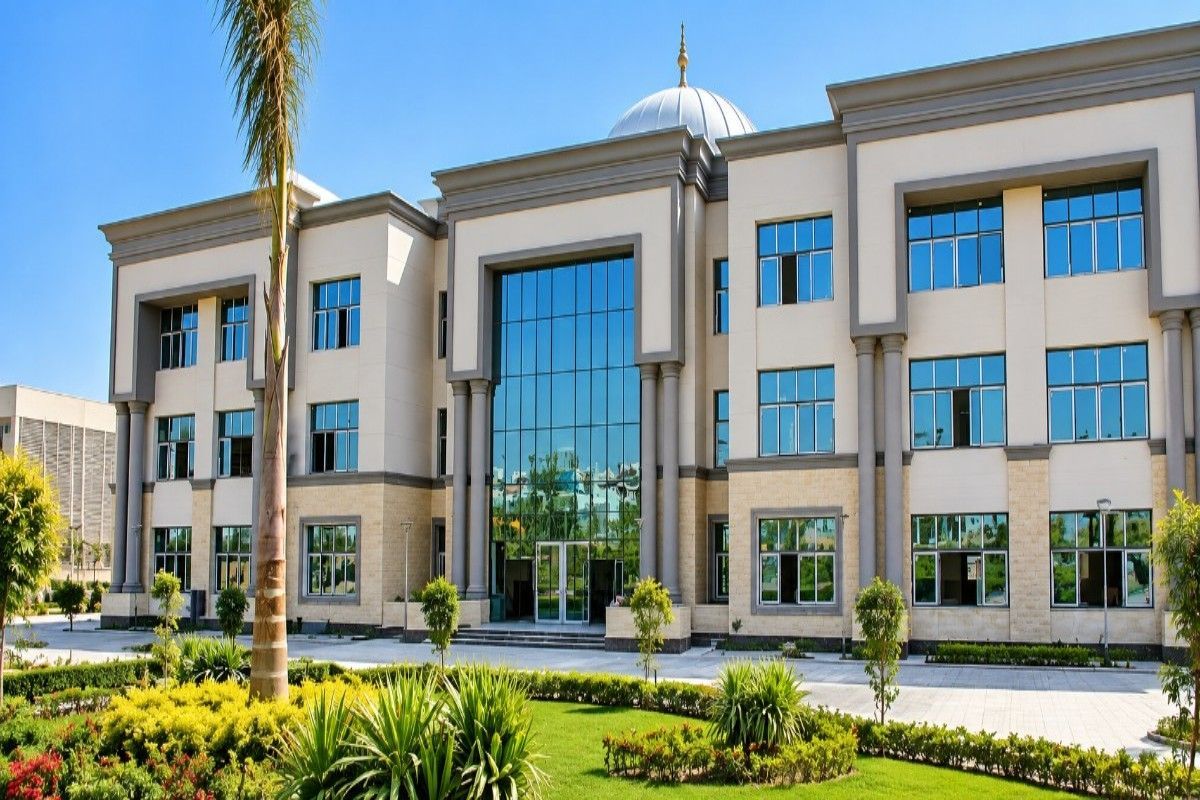
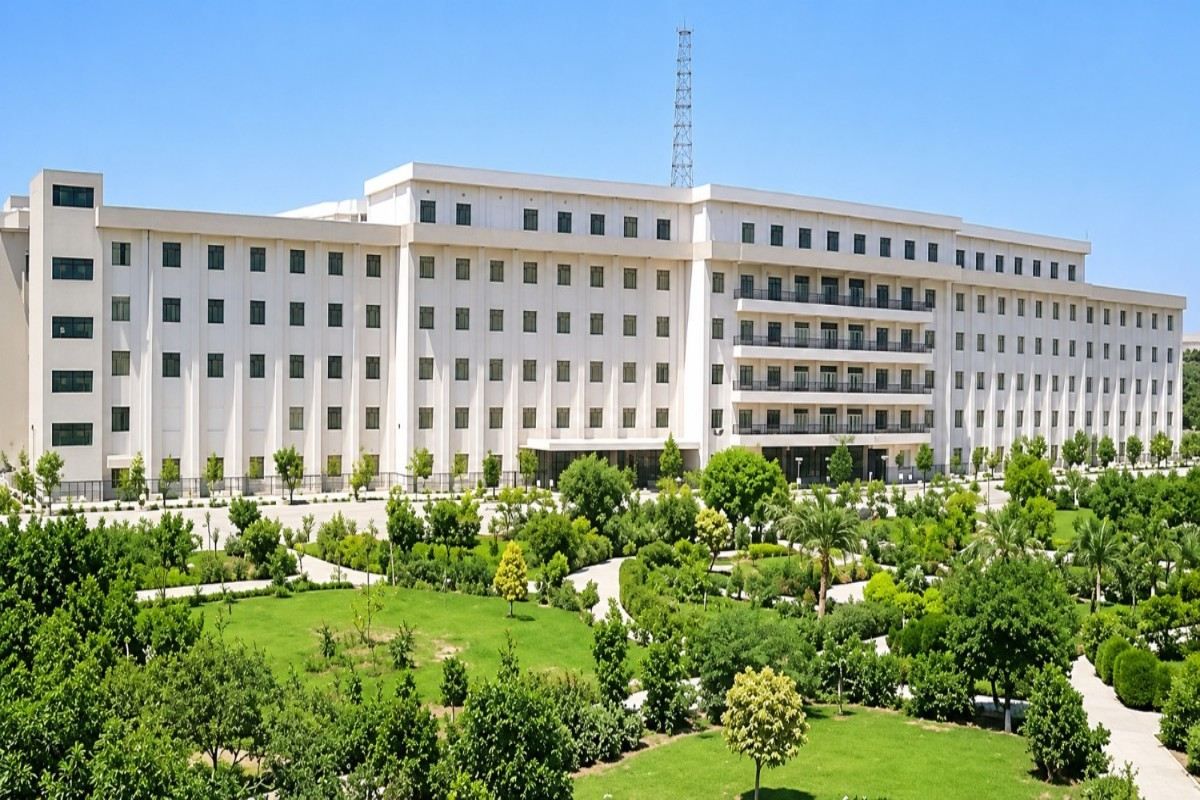
Kafrelsheikh University Faculty of Medicine was not split off from an existing institution or appended to an existing decades-old teaching hospital. Rather, it is a brand-new campus and teaching hospital opened under Republic Decree No. 595 of 2013, making it one of the newest medical faculties in a country boasting several century-old institutions such as Cairo's Kasr Al-Ainy and Alexandria's Faculty of Medicine. That makes a certain difference, as the majority of consultation material on MBBS in Egypt usually starts by mentioning the above-mentioned faculties and then proceeds to mentioning the new Nile Delta faculties only secondarily.
It admitted the first intake of students in the 2013/2014 academic year, using an interim location in the Faculty of Science building while the main campus was being constructed. The official opening ceremony of its building took place on 10 May 2014 and included participation of Egypt's Minister of Higher Education and Scientific Research of the time, the Governor of Kafr El-Sheikh and several university presidents.
Why would one prefer a faculty that is no more than a decade old compared to a faculty that boasts a history spanning over a century? Kafrelsheikh did quite well with its quality benchmarking: already by 2015, that is, two years after the admission of the first intake of students, the faculty managed to make its curriculum, its faculty qualifications, and its clinical training conform to FAIMER and WFME requirements, which is an achievement that has taken some faculties decades to achieve. Furthermore, the teaching hospital attached to it is a 433-bed facility equipped with German and Japanese diagnostic equipment, including 3 Tesla MRI, multislice CT, PET-CT imaging, and separate centers for cardiothoracic and chest surgery, kidney and urology treatment, and oncology, besides a separate intensive care wing accommodating over 50 beds and constantly monitored from the control center.
Small class size is another practical difference. Egypt's older public medical faculties are famous for having several hundred students admitted in each intake; Kafrelsheikh has a ratio of about 1 to 9 in favor of students, thus changing quite substantially what a ward round and dissection look like. The MBBCh course consists of six years, consisting of five years of academic study followed by a mandatory one-year rotating internship; it conforms to the current NMC requirements for the degree allowing Indian graduates to pass FMGE or NExT and the degree is included in the World Directory of Medical Schools recognized by WHO.
Kafr El-Sheikh is not Cairo, and that is basically the idea. It is the capital of an agricultural governorate of Nile Delta region, known primarily for rice and cotton farming rather than for traffic and crowds, and those students who come with an intention to study away from the bustle and high prices of a megacity usually notice the difference quite soon. In Kafr El-Sheikh, rent, food and even daily transportation run much cheaper than in Cairo or Alexandria and everything on the campus is in walking distance from anything else.
The price that one pays for that is clear and explicit: a faculty created in 2013 has neither alumni network nor name recognition, nor century of experience that Cairo and Alexandria have to boast. What it offers, however, is new infrastructure, which was constructed to the same modern standard rather than gradually expanded throughout a hundred years, a lower fee structure characteristic of Egyptian public universities and a quiet Nile Delta town rather than a capital city. If the above-described criteria weigh heavier for a potential applicant than pedigree and historical case volume of an institution, then that is a good deal, otherwise not.
Besides, being a public university also impacts the fee structure in a certain way, namely, the fee structure complies with the regulations of Ministry of Higher Education and the faculty does not charge a capitation or donation fee in addition to tuition fee, which is not the case for many private MBBS-abroad destinations. Finally, there are some special features of the fee structure as well, including merit-based reduction of tuition fees: students maintaining excellent cumulative grade receive substantial discounts during the next years of study.
As for Indian students, the list of advantages becomes much shorter but quite evident: the faculty being NMC recognized means access to the FMGE or NExT route, the six-year program structure satisfies NMC guidelines as concerns foreign medical degree and the compactness of the campus means that the hostels and restaurants will have familiar foods available, and that factor is quite practical despite the fact that it is often omitted in admission materials. One has to be aware of the fact that doing some research on each specific batch's placement results and license outcomes is crucial, but as far as initial profile of the faculty is concerned, Kafrelsheikh can be viewed as a calculated risk rather than a blind gamble.
No hidden charges, no donation. The full picture of costs at MBBS In Kafrelsheikh University Faculty of Medicine.
Tuition Fee
Approximately USD 6,000 (Approx. Rs. 5.00 lakh)
USD 6,000 Approx. Rs. 5.00 lakh
Hostel Fee
Approximately USD 700-1,200 per year (Approx. Rs. 58,000-1.00 lakh)
USD 700-1,200 Approx. Rs. 58,000-1.00 lakh
Food & Meals
USD 1,000-1,500 Approx. Rs. 83,000-1.25 lakh
per year
Insurance
USD 150-250 Approx. Rs. 12,500-20,800
per year
Donation
No Donation
No Hidden Fees.
Total Estimated Cost
Approx. USD 48,000-58,000 for the complete 6-year programme
total 6 year
25–35%
Average FMGE first-attempt pass rates for students from many overseas medical universities. Students from structured programs consistently score higher.
Students returning to India need to clear the FMGE/NExT exam. MBBS In Kafrelsheikh University Faculty of Medicine integrates exam-oriented coaching into the regular curriculum so students are prepared from day one.
A structured program that takes you from foundational sciences to clinical mastery.
• Medical terminology, communication skills, and introduction to the healthcare system
• Human anatomy, histology, medical biochemistry, and physiology fundamentals
• Study of normal body function as a foundation for later disease-based learning
• Advanced physiology, biochemistry, microbiology, parasitology, and immunology
• First structured exposure to clinical reasoning and laboratory diagnostics
• General and systemic pathology, pharmacology, forensic medicine, and community medicine
• Training in internal medicine, general surgery, and paediatrics
• Clinical rotations begin at Kafrelsheikh University Hospital and affiliated centres
• Case-based learning across the hospital's specialised centres, including oncology and urology
• Rotations in obstetrics and gynaecology, ophthalmology, ENT, orthopaedics, psychiatry, and dermatology
• Supervised patient care and preparation for licensing examinations
• Compulsory rotating internship across major specialties at the university hospital

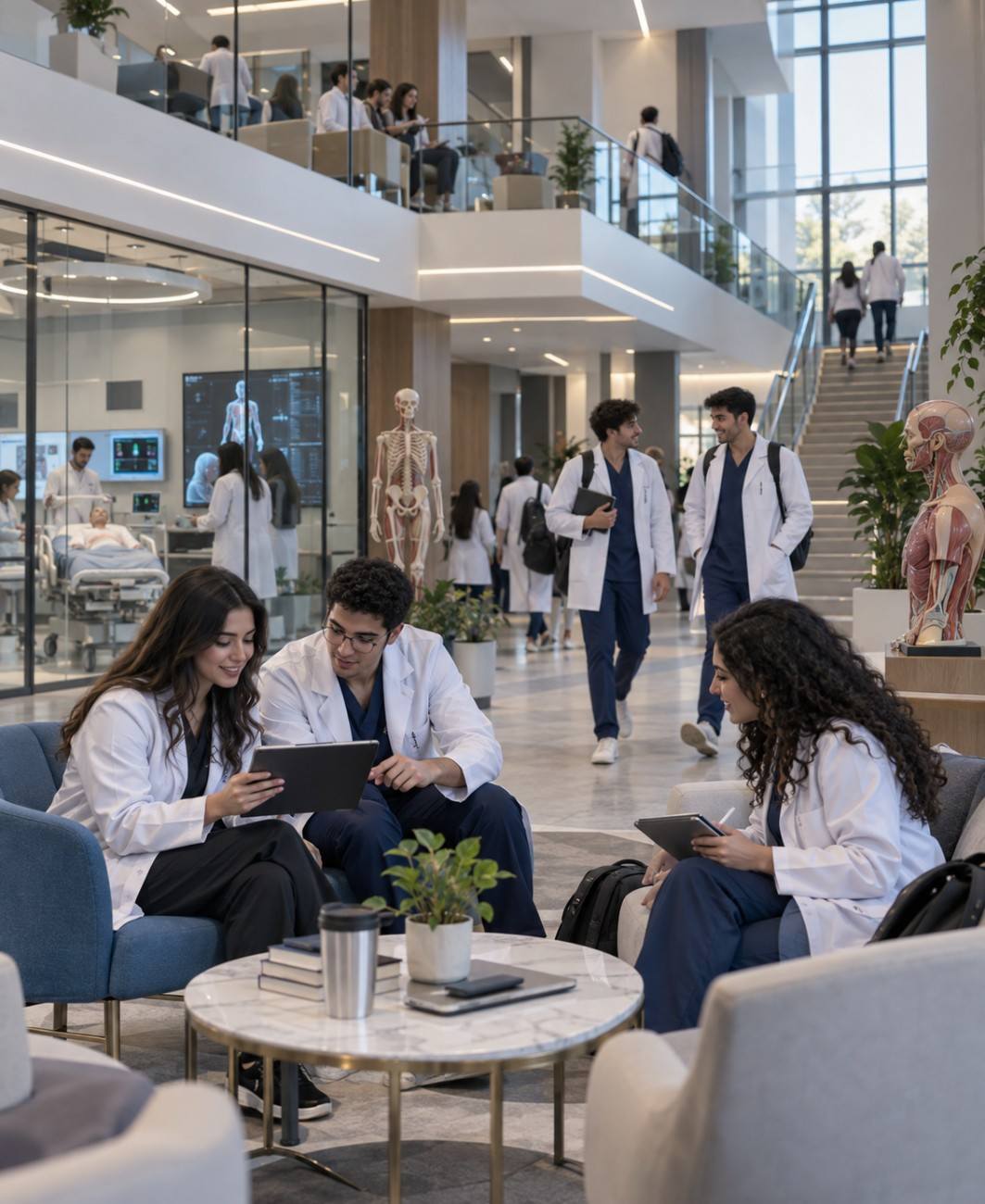
Furnished hostel rooms with Wi-Fi, laundry, 24/7 security, and Indian mess on or near campus.
Indian restaurants and mess facilities serving vegetarian and non-vegetarian home-style food daily.
Strong Indian community with cultural events, festival celebrations, and peer support groups.
Students get hands-on clinical training in government and private hospitals affiliated with the university.
Practical information for students planning to study at MBBS In Kafrelsheikh University Faculty of Medicine.
Prepare for all seasons. Thermal wear for winters, light clothing for summers. University provides heating in hostels.
Student visa processed with university invitation letter. Direct and connecting flights from major Indian cities.
Health insurance included in fees. Medical facility on campus plus city hospitals easily accessible.
Local SIM cards available. WhatsApp and video calls keep you connected with family back home.
Average monthly expenses of $150–$250 covering food, transport, and personal needs.
University library, online databases, and study groups. Seniors mentor juniors through academic challenges.
Our team guides you through every step — from application to arriving on campus.
Our Egypt specialist provides an honest overview of Cairo University vs Ain Shams vs ERU, English-medium status, FMGE outcomes, safety assessment, and total cost comparison.
We provide the Egypt-specific checklist. All documents are verified before university submission.
Direct submission to the suggested university. Offer letter typically within 7–14 days.
Either the students or our team receives the offer, walks you through the terms, and manages the initial fee payment.
We manage visa applications to the Egyptian Embassy in New Delhi, a minimum of 6 weeks before departure
Cairo city orientation, accommodation, Egyptian transport, food, currency, safety zones, and first-week logistics.
We advise on routing to Cairo International Airport (CAI). Confirms arrival with the local team.
Our Cairo representative meets you at the airport. No student arrives unsupported.
Hostel check-in and university registration handled by AMW's local Egypt team.
Our team files the student residence permit at the Egyptian Ministry of Interior within your first weeks. Renewed annually.
Admission Helpline — Contact our counsellors for step-by-step assistance.
“The faculty here is incredibly supportive. The clinical training during hospital rotations has given me real confidence in patient care.”
“Affordable fees without compromising on quality. The campus facilities and hostel life made my transition abroad very smooth.”
“English medium instruction and WHO-recognized curriculum were the deciding factors for me. No regrets so far — excellent experience overall.”
“The university helped with everything from visa to accommodation. Hospital exposure from year three has been invaluable for my FMGE prep.”
“Just cleared my licensing exam on the first attempt. The structured coaching and mock exams during final year were a game-changer.”
“Safe campus, good food options, and a strong Indian student community. The teaching methodology is very practical and hands-on.”
A: It is a purpose-built faculty founded in 2013, offering modern infrastructure and smaller cohorts rather than a century of legacy.
A: Yes. The full six-year MBBCh programme is delivered in English for international students.
A: Yes. It is listed in WDOMS and benchmarked to WFME-aligned standards since 2015.
A: Yes, provided they satisfy the eligibility criteria set by the respective licensing authority.
A: Yes. Indian students must hold a valid NEET qualification as per current NMC guidelines.
A: It serves as the primary teaching hospital, providing clinical rotations across major specialties.
A: Approximately 1:9, kept low compared to most Egyptian public medical faculties.
A: A quieter, lower-cost alternative to Cairo, set in an agricultural Nile Delta town.
A: Yes. On-campus hostel accommodation is available alongside private housing options nearby.
A: Academic transcripts, passport copy, NEET scorecard, medical fitness report, and passport-size photographs.
Our expert counsellors will guide you through the complete admission process — from documents to airport pickup.