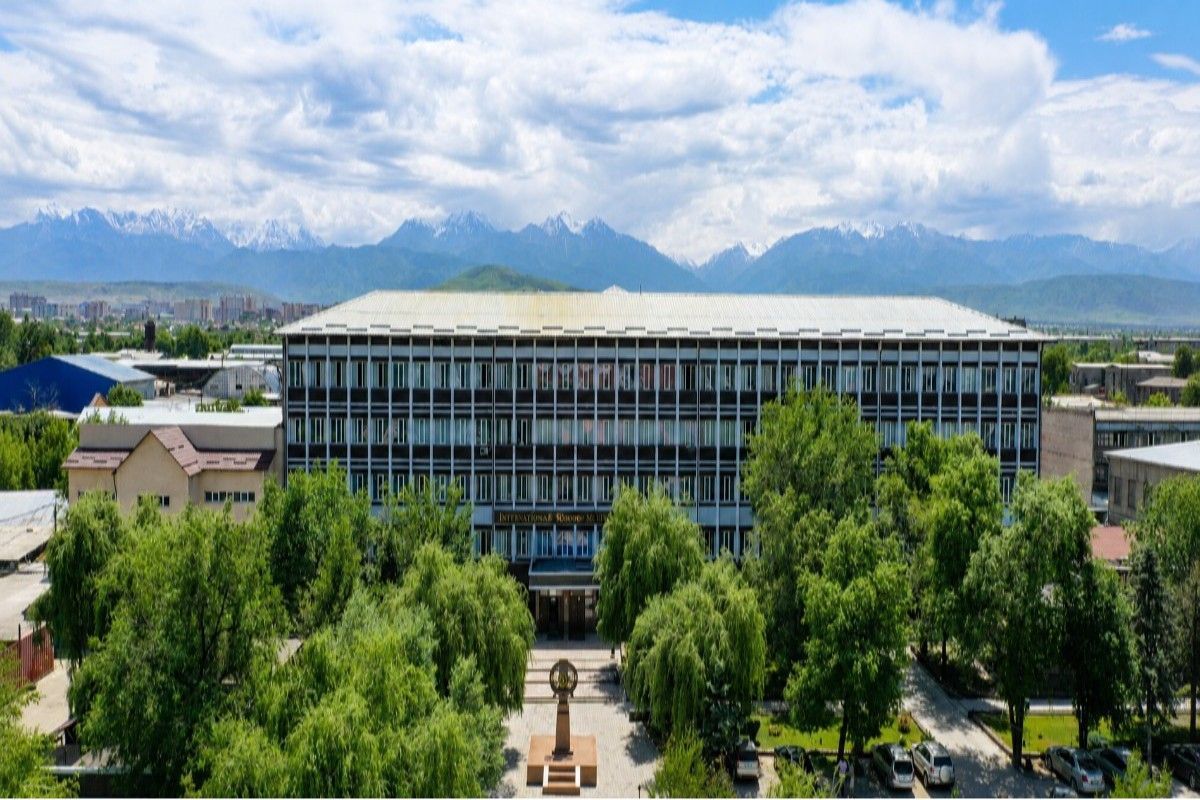
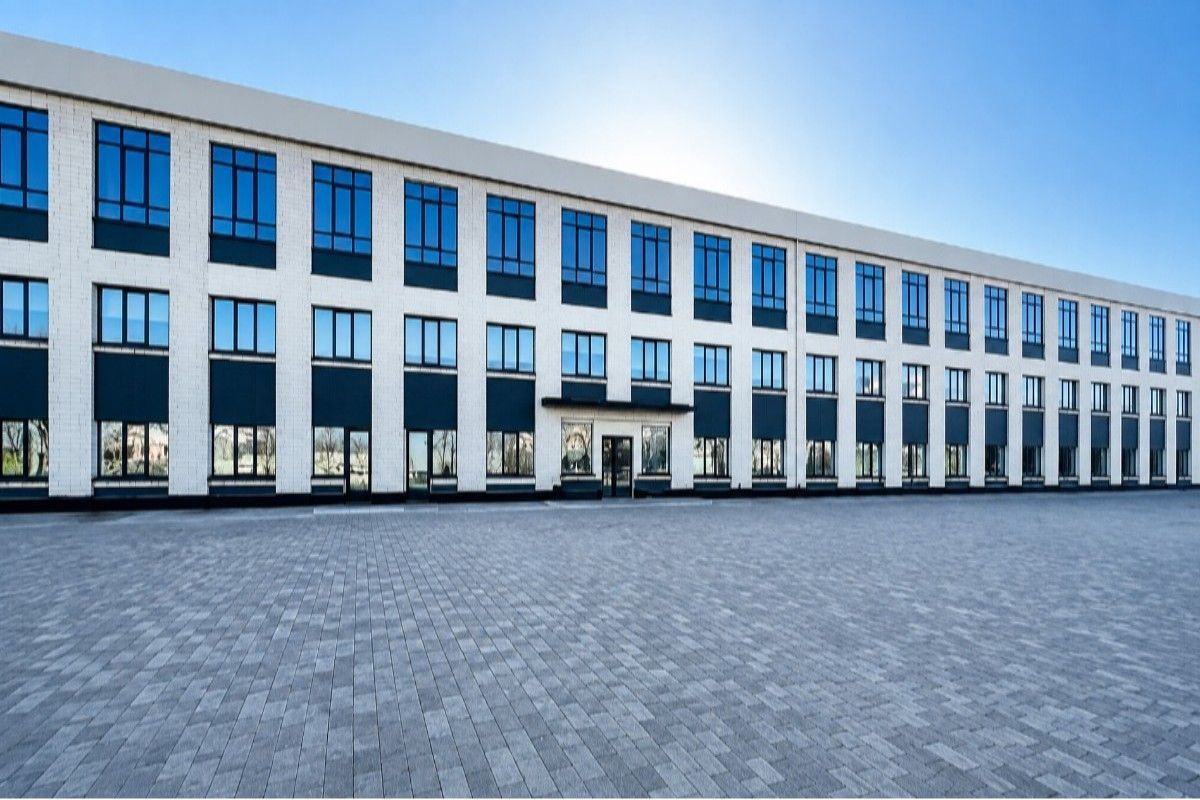
Kyrgyz International University NRZ — KIU-NRZ, to everyone who actually goes there, is Bishkek's newest private medical university, established in 2020 and licensed by the Ministry of Education and Science of the Kyrgyz Republic. In a country where MBBS destinations have existed for decades, opening a medical university in 2020 is either a brave call or a well-timed one. KIU-NRZ turns out to be the latter. Its multi-campus setup spans the cities of Bishkek, Tokmok, and Chuyi across a combined area of over 33,700 square metres, and its First Affiliated Hospital provides students with on-campus clinical access that most competing institutions in Bishkek cannot match.
The clearest way to explain what makes KIU-NRZ different from every other MBBS option in Kyrgyzstan is this: it is the only university in the country with full-time Indian faculty holding MD, MS, MSc, and PhD degrees and not visiting lecturers. Not weekend faculty. Full-time, on-campus Indian specialists who teach daily, mentor personally, and run NExT/FMGE coaching sessions from Year 1. For an Indian student sitting in a Bishkek lecture hall, that means the people explaining pharmacology or pathology to you are not just academically qualified — they understand exactly which examination you will face when you return home. They have prepared students for it before.
The six-year programme at KIU-NRZ is fully aligned with the NMC's 2021 Competency-Based Medical Education (CBME) guidelines. This is not a document most Indian students will have read. Still, its practical consequence is important: a CBME-aligned curriculum means the NMC will recognise your degree as structurally equivalent to an Indian MBBS. Your preparation for NExT will not start from scratch in Year 6. KIU-NRZ has integrated NExT orientation into the curriculum from the first year, subject-wise and systematically, rather than as a panic measure at the end.
Bishkek is a city that rewards a bit of context. It is the capital of Kyrgyzstan, a country most guides vaguely describe as Central Asia, which does not tell you much. Bishkek sits at an altitude of around 800 metres above sea level, backed by the Tian Shan mountain range — an immediate and genuinely striking backdrop to daily student life. The city has a population of around 1.1 million, a functioning public transport system, a growing international food and retail scene, and a Numbeo Safety Index that consistently ranks it as safer than most Indian metros. For Indian students in particular, the large and well-established Indian community in Bishkek — built up over decades of medical education in Kyrgyzstan — means you arrive somewhere with an existing social infrastructure, not as a pioneer.
The fee structure at KIU-NRZ is transparent, with no donation or capitation fees. Tuition is USD 4,000 per year; accommodation and Indian mess are USD 2,000 per year; and a one-time charge of USD 3,000 covers visa, flight ticketing, and processing. The total all-inclusive six-year cost lands at approximately ₹38–42 lakh — meaningfully more affordable than any Indian private medical college, and comparable to the better-established Kyrgyzstan options while offering the Indian faculty USP that none of them can replicate.
One gap almost every competitor page leaves unfilled: what happens to KIU-NRZ graduates in the long run? The university is young, so there is no decade-long alum track record to point to. What there is instead is a structural advantage — NMC approval, WHO recognition, ECFMG listing, a CBME-compliant curriculum, full-time Indian faculty who know the NExT pattern cold, and mandatory rotations at major Bishkek state hospitals with a collective teaching bed count of 700+. The degree KIU-NRZ graduates will hold opens the door to FMGE/NExT in India, USMLE in the US, and PLAB in the UK. The foundation is solid; the institution is building on it fast.