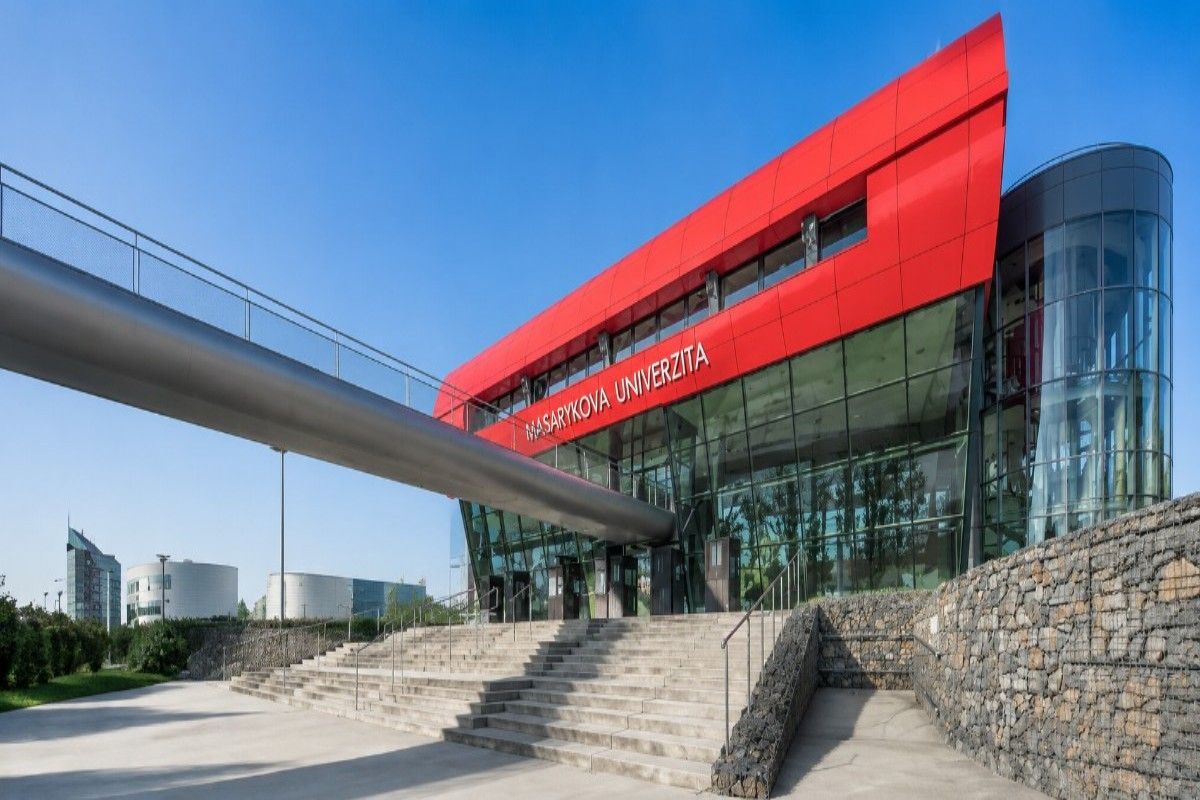
Unlike other universities, such as Charles University in Prague, which offers a similar recruitment slide titled "studies medicine in the Czech Republic," Masaryk University's Faculty of Medicine is quite different, despite its affiliation with the same type of program. While Charles University in Prague operates its international medical courses in multiple faculty branches scattered across three cities, Masaryk University conducts its entire English-language intake of medical and dental students (about 800 of them in all) in one city and one faculty, in the second largest city of the country, Brno, and not in the country's capital, Prague.
Masaryk University's Faculty of Medicine is not an add-on of an existing institution of higher learning, as it was founded in 1919 (alongside the university) – the same year when its primary teaching hospital, St. Anne's University Hospital, gained the status of the university's clinical faculty. It is not as important what year it was founded as the fact that its current English-speaking program (founded in 2004) trains future doctors to work in a system that has existed for over a century. By 2026, more than 30 graduates of the program will have been registered with the UK General Medical Council, a statistic that recruitment agencies do not promise but actually can be verified.
Then why choose Brno over Prague despite Prague's obvious fame? First of all, because the international intake is significantly smaller (around 90-100 students for General Medicine are accepted each admission cycle, while several hundred students are accepted to Charles University's largest international faculty). Second, because the clinical training places – St. Anne's and University Hospital Brno – are located in the same city, and not in several cities. And the curriculum gives a clue to the importance of the issue – Czech Language for Foreigners is mandatory in all of the first eight semesters of the program, as opposed to other competing Czech medical schools, which care only for the initial two years.
None of it is a hidden trade-off. The annual fee of 380,000 CZK (or roughly EUR 15,650) is somewhat higher than that of some competing institutions, and the entry exam – based on Biology, Chemistry, and Physics – is more difficult for the same reason as above. The six-year MUDr degree program has the same EU-wide recognition under Directive 2005/36/EC as any other program in Czech medical schools. Still, the difference is not in legality but in reputation. While Masaryk University's name is prestigious overall, in the context of medicine, it cannot compete with others – for example, Masaryk ranks 454th globally in the QS World University Rankings 2026, behind Charles University (67th) and the Czech Technical University (253rd). In the Times Higher Education Medicine and Health Sciences subject ranking, it sits in the 501-600 band.
And Brno itself is the more tangible reason to choose it over Prague. With a population of about 380,000 people, it is big enough to support a student life but not so big to force one to travel extensively between their residence and clinical teaching hospitals (and even lecture halls). Its living expenses are lower than Prague's, but not at the expense of the city's safety or the convenience of its services. The trade-off is quite honest – association with Prague against a smaller program backed by 20+ years of English-language experience and a tradition of cooperation with the same hospitals spanning over several political systems.