Q1. When was Paracelsus University founded?
+It was established and accredited in 2002, with its first students starting classes in September 2003.
 Austria | Est. 2002
Austria | A private university accredited under Austria's Private Universities Act. Graduates who complete the Dr. med. univ. degree and required registration steps become eligible to practise under Austrian medical law. | : German runs through the Diploma programme, alongside strong English-language and international components. medium
Expert will call you within 2 hours
People just call it PMU, or Paracelsus University. Its founding story leans heavily on one very large gift. PMU was established in 2002 and formally accredited that November, but it only got off the ground thanks to a EUR 70 million donation from Dietrich Mateschitz, the co-founder of Red Bull, alongside support from the state government of Salzburg. The first cohort, just 42 students, began classes on 8 September 2003.
Here is a fact most guides skip entirely. Unlike the newer private medical schools nearby in Krems, PMU never split its medical degree into a separate Bachelor's and Master's. It runs as a single continuous Diploma programme in Human Medicine, compressed into five years rather than the more usual six, without cutting content, according to the university itself.
Another detail worth knowing. PMU is not a Salzburg-only story. Since August 2014, it has run a second full campus in Nuremberg, Germany, in cooperation with Klinikum Nürnberg, training doctors under the same admissions standards and curriculum as Salzburg. That makes it one of the few Austrian medical universities training a meaningful share of its students in another country entirely.
This is a private university, run by the nonprofit Paracelsus Medizinische Privatuniversität Salzburg Privatstiftung. Clinical training in Salzburg runs through Salzburg's university hospital, Uniklinikum Salzburg, right next to where PMU's original building went up, while the Nuremberg site trains students through Klinikum Nürnberg.
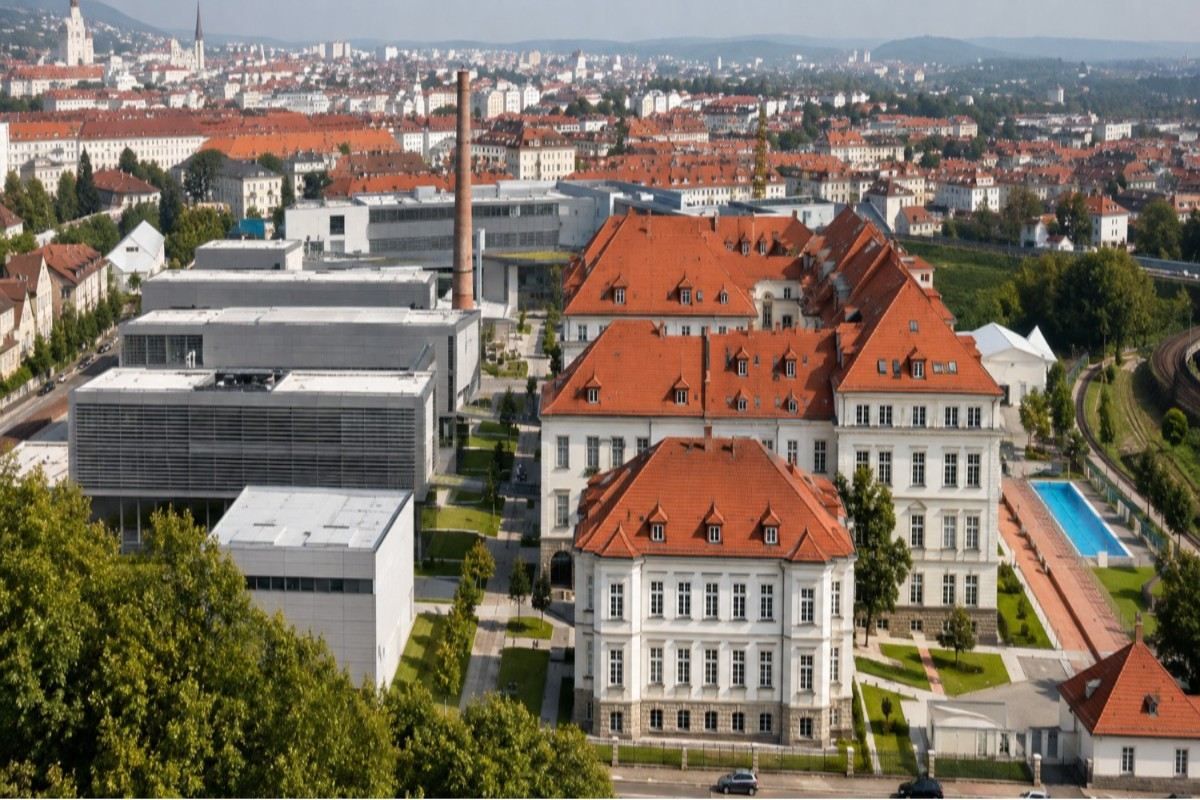
Salzburg itself is Austria's fourth-largest city, famous for its old town, its mountain backdrop, and its connection to Mozart, sitting right on the German border. PMU's original building opened in the Strubergasse in 2003, close by the hospital that later became Uniklinikum Salzburg, and the university has expanded steadily since, adding a new teaching and research building, Haus D, from 2017 onward.
What makes the Salzburg campus genuinely distinctive is what sits alongside Human Medicine there. PMU also runs Pharmacy and Nursing Science degrees on the same site, and it describes this three-discipline combination, medicine, pharmacy, and nursing science sharing one campus with real interdisciplinary teaching and research, as unique in Europe.
Here is where this page needs to be direct with you. Medicine at PMU is not an MBBS degree, and it is not split into a separate Bachelor's and Master's the way some other Austrian private universities run it. It is a single Diploma programme, five years, 360 ECTS credits, leading straight to the Dr. med. univ. qualification.
Teaching runs in German, with strong emphasis on English-language scientific literature and international placements, since PMU actively encourages time abroad, whether through clinical placements, a research trimester, or the final clinical-practical year.
Admission does not run through Austria's national MedAT exam. PMU runs its own three-stage selection process instead, a written application, a lengthy computer-based aptitude test covering intelligence, learning ability, science knowledge at Matura level, and English, and finally a personal interview. Around 75 places open each year in Salzburg and roughly 50 to 55 in Nuremberg, against several hundred applicants.
On cost, there is no getting around it. PMU is fully private, with tuition currently reported at roughly EUR 20,000 to 21,500 per year, putting the full five-year Diploma programme in the rough range of EUR 100,000 to 107,000, though the university's own current fee schedule is the number to confirm directly.
Parameter | Details |
Founded | Established and accredited 2002; first students began classes in Salzburg in September 2003 |
Institution Type | Private university, run by a nonprofit foundation, with major founding support from Dietrich Mateschitz and the state of Salzburg |
Location | Salzburg, Austria, with a second full campus in Nuremberg, Germany, since 2014 |
Diploma Programme in Human Medicine, Dr. med. univ. (Doctor medicinae universae) | |
Duration | 5 years, 360 ECTS credits, a single continuous Diploma track rather than a split Bachelor's and Master's |
Medium of Instruction | German, with strong English-language scientific and international components |
Direct application to PMU; own three-stage written test and interview, no national MedAT exam | |
Teaching Hospital | Uniklinikum Salzburg for the Salzburg campus; Klinikum Nürnberg for the Nuremberg campus |
Fee Component | Amount | Notes |
Tuition Fee | Approx. EUR 20,000 to 21,500 per year | Confirm the current figure directly with PMU's own fee pages |
Total Programme Cost | Approx. EUR 100,000 to 107,000 | Across the full five-year Diploma programme |
Application Fee | Approx. EUR 210 to 290 | Paid as part of the three-stage admissions process |
Living Costs (rent) | Approx. EUR 400 to 800 per month | Salzburg runs on the higher end for an Austrian regional city |
Food and Other Costs | Approx. EUR 300 to 400 per month | Groceries, transport, and leisure |
Student Housing | Available in Salzburg | PMU runs its own student residence at the Salzburg site |
Most rival pages never explain this properly. PMU runs a single, continuous Diploma programme rather than splitting medicine into a separate Bachelor's and Master's, and it fits the whole thing into five years and 360 ECTS credits, a genuinely different structure from Austria's other private medical universities.
Many guides assume an Austrian medical university trains everyone inside Austria. PMU has run a complete second campus in Nuremberg since 2014, admitting roughly 50 to 55 students a year under the same standards as Salzburg, training doctors through a direct partnership with Klinikum Nürnberg.
Be clear about a few real points here. This is a private, fee-paying route into medicine, with costs running well above Austria's public medical universities, which charge little beyond a small administrative fee. German fluency matters throughout, even with the university's strong international outlook. So, who fits here best? Students who want a compressed, intensive five-year Diploma route, who value small class sizes and close hospital ties, and who are comfortable choosing between Salzburg and Nuremberg as their teaching site. Students hoping for a long-established, free public route should look elsewhere. Still, for those who can meet the cost and language bar, PMU offers a genuinely distinctive structure, strong research ties, and direct connections to two major teaching hospitals.
No hidden charges, no donation. The full picture of costs at MBBS in Paracelsus Medical University.
Tuition Fee
Approximately EUR 20,000 to 21,500 per year
EUR 20,000 to 21,500 — Per year
Hostel Fee
€381 and €593 per month
€381 and €593 per month
Food & Meals
EUR 300 to 400
Per month
Insurance
€2,250 to €2,850
per month
Donation
No Donation
No Hidden fee
Total Estimated Cost
€159,650 to €169,650
5 Year
25–35%
Average FMGE first-attempt pass rates for students from many overseas medical universities. Students from structured programs consistently score higher.
Students returning to India need to clear the FMGE/NExT exam. MBBS in Paracelsus Medical University integrates exam-oriented coaching into the regular curriculum so students are prepared from day one.
A structured program that takes you from foundational sciences to clinical mastery.
Builds the foundation of medical science with organ-system learning, anatomical dissection, communication skills and early interprofessional education.
Chemistry, Biochemistry, Cell Biology, Molecular Biology, Genetics, Nervous System, Cardiovascular & Respiratory Systems, Anatomy
Introduces disease processes, clinical examination, public health and research methodology, including work toward the Bachelor's Thesis.
Disease & Therapy Principles, Cardiovascular System, Movement, Nervous System, Endocrinology, Public Health, Epidemiology
Strengthens clinical knowledge through specialty-based modules, Famulatur clinical internship and preparation for USMLE Step 1.
Oncology, Hematology & Immunology, Gastroenterology, Mental Health, Urogenital System, Sensory Organs, Clinical Internshi
Focuses on complex clinical cases, diagnostic and emergency care, hospital-based clinical practice and a research internship/scientific thesis.
Clinical Cases I-IV, Anesthesiology, Emergency Medicine, Intensive Care, Transfusion Medicine, Pain Management, Diagnostic Imaging
Final year is primarily devoted to advanced clinical training and the Clinical-Practical Year, preparing students for independent medical practice.
Laboratory Diagnostics, Clinical Genetics, Interprofessional Collaboration, Communication, Electives, Clinical-Practical Training
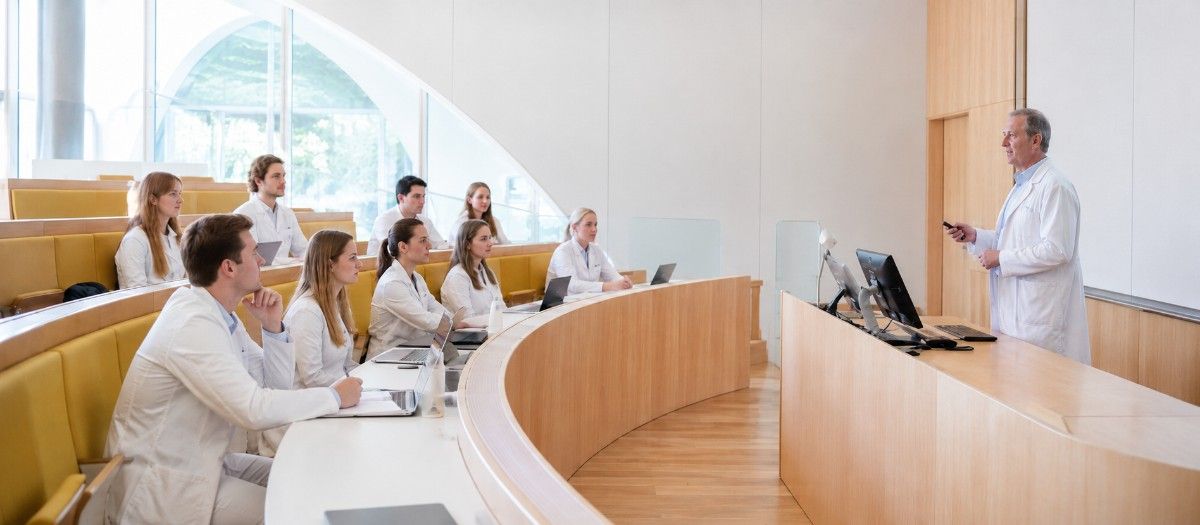
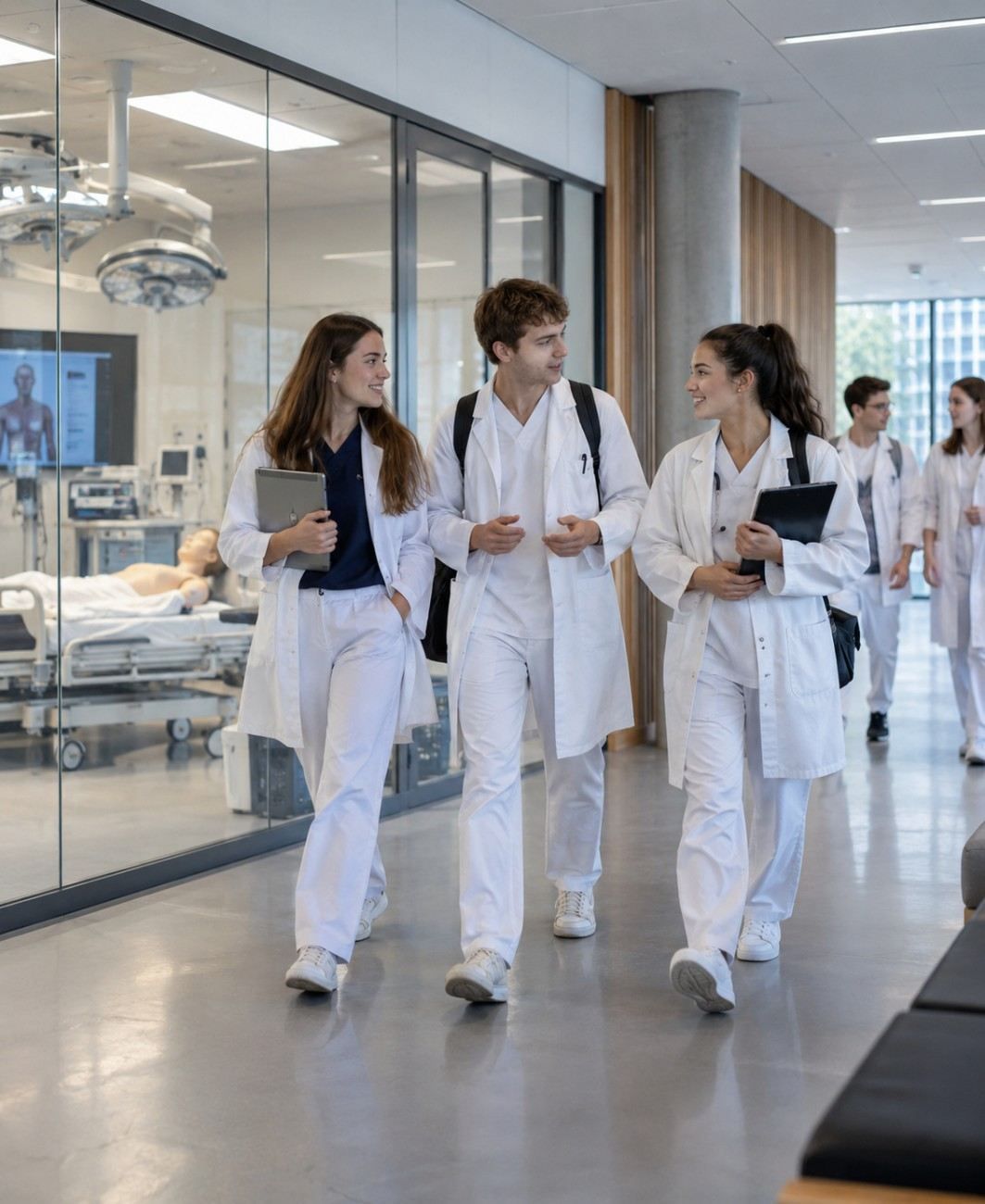
Furnished hostel rooms with Wi-Fi, laundry, 24/7 security, and Indian mess on or near campus.
Indian restaurants and mess facilities serving vegetarian and non-vegetarian home-style food daily.
Strong Indian community with cultural events, festival celebrations, and peer support groups.
Students get hands-on clinical training in government and private hospitals affiliated with the university.
Practical information for students planning to study at MBBS in Paracelsus Medical University.
Prepare for all seasons. Thermal wear for winters, light clothing for summers. University provides heating in hostels.
Student visa processed with university invitation letter. Direct and connecting flights from major Indian cities.
Health insurance included in fees. Medical facility on campus plus city hospitals easily accessible.
Local SIM cards available. WhatsApp and video calls keep you connected with family back home.
Average monthly expenses of $150–$250 covering food, transport, and personal needs.
University library, online databases, and study groups. Seniors mentor juniors through academic challenges.
Our team guides you through every step — from application to arriving on campus.
AMW's Austria specialist determines public (German-medium, EMS) vs SFU (English-medium, private) pathway based on your language level and academic profile.
AMW connects German-track students with certified instructors. C1 certification is required before EMS and clinical years.
AMW provides EMS preparation — natural sciences and cognitive aptitude sections, administered in German.
Full visa and application document set prepared — academic transcripts, language certifications, financial statements
SFU Vienna application submitted by AMW directly. Public university applications managed through Austrian university portals.
AMW receives offer letter, explains terms, and manages initial fee payment — particularly important for SFU's payment schedule
Full visa documentation prepared and submitted to the Austrian Embassy in New Delhi. Begin at least 3 months before departure
Vienna city orientation — accommodation, Wiener Linien transport, banking, SIM card, campus navigation, and first-week expectations.
AMW manages Austrian residence permit application at the local Magistrat. Renewed annually throughout the 6- AMW coordinates Vienna arrival, district registration (Anmeldebestätigung), and accommodation check-in.year programme.
Vienna to Prague: 2 hours. To Budapest: 2.5 hours. To Munich: 3.5 hours. Full Schengen access — weekend travel across Europe is practical and affordable.
Admission Helpline — Contact our counsellors for step-by-step assistance.
“The faculty here is incredibly supportive. The clinical training during hospital rotations has given me real confidence in patient care.”
“Affordable fees without compromising on quality. The campus facilities and hostel life made my transition abroad very smooth.”
“English medium instruction and WHO-recognized curriculum were the deciding factors for me. No regrets so far — excellent experience overall.”
“The university helped with everything from visa to accommodation. Hospital exposure from year three has been invaluable for my FMGE prep.”
“Just cleared my licensing exam on the first attempt. The structured coaching and mock exams during final year were a game-changer.”
“Safe campus, good food options, and a strong Indian student community. The teaching methodology is very practical and hands-on.”
It was established and accredited in 2002, with its first students starting classes in September 2003.
Five years, 360 ECTS credits, run as a single continuous Diploma programme rather than a split Bachelor's and Master's.
No. Teaching runs in German, with strong English-language and international components built into the programme.
No. PMU runs its own three-stage written test and interview instead.
Yes. Fees run to roughly EUR 20,000 to 21,500 per year, around EUR 100,000 to 107,000 for the full programme.
Graduates receive the Dr. med. univ. degree, Doctor medicinae universae, after completing the five-year Diploma programme.
Uniklinikum Salzburg for the Salzburg campus, and Klinikum Nürnberg for the Nuremberg campus.
Not automatically. Indian graduates would still need to clear India's usual foreign-degree licensing route, such as NExT.
It is a private university, run by a nonprofit foundation, though it receives some state funding support.
Since 2014, PMU has trained a full cohort of medical students in Nuremberg, Germany, through a partnership with Klinikum Nürnberg, alongside its original Salzburg site.
Our expert counsellors will guide you through the complete admission process — from documents to airport pickup.