When it comes to medical education in Egypt, people typically think of institutions like Cairo University's Kasr Al-Ainy Faculty of Medicine and Alexandria University's Faculty of Medicine. Suez Canal University Faculty of Medicine in Ismailia is typically not discussed as much as the others. Nonetheless, what makes the faculty remarkable is not its age or size, but its educational philosophy. Indeed, from its foundation, the faculty was created as a pioneer institution of medical education in Egypt.
First of all, the faculty does not follow a typical Egyptian pattern in which the approach to medical education is based on subject-oriented system. Instead, problem-based and community-oriented curriculum was implemented. In fact, the faculty was among the pioneers of problem-based approach in medical education in Egypt. It became possible after the national conference on reform in medical education held in 1978.
The implementation of such a program entailed considerable preparations and even collaboration with other countries. Thus, for example, the founding professors of the faculty Zuhair Noaman and Esmat Ezzat attempted to create the curriculum according to local healthcare requirements, but not simply copy someone else's approach. So, thirteen faculty members were trained at the University of Illinois in health professions education. Moreover, the first group of 49 students entered the faculty in October 1981 and graduated in 1987.
What is more interesting, the faculty attracted the attention even before its official operation started. In 1979 it was chosen as one of ten founding institutions in the world-wide network of community-oriented health sciences schools created by the World Health Organization. Nowadays, there are more than 300 institutions of that kind in the world. Therefore, the attention of WHO to the institution demonstrates its innovative ideas about the education.
In addition to that, the relationship between the Suez Canal University Faculty of Medicine and WHO continues. In 1987 the faculty became WHO Collaborating Centre in Medical Education. The designation remains valid now. Thus, the faculty is one of those rare medical schools in the region with such a long association with WHO.
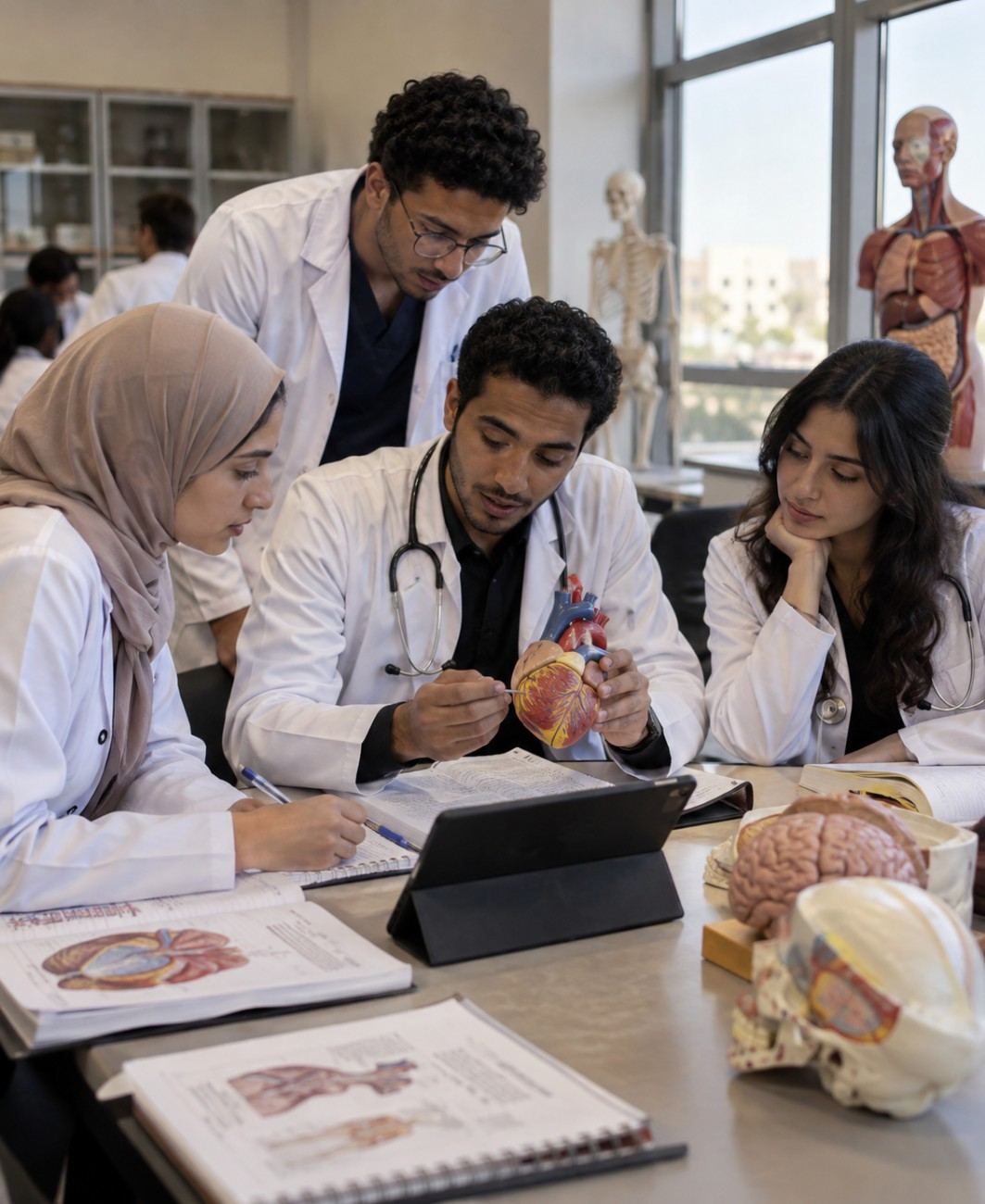
The most important aspect of the educational program of the faculty is its structure. Thus, as opposed to many institutions, the faculty does not study such subjects as anatomy, physiology, biochemistry etc. separately. Instead, students learn the integrated organ-system modules in a format of problem-based learning and small groups discussions.
In addition to that, clinical and community exposure starts earlier than at the most institutions. Students start dealing with patients and public health problems right in the beginning of their study. At the same time, community medicine projects and primary healthcare attachments take place along with the classroom work. It means that the link between theoretical science and healthcare practice is created.
Furthermore, the university supports the educational philosophy. Thus, in 2001 the faculty became the first Medical Education Department in the country. In order to maintain and constantly improve the educational program the department is responsible for the evaluation of teaching methods. Consequently, the process of curriculum development remains constant.
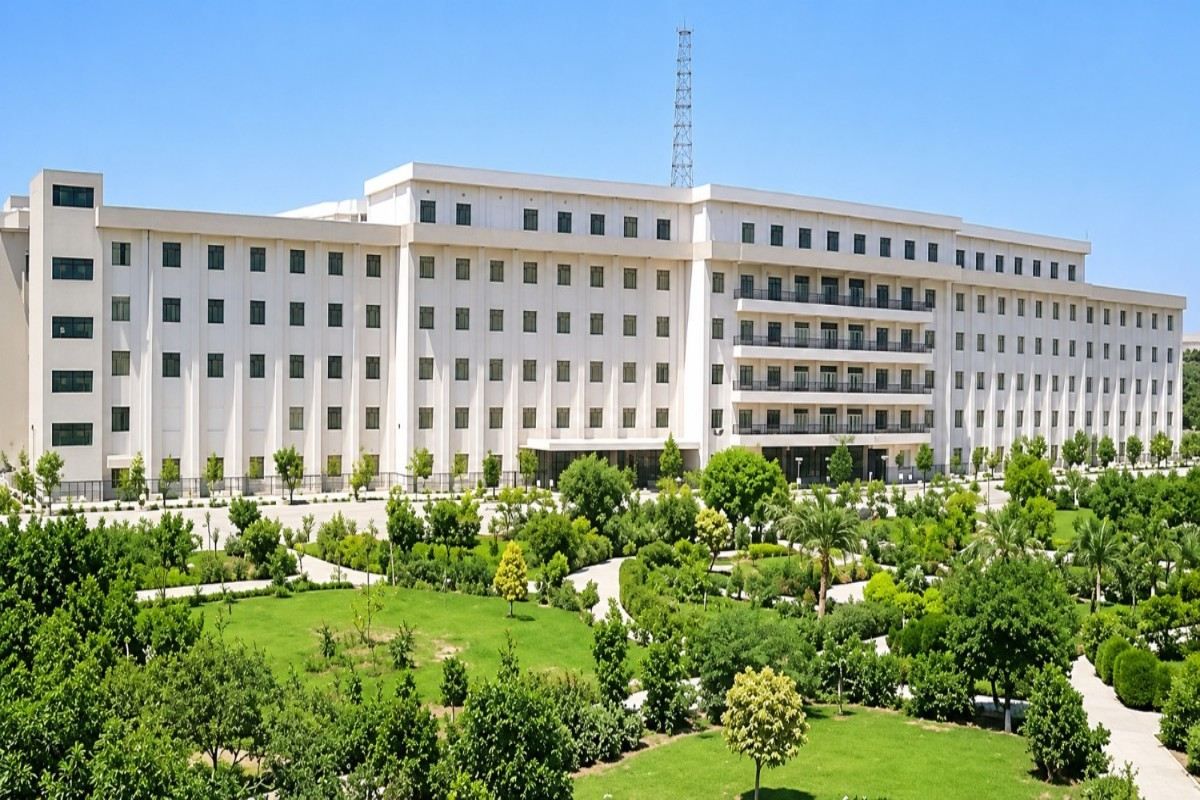
The clinical training of students is carried out in the Suez Canal University Hospital. The hospital opened in 1993 and has 427 general beds plus 146 beds for specialized surgeries and transplant operations. The hospital serves as the main clinical training center for the students. Therefore, students gain a lot of experience in a big and active healthcare institution.
Indeed, the workload in the hospital is quite high. There are 19 operating theatres in the hospital and it supports thousands of operations every year. It means that students get a lot of exposure to real clinical practice in their last years of study. In particular, the number of cases is considered to be one of the advantages of the faculty by students.
Another remarkable thing is the fact that in 2003 Egypt's first Department of Critical Care Medicine was founded there. Indeed, many faculties in Egypt included critical care as a section of internal medicine and did not treat it as an independent discipline.
Finally, recognition and accreditation of the faculty play an important role. In 2010 the faculty was the first university institution in Egypt that received the accreditation of the National Authority for Quality Assurance and Accreditation of Education (NAQAAE). It was the first accreditation in the history of the Egyptian higher education. The faculty got the accreditation again in 2015 after the review process.
Combining WHO Collaborating Centre status, inclusion in World Directory of Medical Schools and other accreditations, the faculty has a good international reputation. It was gained as a result of educational achievements and outcomes, but not because of marketing. This long-term credibility is still one of the unique things about the faculty. For many students it is seen as the institution with proven academic background.
The way of life in Ismailia is completely different from the one in Cairo or Alexandria. Thus, Ismailia is situated on the west bank of the Suez Canal and functions as working canal city, not a tourist one. For students looking for the active metropolitan environment Ismailia can seem less crowded than Egypt's biggest cities. On the other hand, for some students it is an advantage.
Ismailia is approximately two hours away from Cairo by car. The city's identity is connected with the Suez Canal and its economic activity. That is why life in Ismailia is usually quiet and less crowded than in Cairo. It also means that living expenses there are lower.
Accommodation near the university is cheap by international standards. Many international students usually live in hostels and rented accommodations nearby the university. The life of the students usually consists of studying and hospital training and socializing in small places without much nightlife. Such kind of environment is attractive for the students preferring study-focused life.
For international students the tuition fee is usually USD 7,500 for the first year and USD 6,000 for every subsequent year. In case of six-year program the total amount of tuition fees would be approximately USD 37,500. This sum is lower than the tuition fees of many private medical colleges in India and many European medical programs. Cost is one of the practical advantages of the faculty.
The program is delivered in English, which allows attracting international students. Nonetheless, the students are supposed to acquire basic skills in speaking Arabic language. With the help of the training by the end of clinical years the communication with the patients often demands knowledge of at least the basic level of Arabic.
In this respect, Indian students must also remember that choosing to pursue studies in another country does not mean that they are freed from the necessity to have a license in their country of origin. NEET-UG certification remains an indispensable requirement according to current legislation in India. Moreover, the students will have to follow the rules set by NMC after getting their diplomas.
In case you are seeking a unique system of education as well as clinical experience at an early stage of your training and much interaction with patients, then the Suez Canal University can be considered a unique option in comparison with famous Egyptian institutions offering medical education. The advantages of the institution are its unique educational system and international recognition.