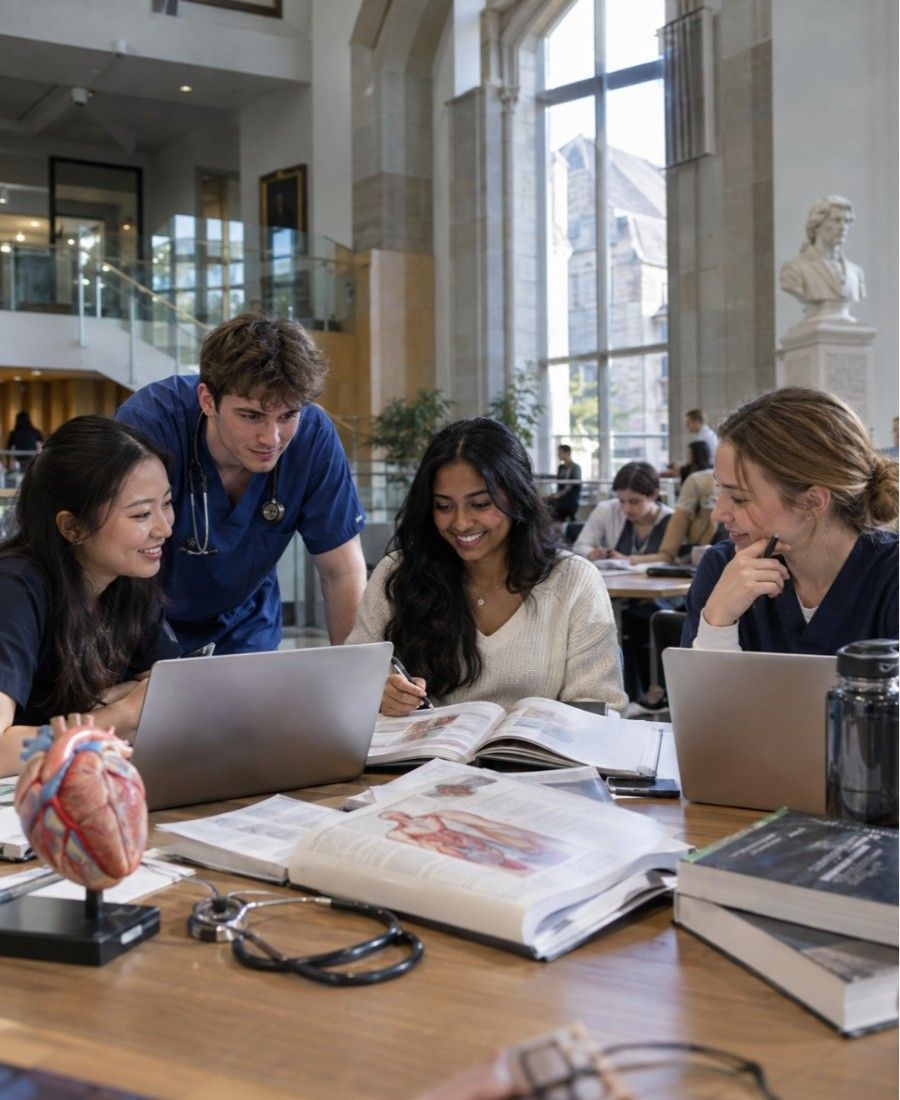
Trinity College Dublin School of Medicine is one of Europe's oldest and most prestigious medical schools, internationally recognised for excellence in medical education, clinical research, innovation, and healthcare leadership. Located in Dublin, Ireland's capital city, the School of Medicine forms part of Trinity College Dublin, Ireland's highest-ranked university and one of the world's leading research-intensive institutions. With a history spanning over three centuries, the medical school has educated generations of physicians, surgeons, researchers, and healthcare leaders who have made significant contributions to medicine worldwide.
Established in 1711, the School of Medicine has continuously evolved to meet the changing demands of global healthcare while maintaining its reputation for academic excellence. Today, it attracts students from more than 120 countries and maintains strong partnerships with internationally recognised teaching hospitals, research institutes, and healthcare organisations across Ireland and beyond.
The university offers a six-year Bachelor of Medicine, Bachelor of Surgery, Bachelor in the Art of Obstetrics (MB BCh BAO) programme for school-leaving students. The programme is internationally recognised as equivalent to the primary medical qualification required for medical practice in many countries. The curriculum follows European medical education standards and integrates biomedical sciences, clinical medicine, communication skills, scientific research, public health, ethics, leadership, and patient-centred healthcare.
Medical education begins with comprehensive instruction in the foundational medical sciences. Students study anatomy, physiology, biochemistry, histology, embryology, molecular biology, genetics, microbiology, immunology, pathology, pharmacology, behavioural sciences, epidemiology, public health, medical ethics, and biostatistics. These subjects provide the scientific foundation before students progress into advanced clinical education.
The curriculum combines lectures with anatomy dissection, laboratory practicals, simulation-based education, problem-based learning (PBL), case-based discussions, digital learning platforms, and small-group tutorials. Students develop critical thinking, scientific reasoning, communication skills, professionalism, teamwork, and evidence-based clinical decision-making throughout the programme.
Early patient contact is introduced from the initial years through communication workshops, clinical skills laboratories, patient interviews, community healthcare exposure, and supervised hospital visits. Students gradually transition into full clinical rotations under the supervision of experienced consultants and clinical educators.
Clinical education takes place through Trinity College Dublin's extensive network of affiliated teaching hospitals, including St James's Hospital, Tallaght University Hospital, Mater Misericordiae University Hospital, St Vincent's University Hospital, Beaumont Hospital, Children's Health Ireland, and several specialist healthcare centres. Students receive comprehensive clinical training across internal medicine, general surgery, paediatrics, obstetrics and gynaecology, cardiology, neurology, psychiatry, orthopaedics, emergency medicine, anaesthesiology, ophthalmology, dermatology, ENT, radiology, oncology, nephrology, endocrinology, pulmonology, gastroenterology, infectious diseases, rehabilitation medicine, family medicine, and community healthcare.
During clinical placements, students actively participate in ward rounds, outpatient clinics, operating theatres, emergency departments, multidisciplinary team meetings, diagnostic procedures, and supervised patient care. These experiences allow students to develop practical clinical competence while applying theoretical knowledge in real healthcare settings.
The School of Medicine is internationally recognised for its outstanding research output. Faculty members conduct pioneering research in cancer biology, neuroscience, cardiovascular medicine, infectious diseases, immunology, genetics, molecular medicine, regenerative medicine, biomedical engineering, digital healthcare, precision medicine, artificial intelligence, ageing research, public health, pharmacology, and global health. Students are encouraged to participate in laboratory research, innovation programmes, scientific publications, international conferences, and faculty-led research projects throughout their education.
Modern educational facilities include advanced anatomy laboratories, clinical simulation centres, biomedical research laboratories, digital learning environments, high-performance research centres, specialised diagnostic laboratories, medical libraries, and interdisciplinary innovation hubs. Students receive training using modern technologies widely adopted in contemporary healthcare systems.
International collaboration remains one of Trinity College Dublin's greatest strengths. The university maintains academic partnerships with leading universities, research institutes, hospitals, and healthcare organisations across Europe, North America, Asia, and Australia. Student exchange programmes, Erasmus+ initiatives, international electives, collaborative research, and visiting faculty programmes provide students with valuable global exposure.
The curriculum incorporates evidence-based medicine, personalised healthcare, digital medicine, healthcare innovation, patient safety, healthcare leadership, professionalism, interdisciplinary collaboration, and ethical medical practice. Graduates develop the knowledge and skills required to practise medicine in increasingly complex global healthcare systems.
Student life at Trinity College Dublin offers an exceptional academic and cultural experience. Students participate in medical societies, research organisations, healthcare outreach programmes, leadership initiatives, volunteer activities, sports clubs, cultural associations, and one of Europe's most active university student communities.
Dublin offers international students an outstanding educational environment with world-class hospitals, vibrant multicultural communities, advanced healthcare infrastructure, rich historical heritage, excellent public transportation, and extensive career opportunities.
The university provides comprehensive student support services including academic advising, international student support, career guidance, counselling, wellbeing programmes, accommodation assistance, digital libraries, research mentorship, and professional development opportunities.
Graduates of Trinity College Dublin School of Medicine pursue careers in clinical medicine, specialist residency training, biomedical research, academic medicine, healthcare leadership, pharmaceutical sciences, public health, and international medical practice. Alumni have gone on to become internationally recognised physicians, researchers, innovators, and healthcare leaders.
Today, Trinity College Dublin School of Medicine continues to rank among Europe's leading medical schools through excellence in education, research, innovation, clinical training, and global collaboration.