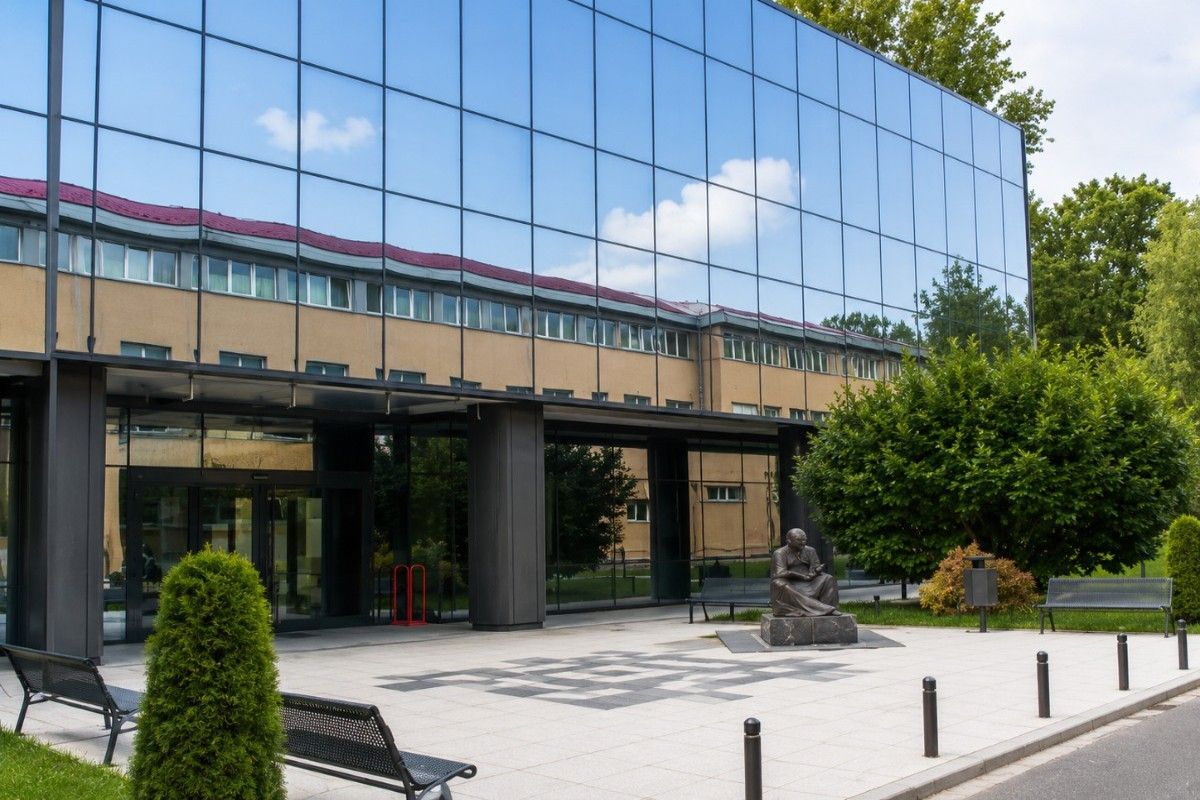
The university has a long history. It goes back to 1707. That year, Franciscans set up a school of theology and philosophy in Osijek. Over time, that school changed. It became a teachers' school at one point. In 1967, a branch of the University of Zagreb opened in Osijek. In 1975, that branch joined with other city schools. Together, they formed the independent University of Osijek. In 1990, the school got a new name. It was named after Bishop Josip Juraj Strossmayer. He was a forward-thinking Catholic bishop born in the city.
The Faculty of Medicine, known locally as MEFOS, has a less clear start date. One source says it has taught medicine for 45 years as of its writing. That would put its start in the late 1970s. Another source says teaching began in 1998. This gap likely comes from a real split. There may have been early medical teaching at Osijek. Later, the faculty became its own full degree-granting school. The exact start year is not fully clear. Both dates are worth knowing.
MEFOS today is a busy, research-active school. It has more than 1,000 students across its programs. It works closely with University Hospital Centre Osijek, known as KBC Osijek. This is the largest hospital in eastern Croatia. It is the main hospital for the Slavonia and Baranja region. That region has close to a million people. Since 2015, MEFOS has led Croatia's National Scientific Centre of Excellence for Personalised Health Care. Its strengths are heart medicine, clinical chemistry, immunology, and brain science. Much of this work looks for new health markers in the blood and body and tests whether they work.
It takes a total of twelve terms, or six years, to earn a degree in medicine. It accrues a total of 360 ECTS credits. The title of Doctor of Medicine, or MD, is earned as a result of this. By successfully completing all of the required examinations, students are able to successfully complete the course. In addition to that, they compose and defend a final paper. In order to submit an application, students must have finished all four years of high school. A portion of the state exit test that is required of them must be passed. In addition, they are required to review the topics of Biology, Physics, and Chemistry as part of that examination.
The course follows one joined-up plan. The first three years cover basic science. Anatomy, body function, and tissue study form the core of this stage. These subjects build a strong grasp of how the body works. This happens before clinical work starts. Years four to six move into full clinical work across hospital wards. Throughout the course, there is a strong focus on talking with patients and on medical ethics. This matters as much as clinical skill.
For the German-language Medicine track, tuition costs between USD 12,960 and USD 17,280 a year. In euros, that is roughly €12,000 to €16,000. The exact cost depends on the setup. This is the one real path open to outside students who want a foreign-language medical degree here. The Croatian-language course works in a different way. It is free for Croatian and EU citizens who win a state-funded spot. Paid spots cost around USD 8,640 a year for those who miss a funded place. A one-time, non-returnable application fee of about USD 216 applies as well.
All outside students, on either track, must go through a step called nostrification. This means sending high school papers to Croatia's Education and Teacher Training Agency in Zagreb. This step checks that a student's grades match the Croatian exit exam. New students must also apply for an OIB. This is a personal ID number. Students need it to sign a rental deal, open a bank account, or get a student ID card. Students must also sign up with Croatia's national health fund, called HZZO. This must happen within eight days of getting a residence permit.
Living costs in Osijek are lower than in Zagreb or Split. This is one of the clearest perks of studying here. The city has no student dorm building. This is a real gap next to Split, which has two dorm options. So students must find their own private housing. Rent in the city usually starts around €300 a month. It can drop to about €200 in nearby areas. All students get an "X-ica" card. This card gives access to cheap university cafeterias. The government pays about 70% of each meal's cost there. A full three-course meal often costs between €1.50 and €3.00. A monthly student bus or tram pass costs around €12 to €15. That is cheap for the region.
Osijek is known locally as the "Green City." It is a calm, walkable place. It has strong old Austro-Hungarian buildings and a well-known river walk along the Drava River. People see it as a safe, family-friendly, student-friendly city. It sits close to the Kopački Rit Nature Park. It also connects well to nearby Hungary and Serbia. Many see it as one of the more affordable Croatian cities to study in. That is a real plus next to the coastal cities or the capital.
It is via Croatia's Council for Higher Education that graduates of the Medicine program are granted official approval. A listing for the program can also be found at FAIMER. This allows graduates to have the opportunity to take the Canadian medical exams in addition to the ECFMG licensing path in the United States. After completing their doctoral studies, alumni have the opportunity to continue their education at MEFOS itself at the expert level. They also have the opportunity to do research for their doctoral degree through the University Doctoral Program in Biomedicine and Health. Paths that are comparable can be found at different schools in Croatia and from other countries.
Unfortunately, there is no designated "NRI seat" for students from India in this location. It is the same general approach for outside students that is followed by applicants as it is for everyone else. Typically, this entails a review of the applicant's high school records, performance on an entrance examination, and an interview. NEET is still a requirement that must be met. This is in accordance with the norm of the National Medical Commission of India, which states that a medical degree earned outside of India must be recognized for practice in India. It makes no difference which Croatian school a kid chooses; this is always the case.
In plain terms, Osijek is a real, solid Croatian medical school. It has a strong tie to a local hospital and a much lower cost of living than its bigger-name peers. But its real use for an English-speaking student is limited by one key fact. Its foreign-language track runs in German, not English. For a German-speaking applicant, or someone happy to study medicine in German, it is a fair and clearly cheaper choice. It compares well against some of Western Europe's German-language medical schools. For an English-speaking student who wants to study medicine in English in Croatia, Zagreb, Rijeka, or Split remain the better fit.