
Q1. Is this program taught in English?
+Yes. The Medical Studies in English (MSE) program has run since 2003, specifically designed for international students, separate from the Croatian-language track for domestic students.
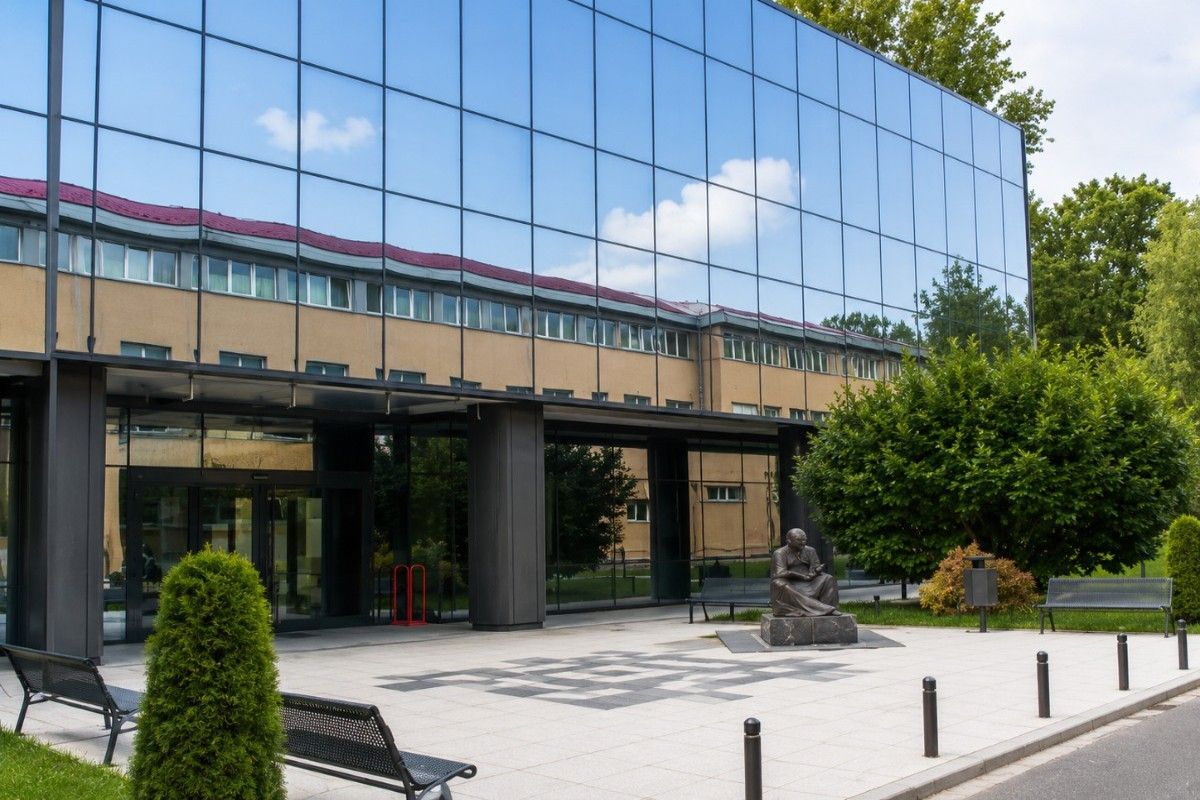
 Croatia | Est. 1917
Croatia | Listed in the World Health Organisation's World Directory of Medical Schools; recognised by the UK General Medical Council, with over 11 graduates registered with the GMC as of 2022. | English (Medical Studies in English program, launched 2003, run separately from the Croatian-language track). medium
Expert will call you within 2 hours
The University of Zagreb is the oldest and largest university in Croatia. It is also the oldest in all of South-East Europe. Its story goes back to 1669. Today, it is a genuinely large school. It has more than 70,000 students. They study across 31 faculties and 12 art academies. That makes it a huge, wide-reaching place of learning, far bigger than any other Croatian university. Its sheer size and age give it a weight and a name that younger Croatian schools simply have not had time to build yet.
Its Faculty of Medicine has its own, more recent start. It was set up in 1917. This came decades after the university's first 1874 rules had already planned for medicine to be one of its four founding faculties. Even so, it remains the oldest and largest of Croatia's four medical schools. The other three sit in Osijek, Rijeka, and Split. Zagreb also has a long history of teaching students from abroad. This history reportedly goes back as far as the years right after World War II. Few medical schools in this part of Europe can point to that length of experience hosting students from outside Croatia's own borders.
The Faculty runs its own Medical Studies in English program, known as MSE. It launched in 2003, built just for students from other countries. It runs fully apart from the Croatian-language track used by local students. The program is said to meet EU teaching standards in full. Its degrees carry real weight abroad too. The school is listed in the World Health Organisation's World Directory of Medical Schools. It is also recognised by the UK's General Medical Council. As of 2022, more than 11 Zagreb graduates were signed up with the GMC. This is a genuinely solid, provable track record. It compares well against some of the newer medical schools in the region, where GMC registration numbers are often smaller simply because their international programs have not been running as long.
The degree runs for six years. It leads to the title of Doctor of General Medicine. There is no fast-track or graduate-entry choice here. Every student follows one steady, six-year plan, no matter their past studies. Since Croatia sits fully inside the EU, the degree is also widely taken up across the European Union. Graduates do not need to sit extra local tests in most cases. This is a real, practical plus for anyone who plans to work somewhere in Europe once they qualify, since it removes an extra layer of local licensing steps that graduates of non-EU medical schools often have to clear.
Getting in is genuinely tough. It rests on a required entrance exam, plus a look at your secondary school marks. The exam itself is a three-hour written test. It holds 120 multiple-choice questions, split evenly across Biology, Chemistry, and Physics. That is 40 questions per subject. To pass, you need at least 15 out of 40 in each single section. You also need a combined score of at least 61 out of 120 overall. Hitting the overall number alone is not enough. If any one section falls short of its own floor, you do not pass, even with a strong total score elsewhere. This section-by-section rule makes broad, balanced preparation across all three subjects far more useful than being excellent in just one or two of them.
Some applicants can skip this entrance exam altogether. This covers candidates with an MCAT score of at least 125 in each section. It also covers those with a BA or BSc in a natural science field, with strong grades in Biology, Physics, and Chemistry. It further covers those who sat SAT Subject Tests in Biology, Physics, and Chemistry, scoring at least 600 in each. Beyond the entrance exam itself, there is one more step for some. Applicants whose past schooling was not in English must also show proof of English skill. This can come through TOEFL, IELTS, or an equal test. Some other Croatian medical schools, such as Rijeka, do not ask for this in quite the same way, since their own entrance tests already run fully in English. Zagreb's approach, by contrast, treats English proof and the science entrance test as two separate, standalone requirements.
The paperwork here is heavy, and it is worth taking seriously. Applicants need translated, notarised, and formally checked copies of their school records. Nostrification, which means official Croatian recognition of your secondary school leaving certificate, is a must before you can enrol. Applications generally stay open until roughly two weeks before the set entrance exam date. There is a single yearly intake, starting in the Winter term. Enrolment happens in September, and classes start at the very start of October. By most accounts, there are around 50 seats open for international students each year. This makes the program genuinely selective, given how many people apply for those spots. The short window does not allow for last-minute fixes, so applicants should plan their travel and documents well ahead of the deadline.
Candidate gets their offer letter with certain conditions. A non-refundable deposit is due within 10 days to hold the place. This is a substantial upfront sum. It later counts toward the first part of tuition. Miss that window, and the seat goes to the next-ranked applicant instead. It is not fully clear from public sources whether the school formally allows mid-program transfers from other medical schools. This is worth asking about directly, rather than guessing either way, particularly for students already partway through a medical degree elsewhere who are weighing a move to Zagreb.
Clinical training runs through a genuinely strong hospital network. KBC Zagreb, also known as Rebro, is the main clinical base. It is the largest hospital in the whole country. KBC Sestre Milosrdnice gives a second major teaching hospital, also based in Zagreb. Beyond these two flagship sites, students also train at the Škola narodnog zdravlja "Andrija Štampar," for public health work. There are further specialised clinics too, including KB Dubrava and KB Merkur. Hands-on skills work happens at modern simulation centres on Šalata Hill, the same area where the medical school itself sits, so students move between classroom, lab, and hospital settings without needing to cross the city.
Zagreb, as a city, gives students a genuinely comfortable, fairly priced base for six years of study. The city holds more than 20 subsidised university cafeterias, known as Mensas. The two nearest to the medical school sit at the School of Medicine itself and the nearby School of Economics. Every student gets an "X-ica" card, which unlocks these cheap meals. A full meal there often costs just a few dollars. Students who would rather cook at home can do so easily, since most live in private flats rather than dorms. They should still plan a modest monthly sum for groceries. A monthly public transport pass, covering Zagreb's tram and bus network, runs cheap by Western European standards. Housing costs shift more widely, depending on the type and spot of housing chosen, so it pays to compare a few neighbourhoods before signing a lease.
In plain terms, this is Croatia's flagship medical school. It may well be its most established name abroad too. It is an old, large, well-resourced school. It carries a genuinely strong, provable GMC-registration record. Its entrance exam process is demanding, but it is also clearly laid out and well documented. It runs a large hospital network, anchored by the country's biggest hospital. This school suits driven school leavers who want a solid, EU-recognised medical education, set in a real European capital city. Just be ready for a competitive entrance exam, and for the fuller paperwork process that comes with applying here, since neither is likely to get any easier the longer you wait to start preparing.
No hidden charges, no donation. The full picture of costs at MBBS In University of Zagreb Faculty of Medicine.
Tuition Fee
Approx. USD 12,960 per year (approx. INR 11.28 lakh) if paid in a single instalment
USD 12,960 INR 11.28 lakh
Hostel Fee
Approx. USD 5,000 per year (approx. INR 4.35 lakh), based on typical private apartment housing costs in Zagreb.
USD 5,000 INR 4.35 lakh
Food & Meals
USD 3,600 INR 3.13 lakh
per year
Insurance
USD 470 INR 0.41 lakh
per year
Donation
No Donation
No Hidden Fees
Total Estimated Cost
USD 77,760 (INR 67.68 lakh)
total 6 year
25–35%
Average FMGE first-attempt pass rates for students from many overseas medical universities. Students from structured programs consistently score higher.
Students returning to India need to clear the FMGE/NExT exam. MBBS In University of Zagreb Faculty of Medicine integrates exam-oriented coaching into the regular curriculum so students are prepared from day one.
A structured program that takes you from foundational sciences to clinical mastery.
Students acquire comprehensive biomedical knowledge through lectures, laboratory sessions, cadaver dissections, clinical simulation, research activities, and introductory patient interactions.
Human Anatomy, Histology, Physiology, Biochemistry, Genetics, Pathology, Pharmacology, Microbiology, Immunology, and Medical Ethics.
Students undergo intensive clinical training in university hospitals, participating in ward rounds, outpatient clinics, surgical procedures, diagnostic medicine, and supervised patient management across various medical specialities.
Internal Medicine, Surgery, Paediatrics, Obstetrics & Gynaecology, Psychiatry, Neurology, Family Medicine, Emergency Medicine, Radiology, and Electives

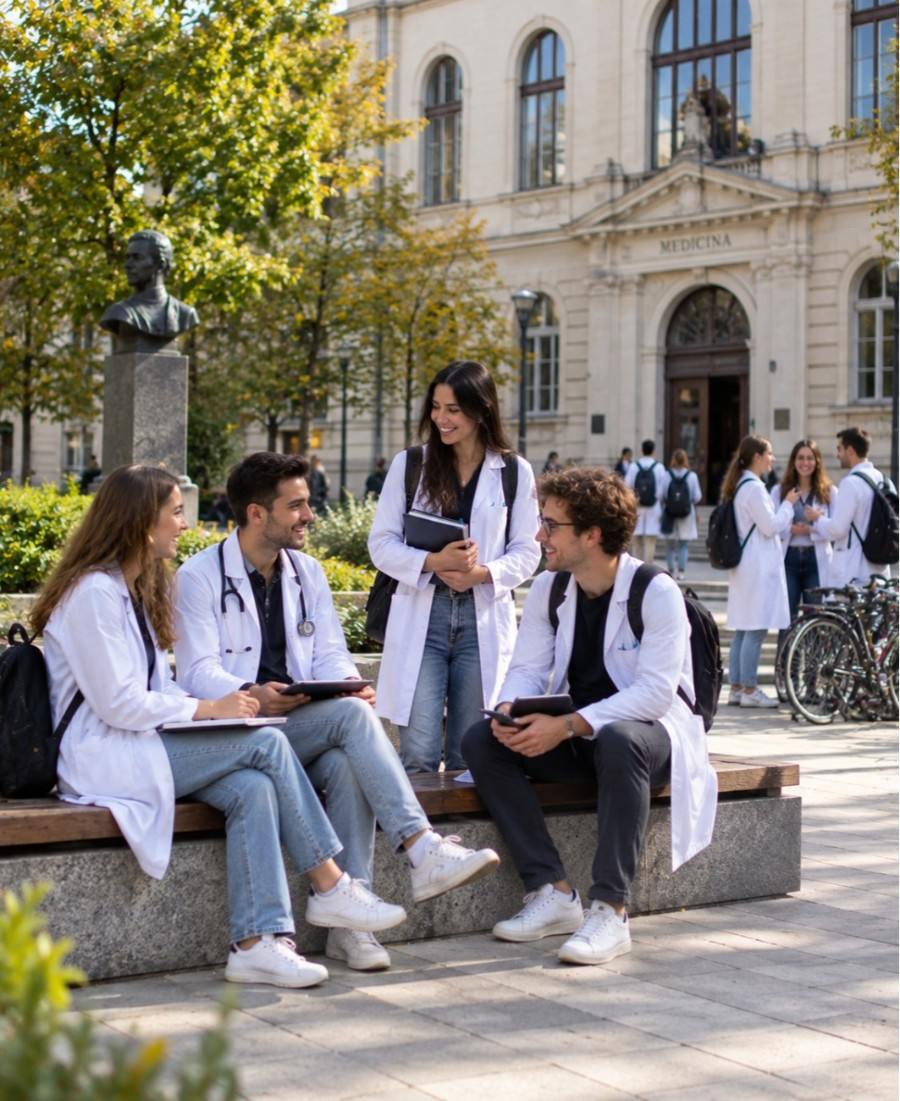
Furnished hostel rooms with Wi-Fi, laundry, 24/7 security, and Indian mess on or near campus.
Indian restaurants and mess facilities serving vegetarian and non-vegetarian home-style food daily.
Strong Indian community with cultural events, festival celebrations, and peer support groups.
Students get hands-on clinical training in government and private hospitals affiliated with the university.
Practical information for students planning to study at MBBS In University of Zagreb Faculty of Medicine.
Prepare for all seasons. Thermal wear for winters, light clothing for summers. University provides heating in hostels.
Student visa processed with university invitation letter. Direct and connecting flights from major Indian cities.
Health insurance included in fees. Medical facility on campus plus city hospitals easily accessible.
Local SIM cards available. WhatsApp and video calls keep you connected with family back home.
Average monthly expenses of $150–$250 covering food, transport, and personal needs.
University library, online databases, and study groups. Seniors mentor juniors through academic challenges.
Our team guides you through every step — from application to arriving on campus.
AMW begins with a comprehensive assessment of your academic profile, financial capacity, and career goals. We evaluate which Croatian medical school (Zagreb, Rijeka, or Split) best suits your profile and compare Croatia transparently against Czech Republic, Hungary, and Poland as comparable EU-English-medium alternatives
Applications to Croatian medical schools are submitted directly through university portals or through international office channels. AMW assists with the complete application package — transcripts, motivation letter, reference letters, passport, NEET scorecard, and financial documentation. Application deadlines typically fall between April and July.
All three English-medium Croatian medical schools require an entrance examination in Biology, Chemistry, and Physics conducted in English. AMW provides structured guidance and content resources for entrance exam preparation. Some universities (notably Split) may also consider BMAT scores.
Indian students require a Croatian Type D long-stay visa for the duration of their studies. AMW assists with the complete visa application submitted to the Croatian Embassy or Consulate. Required documents include an admission letter, financial proof, health insurance, a passport, and proof of accommodation. Processing typically takes 4–6 weeks.
AMW coordinates pre-departure preparation and provides arrival orientation for students heading to Zagreb, Rijeka, or Split.
Admission Helpline — Contact our counsellors for step-by-step assistance.
“The faculty here is incredibly supportive. The clinical training during hospital rotations has given me real confidence in patient care.”
“Affordable fees without compromising on quality. The campus facilities and hostel life made my transition abroad very smooth.”
“English medium instruction and WHO-recognized curriculum were the deciding factors for me. No regrets so far — excellent experience overall.”
“The university helped with everything from visa to accommodation. Hospital exposure from year three has been invaluable for my FMGE prep.”
“Just cleared my licensing exam on the first attempt. The structured coaching and mock exams during final year were a game-changer.”
“Safe campus, good food options, and a strong Indian student community. The teaching methodology is very practical and hands-on.”
Yes. The Medical Studies in English (MSE) program has run since 2003, specifically designed for international students, separate from the Croatian-language track for domestic students.
Yes, and you have to do it unless you get exempted. It is a written test with 120 questions and it is 3 hours long. The test covers Biology, Chemistry and Physics. There are minimum scores you need to get in each section and a combined minimum score as well.
Possibly. There are exemptions for applicants who have an MCAT score of at least 125 in each section, a BA/BSc in natural sciences with strong relevant grades, or SAT Subject Test scores of at least 600 in Biology, Physics and Chemistry.
Most sources consistently point to approximately USD 12,960 per year (about INR 11.28 lakh), though one source cites a notably lower, conflicting figure. Confirm the exact current fee directly with the Faculty of Medicine.
No. All students follow the same six-year programme no matter what their academic background is. There is no fast-track or graduate-entry route at this school.
Yes, with a good evidence base. It’s listed in the WHO’s World Directory of Medical Schools and recognised by the UK General Medical Council, with over 11 graduates registered with the GMC as of 2022, a very solid track record.
Yes. Indian applicants must qualify in NEET to meet National Medical Commission requirements for studying medicine abroad, the standard rule applying across foreign medical degrees generally.
Primarily at KBC Zagreb (Rebro), Croatia's largest hospital, and KBC Sestre Milosrdnice, both major teaching hospitals in Zagreb, alongside additional specialised clinics and a public health training institute.
Approximately 50 seats per year, making this a genuinely selective program given its strong international reputation and the size of its applicant pool.
You'll need to pay a substantial non-refundable deposit within 10 days to secure your place, which then counts toward your first tuition instalment. Missing this deadline means the seat goes to the next-ranked applicant instead.


Our expert counsellors will guide you through the complete admission process — from documents to airport pickup.