Q1. When was VinUniversity's College of Health Sciences established?
+VinUniversity was formally approved in December 2019, and the College of Health Sciences opened alongside the university's first academic year on 17 October 2020.

 Vietnam | Est. 2019
Vietnam | Accredited by Vietnam's Ministry of Education and Training; residency programmes hold ACGME-International accreditation, one of only two such programmes in Southeast Asia. | English medium
Expert will call you within 2 hours
People mostly just call it VinUni for short. It's a genuinely distinctive institution among Vietnamese universities, founded by Vingroup, Vietnam's largest private conglomerate, and built specifically as the country's first private, not-for-profit university aiming for genuine international excellence. So, unlike most Vietnamese medical schools, which are either long-established public institutions or smaller private colleges, this one launched with the explicit backing of Vietnam's biggest private company.
The founding story here is genuinely well documented, step by step. In November 2017, Vingroup began collaborating with Cornell University's SC Johnson College of Business to explore building a new private Vietnamese university aiming for a QS five-star rating. In June 2018, the University of Pennsylvania entered a formal alliance with Vingroup specifically to help establish medical and nursing schools within this new university, and to strengthen graduate medical education across Vietnam's largest private nonprofit health system, Vinmec, also part of Vingroup. The Prime Minister of Vietnam formally approved VinUniversity's establishment in December 2019, under Decision No. 1824/QĐ-TTg.
Here's a fact most guides skip entirely. Construction of the main campus began in November 2018, and Vingroup completed the entire first phase, covering 230,000 square metres, in just fourteen months, officially inaugurating the campus on 15 January 2020. The build cost around 6,500 billion Vietnamese dong, roughly USD 285 million. So, this university went from groundbreaking to fully operational campus in barely over a year, a genuinely rapid timeline for a project of this scale.
The College of Health Sciences opened alongside VinUni's other two founding colleges, Business and Management, and Engineering and Computer Science, when the university's first academic year officially began on 17 October 2020. That very first cohort was capped at just 260 students, 230 full-time undergraduates and 30 exchange students, selected from nearly 4,500 applicants. Remarkably, in that same inaugural year, VinUni also enrolled its first resident physicians for graduate medical education, training specifically in Internal Medicine, General Surgery, and Paediatrics, alongside its undergraduate Doctor of Medicine and Nursing programmes.
VinUni's strategic academic partnerships are genuinely substantive rather than symbolic. The university built its Health Sciences programme in direct collaboration with Weill Cornell Medicine and Penn Medicine, the medical school of the University of Pennsylvania, both consistently ranked among the world's top 20 universities. A genuinely notable outcome of this partnership is VinUni's ACGME-International accredited residency programmes, a US-based graduate medical education accreditation held by only two institutions in the whole of Southeast Asia.
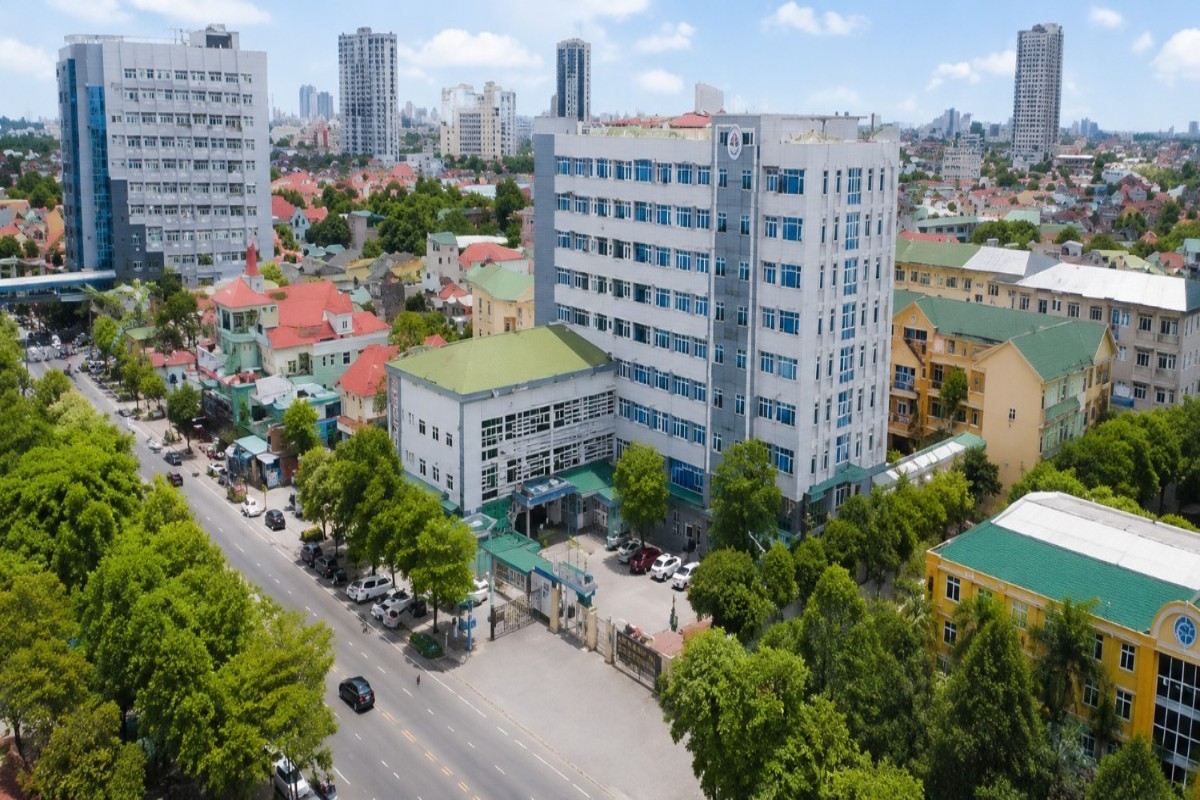
VinUni's campus sits within Vinhomes Ocean Park, a large residential development in Gia Lam district, on Hanoi's eastern edge. The campus operates as a genuinely self-contained, residential college, with dedicated dormitories for all first-year students, and, distinctively, for faculty as well, who live and work alongside their students on site. Facilities from the very first construction phase include a 1,500-seat auditorium, a sports complex with a swimming pool, and a 24-hour library spanning 4,000 square metres, built with capacity for around 1,000 students working concurrently.
Clinical training draws on the Vinmec Healthcare System, Vingroup's own private nonprofit hospital network, alongside external partner hospitals including Military 108 Hospital in Hanoi, where VinUni faculty and students work directly in departments such as neurology. So, students here train across both a purpose-built private hospital system tied directly to the university's own parent company, and established external Vietnamese hospitals.
VinUni's Doctor of Medicine programme runs 72 months, six years, taught entirely in English. A genuinely distinctive feature of this programme is its admissions philosophy: VinUni's own MD programme leadership has stated explicitly that there is no standardised entrance exam. Instead, applicants are evaluated holistically, as individuals who want to serve humanity as either clinicians or researchers, with past academic performance considered alongside personal interests, hobbies, and non-academic activities, weighed relative to each applicant's own opportunities and circumstances. A personal interview forms a central part of the final decision.
Tuition fees here are genuinely high by Vietnamese standards, reflecting VinUni's premium, Ivy League-partnered positioning. The listed, gross tuition for the MD programme and other non-Nursing undergraduate programmes runs to roughly 816 million to 932 million Vietnamese dong a year, approximately USD 35,000 to 40,000. However, every admitted VinUni student automatically receives a 35 percent subsidy from the Fund for Education Development, applied for the entire duration of study provided the student remains in good academic standing. After this automatic subsidy, the effective annual tuition for the MD programme runs to approximately 530 million dong, roughly USD 22,000 to 23,000 a year.
Beyond the automatic subsidy, VinUni offers further merit-based scholarships, covering 50 to 100 percent of tuition for students with outstanding academic capability, creativity, and commitment, with full-scholarship recipients also receiving a living stipend of roughly USD 1,500 a year. A separate Need-Sensitive International Fellowship, aimed specifically at international students facing genuine financial hardship, covers 50 to 80 percent of tuition, working out to a total value of roughly USD 70,000 to 112,000 across the degree. Students who receive either scholarship type are not eligible to also claim the automatic 35 percent subsidy.
International students must also pay a compulsory health insurance fee, unless they already hold a valid equivalent policy, reported at approximately 5.7 million dong a year, roughly USD 245, compared to a much lower rate for Vietnamese students. NEET remains relevant for Indian applicants specifically because India's own National Medical Commission requires it before graduates can pursue the FMGE or NExT licensing exam back home, not because VinUni's own admissions process requires it.
Parameter | Details |
Established | Prime Minister approval December 2019 (Decision No. 1824/QĐ-TTg); first academic year began 17 October 2020 |
Institution Type | Private, not-for-profit university, founded by Vingroup, Vietnam's largest private conglomerate |
Location | Vinhomes Ocean Park, Gia Lam district, Hanoi, Vietnam |
Programme | Doctor of Medicine (MD), English-medium, six-year undergraduate programme |
Duration | 72 months (6 years); no separate NEET-style entrance exam, using a holistic, interview-based admissions process instead |
Medium of Instruction | English |
Foreign Quota Note | NEET remains an Indian regulatory requirement for practising in India; VinUni's own MD admissions process has no standardised entrance exam |
Teaching Hospital | Vinmec Healthcare System and partner hospitals, including Military 108 Hospital, Hanoi |
Fee Component | Amount | Notes |
Listed Tuition (before automatic subsidy) | Approx. 816 million to 932 million VND per year (approx. USD 35,000 to 40,000) | Gross tuition before the standard 35% Vingroup subsidy is applied |
Effective Tuition (after automatic 35% subsidy) | Approx. 530 million VND per year (approx. USD 22,000 to 23,000) | Applied automatically to all admitted students in good academic standing, for the full duration of study |
Merit Scholarships | 50% to 100% of tuition fee | Awarded for outstanding academic capability, creativity, and commitment; full scholarships include a living stipend of approx. USD 1,500 per year |
Need-Sensitive International Fellowship | 50% to 80% of tuition fee (approx. USD 70,000 to 112,000 total value) | Specifically for international students facing genuine financial hardship |
Compulsory Health Insurance (international students) | Approx. 5,700,000 VND per year (approx. USD 245) | Required unless a valid existing health insurance card is presented |
Most rival pages describing new Vietnamese medical schools cite vague international ties. VinUni's residency programmes hold actual ACGME-International accreditation, a specific US graduate medical education standard held by only two institutions across the whole of Southeast Asia. So, this claim rests on an independently issued American accreditation, not marketing language dressed up as partnership.
Most guides describe medical school admission purely through entrance exam scores. VinUni's own MD programme leadership states plainly that there is no standardised entrance exam at all, evaluating applicants instead through academic history, personal interests, and an interview exploring their motivation to serve humanity. So, this represents a genuinely different admissions philosophy from nearly every other medical school covered in comparable guides.
Be very clear about the real trade-off here. Even after VinUni's automatic 35 percent subsidy, effective tuition runs to roughly USD 22,000 to 23,000 a year, working out to well over USD 130,000 across the full six-year programme, genuinely one of the most expensive medical degrees covered in comparable Vietnamese university guides. As a university that only opened in 2020, VinUni doesn't yet carry a long, multi-decade graduate track record. Scholarship and fellowship support can meaningfully reduce this cost, but eligibility isn't guaranteed.
So, who fits here best? Students drawn to a genuinely premium, Ivy League-partnered medical education, with real ACGME-International accredited residencies and a distinctive, exam-free admissions process, fit well here, provided the cost is manageable or offset by scholarship support. Students who value a self-contained, residential campus model, with faculty living alongside students, fit well too. However, applicants specifically seeking Vietnam's most affordable MBBS options should look elsewhere, since VinUni sits at the opposite end of the pricing spectrum. Still, the genuine Penn and Cornell partnerships, and the rare ACGME-International accreditation, are real, well-documented strengths.
No hidden charges, no donation. The full picture of costs at MBBS in Vin University College of Health Sciences.
Tuition Fee
815,850,000 VND
Approx. USD 22,000 to 23,000 per year — approx. USD 132,000 to 138,000 over 6 ye
Hostel Fee
Not consistently reported; Hanoi is a major capital city, so costs run higher than smaller Vietnamese cities
Not consistently reported; Hanoi is a major capital city, so costs run higher th
Food & Meals
3,000,000 VND
per month
Insurance
Approx. USD 245 per year — approx. USD 1,470 over 6 years
per year
Donation
No Donation
No Hidden fee
Total Estimated Cost
Roughly USD 133,500 to 139,500 over 6 years (tuition and insurance only) — living costs add to this baseline
6 year
25–35%
Average FMGE first-attempt pass rates for students from many overseas medical universities. Students from structured programs consistently score higher.
Students returning to India need to clear the FMGE/NExT exam. MBBS in Vin University College of Health Sciences integrates exam-oriented coaching into the regular curriculum so students are prepared from day one.
A structured program that takes you from foundational sciences to clinical mastery.
● Taught entirely in English, built in collaboration with Weill Cornell Medicine and Penn Medicine faculty.
● Covers Anatomy, Physiology, and Biochemistry, forming the scientific foundation for everything that follows.
● Draws on VinUni's close curriculum ties with two top-20 world-ranked US medical schools.
● Covers Pathology, Microbiology, Pharmacology, and Community Medicine.
● Runs through the Vinmec Healthcare System and partner hospitals, including Military 108 Hospital, Hanoi.
● Covers Medicine, Surgery, and Obstetrics and Gynaecology, plus allied clinical subjects.
● Enrolled since the university's very first academic year, alongside the undergraduate MD programme.
● VinUni also runs ACGME-International accredited residency programmes in Internal Medicine, General Surgery, and Paediatrics.


Furnished hostel rooms with Wi-Fi, laundry, 24/7 security, and Indian mess on or near campus.
Indian restaurants and mess facilities serving vegetarian and non-vegetarian home-style food daily.
Strong Indian community with cultural events, festival celebrations, and peer support groups.
Students get hands-on clinical training in government and private hospitals affiliated with the university.
Practical information for students planning to study at MBBS in Vin University College of Health Sciences.
Prepare for all seasons. Thermal wear for winters, light clothing for summers. University provides heating in hostels.
Student visa processed with university invitation letter. Direct and connecting flights from major Indian cities.
Health insurance included in fees. Medical facility on campus plus city hospitals easily accessible.
Local SIM cards available. WhatsApp and video calls keep you connected with family back home.
Average monthly expenses of $150–$250 covering food, transport, and personal needs.
University library, online databases, and study groups. Seniors mentor juniors through academic challenges.
Our team guides you through every step — from application to arriving on campus.
Compare based on fees, clinical exposure starting year, city, and current NMC/WDOMS status, not just the cheapest headline number. This comparison step is where most of the confusion about MBBS in Vietnam and the fees for Indian students is actually resolved.
Submit academic transcripts and NEET scorecard to the university, either directly or through an authorised admission partner.
The university's international admissions office verifies submitted documents and academic eligibility.
Most universities issue this within 5–10 working days of document approval, though this can take longer during peak intake season.
Pay the first-year fee or an agreed-upon advance to confirm your seat.
The university registers your Letter of Invitation with the relevant Vietnamese education authority before the visa stage begins.
Apply for the student visa at the Vietnamese embassy/consulate in India; realistic processing time is 10–20 working days.
Book travel, confirm arrival dates with the university's international office, finalise documents, and arrange insurance in the final 30 days.
Complete on-arrival registration with local authorities within the required window (commonly 3–5 working days) — this is what legally covers your stay for the semester, not the entry visa alone.
Open a local bank account, get a local SIM card, attend orientation (including basic language sessions where offered), and start building routine and community connections.
Admission Helpline — Contact our counsellors for step-by-step assistance.
“The faculty here is incredibly supportive. The clinical training during hospital rotations has given me real confidence in patient care.”
“Affordable fees without compromising on quality. The campus facilities and hostel life made my transition abroad very smooth.”
“English medium instruction and WHO-recognized curriculum were the deciding factors for me. No regrets so far — excellent experience overall.”
“The university helped with everything from visa to accommodation. Hospital exposure from year three has been invaluable for my FMGE prep.”
“Just cleared my licensing exam on the first attempt. The structured coaching and mock exams during final year were a game-changer.”
“Safe campus, good food options, and a strong Indian student community. The teaching methodology is very practical and hands-on.”
VinUniversity was formally approved in December 2019, and the College of Health Sciences opened alongside the university's first academic year on 17 October 2020.
No, VinUni's MD programme uses a holistic, interview-based admissions process instead of a standardised entrance exam.
Yes, a valid, qualifying NEET score is required for Indian applicants under India's own national rules, even though VinUni's own process has no standardised exam.
It runs 72 months, six years, with no separate rotating internship year appended beyond the programme's own clinical training.
Effective tuition, after VinUni's automatic 35% subsidy, runs to approximately USD 22,000 to 23,000 a year, totalling well over USD 130,000 across the six-year programme.
Vingroup, Vietnam's largest private conglomerate, founded VinUniversity as the country's first private, not-for-profit university.
Training runs through the Vinmec Healthcare System and partner hospitals, including Military 108 Hospital in Hanoi.
VinUni's Health Sciences programme was built in collaboration with Weill Cornell Medicine and Penn Medicine, both top-20 world-ranked universities.
Yes, the entire MD programme is taught in English.
Yes, merit-based scholarships covering 50-100% of tuition, and a Need-Sensitive International Fellowship covering 50-80%, are both available, though eligibility isn't guaranteed.
Our expert counsellors will guide you through the complete admission process — from documents to airport pickup.