
1. Is the programme taught in English?
+No. Teaching runs in Turkish. A prep year is open for foreign students who need language training first.
 Turkey | Est. 2018
Turkey | Turkish Council of Higher Education (YÖK). Also listed in WDOMS. | Turkish. A prep year is open for students who need it. medium
Expert will call you within 2 hours
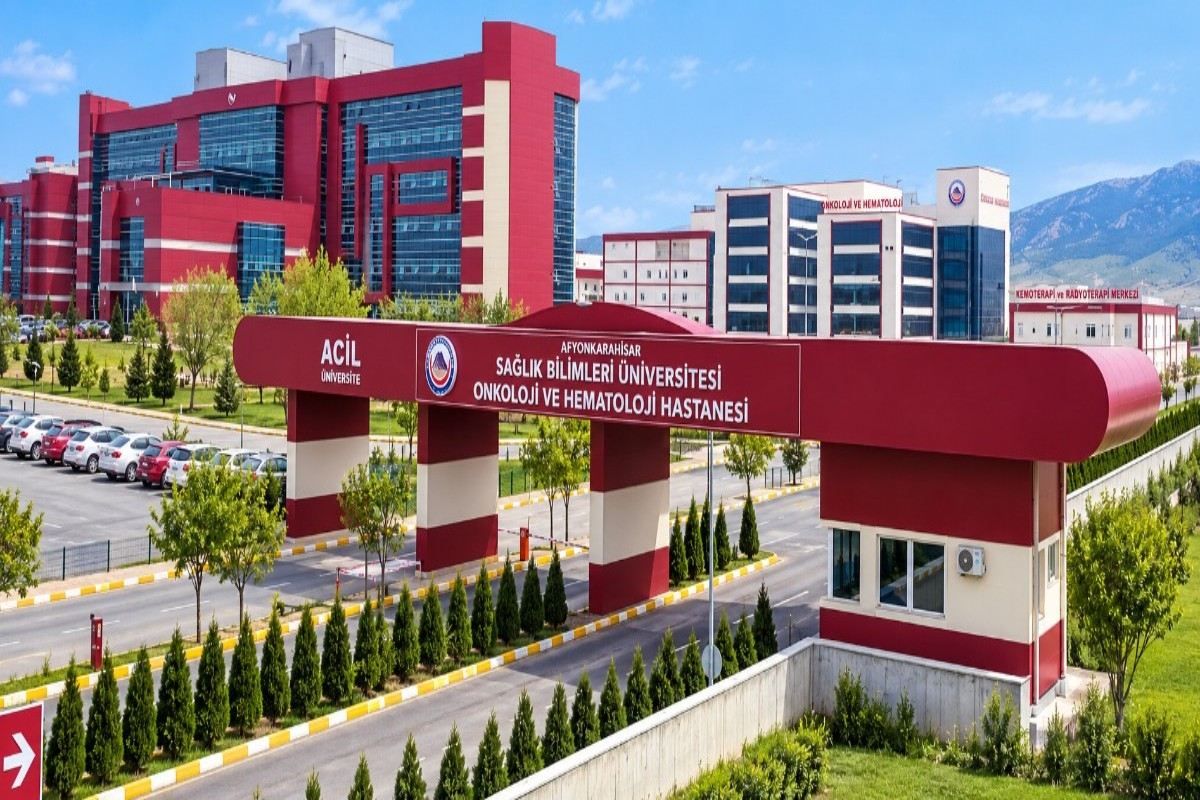
Afyonkarahisar sits in western Anatolia. It's famous for two things. Thermal springs. And a huge historic castle rock. Inside this city sits a real medical school. It's called Afyonkarahisar Health Sciences University. The Faculty of Medicine runs there.
This university is fairly new. It started in 2018. But don't let that fool you. It didn't start from zero. It grew from an older school instead. That school was Afyon Kocatepe University. Its medical and health faculties had trained doctors since the early 1990s. This history matters a lot. The medical faculty brings three decades of real teaching time. It brings a real hospital too. It brings a mature, tested curriculum. All of this sits inside a newer university brand.
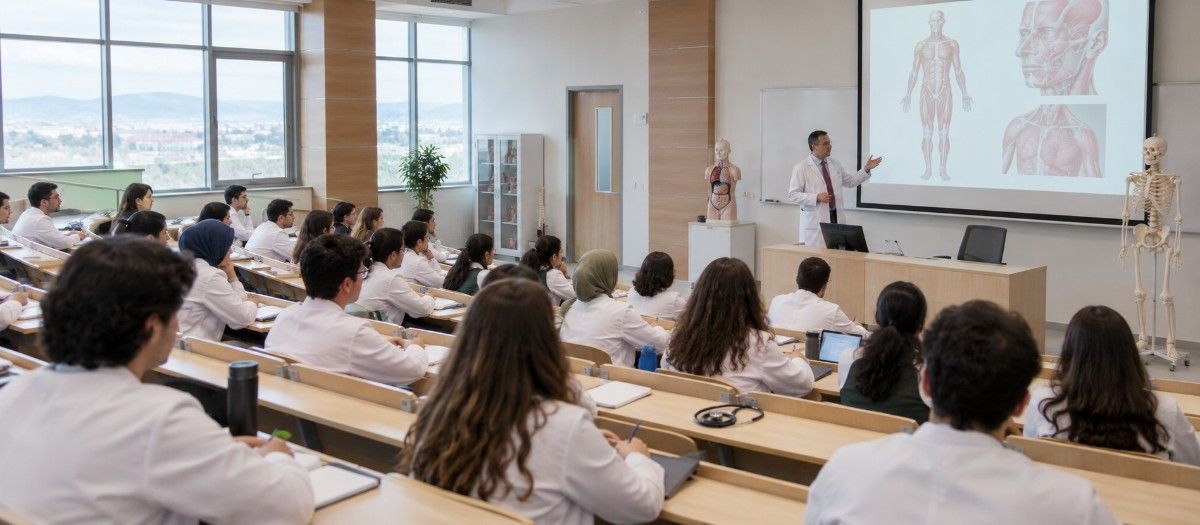
The medical program runs six years total. The first two years cover basic science. Teaching runs through integrated, system-based blocks. You study anatomy first. Then physiology. Then biochemistry. Then histology and medical biology too. Lab work runs alongside this. So do problem-based group sessions.
Year three shifts things up. Pathology enters the picture. So does microbiology. So does pharmacology. Clinical skills teaching starts here too. This happens in a dedicated skills lab. You practise exams and procedures on simulators first. Real patients come later.
Clinical training runs from year four through year six. The main teaching site is one big hospital. It's called the Afyonkarahisar Health Sciences University Training and Research Hospital. This hospital serves the whole city. It also serves nearby provinces. Patient numbers run high here. You get real, hands-on experience early because of this. Rotations cover internal medicine. They cover surgery too. Paediatrics. Obstetrics and gynaecology. Psychiatry. Family medicine. Every major surgical and medical sub-specialty gets covered too.
Year six works differently. It's your internship year. You carry real, supervised responsibility for patients here. This is close to being a real working doctor. It happens before you actually are one.
Now, an important fact. Teaching runs in Turkish here. Not English. Foreign students need real Turkish skill for this program. The university does offer help, though. A prep year exists for students who need it. Some optional courses use English. So do some scientific activities. But ward work always needs Turkish. Plan your language learning as a real, core part of this degree. Don't treat it as an afterthought.
Afyonkarahisar itself sits in a useful spot. Main roads and rail lines connect it to Ankara. They connect it to Izmir too. Antalya sits within reach as well. Travel around Turkey stays genuinely easy from here. The city itself runs compact. It runs safe. It runs cheap too. Students live in state dorms or private flats. Monthly costs stay well below big-city levels.
There's a fun local perk too. A whole thermal hotel district sits nearby. This adds a genuinely unusual leisure option. The Phrygian Valley sits close by as well. It offers real hiking, among ancient rock monuments carved centuries ago.
This university focuses fully on health sciences. Nothing else. Alongside medicine, it runs dentistry and pharmacy faculties. It runs nursing schools too. Physiotherapy programs sit here as well. This focus matters in practice. Medical students share labs with these other health students. They share simulation centres too. They share clinical placements. This builds real teamwork habits early, across different health professions.
Research here centers on clinical and basic science work. Most projects tie directly to the hospital. Students can join research groups during optional periods. The university publishes in national journals. It publishes in international ones too. Academic staff include professors trained at major centres. Some trained in Ankara. Others trained in Istanbul. Class sizes stay small in the clinical years. This means real, direct contact with senior doctors.
For foreign students, the practical picture stays clear. Fees run low. Living costs run low too. The hospital offers strong, real clinical exposure. But there's a real trade-off here. It's the language. This program offers no English-medium track. Because of this, graduates don't currently meet India's National Medical Commission rule. That rule requires English-medium teaching for registration. Check the current NMC position yourself, before you apply. Students from other countries should check their own rules too. Ask your own medical board.
Graduates here sit Turkey's national exams. They can also sit the TUS exam. This opens residency spots inside Turkey itself. Students who return home follow that country's own licensing steps instead.
Weighed as a whole, this school offers something real. Skilled faculty. A busy, high-volume hospital. Modest, small costs. It suits a specific kind of student. Someone who wants a solid clinical education. Someone drawn to a calm Turkish city. And someone really ready to study fully in Turkish. Not just willing to try it.
One more honest point rounds out this picture. Turkish language study takes real, sustained effort. It isn't something you pick up in a few weeks. Students should budget real time for this before enrolling. Many students spend the prep year almost entirely on language work. This lets them start year one with real confidence. They don't struggle to keep up from day one.
Weighing this school against Turkey's better-known medical universities takes honest thought too. Bigger cities like Istanbul or Ankara offer larger medical schools. These are better known abroad. Afyonkarahisar offers something new instead. It offers a smaller, calmer setting. It offers lower costs too. Direct access to senior doctors matters here too. Class sizes stay smaller than at bigger, busier city schools.
Daily life here stays simple and calm. Afyonkarahisar isn't a huge city. It's a real, working Turkish town instead. Students find this easier to settle into. There's less noise. Less rush. Less cost too, compared to Istanbul or Ankara.
Safety rarely comes up as a real worry here. Afyonkarahisar carries a good name as a safe, quiet place to live. Students walk to class. They walk to the market too. Daily errands stay simple and close by.
Housing choices stay simple too. Most students pick state dorms first. These run cheap and close to campus. Some students move to private flats later. This often happens once they know the city better. Either way, monthly costs stay low here. This holds true compared to almost any other Turkish city.
One more real point deserves a mention. This school sits inside Turkey's national health system fully. Graduates don't just get a degree. They also join a real, working medical network. Many graduates stay in Turkey after finishing. They build careers through the TUS residency system. Others take their degree home instead. Either path works, depending on where a student wants to end up long term.
Weighing cost against quality matters here too. Low fees don't mean low standards, in this case. The hospital handles real, high patient volumes daily. Students see real cases early. This builds real clinical skill, well before graduation day arrives.
For families comparing this school against other Turkish options, one thing stands out. This university focuses only on health sciences. Nothing else competes for space or funding. Every lab. Every building. Every staff hire goes toward health training specifically. This single-purpose focus shows up in daily teaching quality, according to student and staff reports found during this research. This matters for families weighing cost against real training quality, not just brand name alone.
No hidden charges, no donation. The full picture of costs at MBBS in Afyonkarahisar Health Sciences University Faculty of Medicine.
Tuition Fee
USD 2,500 a year (roughly INR 2,20,000)
USD $2,500 per year
Hostel Fee
USD 700 a year (roughly INR 61,600).
USD $700 Per year
Food & Meals
USD $1,200
per year
Insurance
USD $300
per year
Donation
No donation fee
No hidden fee
Total Estimated Cost
USD $~28,200 (INR ~24,81,600)
6 year
25–35%
Average FMGE first-attempt pass rates for students from many overseas medical universities. Students from structured programs consistently score higher.
Students returning to India need to clear the FMGE/NExT exam. MBBS in Afyonkarahisar Health Sciences University Faculty of Medicine integrates exam-oriented coaching into the regular curriculum so students are prepared from day one.
A structured program that takes you from foundational sciences to clinical mastery.
All taught in integrated blocks, with lab work and small-group sessions.
Anatomy, Histology, Biochemistry, Medical Biology
More system-based basic science blocks. Early clinical skills training starts too, in the simulation lab, alongside medical ethics.
Physiology, Microbiology, Pathology, Pharmacology
Pathology, microbiology, and pharmacology take over. Clinical skills training grows, preparing students for real ward work.
Internal Medicine, Surgery, Obstetrics & Gynaecology
Core clinical rotations begin in internal medicine, surgery, paediatrics, obstetrics and gynaecology, and psychiatry, at the university hospital.
Paediatrics, Neurology, Ophthalmology, ENT
Advanced rotations across medical and surgical sub-specialities, plus emergency medicine and family medicine placements.
Psychiatry, Dermatology, Radiology, Emergency Medicine
The internship year. Students work as supervised junior doctors, with real responsibility on the wards and in the emergency department.
Full-time clinical rotations, FMGE/NExT coaching
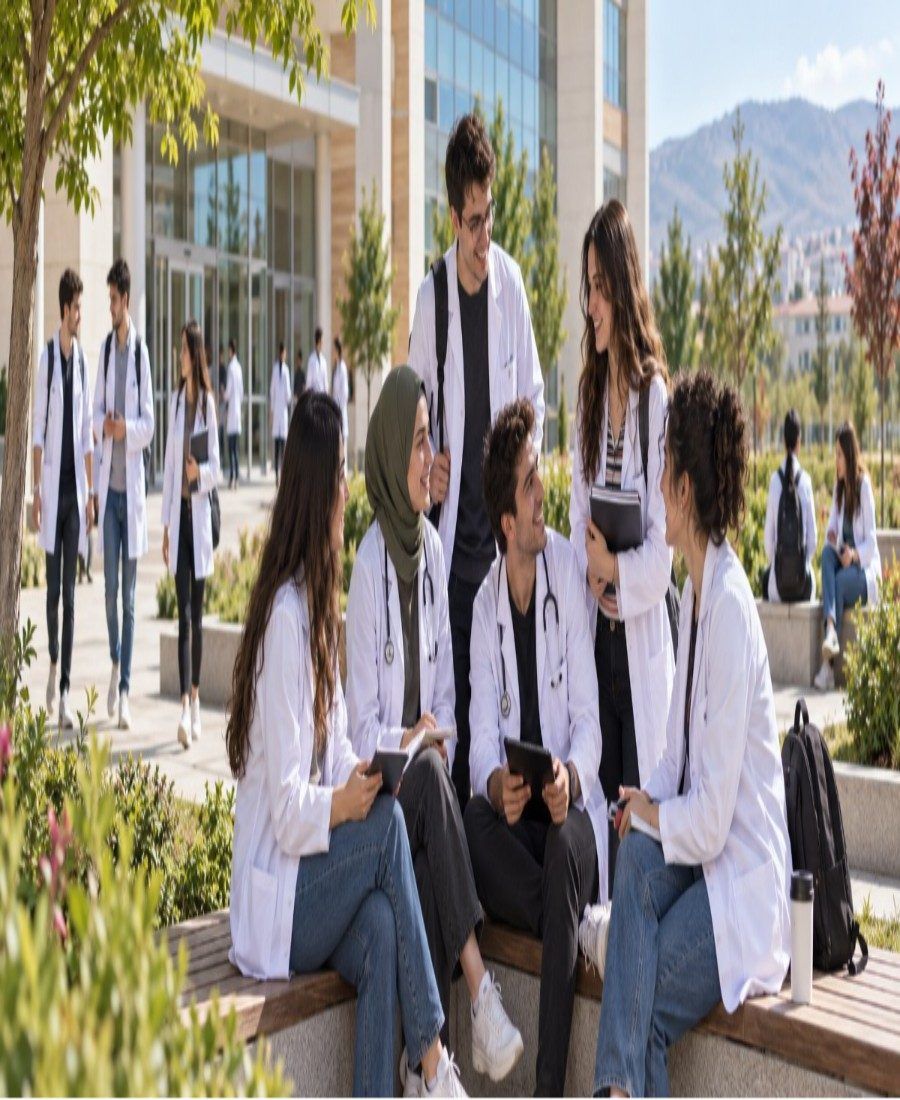
Furnished hostel rooms with Wi-Fi, laundry, 24/7 security, and Indian mess on or near campus.
Indian restaurants and mess facilities serving vegetarian and non-vegetarian home-style food daily.
Strong Indian community with cultural events, festival celebrations, and peer support groups.
Students get hands-on clinical training in government and private hospitals affiliated with the university.
Practical information for students planning to study at MBBS in Afyonkarahisar Health Sciences University Faculty of Medicine.
Prepare for all seasons. Thermal wear for winters, light clothing for summers. University provides heating in hostels.
Student visa processed with university invitation letter. Direct and connecting flights from major Indian cities.
Health insurance included in fees. Medical facility on campus plus city hospitals easily accessible.
Local SIM cards available. WhatsApp and video calls keep you connected with family back home.
Average monthly expenses of $150–$250 covering food, transport, and personal needs.
University library, online databases, and study groups. Seniors mentor juniors through academic challenges.
Our team guides you through every step — from application to arriving on campus.
Share your NEET score, academic record, and budget. Our Turkey specialist provides an honest assessment comparing Turkey with Georgia, Armenia, and Russia and, within Turkey, identifies the right university based on NMC recognition status, clinical quality, preferred city, and total cost. NMC status verification is the first step for every Turkey recommendation.
AMW submits your application to the selected university with all required documents. Most Turkish private medical universities for English-medium programmes do not require a separate university entrance exam beyond NEET, though some require YÖS. AMW advises on this for each specific university. Offer letters are typically issued within 2–4 weeks.
AMW assists with your Turkish student visa application a straightforward process for Indian nationals. Required documents include a university acceptance letter, financial means documentation, health insurance, and a biometric appointment at the Turkish Embassy in India. Processing typically takes 3–6 weeks.
AMW coordinates travel planning and arranges airport pickup in Istanbul or Ankara. Our local Turkey representative handles hostel check-in, university registration, and city orientation. Support continues throughout the first month.
Admission Helpline — Contact our counsellors for step-by-step assistance.
“The faculty here is incredibly supportive. The clinical training during hospital rotations has given me real confidence in patient care.”
“Affordable fees without compromising on quality. The campus facilities and hostel life made my transition abroad very smooth.”
“English medium instruction and WHO-recognized curriculum were the deciding factors for me. No regrets so far — excellent experience overall.”
“The university helped with everything from visa to accommodation. Hospital exposure from year three has been invaluable for my FMGE prep.”
“Just cleared my licensing exam on the first attempt. The structured coaching and mock exams during final year were a game-changer.”
“Safe campus, good food options, and a strong Indian student community. The teaching methodology is very practical and hands-on.”
No. Teaching runs in Turkish. A prep year is open for foreign students who need language training first.
Six years total. Add a prep year on top, if you need Turkish language training first.
About USD 2,500 a year, for foreign students. Confirm the current rate with the university directly.
At the Afyonkarahisar Health Sciences University Training and Research Hospital.
Yes. The Faculty of Medicine appears in the World Directory of Medical Schools.
This course teaches in Turkish. It does not currently meet the NMC's English-medium rule. Check the latest NMC position before applying.
Low. Afyonkarahisar runs cheap for students, compared to Istanbul or Ankara.
Yes. State dorms and private flats both exist, at modest prices.
September each year, through the university's international student system.
Yes. Its medical faculty has trained doctors since 1992, under an earlier predecessor school.
Smaller class sizes, lower costs, and direct access to senior doctors, in a calmer, quieter city than Istanbul or Ankara.
Our expert counsellors will guide you through the complete admission process — from documents to airport pickup.