
Q1. When was Arish University's Faculty of Medicine established?
+The wider university was created by presidential decree in 2016, but its Faculty of Medicine only opened later, in 2021.
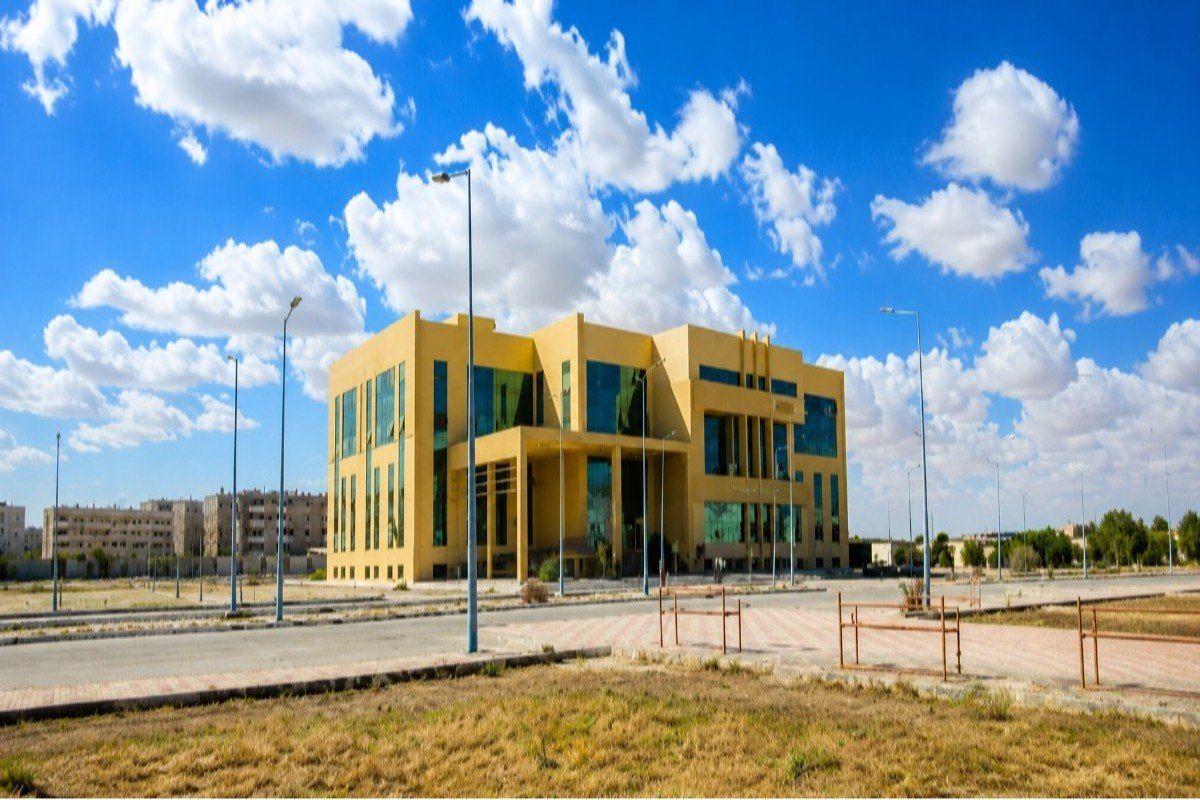
 Egypt | Est. 2016
Egypt | Recognised by Egypt's Ministry of Higher Education and Research. Some sources describe WHO recognition as well, though this specific claim isn't yet independently confirmed and is worth verifying directly given how recently the faculty opened. | English runs through the entire medicine programme medium
Expert will call you within 2 hours
The University and What Makes It Different
People mostly just call it Arish University, or sometimes ARU for short. The wider university was founded by Egyptian presidential decree back on 25 April 2016. So, this makes it a genuinely young public university, still well within its first decade of independent life. Egypt's Ministry of Higher Education classifies it as a fully public, state-run institution, not one of the newer hybrid "national university" categories that some other recent Egyptian colleges fall under.
That public status matters, because it shapes almost everything else about this college. Arish University didn't start out on its own. It began life as a branch campus of Suez Canal University, with its very first faculty, the Faculty of Education, opening on Sinai soil all the way back in 1982, just after the city of Arish was liberated. The Faculty of Agricultural and Environmental Sciences followed in 1988, and several other faculties joined over the following decades. Only in 2016 did presidential decree formally split this cluster of campuses off from Suez Canal University and turn it into its own independent institution. So, unlike a college built from scratch, Arish University actually carries over three decades of real teaching history within it, even though its official founding date reads 2016.
Here is a fact most guides skip entirely. The Faculty of Medicine itself is far younger than the wider university. It only opened its doors in 2021, making it one of Arish University's newest additions among its eleven faculties, which also include education, agriculture, science, arts, sports education, commerce, fish farming and marine fisheries, home economics, computers and information, and veterinary medicine. So, medicine sits as just one part of a broader, multi-discipline university project, not a standalone specialist medical school built purely to attract international fee-paying students.
The reason behind this faculty's creation is also worth knowing, since it explains a lot about how the college positions itself. North Sinai had no medical college of its own before this. The faculty was set up specifically to train doctors for the unique healthcare needs of the Sinai region, and its launch lined up with a wider Ministry of Social Solidarity push to expand health services across Sinai, including a new hospital project in Arish focused on free tumour treatment. So, this isn't a generic medical faculty chasing prestige. It exists to solve a real, documented regional gap in doctor availability.
Because the Faculty of Medicine only opened in 2021, and Egyptian medical training generally runs five or six years before graduation, this college likely has no confirmed graduating class yet, or at most a very small and recent one, as of the time of writing. So, genuine long-term outcomes data, like national licensing exam pass rates or graduate employment patterns, simply isn't available here the way it would be at Egypt's older, century-old medical schools.
The Arish Campus and Its Setting
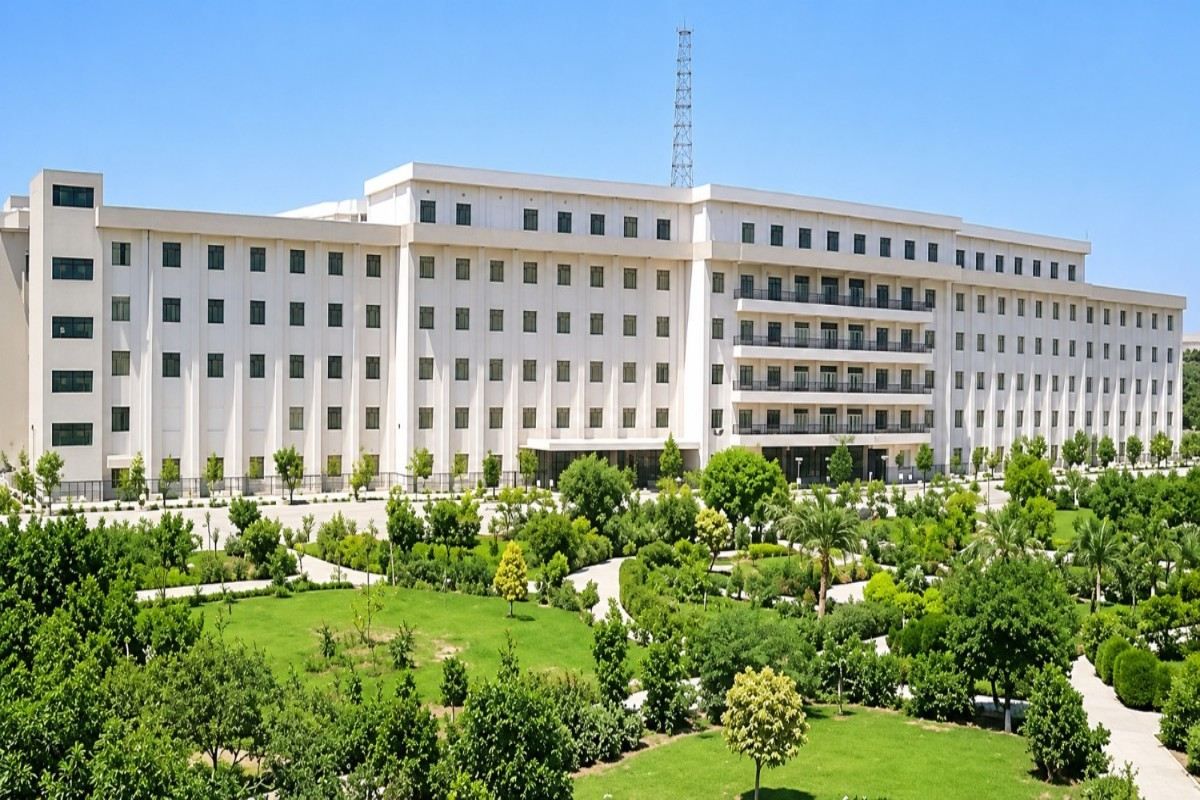
Arish University's Faculty of Medicine sits in Arish City itself, the capital of North Sinai Governorate, right on Egypt's Mediterranean coast near the Sinai Peninsula's northern edge. So, students train in a genuinely coastal desert city, quite different in character from Cairo or Alexandria further west.
Clinical training runs primarily through Arish General Hospital, which has reportedly been upgraded specifically to meet university teaching hospital standards and now serves as the faculty's main clinical training site. A newer, purpose-built medical education building and outpatient clinic complex is also reported to be under construction, aimed at expanding student training capacity further. So, the clinical backbone here is still visibly a work in progress, growing alongside the faculty itself rather than being a long-settled, decades-old arrangement.
As the only medical faculty in the whole of North Sinai, students reportedly see a genuinely wide mix of clinical cases, with particular emphasis on emergency and trauma medicine, given the region's strategic location. Students also take part in community medical convoys out to rural Sinai villages, gaining direct exposure to primary care and community medicine in a way that's less common at large city-based medical schools. So, the clinical experience on offer here leans regional and hands-on, rather than hospital-heavy in the way a big Cairo teaching hospital might be.
Cost of living in Arish itself runs low by Egyptian standards, with monthly food and basic living expenses reportedly falling somewhere between USD 100 and 150. So, day-to-day costs shouldn't be the main financial concern for students choosing this college.
Given how recently this faculty opened, independent reviews, student forums, and alumni accounts remain genuinely thin compared to older, better-documented Egyptian medical colleges. Most existing guides for Indian students pursuing MBBS in Egypt still point first toward Cairo University, Ain Shams University, and Alexandria University, all of which carry decades, or in some cases nearly two centuries, of track record. So, choosing Arish today still means joining one of its earliest international cohorts.
Course Structure, Cost, and Practical Details
Arish University's medical programme leads to a Bachelor of Medicine and Bachelor of Surgery, styled MBBCh, following Egypt's standard naming convention rather than the MBBS label used in India. Teaching runs through an Integrated Modular Curriculum, the same broad teaching style used across many Egyptian medical schools, with small-group discussion spaces built into the newer campus buildings specifically to support this format.
Course duration is genuinely unclear from available sources, and this is worth flagging honestly rather than papering over. One detailed listing states the programme runs six years in total, made up of five years of academic study plus one year of compulsory internship. That same source elsewhere states the programme runs seven years, with five years of study followed by a two-year internship. So, prospective applicants should treat this as a real open question and confirm the exact current duration directly with the university before committing, rather than assuming either figure is settled.
Fee figures appear more consistent. One detailed education portal lists Medicine and Dentistry tuition at roughly USD 6,000 a year for international students, alongside a one-time enrolment fee of about USD 1,500 paid only once, on top of annual tuition. So, this college's cost profile looks broadly in line with, or even below, several other public Egyptian medical faculties popular with Indian applicants.
NEET remains a genuine requirement for Indian applicants here, exactly as it does for MBBS study in most other countries. Admission generally runs on 12th-grade marks in the sciences plus a qualifying NEET score, though some sources mention a possible simple entrance assessment as well. Given how new this faculty's international admissions process still is, applicants should expect more direct correspondence with the university itself, and should lean less on assumptions carried over from older, more thoroughly documented Egyptian colleges.
Quick Overview
Parameter | Details |
Established | 2016, by Egyptian presidential decree (university); Faculty of Medicine opened 2021 |
Institution Type | Public, state-run Egyptian university |
Location | Arish City, North Sinai Governorate, Egypt |
Programme | Bachelor of Medicine and Surgery (MBBCh), taught in English |
Duration | Sources conflict: reported as either 6 years (5+1) or 7 years (5+2); confirm directly |
Medium of Instruction | English |
Foreign Quota Note | No confirmed graduating class yet; international admissions process still relatively new |
Teaching Hospital | Arish General Hospital, upgraded to serve as the faculty's university teaching hospital |
Fee Structure
Fee Component | Amount | Notes |
Annual Tuition (Medicine, international students) | Approx. USD 6,000 per year | Based on one detailed education-portal listing |
One-Time Enrolment Fee | Approx. USD 1,500 | Paid once, separate from annual tuition |
Living Costs (food, basic needs) | Approx. USD 100 to 150 per month | Arish runs cheaper than Cairo or Alexandria |
Hostel (standalone, reported) | Not consistently published | Confirm directly, given the faculty's recent opening |
Scholarships | Not consistently reported | Confirm current eligibility directly with the university |
Approx. Total Programme Cost | Not confirmed | Depends on final course duration; confirm directly with the college |
Why This College Deserves a Harder Look Than You've Given It
Built to Fix a Real Regional Gap, Not Chase Prestige
Most rival pages describe new medical faculties in generic terms. This one exists because North Sinai genuinely had no medical college of its own before 2021, and its creation tied directly into a wider government push to expand healthcare access across the region. So, the entire faculty traces back to a documented local need, not simply a university expanding its course catalogue for the sake of growth.
Hands-On, Community-Focused Clinical Exposure
Most guides on studying medicine in Egypt focus on big-city teaching hospitals in Cairo or Alexandria. Arish offers something different: as the only medical faculty in North Sinai, students reportedly get direct exposure to a wide range of cases, real emergency and trauma training given the region's setting, and community medical convoys into rural Sinai villages. So, students who want genuinely varied, community-rooted clinical experience get a real option here, even if the facilities themselves are still growing.
Honest Assessment
Be very clear about the real gaps here. This is a young medical faculty, open only since 2021, so there's no long graduate track record, no confirmed national licensing exam pass-rate history, and limited independent documentation to check against. Even basic facts, like the exact total course duration, genuinely conflict across available sources. So, who fits here best? Students comfortable joining an early cohort, willing to confirm every key detail directly with the university before committing, and drawn to a smaller, community-focused regional college, may find real value here. Students who need a long, thoroughly documented track record should look toward Egypt's older, well-established public medical colleges instead.
No hidden charges, no donation. The full picture of costs at MBBS in Arish University Faculty of Medicine.
Tuition Fee
USD 6,000 per year for Medicine
Approx. USD 6,000 per year, reported
Hostel Fee
EGP 688 to EGP 838 per year
EGP 688 to EGP 838 per year
Food & Meals
oughly $6,000 per year
per year
Insurance
$6,000 USD per year,
per year
Donation
No Donation
No Hideen fee
Total Estimated Cost
Depends on final course duration; confirm directly with the college
6 year
25–35%
Average FMGE first-attempt pass rates for students from many overseas medical universities. Students from structured programs consistently score higher.
Students returning to India need to clear the FMGE/NExT exam. MBBS in Arish University Faculty of Medicine integrates exam-oriented coaching into the regular curriculum so students are prepared from day one.
A structured program that takes you from foundational sciences to clinical mastery.
• Runs through the faculty's newly built specialised laboratories and its anatomy museum and lab.
• Covers Anatomy, Physiology, and Biochemistry, forming the scientific foundation for everything that follows.
• Links basic disease science with population health, an area this faculty emphasises through its rural community medical convoys.
• Covers Pathology, Microbiology, Pharmacology, and Community Medicine.
• Runs largely through Arish General Hospital, with a strong practical focus on emergency and trauma care.
• Covers Medicine, Surgery, and Obstetrics and Gynaecology, plus allied clinical subjects.
• Interns rotate through major hospital departments before receiving the final degree and practising licence.
• A compulsory internship follows completion of academic study, though reported length conflicts across sources, ranging from one to two years.
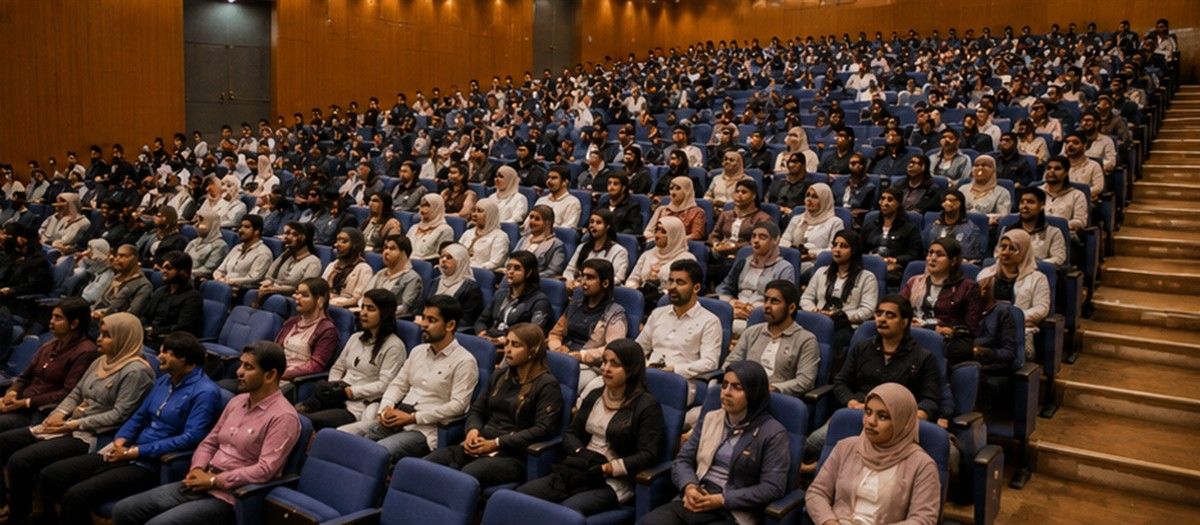
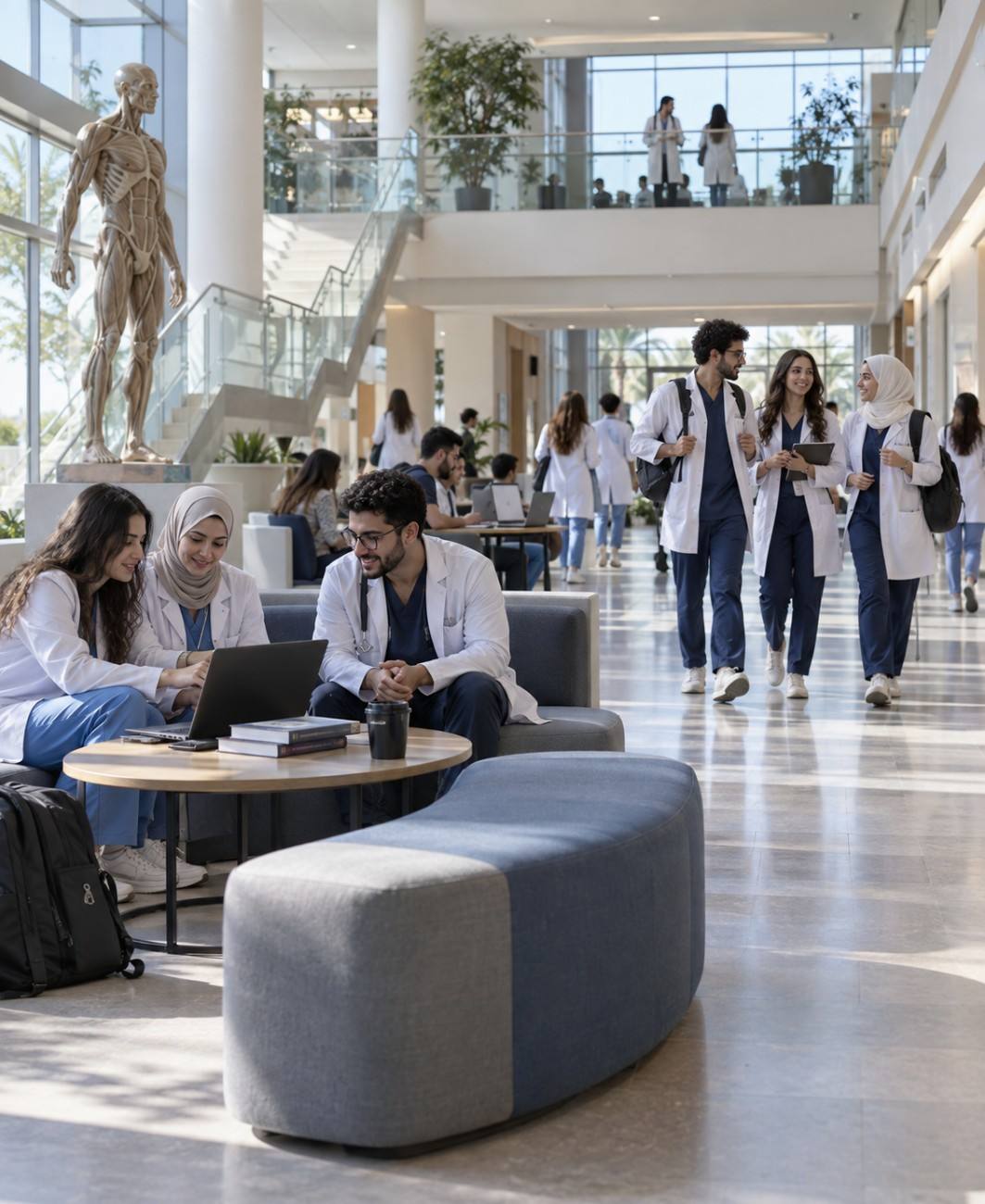
Furnished hostel rooms with Wi-Fi, laundry, 24/7 security, and Indian mess on or near campus.
Indian restaurants and mess facilities serving vegetarian and non-vegetarian home-style food daily.
Strong Indian community with cultural events, festival celebrations, and peer support groups.
Students get hands-on clinical training in government and private hospitals affiliated with the university.
Practical information for students planning to study at MBBS in Arish University Faculty of Medicine.
Prepare for all seasons. Thermal wear for winters, light clothing for summers. University provides heating in hostels.
Student visa processed with university invitation letter. Direct and connecting flights from major Indian cities.
Health insurance included in fees. Medical facility on campus plus city hospitals easily accessible.
Local SIM cards available. WhatsApp and video calls keep you connected with family back home.
Average monthly expenses of $150–$250 covering food, transport, and personal needs.
University library, online databases, and study groups. Seniors mentor juniors through academic challenges.
Our team guides you through every step — from application to arriving on campus.
Our Egypt specialist provides an honest overview of Cairo University vs Ain Shams vs ERU, English-medium status, FMGE outcomes, safety assessment, and total cost comparison.
We provide the Egypt-specific checklist. All documents are verified before university submission.
Direct submission to the suggested university. Offer letter typically within 7–14 days.
Either the students or our team receives the offer, walks you through the terms, and manages the initial fee payment.
We manage visa applications to the Egyptian Embassy in New Delhi, a minimum of 6 weeks before departure
Cairo city orientation, accommodation, Egyptian transport, food, currency, safety zones, and first-week logistics.
We advise on routing to Cairo International Airport (CAI). Confirms arrival with the local team.
Our Cairo representative meets you at the airport. No student arrives unsupported.
Hostel check-in and university registration handled by AMW's local Egypt team.
Our team files the student residence permit at the Egyptian Ministry of Interior within your first weeks. Renewed annually.
Admission Helpline — Contact our counsellors for step-by-step assistance.
“The faculty here is incredibly supportive. The clinical training during hospital rotations has given me real confidence in patient care.”
“Affordable fees without compromising on quality. The campus facilities and hostel life made my transition abroad very smooth.”
“English medium instruction and WHO-recognized curriculum were the deciding factors for me. No regrets so far — excellent experience overall.”
“The university helped with everything from visa to accommodation. Hospital exposure from year three has been invaluable for my FMGE prep.”
“Just cleared my licensing exam on the first attempt. The structured coaching and mock exams during final year were a game-changer.”
“Safe campus, good food options, and a strong Indian student community. The teaching methodology is very practical and hands-on.”
The wider university was created by presidential decree in 2016, but its Faculty of Medicine only opened later, in 2021.
Sources genuinely disagree here. One reports 6 years (5 years of study plus 1 year of internship), another reports 7 years (5 years plus a 2-year internship). Confirm directly.
It's a fully public, state-run Egyptian university, not a hybrid private-public "national university" category.
Yes, a valid, qualifying NEET score is required for Indian applicants.
One detailed source reports around USD 6,000 a year, plus a one-time USD 1,500 enrolment fee. Confirm directly given how new the admissions process is.
Training runs mainly through Arish General Hospital, upgraded to serve as the faculty's university teaching hospital.
Yes, English is the medium for both teaching and examinations.
Very likely not yet, or at most a very small and recent cohort, since the faculty only opened in 2021.
It was set up to give North Sinai its own medical college for the first time, addressing a real, documented regional shortage in doctors and healthcare training.
It can suit students comfortable joining an early cohort at an affordable, community-focused college, though most existing guides still point Indian applicants toward older, better-documented Egyptian colleges first.
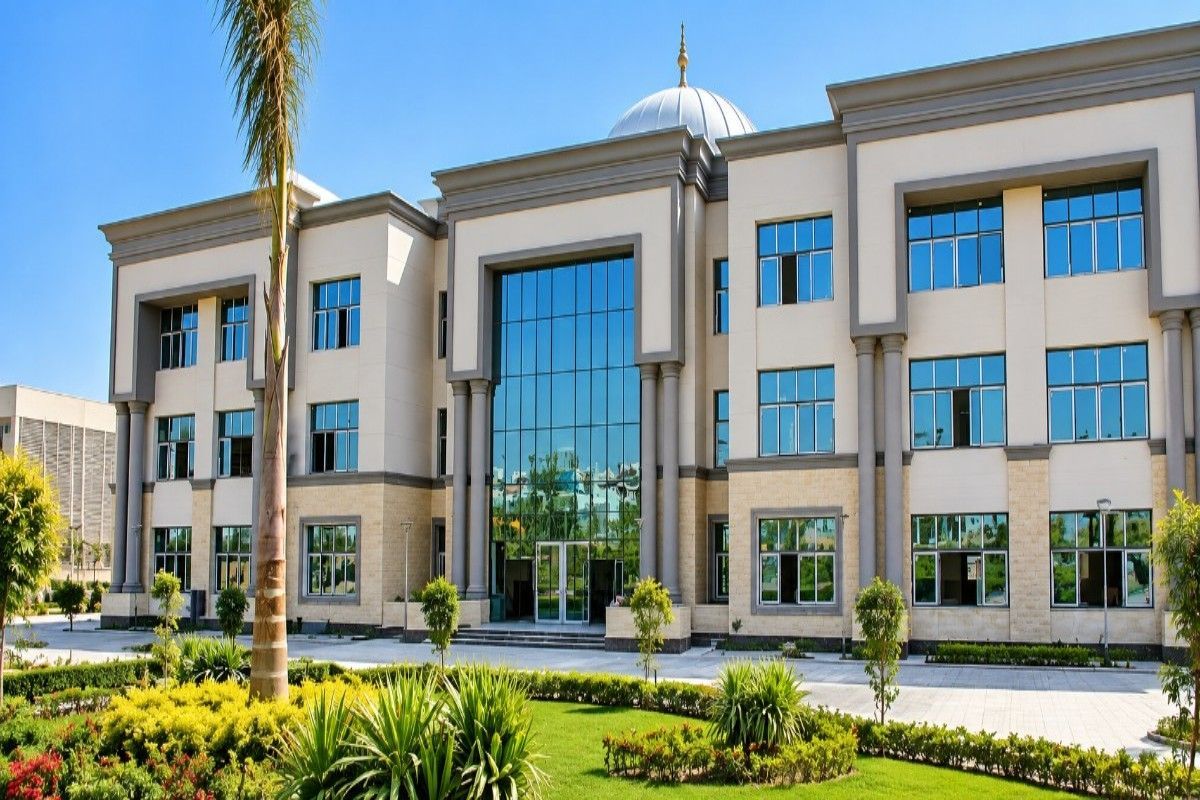
Our expert counsellors will guide you through the complete admission process — from documents to airport pickup.