
Q1. When was Mkhitar Gosh Armenian-Russian International University founded?
+In 1996, in Yerevan, named after the 12th-century Armenian scholar Mkhitar Gosh.
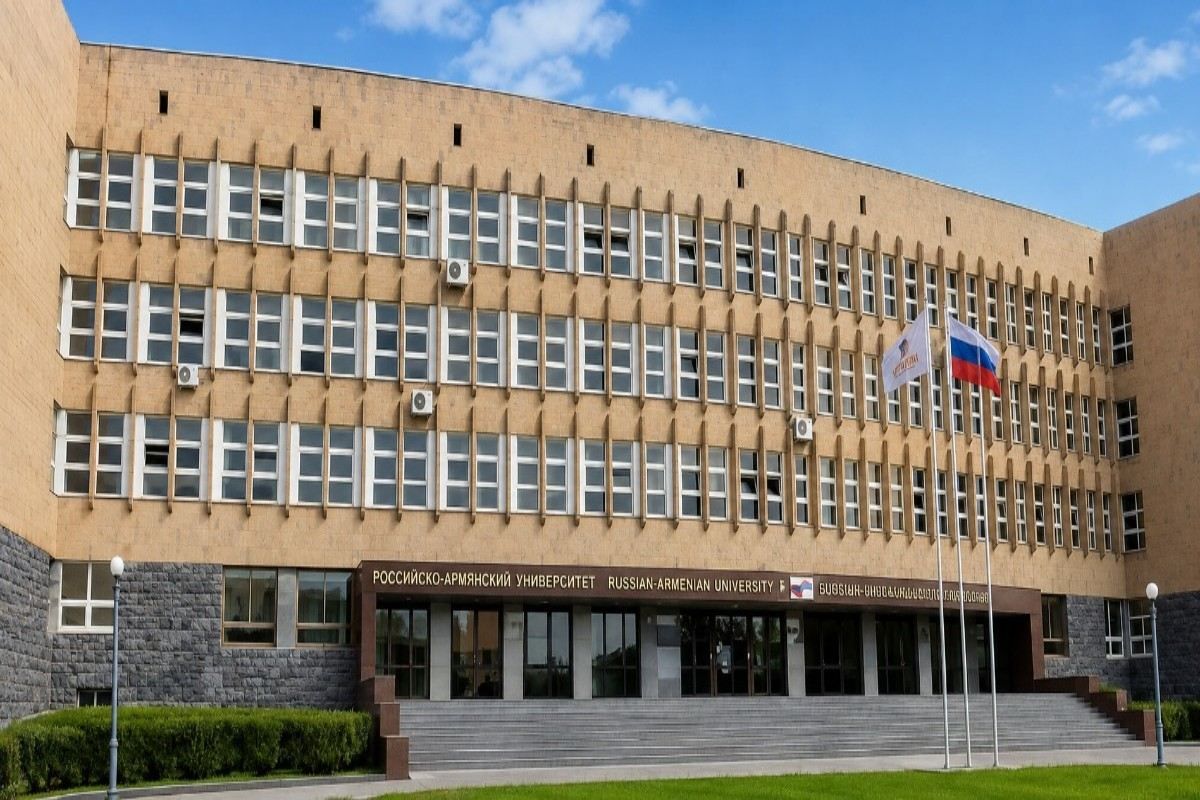
 Armenia | Est. 1996
Armenia | A private university accredited by ANQA and approved by Armenia's Ministry of Education and Science, recognised by the WHO, WDOMS, FAIMER, ECFMG, and India's National Medical Commission. | English, right through the medical programme for international students. medium
Expert will call you within 2 hours
Most people just call it Mkhitar Gosh, or MGARIU for short. Its name comes from a 12th-century figure, not a modern founder — the university was set up in 1996 in Yerevan and named after Mkhitar Gosh, a medieval Armenian jurist, fabulist, and church leader who's still remembered as one of the most important figures in Armenian legal and cultural history.
Here's something a lot of guides skip over. Mkhitar Gosh didn't actually start out as a medical school. It began as a broader institution — law, economics, business, humanities, social sciences — and the Faculty of Medicine came later, eventually growing into the programme that now pulls in the biggest share of the university's international students, India especially.
There's another angle worth knowing too. The university describes itself as a real mix of Armenian and Russian academic traditions, which makes sense given how closely tied Armenia and Russia have historically been. It's also a member of both the European University Association and the International Association of Universities, and it carries UNESCO recognition for the equivalence of its state diplomas.
It's a private university, accredited by ANQA (Armenia's National Center for Professional Education Quality Assurance) and approved by the country's Ministry of Education and Science. Clinical training happens through affiliated hospitals in Yerevan, and students typically start getting hands-on hospital time from their second year onward.
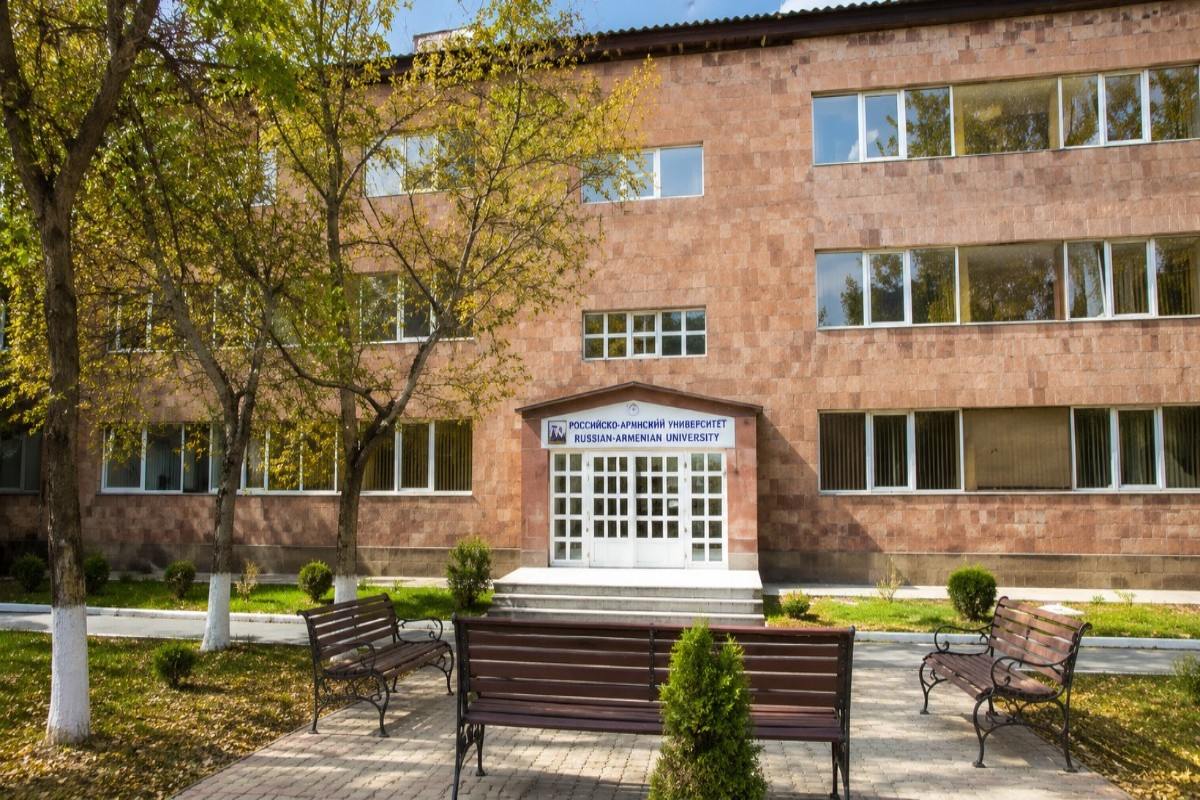
Yerevan is Armenia's capital and largest city, with a history that goes back thousands of years — so students here get a genuinely urban setting rather than a smaller regional town. The university's own campus, not counting its clinical sites, spreads across roughly 17.3 hectares, and it runs on a fairly sizeable teaching staff of about 700, including close to 100 doctors of sciences and around 350 candidates of sciences.
What really sets Mkhitar Gosh apart within Armenia's medical education scene is how central that Russian academic influence stays. Beyond the formal Faculty of Medicine, the university keeps close working ties with institutions across both Armenia and Russia — something that shapes its teaching style just as much as its name does.
Let's be upfront about the shape of this degree. It's not a Staatsexamen-style programme like you'd find somewhere in Germany or Austria. It runs as a six-year MBBS-equivalent course — generally three years of preclinical study, followed by a stage that blends clinical theory with practice, and finishing with a full internship year.
English carries the whole thing for international students, even though Armenian is the country's main language and Russian is widely spoken too. No separate IELTS or TOEFL certificate is needed to enrol.
Getting in doesn't involve a competitive entrance exam at the university itself. Indian applicants need a qualifying NEET score with at least 50 percent aggregate marks, plus the standard 10+2 requirement — and once those boxes are ticked, there's no extra written test to sit.
On the money side, Mkhitar Gosh positions itself pretty firmly as a budget option. Tuition tends to run around USD 3,000 to 4,000 a year, with hostel fees adding another USD 2,000 to 3,000 annually, which puts the full six-year package somewhere in the range of INR 18 to 20 lakh — noticeably less than a lot of private medical colleges back in India.
Parameter | Details |
Founded | 1996, in Yerevan, Armenia, named after 12th-century Armenian scholar Mkhitar Gosh |
Institution Type | Private university, accredited by Armenia's ANQA and Ministry of Education and Science |
Location | Yerevan, capital of Armenia |
MBBS-equivalent medical degree | |
Duration | 6 years total: preclinical and clinical study plus a 1-year internship |
Medium of Instruction | English |
Direct application; no entrance exam; NEET required for Indian applicants | |
Teaching Hospital | Affiliated hospitals in Yerevan, with clinical exposure generally starting in the second year |
Fee Component | Amount | Notes |
Tuition Fee | Approx. USD 3,000 to 4,000 per year | Among the lower-cost MBBS options in Armenia |
Hostel Accommodation | Approx. USD 2,000 to 3,000 per year | Furnished rooms with essential facilities |
Total Programme Cost | Approx. INR 18 to 20 lakh | Covers tuition and hostel across the full six-year course |
Food and Other Costs | Approx. USD 100 per month | Based on roughly 10 months a year on campus |
Registration and Other Charges | Up to approx. INR 70,000 | One-time and incidental costs, confirm current figures |
Donation | No Donation | Fees are tuition and hostel-based, not capitation-based |
Most competing pages never explain this properly. Mkhitar Gosh was a real 12th-century Armenian scholar and jurist, and naming the university after him ties it to genuinely Armenian intellectual roots rather than to some foreign founder or brand name — which is more than most rival medical universities in the region can say.
A lot of guides lump every Armenian medical university together as if they're all the same. Mkhitar Gosh doesn't fit that mould — it explicitly builds its academic identity around Armenian and Russian traditions together, visible in its teaching staff, its institutional partnerships, and even its name. That's a different starting point than a university built purely around international-student enrolment.
Let's be fair about this. It's a private, fee-paying route into medicine, and while it really is cheap compared to plenty of alternatives, students still need to budget for hostel, food, registration charges, and travel on top of tuition. Indian applicants need to clear NEET before enrolling, and FMGE or NExT afterward before they can actually practise back home. So who's this for? Students, mostly from India, after one of the more affordable English-medium MBBS routes abroad, without a punishing entrance exam, who don't mind that the medical faculty here is a newer addition sitting alongside older, non-medical departments. If you're after a university built solely around medicine from day one, this isn't quite that. But for anyone focused mainly on cost and a simpler path in, Mkhitar Gosh offers a workable, internationally recognised way into medicine.
No hidden charges, no donation. The full picture of costs at MBBS in Armenian Russian International University Mkhitar Gosh Faculty of Medicine.
Tuition Fee
US$2,900 ≈ ₹2.77 lakh per year
US$3,000–US$4,000 ≈ ₹2.87–₹3.83 lakh per year
Hostel Fee
US$800–US$1,500 ≈ ₹76,500–₹1,43,500 per year
US$800–US$1,500 ≈ ₹76,500–₹1,43,500 per year
Food & Meals
US$100 ≈ ₹9,570
per month
Insurance
US$150–US$200 ≈ ₹14,350–₹19,150
Per Year
Donation
No Donation
No Hidden Fee
Total Estimated Cost
US$30,300–US$38,400 ≈ ₹29.0–₹36.8 lakh
6 Year
25–35%
Average FMGE first-attempt pass rates for students from many overseas medical universities. Students from structured programs consistently score higher.
Students returning to India need to clear the FMGE/NExT exam. MBBS in Armenian Russian International University Mkhitar Gosh Faculty of Medicine integrates exam-oriented coaching into the regular curriculum so students are prepared from day one.
A structured program that takes you from foundational sciences to clinical mastery.
Anatomy, histology, embryology and cytology are introduced alongside biology, chemistry, bio-organic chemistry and medical physics. Students also study medical terminology/Latin, languages, Armenian history and culture, medical history, first aid, mathematics/informatics/statistics and physical education.
Anatomy, Histology, Biochemistry, Medical Biology
Human physiology, biochemistry, histology, anatomy and microbiology/virology/immunology form the core biomedical component. Bioethics, medical psychology, languages and topographical anatomy/operative surgery are introduced, building the foundation for later clinical study.
Physiology, Microbiology, Pathology, Pharmacology
Pharmacology, pathophysiology, anatomic pathology, general surgery and propedeutics of internal medicine become major components. Public health, health law and continued microbiology/immunology strengthen the transition from basic sciences to clinical medicine.
Internal Medicine, Surgery, Obstetrics & Gynaecology
Students progress into internal medicine and surgical disease disciplines together with diagnostic radiology, medical genetics, clinical immunology/allergology and maxillofacial surgery. Clinical-oriented teaching develops diagnostic reasoning and application of biomedical knowledge to patient care.
Paediatrics, Neurology, Ophthalmology, ENT
Clinical education expands across major specialties including internal medicine, surgery, pediatrics, obstetrics and gynecology, dermatology, orthopedics and radiology. Students develop skills in diagnosis and treatment of adult and pediatric patients through practical and clinical instruction.
Psychiatry, Dermatology, Radiology, Emergency Medicine
Advanced clinical subjects include emergency medicine, anesthesiology, neurology, psychiatry and other specialist disciplines. The final stage emphasizes supervised clinical practice, integration of diagnostic and therapeutic skills, and preparation for professional medical practice. The official program specifies preparation for preventive, diagnostic, therapeutic, rehabilitation, organizational and research activities.
Full-time clinical rotations, FMGE/NExT coaching
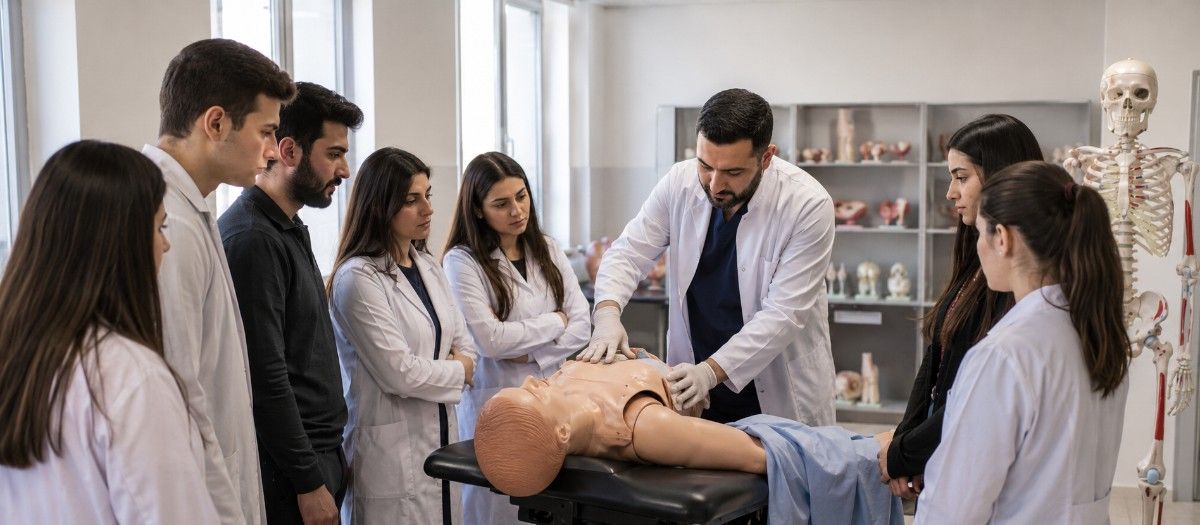
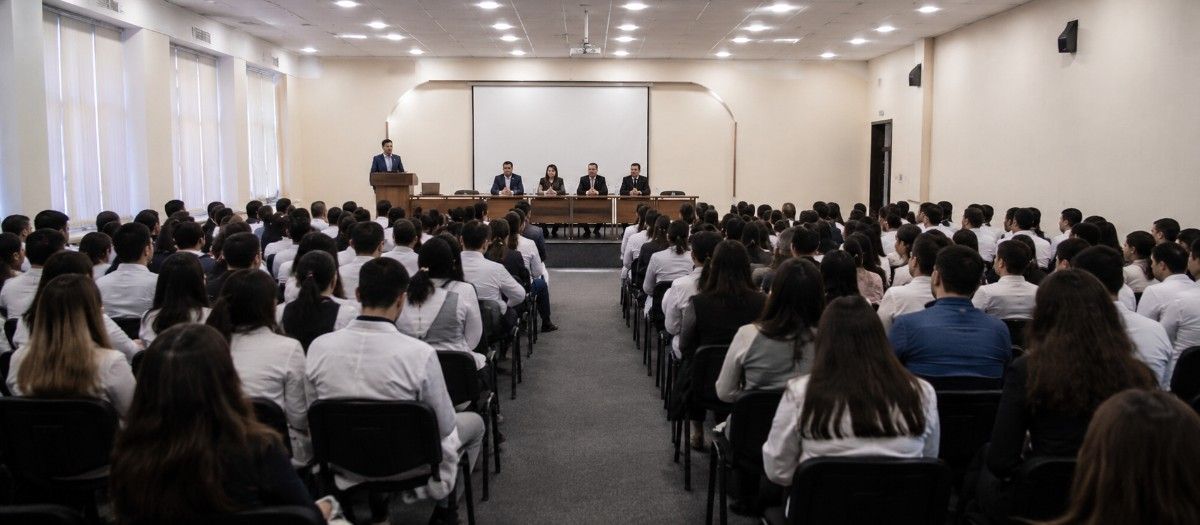
Furnished hostel rooms with Wi-Fi, laundry, 24/7 security, and Indian mess on or near campus.
Indian restaurants and mess facilities serving vegetarian and non-vegetarian home-style food daily.
Strong Indian community with cultural events, festival celebrations, and peer support groups.
Students get hands-on clinical training in government and private hospitals affiliated with the university.
Practical information for students planning to study at MBBS in Armenian Russian International University Mkhitar Gosh Faculty of Medicine.
Prepare for all seasons. Thermal wear for winters, light clothing for summers. University provides heating in hostels.
Student visa processed with university invitation letter. Direct and connecting flights from major Indian cities.
Health insurance included in fees. Medical facility on campus plus city hospitals easily accessible.
Local SIM cards available. WhatsApp and video calls keep you connected with family back home.
Average monthly expenses of $150–$250 covering food, transport, and personal needs.
University library, online databases, and study groups. Seniors mentor juniors through academic challenges.
Our team guides you through every step — from application to arriving on campus.
Compare universities on fees, hostel facilities, and accreditation status, not just the lowest tuition figure, and request the current semester-wise curriculum to self-check FMGL 2021 compliance.
Submit the application with Class 10 and 12 mark sheets, passport copy, NEET admit card/scorecard, and passport-size photographs, either directly to the university’s international office or through a registered representative.
The university’s international admissions office verifies the submitted documents.
Most universities issue a provisional admission/invitation letter within 1–3 weeks of a complete application.
Pay the first-year tuition fee (or an initial deposit, depending on the university) to convert the provisional offer into a confirmed seat.
Apply for the Armenian student visa/entry permit at the nearest consulate or through the e-visa system, using the university’s invitation letter.
Book travel and prepare original documents: academic transcripts, medical fitness certificate, passport, and photographs, for physical submission on arrival.
In the final weeks before travel, finalize documents, arrange winter clothing and medical insurance, confirm hostel allotment in writing, and arrange initial currency exchange.
Arrive in Yerevan, complete university registration, and get medical/health screening done as required by the institution.
Apply for temporary residence status at Armenia’s Migration and Citizenship Service within the permitted window, open a local bank account, attend orientation, get the class schedule, and begin building a mess/cooking routine and connections with the Indian student community.
Admission Helpline — Contact our counsellors for step-by-step assistance.
“The faculty here is incredibly supportive. The clinical training during hospital rotations has given me real confidence in patient care.”
“Affordable fees without compromising on quality. The campus facilities and hostel life made my transition abroad very smooth.”
“English medium instruction and WHO-recognized curriculum were the deciding factors for me. No regrets so far — excellent experience overall.”
“The university helped with everything from visa to accommodation. Hospital exposure from year three has been invaluable for my FMGE prep.”
“Just cleared my licensing exam on the first attempt. The structured coaching and mock exams during final year were a game-changer.”
“Safe campus, good food options, and a strong Indian student community. The teaching methodology is very practical and hands-on.”
In 1996, in Yerevan, named after the 12th-century Armenian scholar Mkhitar Gosh.
Six years total — preclinical and clinical study plus a one-year internship.
Yes, entirely, for international students.
No separate university test exists, though Indian applicants do need a qualifying NEET score.
Roughly INR 18 to 20 lakh in total, tuition and hostel included, across the six years.
An MBBS-equivalent medical degree, recognised internationally.
Affiliated hospitals in Yerevan, with clinical work generally starting in the second year.
Not right away — graduates still need to clear the FMGE or NExT exam first.
Private, accredited by Armenia's ANQA and Ministry of Education and Science.
He was a 12th-century Armenian scholar, jurist, and church leader, widely seen as one of the most significant figures in Armenian intellectual history.
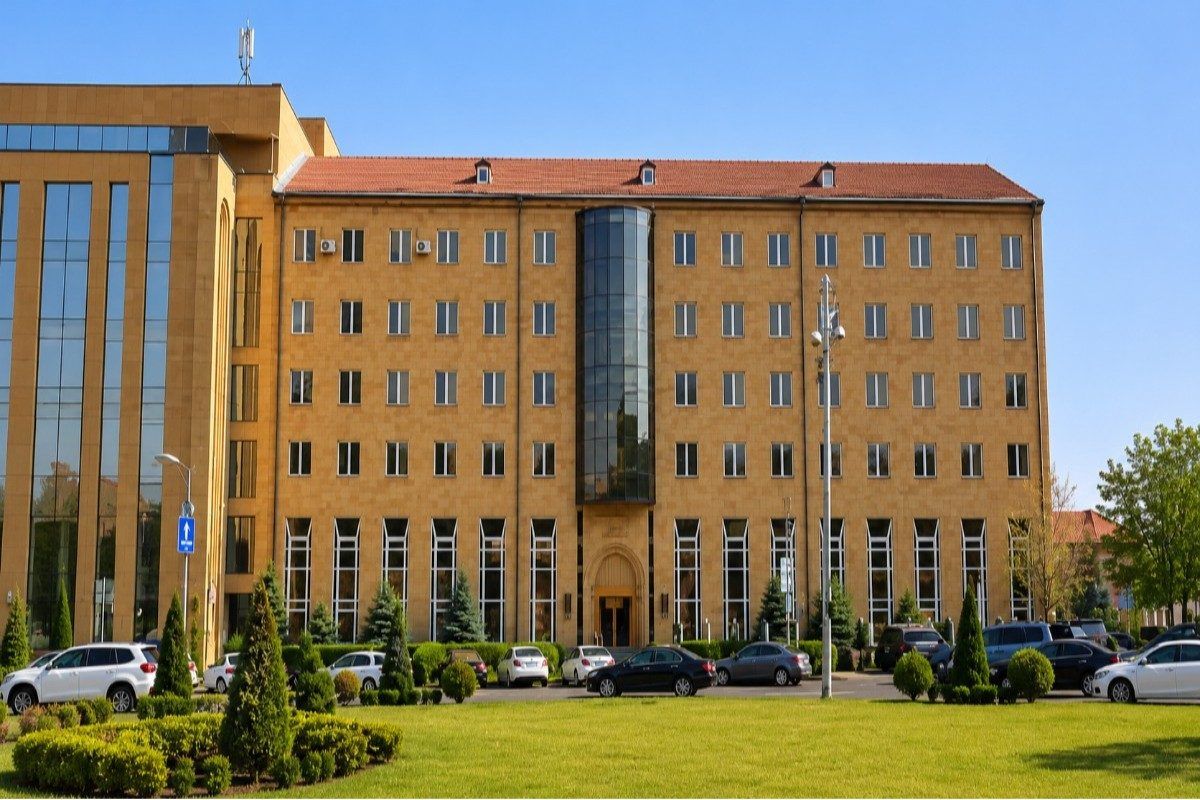
Our expert counsellors will guide you through the complete admission process — from documents to airport pickup.