The Faculty of Medicine in Pilsen is the first medical faculty established by Charles University outside Prague. Located in Pilsen, the Czech Republic's fourth-largest city, it is one of the university's five medical faculties. In collaboration with University Hospital Pilsen, one of the country's leading teaching hospitals, it offers high-quality clinical training and close-knit academic environment. The institute has a strong reputation for personalized learning and the academic excellence of Charles University.
Charles University was founded on 7 April 1348 by King Charles IV, and it provided medical education with a single Faculty of Medicine for centuries. Although, with the Second World War the demand for doctors grew, leading to the establishment of a branch of its Prague Faculty of Medicine in Pilsen.
This Pilsen branch was created by decree of the President of the Republic, Dr. Edvard Beneš, in 1945. Initially, lectures were held on a former biology institute although faculty began using the Purkyně Pavilion for teaching purposes within a year. With further registrations, the faculty started acquiring more buildings, like the former Jubilee District Children's Home, which was later converted into its theoretical institutes. In 1953, the Pilsen branch became a fully independent faculty of Charles University, with its own academic leadership and degree-granting authority.
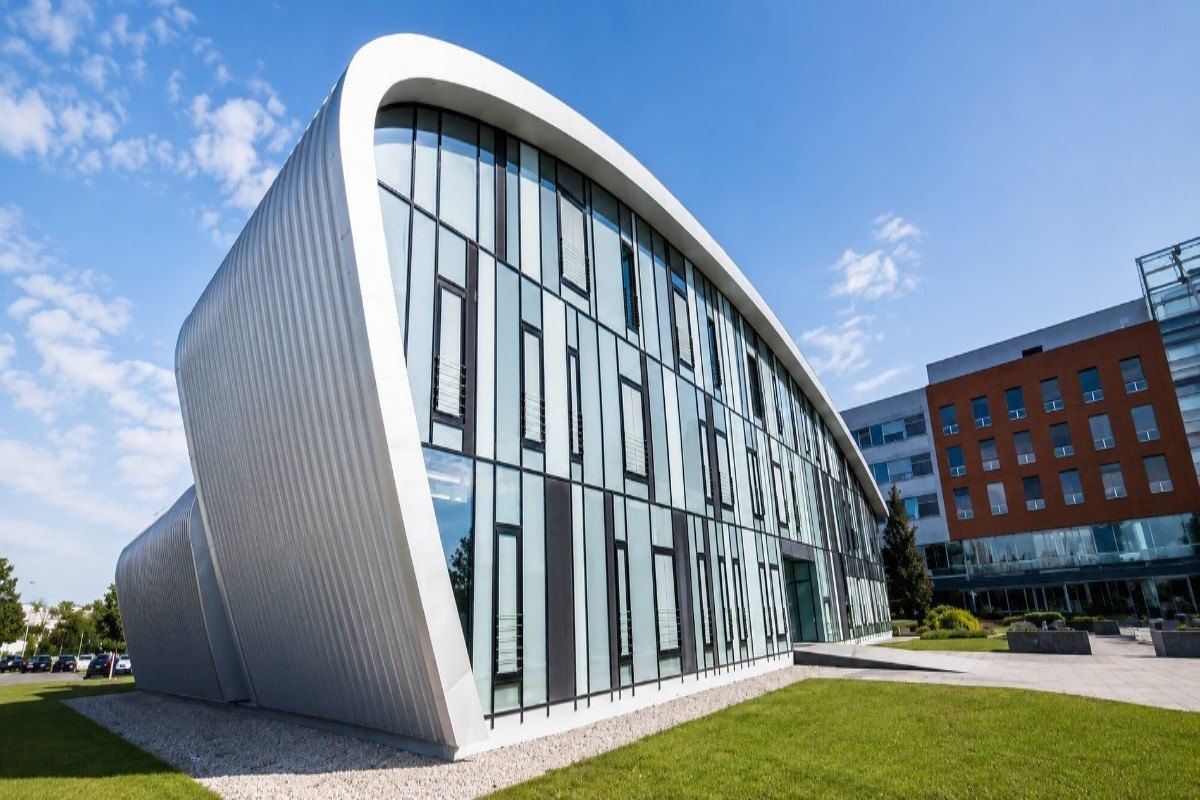
In the coming years, the faculty taught in the historical buildings in the centre of Pilsen but as education modernised in this domain and more student started registering, the need for a purpose-built campus was identified. This initiated the search for a new site in the Lochotín district, the construction began in stages between 2012 and 2022. The newly built campus holds the faculty's theoretical institutes, its administrative and technical facilities, and the Biomedical Centre, a dedicated research facility supporting work in regenerative medicine and related fields.
Today, the faculty two kinds of degree: MUDr (a six-year General Medicine programme) and MDDr (a five-year Dentistry programme). Around 2,000 students study at the faculty, of whom close to 500 are international students, and more than 12,000 graduates have completed their studies there since its founding. The teaching patterns are common to that of Charles University's medical faculties: the first two years cover theoretical subjects such as anatomy, histology, biophysics, biochemistry, and physiology; the following two years introduce pre-clinical and para-clinical subjects, including pathology, pharmacology, and microbiology, along with the first supervised contact with patients; and the final two years cover full clinical rotations across the major specialities.
One of the faculty's unique features is its Simulation Centre, helping students practise clinical interventions on mannequins and simulators before working directly with patients. This allows students to cover a range of topics from basic procedures to advanced emergency and intensive-care situations. Additionally, the modern campus includes lecture halls equipped for current teaching technology, a canteen and café, dedicated study rooms, and a rooftop terrace popular for informal gatherings.
Clinical training takes place mainly at University Hospital Pilsen (Fakultní nemocnice Plzeň), serving the wider western Bohemia region and giving students exposure to a broad range of specialities, including internal medicine, surgery, paediatrics, obstetrics and gynaecology, psychiatry, and emergency medicine. Research carried out at the faculty focuses on areas such as oncology, immunology, infectious disease, and biomedical engineering, linking laboratory work directly to patient care.
The General Medicine and Dentistry programmes are available in English which attracts international students from all over the world and, as the faculty admits less students as compared to other branches, it has modest sized classes, improving the working relationships among classmates and teaching staff, which ultimately makes the institute a preferrable choice for the students.
Along with being a hospital-linked medical faculty in a smaller, close-knit city the faculty also provides a platform for students to benefit from an active calendar of events, sports facilities, and cultural venues. Pilsen, known as the birthplace of Pilsner-style lager is a historic city of around 175,000 people, which is roughly 90 kilometres west of Prague. It combines a compact, walkable historic centre with a functioning modern economy, which makes the living costs noticeably lower than in the capital. Public transport within the city is efficient, and Pilsen's location in western Bohemia is within easy reach of Germany and the rest of central Europe.
What distinguishes the Faculty of Medicine in Pilsen is its combination of full integration into Charles University's long-standing medical tradition, a modern purpose-built campus, and a scale of operation that keeps the learning environment personal even as its facilities remain cutting-edge.