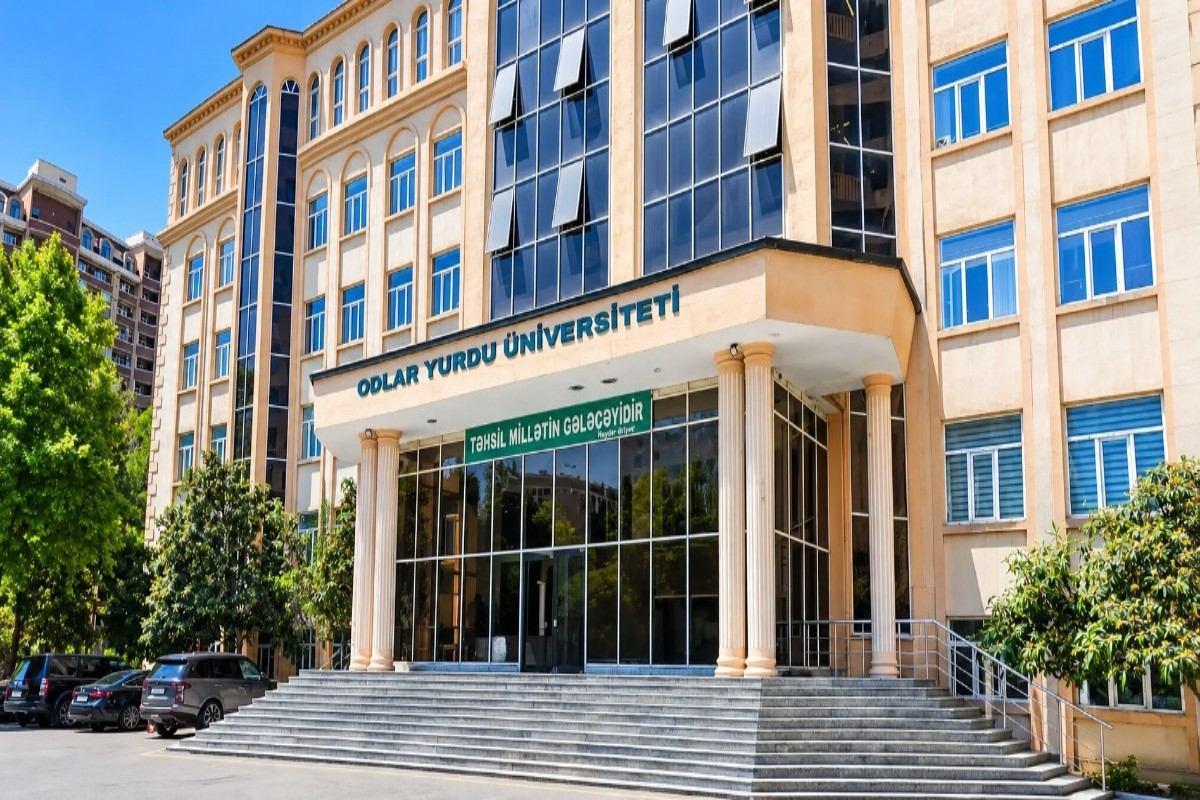
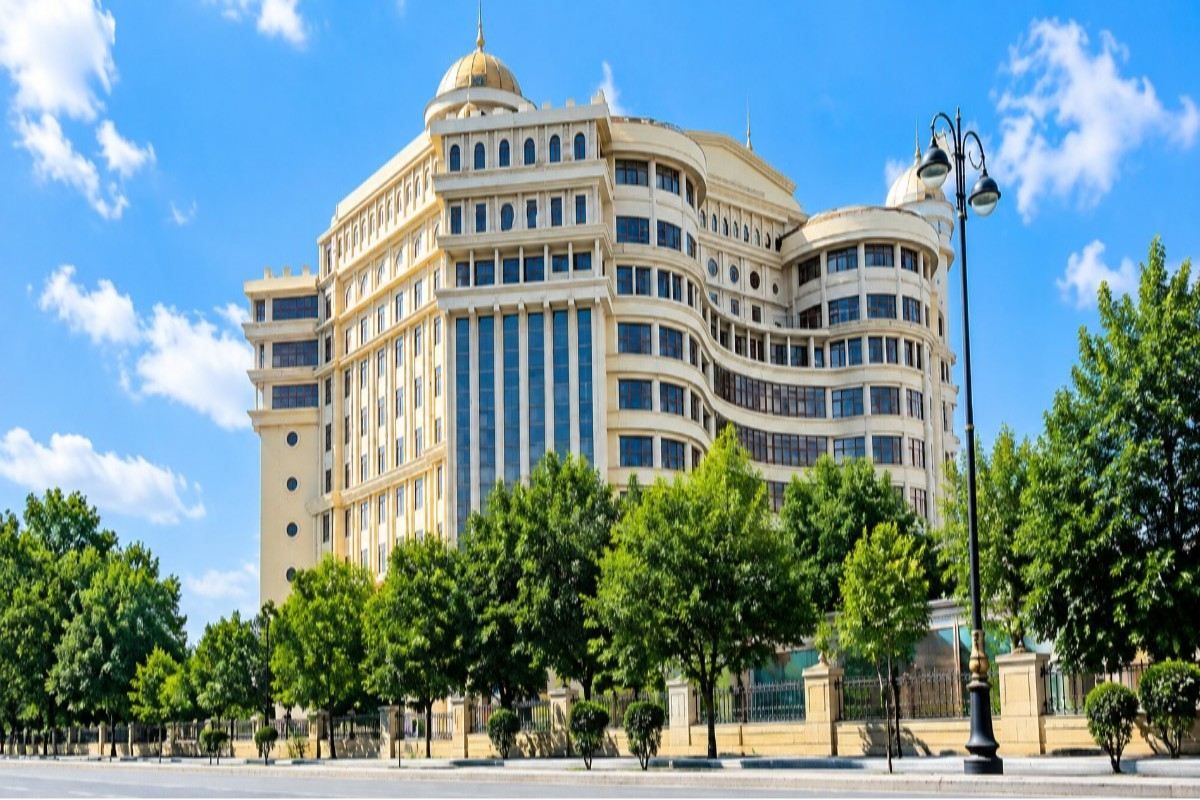
1. What makes Nakhchivan State University unique?
+A: NSU is a public university in a small, Muslim-majority regional exclave of Azerbaijan, offering the lowest-cost WHO and ECFMG-listed MBBS/MD route in the country.
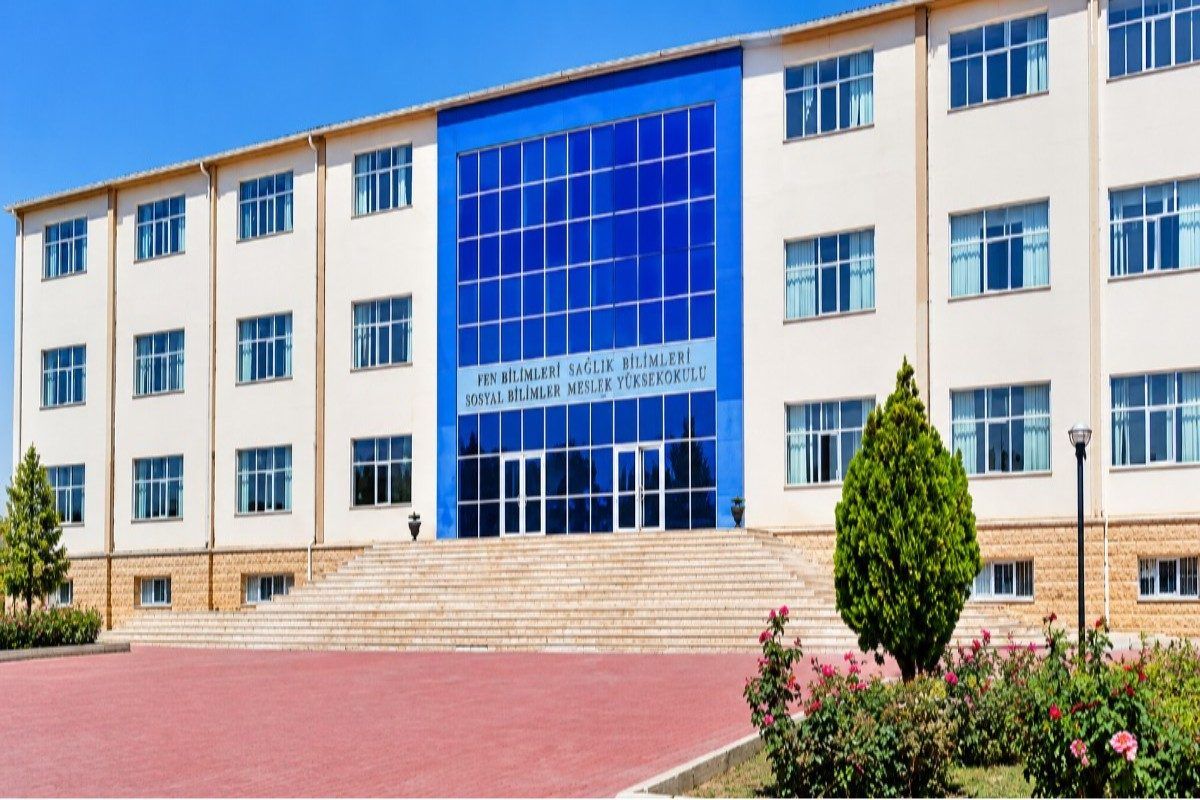
 Azerbaijan | Est. 1967
Azerbaijan | Ministry of Science and Education of the Republic of Azerbaijan | English medium
Expert will call you within 2 hours
Nakhchivan State University (NSU) is a completely different path to pursue from that recommended by the majority of Indian consultancies. It is situated in the Nakhchivan Autonomous Republic, an exclave of Azerbaijan surrounded by Armenia and bordering with Turkey and Iran. NSU is located in the Nakhchivan city, which is a rather tranquil place populated by about 100,000 people in comparison with the capital Baku.
NSU was founded as a branch of the Azerbaijan State Pedagogical Institute in 1967 and became an independent university in 1990. The development of its medical profile came later – medical courses started to be offered only since 1999. In 2000, the Department of Basic Medical Sciences was created, offering classes of anatomy, physiology, biochemistry, and genetics. In 2020, the structure of the faculty of medicine was changed, dividing it into various departments dealing with General Medicine and Clinical Subjects, Dentistry, Pharmacy, Biochemistry, and Basic Medical Sciences.
First of all, NSU differs from other universities in its relatively low costs. The annual tuition fee for General Medicine at NSU is about USD 3,000-3,500 while at Azerbaijan Medical University (Baku) it equals around USD 6,500. Moreover, the monthly cost of living at NSU amounts to approximately USD 200-350 while in Baku – USD 350-500. Thus, over six years, there will be quite a significant difference.
Of course, one should understand that Nakhchivan will not provide an international atmosphere, a wide network of hospitals, and an urban environment as Baku will. It will be rather a regional city, and students seeking a metropolitan life will be disappointed.
Moreover, the programme of General Medicine at NSU is included in the World Directory of Medical Schools (WDOMS). It is an essential factor for Indian students, but it would be incorrect to describe NSU simply as an "NMC-approved university". First of all, the Indian eligibility depends on the current rules of the National Medical Commission (that apply to the year of graduation) and on the individual compliance with these rules. NSU is listed with the ECFMG, and the opportunity of passing USMLE is provided for the eligible graduates.
Currently, the university has over 7,000 students enrolled in more than 90 degree programmes with over 1,000 international students. Among them are students from India, Pakistan, Nigeria, Kenya, Turkey, and Egypt. All courses of medicine are conducted in English. It is a great advantage for the international students since Azerbaijani and Russian are usually spoken in everyday life.
Apart from regular facilities, the university has created facilities for practical and applied work. They include pharmaceutical simulation labs, Green Pharmacy cabins, and STEAM Centre. The university also has internet centers, publishing house, media facilities, and television studio. It shows that the university has built up decent academic infrastructure despite the small size of the city.
Admission process at NSU is rather simple in comparison with the admission processes at selective European universities. There are September and March admissions without requiring IELTS or TOEFL certificates, an English proficiency certificate from the previous school will be enough. Indian applicants should still meet the relevant NEET requirements since they originate from Indian laws rather than from the requirements of the university.
Therefore, for the Indian students, NSU can be considered the best budget-oriented variant among foreign universities. It provides medical education in English language, rather low tuition and living costs, international student community, WDOMS and ECFMG listings. The sacrifices are the relatively young age of the medical school, smaller city environment and less developed clinical and lifestyle ecosystem in comparison with Baku.
Overall, NSU should be regarded as an alternative to a budget-friendly university in Azerbaijan rather than a direct competitor to the country's flagship medical university. If the cost factor is important, Nakhchivan can be a great variant to study in a quiet regional city.
No hidden charges, no donation. The full picture of costs at MBBS in Nakhchivan State University Faculty of Medicine.
Tuition Fee
Approximately USD 3,000-3,500 (Approx. Rs. 2.49 lakh-2.90 lakh)
USD 3,000-3,500 Approx. Rs. 2.49 lakh-2.90 lakh
Hostel Fee
Approximately USD 500-1,000 per year (Approx. Rs. 41,500-83,000)
Approximately USD 500-1,000 per year (Approx. Rs. 41,500-83,000)
Food & Meals
USD 800-1,200 (estimated) Approx. Rs. 66,400-99,600 (estimated)
per monrth
Insurance
USD 120-150 Approx. Rs. 9,960-12,450
per year
Donation
No Donation
No hideen fees
Total Estimated Cost
Approx. USD 23,750-30,000
6-year
25–35%
Average FMGE first-attempt pass rates for students from many overseas medical universities. Students from structured programs consistently score higher.
Students returning to India need to clear the FMGE/NExT exam. MBBS in Nakhchivan State University Faculty of Medicine integrates exam-oriented coaching into the regular curriculum so students are prepared from day one.
A structured program that takes you from foundational sciences to clinical mastery.
• Introduction to healthcare systems, medical terminology, and foundational scientific methodology
• Human anatomy, medical biology, biochemistry, and histology under the Department of Basic Medical Sciences
• Microbiology and introductory immunology, building toward disease mechanisms
• Normal physiology, cytology, embryology, and medical genetics
• Early clinical exposure alongside diagnostic reasoning training
• Pathological anatomy, pathological physiology, and pharmacology
• Training across affiliated teaching hospitals in the Nakhchivan region
• Clinical rotations in internal medicine, surgery, paediatrics, and obstetrics-gynaecology
• Case-based clinical assessments and preparation for licensing examinations
• Specialised rotations including psychiatry, neurology, dermatology, and emergency medicine
• Final preparation for national licensing and international screening examinations such as NExT/FMGE
• Supervised clinical internship across major specialties under hospital faculty
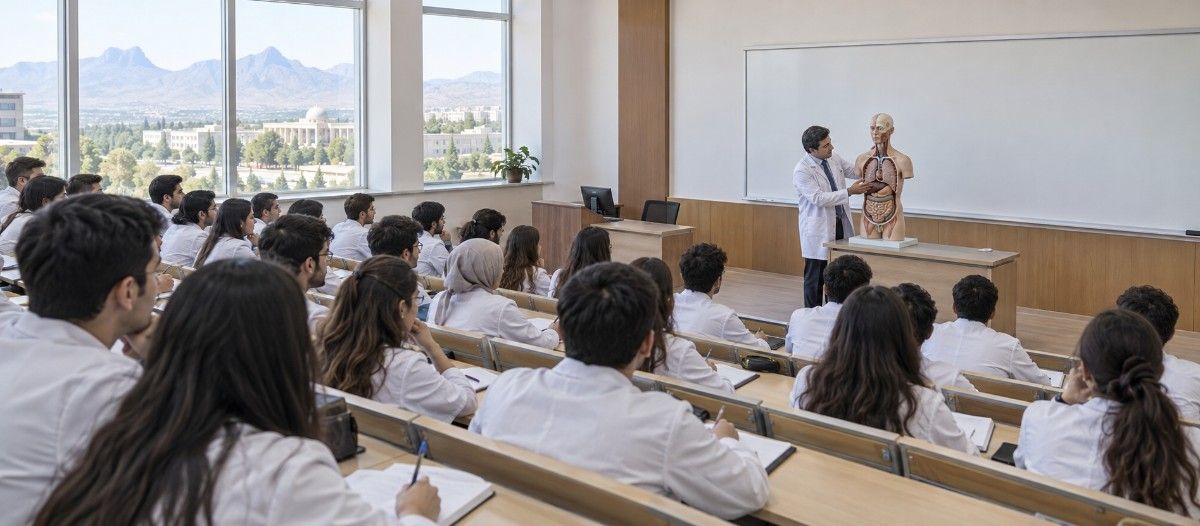
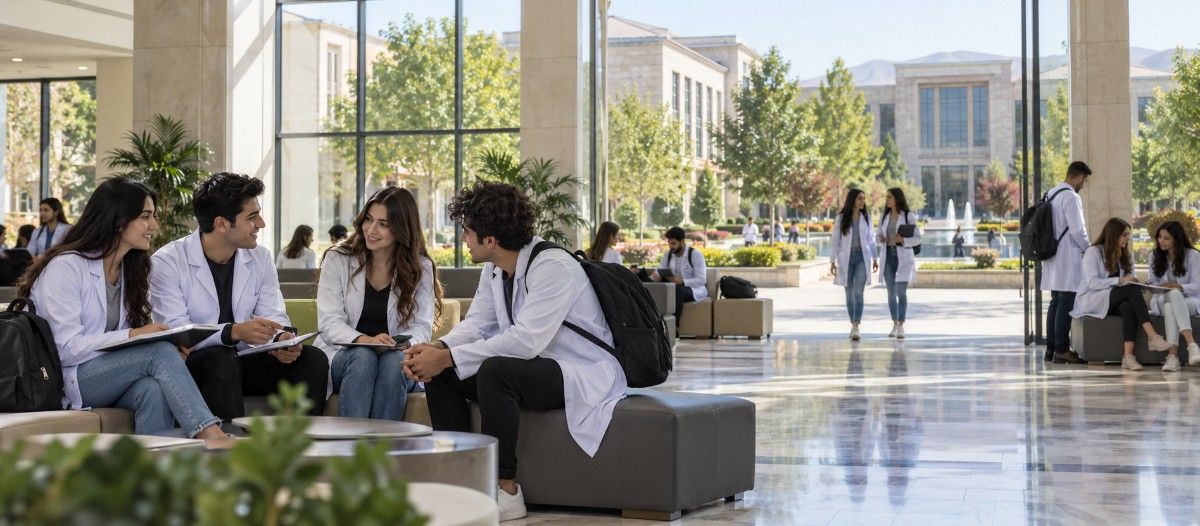
Furnished hostel rooms with Wi-Fi, laundry, 24/7 security, and Indian mess on or near campus.
Indian restaurants and mess facilities serving vegetarian and non-vegetarian home-style food daily.
Strong Indian community with cultural events, festival celebrations, and peer support groups.
Students get hands-on clinical training in government and private hospitals affiliated with the university.
Practical information for students planning to study at MBBS in Nakhchivan State University Faculty of Medicine.
Prepare for all seasons. Thermal wear for winters, light clothing for summers. University provides heating in hostels.
Student visa processed with university invitation letter. Direct and connecting flights from major Indian cities.
Health insurance included in fees. Medical facility on campus plus city hospitals easily accessible.
Local SIM cards available. WhatsApp and video calls keep you connected with family back home.
Average monthly expenses of $150–$250 covering food, transport, and personal needs.
University library, online databases, and study groups. Seniors mentor juniors through academic challenges.
Our team guides you through every step — from application to arriving on campus.
Compare AMU, Nakhchivan State, Baku State, Odlar Yurdu, and Khazar on fee, city, English-medium status, and WDOMS listing, not just the cheapest option.
Submit the application along with academic transcripts and the NEET scorecard, either directly to the university or through an admission partner.
The university's international admissions office carries out document verification against its eligibility criteria.
Once approved, the university issues an offer letter followed by the invitation letter needed for the visa application.
Pay the first installment as instructed, ideally via a traceable bank transfer, and insist on an official, written receipt.
Apply for the student visa at the Azerbaijan embassy/consulate in India, or via the applicable e-visa system; budget a few weeks for processing.
Book flights to Baku (or the relevant city) and confirm arrival details with the university's international office, which often arranges pickup for the intake batch.
In the final weeks, finalize documents, arrange winter clothing and health insurance, book flights, arrange currency exchange, and confirm hostel allotment in writing.
Complete on-arrival registration with local migration authorities within the specified window (usually handled by the university during orientation) to legalize your stay for the academic term.
Open a local bank account if needed, get a local SIM card, attend orientation sessions, receive your class schedule, and start building your grocery/cooking routine and connections within the Indian student community.
Admission Helpline — Contact our counsellors for step-by-step assistance.
“The faculty here is incredibly supportive. The clinical training during hospital rotations has given me real confidence in patient care.”
“Affordable fees without compromising on quality. The campus facilities and hostel life made my transition abroad very smooth.”
“English medium instruction and WHO-recognized curriculum were the deciding factors for me. No regrets so far — excellent experience overall.”
“The university helped with everything from visa to accommodation. Hospital exposure from year three has been invaluable for my FMGE prep.”
“Just cleared my licensing exam on the first attempt. The structured coaching and mock exams during final year were a game-changer.”
“Safe campus, good food options, and a strong Indian student community. The teaching methodology is very practical and hands-on.”
A: NSU is a public university in a small, Muslim-majority regional exclave of Azerbaijan, offering the lowest-cost WHO and ECFMG-listed MBBS/MD route in the country.
A: Yes. Medical subjects are taught in English by a dedicated foreign faculty, though daily life outside class runs largely in Azerbaijani and Russian.
A: The programme is listed in WDOMS, which forms the basis for Indian graduates' eligibility to sit FMGE/NExT, subject to NMC regulations at the time of graduation.
A: Yes. NEET qualification is mandatory for Indian students under NMC rules, regardless of the country or university chosen.
A: No. NSU does not require IELTS or TOEFL; an English proficiency certificate from the applicant's own school is generally accepted.
A: Two. NSU admits students in both September and March, offering more flexibility than single-intake universities.
A: NSU is ECFMG listed, keeping the USMLE pathway open for eligible graduates; PLAB eligibility depends on separate UK GMC requirements.
A: Reported figures range from roughly USD 23,750 to USD 30,000 over six years including hostel; this should be confirmed directly with the university before enrolment.
A: No. Available fee structures do not report any donation or hidden capitation charge beyond the listed tuition, hostel, and incidental fees.
A: Applicants generally need Class 10 and 12 transcripts, a valid passport, an English proficiency certificate, a police character certificate, and medical/vaccination records.
Our expert counsellors will guide you through the complete admission process — from documents to airport pickup.