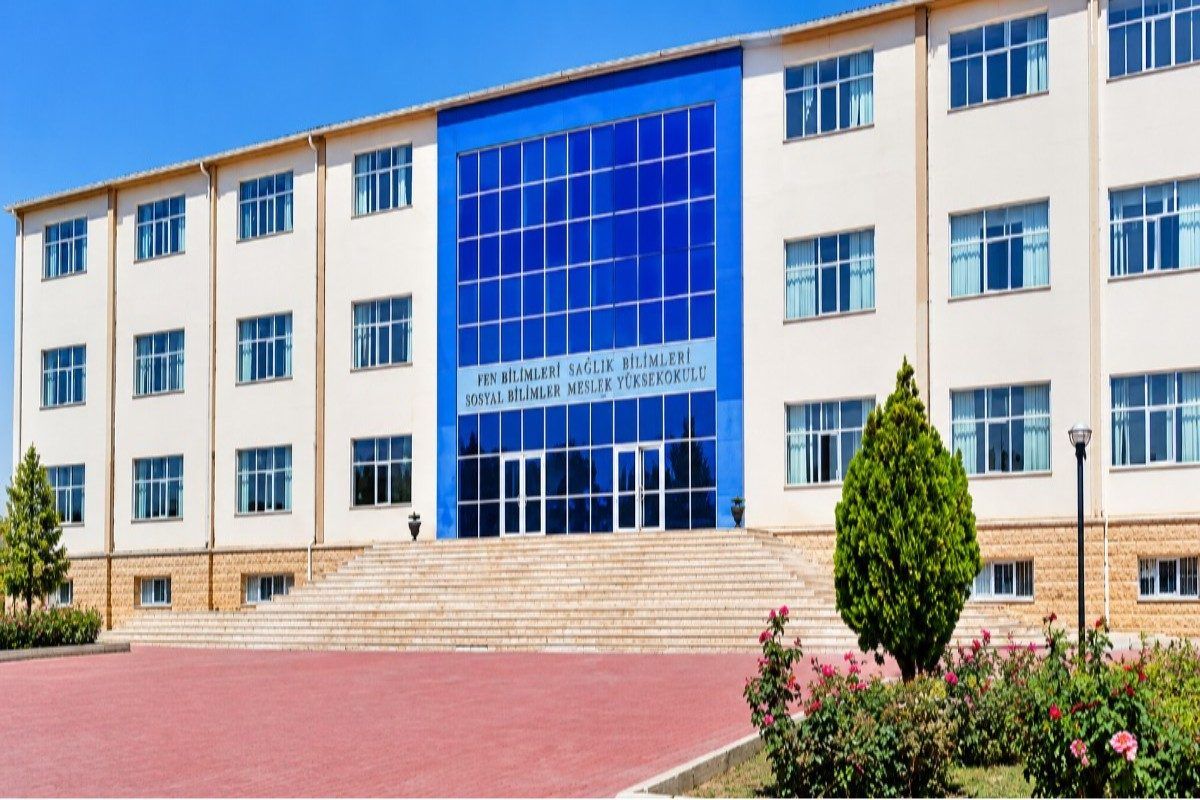
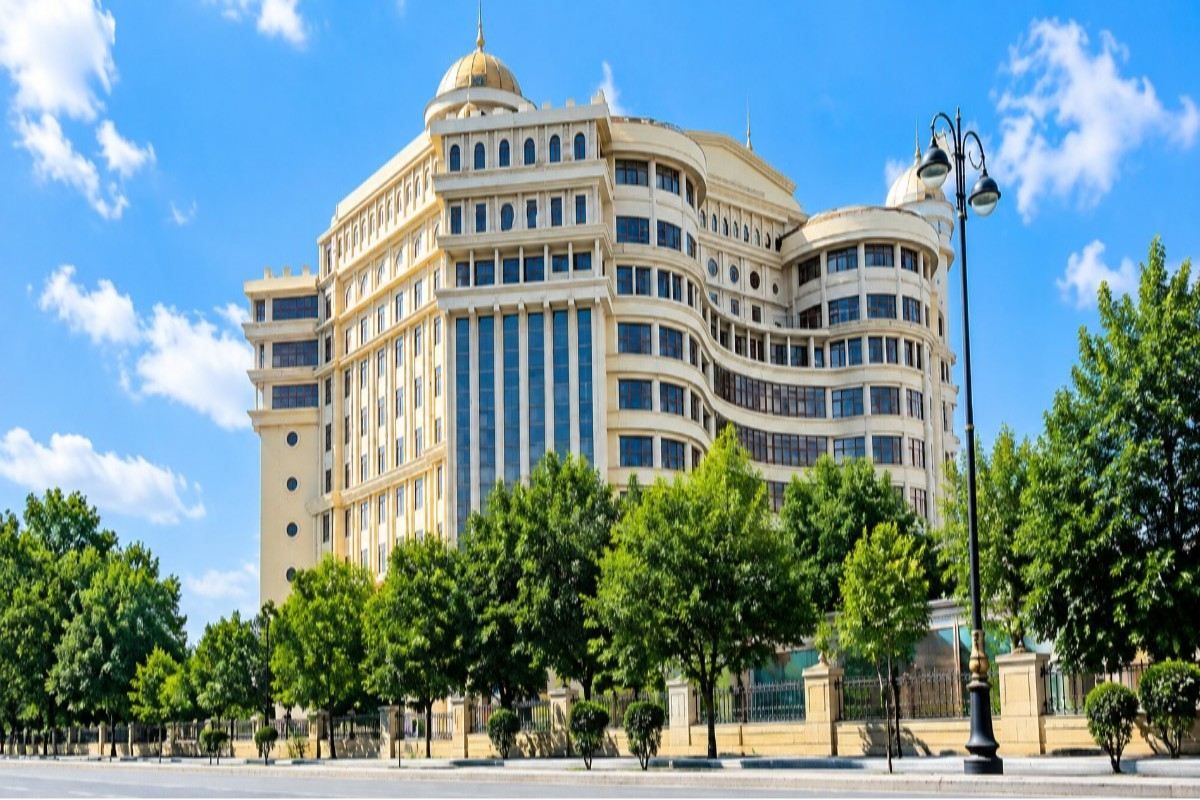
1. What makes Odlar Yurdu University's Medical Faculty different?
+A: It is a comparatively new medical faculty inside an older, private, multi-faculty Baku university, priced between NSU and AMU.
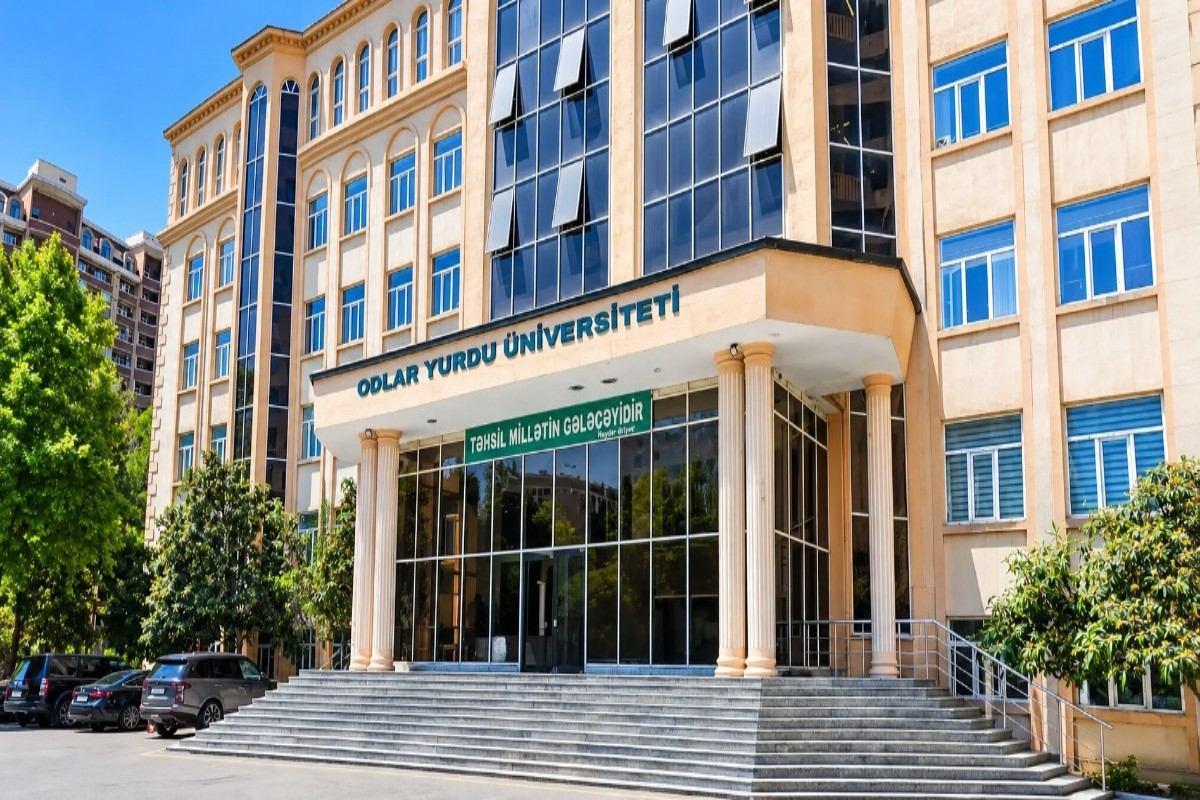
 Azerbaijan | Est. 1995
Azerbaijan | Ministry of Science and Education of Azerbaijan; recognised by Turkey's YÖK and Germany's H+ Institution category | English medium
Expert will call you within 2 hours
What is important to note is that ODLAR YURDU UNIVERSITY is not a medical school that happens to have faculties of other subjects. OYU is a private, multi-faculty university in Baku, established in 1995 by Professor Ahmad Valiyev. Its reputation was built on business, law, and information technologies long before the establishment of the Medical Faculty in cooperation with Ankara University around 2013.
To illustrate this point, Azerbaijan Medical University and Nakhchivan State University started teaching medicine in 1930 and 1999 respectively, whereas OYU Medical Faculty was established significantly later.
Nevertheless, ODLAR YURDU UNIVERSITY itself is quite a reputable institution of higher education. It was state-inspected in November 1995, registered under the Cabinet of Ministers in July 1996, and granted legal-entity status afterwards.
OYU belongs to a larger educational network including Odlar Yurdu College, the British School in Baku, and the Modern Innovations Lyceum. Furthermore, the university is officially accredited both in Azerbaijan by the Ministry of Science and Education and in Turkey by YÖK. It belongs to H+ Institutions of Germany and to the International Association of Universities (IAU) under UNESCO.
Finally, ODLAR YURDU UNIVERSITY has an Erasmus+ and Mevlana exchange programme and a dual-degree agreement with the Swiss Montreux Business School. However, none of these programs apply to the university's medical faculty in particular, which speaks in favour of the university's actual international connections rather than those of shell organizations.
Now comes the main point – how is it different from a specialized medical school?
OYU Medical Faculty is accredited directly by the Ministry of Science and Education. Also, the Medical Faculty of Odlar Yurdu University is explicitly mentioned by name on the list of officially recognized institutions awarding MD degrees published by Pakistan's Medical and Dental Council. Thus, this is one of the rare points which can be checked independently of the agent's marketing.
As far as the listing in the World Directory of Medical Schools affiliated with WHO is concerned, some counselling sites claim that OYU's Medical Faculty is included either in WDOMS or in some similar directories, yet this point is reported with noticeably less confidence than the same information about AMU and NSU.
Therefore, it is necessary to check the current WDOMS entry and the NMC's position at the time of graduation before considering the degree of Indian licensure officially recognized.
From the structural point of view, the program follows the standard six-year scheme typical for all regional medical schools. The pre-clinical studies include anatomy, physiology, biochemistry, and medical ethics.
The para-clinical phase involves pathology, pharmacology, microbiology, community medicine, and forensic medicine. Finally, the clinical phase is devoted to rotating through internal medicine, surgery, pediatrics, and obstetrics and gynecology. The last year is hospital-oriented internship.
English-language classes are provided for the international students. Azerbaijani language course is also provided to ensure effective communication with the patients during the clinical phase.
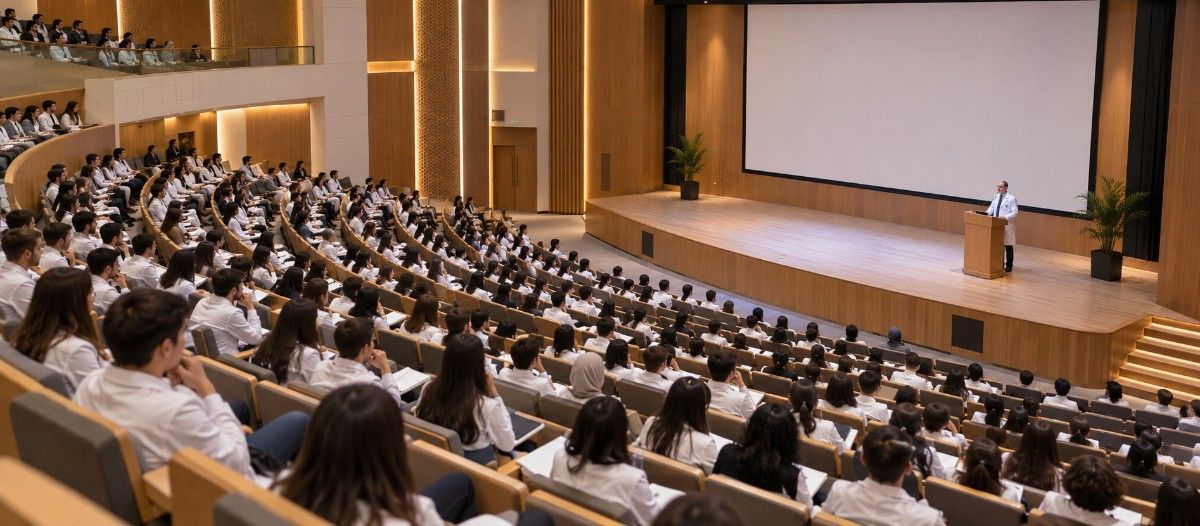
Facilities-wise, OYU Medical Faculty has invested in the basic equipment needed for the proper study of the pre-clinical phase of a medical program rather than providing some general claims.
This includes the dissection hall for studying anatomy using cadavers, the clinical skills laboratory equipped with simulation mannequins, as well as diagnostic and radiological facilities including MRI, CT, X-ray, ultrasound, and ECG.
The medical library of the university gives access to such resources as PubMed, Medline, and ScienceDirect – this is important for conducting research-related coursework. Clinical rotations are conducted in affiliated hospitals in Baku.
Nevertheless, being comparatively young, OYU Medical Faculty still has less detailed descriptions of its hospital affiliations than, for example, AMU's century-old clinical network involving multiple hospitals.
Concerning tuition, OYU lies between Baku's two better-known medical schools. Tuition fee is reported to be around $3,600-$4,800 per year depending on the source, typically being lower than AMU's approximate $6,500 but higher than NSU's approximate $3,000-$3,500.
The inconsistencies among sources here themselves are worth mentioning since a comparatively young medical faculty typically has less standardized information on the official fees than a programme that has been functioning for decades.
Thus, the prospective applicant needs to consider any quoted tuition fee as a point for independent verification rather than an exact number.
Living expenses are typical for Baku, which is a cosmopolitan capital city where halal food is readily available, where there is a strong community of Indian and Pakistani students, and where living expenses typically range $350-$500 per month.
The university itself does not provide an entrance examination, although NEET test is mandatory for Indian students under NMC rules irrespective of the foreign university of choice.
Thus, for a student willing to obtain a Baku-based medical degree at an approximate cost between NSU and AMU, and willing to conduct an independent verification of the recognition status of OYU's Medical Faculty before applying, OYU is a legitimate choice.
Nevertheless, for a student who wants the least possible ambiguity with regard to the recognition status, the older and better-documented programmes at AMU or NSU are still safer choices.
No hidden charges, no donation. The full picture of costs at MBBS in Odlar Yurdu University Medical Faculty.
Tuition Fee
Approximately USD 3,600-4,800 (Approx. Rs. 2.99 lakh-3.98 lakh)
USD 3,600-4,800 Approx. Rs. 2.99 lakh-3.98 lakh
Hostel Fee
Approximately USD 800-1,200 per year (Approx. Rs. 66,400-99,600)
USD 800-1,200 Approx. Rs. 66,400-99,600
Food & Meals
USD 900-1,300 (estimated) Approx. Rs. 74,700-1.08 lakh (estimated)
per month
Insurance
USD 120-150 (estimated) Approx. Rs. 9,960-12,450 (estimated
per yeart
Donation
No Donatin
No Hideen Fees
Total Estimated Cost
Approx. USD 22,000-29,000
6-year
25–35%
Average FMGE first-attempt pass rates for students from many overseas medical universities. Students from structured programs consistently score higher.
Students returning to India need to clear the FMGE/NExT exam. MBBS in Odlar Yurdu University Medical Faculty integrates exam-oriented coaching into the regular curriculum so students are prepared from day one.
A structured program that takes you from foundational sciences to clinical mastery.
• Introductory biochemistry and foundational scientific methodology
• Human anatomy, including hands-on dissection hall training, alongside physiology and medical ethics
• Introduction to microbiology and basic diagnostic techniques
• Continued physiology and biochemistry, with laboratory-based coursework
• Community medicine and public health foundations
• Pathology and pharmacology, building toward disease mechanisms and drug action
• Radiology and diagnostic imaging fundamentals using the faculty's MRI, CT, and ultrasound facilities
• Forensic medicine and continued microbiology and pathology coursework
• Structured bedside teaching through affiliated Baku hospitals
• Clinical rotations in internal medicine, surgery, paediatrics, and obstetrics and gynaecology
• Case-based assessments and preparation for licensing and screening examinations
• Supervised hospital-based internship across major clinical departments

Furnished hostel rooms with Wi-Fi, laundry, 24/7 security, and Indian mess on or near campus.
Indian restaurants and mess facilities serving vegetarian and non-vegetarian home-style food daily.
Strong Indian community with cultural events, festival celebrations, and peer support groups.
Students get hands-on clinical training in government and private hospitals affiliated with the university.
Practical information for students planning to study at MBBS in Odlar Yurdu University Medical Faculty.
Prepare for all seasons. Thermal wear for winters, light clothing for summers. University provides heating in hostels.
Student visa processed with university invitation letter. Direct and connecting flights from major Indian cities.
Health insurance included in fees. Medical facility on campus plus city hospitals easily accessible.
Local SIM cards available. WhatsApp and video calls keep you connected with family back home.
Average monthly expenses of $150–$250 covering food, transport, and personal needs.
University library, online databases, and study groups. Seniors mentor juniors through academic challenges.
Our team guides you through every step — from application to arriving on campus.
Compare AMU, Nakhchivan State, Baku State, Odlar Yurdu, and Khazar on fee, city, English-medium status, and WDOMS listing, not just the cheapest option.
Submit the application along with academic transcripts and the NEET scorecard, either directly to the university or through an admission partner.
The university's international admissions office carries out document verification against its eligibility criteria.
Once approved, the university issues an offer letter followed by the invitation letter needed for the visa application.
Pay the first installment as instructed, ideally via a traceable bank transfer, and insist on an official, written receipt.
Apply for the student visa at the Azerbaijan embassy/consulate in India, or via the applicable e-visa system; budget a few weeks for processing.
Book flights to Baku (or the relevant city) and confirm arrival details with the university's international office, which often arranges pickup for the intake batch.
In the final weeks, finalize documents, arrange winter clothing and health insurance, book flights, arrange currency exchange, and confirm hostel allotment in writing.
Complete on-arrival registration with local migration authorities within the specified window (usually handled by the university during orientation) to legalize your stay for the academic term.
Open a local bank account if needed, get a local SIM card, attend orientation sessions, receive your class schedule, and start building your grocery/cooking routine and connections within the Indian student community.
Admission Helpline — Contact our counsellors for step-by-step assistance.
“The faculty here is incredibly supportive. The clinical training during hospital rotations has given me real confidence in patient care.”
“Affordable fees without compromising on quality. The campus facilities and hostel life made my transition abroad very smooth.”
“English medium instruction and WHO-recognized curriculum were the deciding factors for me. No regrets so far — excellent experience overall.”
“The university helped with everything from visa to accommodation. Hospital exposure from year three has been invaluable for my FMGE prep.”
“Just cleared my licensing exam on the first attempt. The structured coaching and mock exams during final year were a game-changer.”
“Safe campus, good food options, and a strong Indian student community. The teaching methodology is very practical and hands-on.”
A: It is a comparatively new medical faculty inside an older, private, multi-faculty Baku university, priced between NSU and AMU.
A: Yes. Teaching runs in English for international students, with supplementary Azerbaijani language instruction for clinical years.
A: It is accredited by Azerbaijan's Ministry of Education and listed by Pakistan's PMDC; its WDOMS status is less consistently documented, so verify directly before enrolling.
A: Yes. NEET qualification is required for FMGE/NExT eligibility in India under NMC rules, regardless of the university chosen.
A: No. IELTS and TOEFL are not required; applicants generally need standard documents including a passport and health certificate.
A: No. There is no OYU-specific entrance exam; admission is based on academic documents and, for Indian students, NEET eligibility.
A: Tuition alone is reported at roughly USD 3,600-4,800 a year, putting an approximate 6-year total near USD 22,000-29,000 excluding living costs.
A: No. Available fee structures do not report any donation or capitation charge beyond tuition, hostel, and incidental fees.
A: A dissection hall, a simulation-based clinical skills lab, and a diagnostic centre with MRI, CT, X-ray, ultrasound, and ECG equipment.
A: Baku offers a cosmopolitan capital-city experience with halal food widely available and an established Indian and Pakistani student community.
Our expert counsellors will guide you through the complete admission process — from documents to airport pickup.