The First Faculty of Medicine at Charles University is the oldest and largest medical faculty in the Czech Republic. It forms part of Charles University, the oldest university in Central Europe and one of the oldest continuously operating universities in the world. What makes this faculty particularly unique is its direct connection to a university founded in the fourteenth century and its long tradition of medical education that spans more than six centuries.
The origins of the faculty can be traced to 7 April 1348, when Charles University was established by King Charles IV, Holy Roman Emperor and King of Bohemia. The university was founded through a papal bull issued by Pope Clement VI and was modelled after the great universities of Paris and Bologna. From its earliest years, medicine was one of the four original faculties, alongside theology, law, and arts. This makes the medical faculty one of the oldest continuously operating medical schools in Europe.
Medical teaching began shortly after the establishment of the university. During the medieval period, students studied anatomy, physiology, herbal medicine, and medical theory based on the knowledge available at the time. Over the centuries, the faculty adapted to scientific developments and played an important role in advancing medical education throughout Central Europe.
A significant transformation occurred during the nineteenth century when modern scientific medicine emerged. New laboratories, clinical departments, and teaching hospitals were established. The faculty expanded its focus beyond traditional medical theory and embraced practical clinical training, pathology, microbiology, surgery, and laboratory sciences. This period helped shape the institution into a modern medical school.
The twentieth century brought major political and social changes to Central Europe, and the faculty experienced several periods of restructuring. Following the Second World War, medical education was reorganised within Czechoslovakia. In 1953, the original Faculty of Medicine of Charles University was divided into three separate medical faculties. These became the First Faculty of Medicine, the Second Faculty of Medicine, and the Third Faculty of Medicine. The First Faculty of Medicine inherited much of the historical legacy and remains the largest medical faculty within the university system.
Today, the First Faculty of Medicine is recognised as one of the leading centres for medical education, research, and healthcare training in the Czech Republic. It educates thousands of students from the Czech Republic and from countries around the world. The faculty has built a strong reputation among international students because it offers a General Medicine programme taught entirely in English.
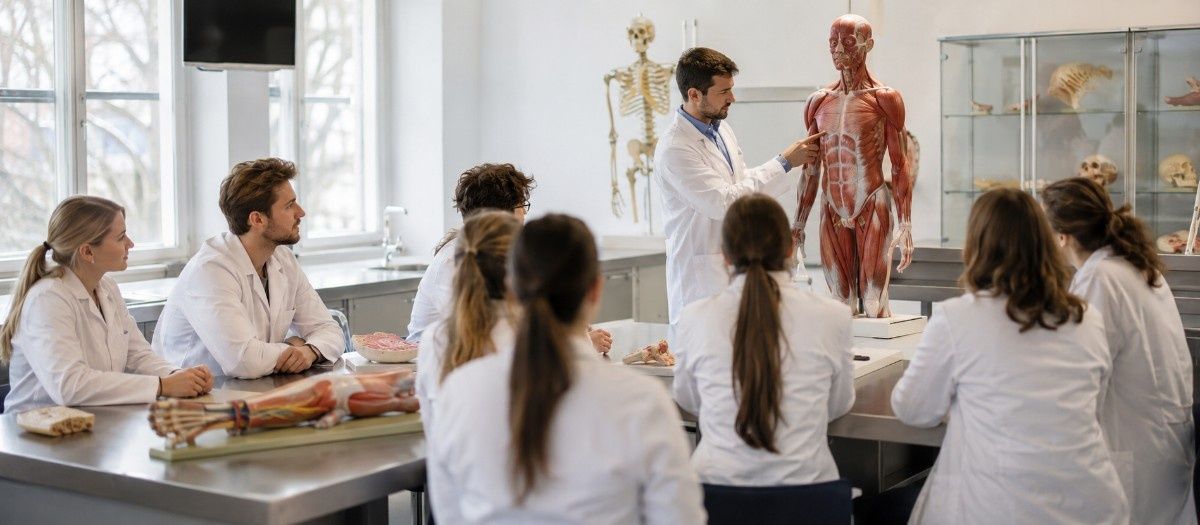
The faculty consists of dozens of institutes, departments, and specialised teaching units covering all major areas of medicine and healthcare. Students receive training in anatomy, physiology, pathology, pharmacology, internal medicine, surgery, paediatrics, neurology, oncology, obstetrics and gynaecology, public health, and many other disciplines. The curriculum is designed to combine theoretical knowledge with extensive clinical experience.
Clinical education is one of the faculty's greatest strengths. Students train at several major teaching hospitals in Prague, including the General University Hospital in Prague, Motol University Hospital, Thomayer University Hospital, Na Bulovce Hospital, and other affiliated healthcare institutions. These hospitals provide exposure to a wide range of medical specialties and patient populations. The large hospital network allows students to gain extensive practical experience throughout their studies.
Research forms an important part of the faculty's identity. Academic staff and researchers contribute to projects in oncology, cardiovascular medicine, neuroscience, genetics, immunology, infectious diseases, transplantation medicine, and molecular biology. Many research activities are conducted in cooperation with Czech and international institutions. Students are encouraged to participate in scientific projects, conferences, and research initiatives during their education.
The English-language General Medicine programme has helped attract students from Europe, Asia, North America, and the Middle East. The curriculum follows European Union standards and leads to the degree of Doctor of Medicine (MUDr.). Graduates can pursue postgraduate training and licensing opportunities in many countries, subject to local regulations.
Prague provides an excellent environment for medical education. With a population of approximately 1.4 million people, it is the largest city in the Czech Republic and one of Europe's most historic capitals. The city is known for its medieval architecture, cultural heritage, academic institutions, and modern infrastructure. Students benefit from a combination of historical surroundings and contemporary urban life.
The city's public transport system is among the best in Europe and includes metro lines, trams, buses, and rail connections. Prague's central location also makes travel to other European countries convenient. Students can easily visit neighbouring countries such as Germany, Austria, Slovakia, and Poland.
Student life is active and diverse. International students have access to student organisations, cultural societies, sports clubs, academic associations, and social events throughout the year. The presence of a large international community helps new students adapt quickly to university life.
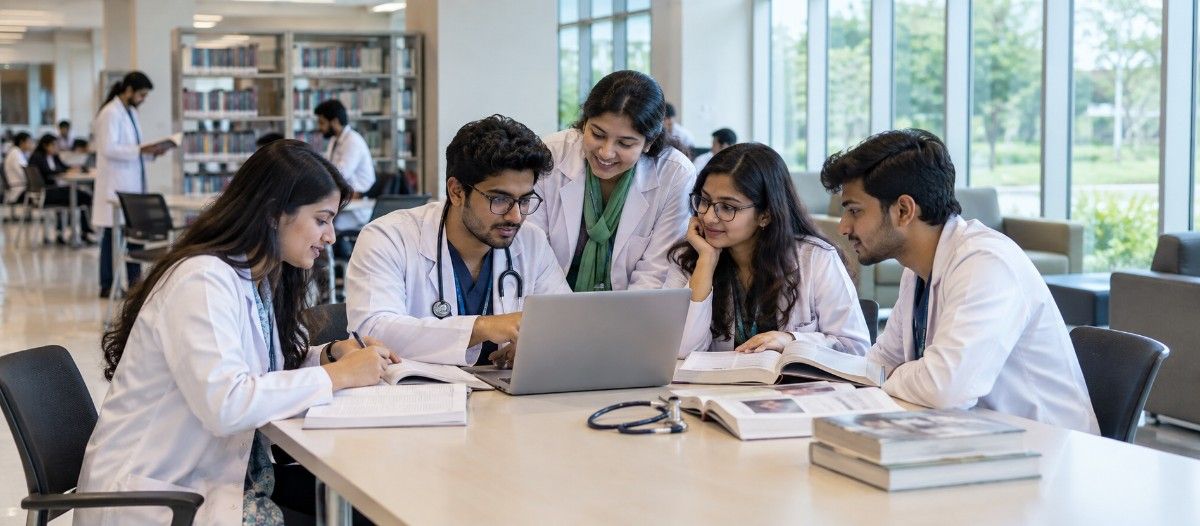
Accommodation is available through university residences and private housing options. Student hostels typically provide furnished rooms, internet access, study areas, and shared facilities. The faculty has welcomed Indian students for many years, and an established Indian student community is present within the university. Cultural events, student groups, and peer support networks help international students adjust to life in Prague.
What distinguishes the First Faculty of Medicine from many other medical schools is its combination of historical prestige, English-medium medical education, extensive teaching hospital network, and direct connection to Charles University, which has been educating physicians since the fourteenth century. Few medical institutions can match this combination of history, clinical exposure, and international recognition.