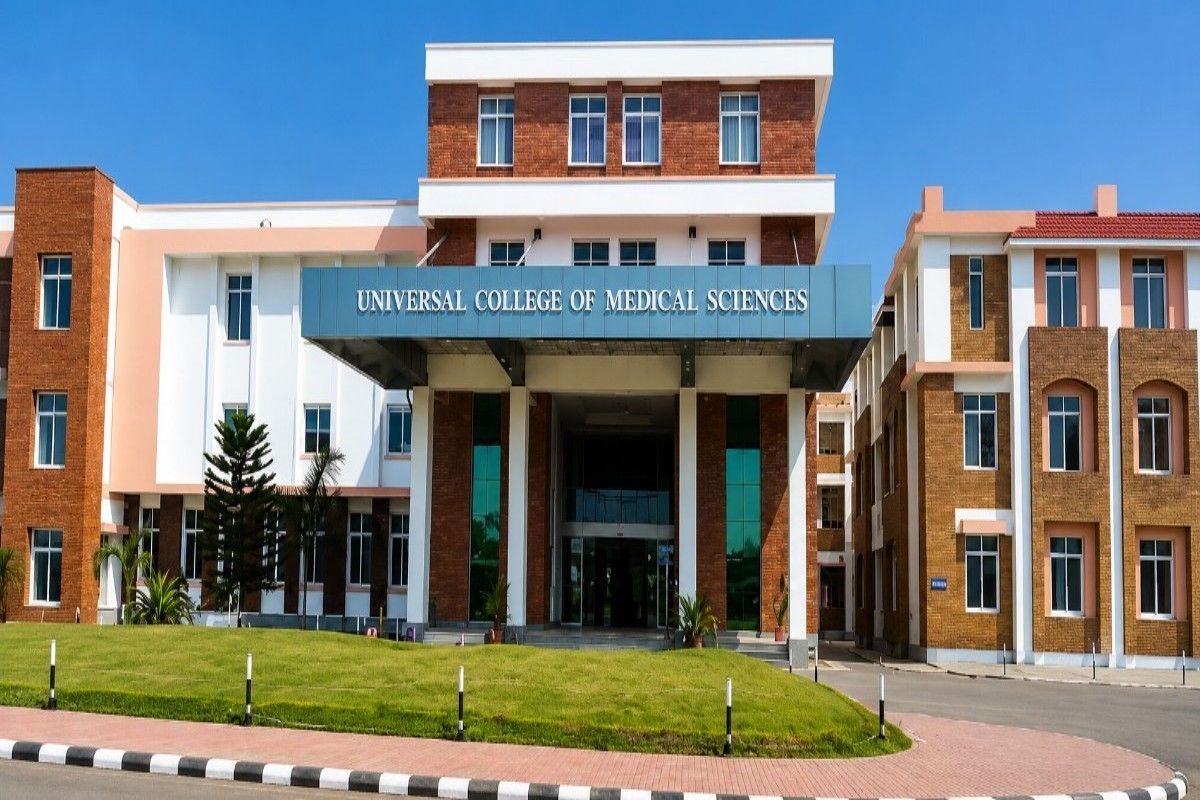
Pokhara is one of those cities that catches students off guard. Most guides mention the lakes and the mountains as a backdrop for a recruitment pitch, then move on to the fee tables. But the geography actually matters here. Gandaki Medical College Teaching Hospital and Research Centre (GMCTHRC) sits in the Lekhnath area of Pokhara, a mid-sized city of roughly 400,000 people, clean, walkable, noticeably less chaotic than Kathmandu, and surrounded by Annapurna range views that make early morning rounds feel different from anywhere else a medical student is likely to train. The environment is calm in a way that is genuinely useful for six years of focused academic work.
GMC was established in 2007 with a specific mandate: to bring quality medical education to the western region of Nepal, which had historically been underserved by both government and private medical institutions, with the latter concentrated in Kathmandu. The college is 100% Nepalese-owned, sits on 204 ropanis of its own land, and is affiliated with Tribhuvan University's Institute of Medicine, meaning it follows the same IOM curriculum framework and examination standards, and carries the same TU affiliation that underpins Nepal's oldest and most respected medical programmes. That connection to IOM is not just a marketing point. It is a structural guarantee of curriculum quality that not all private Nepalese medical colleges can claim.
The teaching hospital is the part of the GMC that most competitor pages either understate or misrepresent. As of 2025–26, GMC's teaching hospital operates 550 beds at its Prithivi Chowk facility in Pokhara Lekhnath Metropolitan City-9, with expansion to 750 beds underway. Beyond that, a separate 400-bed multi-speciality hospital is being developed at Pokhara Lekhnath Metropolitan City-27, roughly 9 km away. When expansion is complete, the total teaching bed count will approach 900, making GMC's clinical infrastructure among the largest of private universities for MBBS in Nepal. The hospital already runs ICUs, multiple operating theatres, emergency care, and speciality departments in Cardiology, Orthopaedics, Paediatrics, Gynaecology, and more. Students rotating through these wards from Year 3 onwards are seeing genuine clinical volume, not a small affiliated facility. One thing that no competitor guide mentions clearly is the government quota arrangement at GMC. The college is contractually committed to providing free tuition to 10% of its students, nominated by the Government of Nepal. That is not a scholarship programme that may or may not have funds; it is a binding institutional commitment that the State Level Fee Determination Committee of the Government of Western Region actively monitors, alongside the broader fee structure. That regulatory oversight is why GMC's fee structure is more transparent and more stable year-on-year than many private colleges in the region.
For Indian students, GMC combines the cultural and geographic proximity advantages of Nepal, under a 90-minute flight from Delhi, no language barrier, Hindi widely understood in Pokhara, a cultural calendar identical to northern India, with a teaching hospital that is genuinely expanding rather than stagnant. The Sunauli border crossing in Uttar Pradesh is 170 km away, meaning students from UP, Bihar, and Uttarakhand have a road travel option that costs a fraction of the cost of a flight. That practical accessibility matters over five and a half years. Parents visiting, emergency trips home, and end-of-year travel are all far simpler from Pokhara than from Bishkek or Tashkent.
The total 5.5-year all-inclusive cost at GMC, including tuition, hostel, food, insurance, and incidentals, typically falls between INR 55–65 lakh. That is lower than most Indian private medical colleges by INR 25–35 lakh and comparable to the better-regarded government-affiliated colleges in Nepal. There is no donation and no capitation fee. Fees are payable in yearly instalments, and the structure is published under state government regulation. For a family comparing GMC with a private MBBS college in Karnataka or Maharashtra that charges INR 80–90 lakh, with a separate donation component, the financial case for Pokhara is straightforward.