 Partner
📍nepal, Bhairahawa
 Study destination: nepal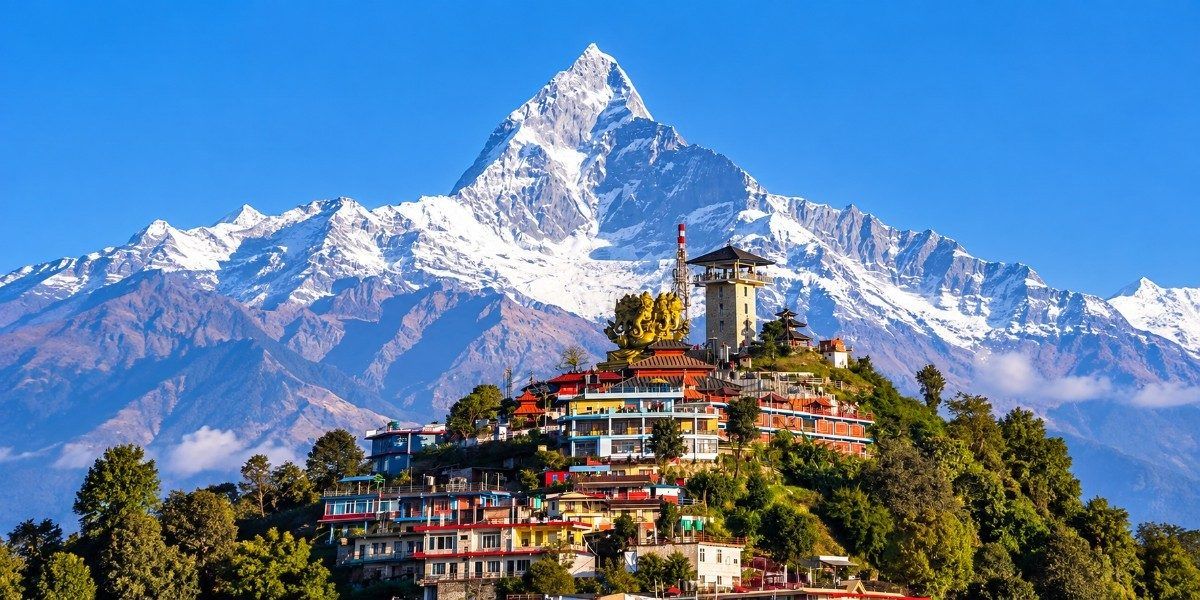
MBBS in Nepal is a popular choice for Indian students due to its proximity to India, English-medium teaching, familiar academic environment and strong clinical exposure.
For MBBS in Nepal for Indian students, major advantages include easy travel, availability of Indian food, Hindi-speaking communities and a medical education system similar to India.
The MBBS course in Nepal generally takes 5.5 years, including about 4.5 years of academic and clinical study followed by a 1-year compulsory rotating internship.
Before admission, students should verify the college’s current status, Medical Education Commission requirements, fees, hospital facilities, internship arrangements and compliance with the latest NMC regulations.
There are several reasons why students choose to study MBBS in Nepal, particularly students from India.
Nepal provides a combination of geographical convenience, medical education, English-medium teaching, clinical exposure and a familiar social environment.
Most established medical colleges offering MBBS education in Nepal use English as the main academic language. Students generally study medical subjects such as:
Anatomy
Physiology
Biochemistry
Pathology
Pharmacology
Microbiology
Medicine
Surgery
Pediatrics
Obstetrics and Gynaecology
This is particularly useful for Indian students because they do not need to learn an entirely new language just to understand lectures or textbooks.
During hospital training, Nepali and other local languages may be useful when interacting with patients. Hindi is also understood by many people, particularly in areas close to the Indian border.
One of the major reasons students consider MBBS in Nepal for Indian students is the similarity between medical education in Nepal and the Indian medical education environment.
The medical curriculum generally includes:
Basic medical sciences
Para-clinical subjects
Clinical subjects
Community medicine
Hospital postings
Practical training
Compulsory internship
This can make academic adjustment relatively easier for Indian students.
The standard MBBS duration in Nepal is approximately 5.5 years.
This generally consists of:
4.5 years of academic and clinical education
1 year of compulsory rotating internship
Kathmandu Medical College describes its MBBS programme as a 4.5-year academic course followed by a one-year compulsory rotating internship, while Nepalgunj Medical College describes the full programme as five and a half years.
Clinical exposure is an important factor while choosing a medical college in Nepal.
Several medical colleges operate their own teaching hospitals where students can participate in:
Ward rounds
History taking
Physical examination
Case discussions
Emergency medicine
Surgery observation
Pediatrics
Obstetrics and Gynaecology
Community medicine
Clinical quality differs between institutions, so students should compare hospital size, patient flow, clinical departments and internship arrangements before admission.
Nepal shares an open border with India and is easy to reach by road and air.
This provides several advantages for Indian students:
Shorter travel time
Easy access to India
Lower travel costs than distant MBBS-abroad countries
Similar food habits
Cultural familiarity
Frequent travel possibilities
Indian citizens also do not require a visa to enter Nepal. Nepal's Department of Immigration confirms that Indian citizens are visa-exempt.
Indian students generally find adaptation easier because Nepal and India share several cultural similarities.
Students can commonly find:
Vegetarian food
North Indian food
South Indian food
Nepali meals
Street food
Indian grocery products
Religious and cultural traditions also have many similarities.
English is used academically, while Nepali and Hindi share linguistic similarities.
Students can often communicate in:
English
Hindi
Nepali
depending on the situation.
Major advantages of MBBS in Nepal include:
English-medium MBBS education
5.5-year course structure at many colleges
One-year rotating internship
Geographical proximity to India
Similar medical curriculum
Easy travel from India
Familiar food and culture
Good clinical exposure at established hospitals
No visa requirement for Indian citizens
Multiple medical colleges
Similar disease profile to northern parts of India
Indian students already studying in many institutions
Relatively easy cultural adjustment
Opportunities for postgraduate medical pathways
Students should still compare individual colleges because infrastructure, fees, patient exposure and academic quality vary.
Nepal is a South Asian country located between India and China. It is well known for the Himalayan region, diverse geography, cultural heritage and close historical ties with India.
The country includes major educational and healthcare centres such as:
Kathmandu
Lalitpur
Bhaktapur
Pokhara
Bharatpur
Dharan
Biratnagar
Birgunj
Janakpur
Nepalgunj
Bhairahawa
Students planning MBBS admission in Nepal should compare the location of their medical college because accommodation, climate, transportation and living expenses vary by city.
Nepal has a culturally diverse population and strong historical connections with India.
Students may experience festivals such as:
Dashain
Tihar
Holi
Maha Shivaratri
Buddha Jayanti
Teej
Many festivals and social traditions are familiar to Indian students.
Climate depends strongly on location and altitude.
Kathmandu generally has pleasant summers and cooler winters, while cities in the Terai region such as Birgunj, Biratnagar and Nepalgunj can experience hotter summers.
Pokhara usually has a moderate climate with substantial rainfall.
Students should check the climate of the specific college city before admission.
Food options for Indian students may include:
Dal bhat
Roti and vegetables
Indian meals
Vegetarian dishes
Momos
Rice dishes
Chicken and meat dishes
Cafeteria meals
Restaurants
Self-cooking where permitted
Food expenses vary according to the city and lifestyle.
Students studying MBBS in Nepal may participate in:
Medical conferences
Academic clubs
Sports
Cultural programmes
Research activities
Community health camps
Volunteering
College festivals
Medical outreach programmes
Particular | Details |
Course Name | Bachelor of Medicine and Bachelor of Surgery |
Degree | MBBS |
Course Duration | About 5.5 Years |
Academic Study | Around 4.5 Years |
Internship | 1 Year Compulsory Rotating Internship |
Medium | English |
Entrance System | MECEE-BL / applicable foreign-candidate route |
NEET | Important for Indian students under applicable Indian regulations |
Eligibility | 10+2 with Physics, Chemistry and Biology; programme-specific conditions apply |
Major Universities | Tribhuvan University, Kathmandu University and autonomous academies |
Tuition for Indian Students | Commonly around ₹50 lakh–₹65 lakh at many private colleges; college-specific |
Approx. Fee in NPR | Around NPR 80 lakh–1.04 crore |
Main Intake | Annual admission cycle |
Clinical Training | Attached/affiliated teaching hospitals |
Visa for Indians | Not required for entry |
Registration in India | Subject to current NMC foreign medical graduate regulations |
Students frequently ask, How many years is MBBS in Nepal?
The MBBS in Nepal duration is generally around 5.5 years, consisting of:
4.5 years of academic and clinical education + 1 year compulsory rotating internship.
Kathmandu University-affiliated Nepalgunj Medical College states that its programme includes 4.5 years of study followed by a one-year internship. Kathmandu Medical College follows the same broad structure.
The early phase focuses on foundation subjects. During this phase Students generally study:
Anatomy
Physiology
Biochemistry
Pathology
Pharmacology
Microbiology
Community Medicine
Introduction to Clinical Medicine
Students gradually begin clinical subjects and practical training.
Common areas include:
Pathology
Pharmacology
Microbiology
Forensic Medicine
Community Medicine
Clinical diagnostics
The clinical phase includes subjects such as:
Internal Medicine
General Surgery
Pediatrics
Obstetrics and Gynaecology
Orthopaedics
Psychiatry
Dermatology
Ophthalmology
ENT
Anaesthesiology
Radiology
Nepalgunj Medical College describes its clinical phase as running from semester V through semester IX.
After completing academic examinations, students generally complete a one-year compulsory rotating internship.
During the internship, students may rotate through departments including:
Medicine
Surgery
Pediatrics
Obstetrics and Gynaecology
Emergency Medicine
Community Medicine
Orthopaedics
Other clinical departments
After completing the academic phase of MBBS in Nepal, students generally undergo a 12-month compulsory rotating internship in an approved teaching hospital. The purpose of this internship is to give graduates supervised, hands-on clinical exposure before independent medical practice.
During the internship, students usually rotate through major departments such as:
Internal Medicine
General Surgery
Obstetrics & Gynaecology
Pediatrics
Emergency Medicine
Community Medicine
Orthopedics and other clinical departments, depending on the institution
The main medium of instruction for MBBS in Nepal is English at established medical institutions.
Teaching, examinations, medical textbooks and most academic communication are generally conducted in English.
However, learning basic Nepali terminology can help students communicate more effectively with patients during clinical training.
Indian students who understand Hindi may find basic local communication easier than in many non-South Asian destinations.
MBBS admissions in Nepal are generally organised through an annual admission cycle under the country's Medical Education Commission framework.
For the current system, the Medical Education Commission conducts the Medical Education Common Entrance Examination for Bachelor Level programmes (MECEE-BL) and publishes foreign-category admission and matching information. MEC published MBBS results for MECEE-BL 2026 and category-wise seat information under the current cycle.
Students should start preparing early because the admission process can include:
Entrance registration
NEET documentation for Indian applicants where applicable
Academic verification
Foreign-candidate application
Merit or matching process
College preference selection
Fee payment
Admission reporting
The overall MBBS in Nepal fees depend on:
Medical college
University affiliation
Foreign-student category
Hostel
Food
University charges
Registration charges
Examination fees
Personal expenses
For currency comparison, the Nepal Rastra Bank currently lists approximately:
INR 100 = NPR 160
or around:
₹1 = NPR 1.60
NPR 1 = approximately ₹0.625.
For Indian students, private-college MBBS tuition commonly falls around:
₹50 lakh–₹65 lakh for the complete programme
which is approximately:
NPR 80 lakh–NPR 1.04 crore
depending on the college and fee package.
Students should always verify the latest official fee letter because foreign-student fees can be revised.
Kathmandu Medical College published a 2025/26 MBBS fee structure for Indian/international students showing total programme tuition of:
₹55,00,000
Equivalent in Nepalese currency:
Approximately NPR 88,00,000
using ₹1 = NPR 1.60.
The same official fee notice also lists additional admission, university registration, affiliation and other charges separately.
Living expenses depend on:
City
Hostel type
Mess arrangement
Personal lifestyle
Transportation
Mobile/internet
Recreation
Cities such as Kathmandu and Pokhara may generally cost more than smaller cities or border regions.
MBBS in Nepal eligibility differs according to the admission route and current MEC rules.
Students should verify the requirements for the exact academic year.
Students generally need:
Completion of 10+2 or equivalent
Physics
Chemistry
Biology
Required academic percentage or grade
Eligibility under the current entrance framework
A commonly applied requirement is at least around 50% aggregate in the relevant science qualification, although students must verify the current MEC notice for their category.
Indian students planning to pursue MBBS in Nepal must qualify NEET under the applicable Indian rules. For NEET UG 2026, the qualifying cut-off was 213 marks for General/EWS candidates and 177 marks for OBC/SC/ST candidates, corresponding to the required qualifying percentiles.
Qualifying NEET alone does not guarantee MBBS admission in Nepal. Indian students must also meet the Medical Education Commission (MEC) eligibility and merit criteria, which may require at least the 50th percentile or equivalent score. Students should check both NEET and the latest MEC rules before applying.
NEET is therefore an important consideration for students who intend to return to India after completing their foreign medical degree.
Nepal's Medical Education Commission manages common entrance and matching arrangements.
MEC also provides specific routes for foreign applicants.
Its published framework has included categories for:
Foreign candidates appearing in MECEE-BL
Eligible foreign candidates applying through recognised national-level medical entrance examination results under applicable rules
MEC information states that for certain foreign applicants using the second-priority route, a qualifying national-level medical entrance examination result may be considered, with the stated threshold linked to the 50th percentile or equivalent 50% where results are expressed as percentages.
Students should check the current foreign-candidate notice before applying.
Applicants should satisfy the age requirements prescribed by the admission authority and Indian regulations applicable to their case.
Indian students should also check current NEET eligibility conditions.
Indian students planning MBBS in Nepal for Indian students should pay particular attention to NMC requirements. NMC's current advisory reiterates requirements including at least 54 months of medical education in a single institution, a 12-month internship at the same foreign university/institution, clinical training that is not split across different countries and English as the medium of instruction.
NMC's FMGL rules also state that foreign graduates covered by the regulations must complete the prescribed foreign internship and subsequently fulfil the required supervised internship provisions in India before registration.
Indian students should verify:
Minimum academic duration
One-year internship
Internship at the appropriate institution
English-medium teaching
Required medical subjects
Clinical exposure
Degree-awarding university
Eligibility for medical registration in Nepal
NMC regulations applicable to the admission batch
Do not choose a medical college only because a website describes it as "NMC approved."
NMC's current approach places responsibility on students to ensure that the foreign medical programme satisfies applicable Indian regulations.
Students should verify the institution at multiple levels before taking admission.
The Medical Education Commission (MEC) regulates medical education processes including entrance, seats, matching and fee-related matters in Nepal.
The Nepal Medical Council is relevant to medical professional registration within Nepal.
Students should confirm whether the qualification and training pathway enables the graduate to satisfy local registration conditions.
Indian students should verify:
54-month minimum academic requirement
Internship structure of 12 month
Medium of instruction
Required clinical subjects
Clinical training
Local licensing eligibility
Current Indian screening/licensing requirements
Students can also check the World Directory of Medical Schools for institutional information.
However, WDOMS listing does not by itself guarantee eligibility for Indian medical registration.
Students searching for top medical colleges in Nepal, best medical colleges in Nepal for Indian students or Nepal MBBS colleges may come across institutions affiliated with Tribhuvan University, Kathmandu University and autonomous medical academies.
Major institutions include:
Medical College / Institution | Location | Affiliation / Status |
Dharan | Autonomous Institution | |
Dhulikhel | Kathmandu University | |
Kathmandu | Kathmandu University | |
Kathmandu | Kathmandu University | |
Pokhara | Kathmandu University | |
Nepalgunj | Kathmandu University | |
Biratnagar | Kathmandu University | |
Palpa | Kathmandu University | |
Bharatpur | Kathmandu University | |
Lalitpur | Tribhuvan University | |
Bharatpur | Tribhuvan University | |
Birgunj | Tribhuvan University | |
Janakpur | Tribhuvan University | |
Bhairahawa | Tribhuvan University | |
Maharajgunj Medical Campus, Institute of Medicine | Kathmandu | Tribhuvan University |
The MEC's published foreign admission list has included institutions such as Maharajgunj Medical Campus, B.P. Koirala Institute of Health Sciences and Kathmandu University School of Medical Sciences.
Students should check the current year's seat allocation because availability for foreign candidates can change.
The MBBS fee structure in Nepal for Indian students varies considerably by college.Generally, the total MBBS fee for Indian students in Nepal for the 2026-27 academic year approximately ranges between ₹50 lakh to ₹65 lakh in many of the private medical colleges.
However, the actual amount will depend on the respective college and what their package includes. Some of the current college fee structures include examples such as the application fees at Birat Medical College being around ₹52.8 lakh, at Kathmandu Medical College (2025-26), it comes to approximately ₹55 lakh, at National Medical College it reaches around ₹57 lakh, and at Nepal Medical College it approximately costs around ₹59.5 lakh.
A practical planning range for many private medical colleges is approximately:
₹50 lakh–₹65 lakh
or roughly:
NPR 80 lakh–NPR 1.04 crore
for tuition across the programme.
Some colleges may charge above or below this range depending on the admission category and package.
Medical College | Indicative Tuition for Indian Students | Approx. NPR Equivalent |
Kathmandu Medical College | ₹55 lakh* | NPR 88 lakh |
National Medical College | Around ₹57 lakh | Around NPR 91.2 lakh |
Nepal Medical College | Around ₹59.5 lakh | Around NPR 95.2 lakh |
Janaki Medical College | Around ₹58 lakh | Around NPR 92.8 lakh |
Other Private Colleges | Approx. ₹50–65 lakh | Approx. NPR 80 lakh–1.04 crore |
Hostel costs vary depending on:
College
Room sharing
Hostel facilities
Location
Meal inclusion
Electricity and utilities
Students should ask whether hostel fees are included in the tuition package or charged separately.
Food costs depend on personal preferences.
Students may use:
College mess
Local restaurants
Cafeterias
Self-cooking
Indian restaurants
Additional charges may include:
Admission fee
University registration
Affiliation fee
Examination fee
Medical council registration
Library charges
Laboratory charges
Internship charges
For example, Kathmandu Medical College's published fee sheet lists separate admission and university-related charges in addition to its tuition amount.
A practical total budget for MBBS in Nepal for Indian students may reach around:
₹55 lakh–₹75 lakh or more
depending on tuition, hostel, food, additional charges and lifestyle.
Equivalent Nepalese currency:
Approximately NPR 88 lakh–NPR 1.20 crore+
Students should calculate:
Tuition + hostel + food + registration + university charges + examination fees + internship expenses + transportation + personal expenses
rather than relying on a single advertised package.
Students searching for low-cost MBBS in Nepal or affordable medical colleges in Nepal should avoid selecting a college only on tuition.
Compare:
MEC seat availability
University affiliation
Teaching hospital
Patient flow
Course duration
Internship
Hostel
Academic results
NMC compliance
Total package cost
A fee that appears lower may exclude hostel, food, registration, examinations or internship-related charges.
Most private medical colleges provide or arrange hostel facilities for students.
Facilities may include:
Furnished rooms
Beds
Study tables
Electricity
Water
Security
Laundry facilities
Wi-Fi
Common rooms
Mess facilities
Some institutions may have separate hostels for male and female students.
Students should check:
Hostel rules
Curfew
Room sharing
Mess charges
Security deposit
Distance from teaching hospital
before admission.
Food adjustment is generally easier for Indian students in Nepal than in many distant overseas destinations.
Students can commonly find:
Roti
Rice
Dal
Sabzi
Paneer
Chicken
Vegetarian meals
Indian-style food
Nepali food
Snacks
Students staying in Kathmandu, Pokhara, Bharatpur, Birgunj and other major cities generally have access to restaurants and grocery shops.
The cost of living in Nepal for Indian students depends on the city and lifestyle.
Expense | Typical Consideration |
Accommodation | Hostel or private room |
Food | Mess, restaurant or self-cooking |
Transportation | Local bus, taxi or ride-hailing |
Mobile/Internet | Local SIM and data plan |
Study Material | Books, printing and equipment |
Clothing | Depends on city and climate |
Personal Expenses | Recreation and daily needs |
Travel | India-Nepal travel |
Students living in Kathmandu may spend more than students in smaller cities.
Scholarships in Nepal are generally more competitive than regular self-financed admission.
Scholarship allocation may depend on:
Entrance performance
Nationality
Government policy
MEC regulations
Institutional rules
Scholarship category
Indian students should not assume that a scholarship will automatically be available.
Always verify the current MEC scholarship and foreign-category rules.
One major benefit of studying MBBS in Nepal for Indian students is easy travel.
Students can reach Nepal by both road and air.
Common Indian departure cities for flights include:
Delhi
Mumbai
Kolkata
Bengaluru
Varanasi
Land-border routes also connect India with cities such as:
Birgunj
Bhairahawa
Nepalgunj
Janakpur region
Indian citizens do not require a visa to enter Nepal.
For air travel, the Embassy of India states that valid travel documents include:
Valid Indian passport, or
Original Election Commission of India Voter ID with photograph
Aadhaar, PAN card and driving licence are not accepted as substitutes for these travel documents for air travel between India and Nepal.
Students may use airports including:
Tribhuvan International Airport, Kathmandu
Gautam Buddha International Airport
Pokhara International Airport
Students may use:
Public buses
Microbuses
Taxis
Ride-hailing services
Domestic flights
College buses
Transportation infrastructure is best developed around major urban centres.
Kathmandu is Nepal's capital and major educational centre.
Advantages include:
Multiple medical colleges
Large hospitals
International airport
Restaurants
Indian communities
Shopping
Public transport
Living costs can be higher than in smaller cities.
Pokhara is a major student and tourism city.
It is home to medical institutions including Manipal College of Medical Sciences.
Students may find a relatively relaxed city environment with good connectivity.
Bharatpur is an important healthcare hub in Chitwan.
It has several medical institutions and hospitals and is well connected by road.
Dharan is home to B.P. Koirala Institute of Health Sciences.
The city has a strong medical-education environment.
Biratnagar is an important city in eastern Nepal with medical colleges and relatively convenient access to India.
Birgunj lies near the Indian border and offers easy road connectivity.
Nepalgunj is another important border-region city with established medical education.
Students pursuing MBBS in Nepal may participate in following activities apart from academics:
Football
Cricket
Basketball
Badminton
Volleyball
Gym activities
Medical societies
Cultural programmes
Health camps
Research activities
Conferences
Community service
These activities help students develop teamwork and build connections outside the classroom.
Feature | MBBS in Nepal | MBBS in India |
Course Duration | Usually 5.5 Years | About 5.5 Years |
Medium | English | English |
Required under applicable Indian rules | Required | |
Admission | Nepal MEC/foreign route + applicable NEET requirement | NEET counselling |
Clinical Environment | Nepalese hospitals | Indian hospitals |
Internship | Generally 1 Year | Generally 1 Year |
Culture | Similar to India | Indian |
Food | Indian/Nepali options | Indian |
Travel from India | Easy | Domestic |
Registration in India | Foreign graduate pathway | Domestic pathway |
Tuition | College-dependent | Highly variable |
For Indian students, Nepal can feel academically and culturally closer to India than many other foreign destinations.
Country | Typical Duration | Tuition Level | Living Cost | Medium | Distance from India |
Nepal | About 5.5 Years | Moderate to High | Low–Moderate | English | Very Close |
Around 6 Years | Moderate | Moderate | English/Bilingual | Far | |
Around 6 Years | Moderate | Moderate | English | Far | |
Around 6 Years | Lower–Moderate | Low | English at selected universities | Far | |
Around 5–6 Years | Lower | Low | English at selected universities | Far | |
Around 5–6 Years | Moderate | Moderate | English at selected universities | Far | |
Around 5 Years + internship | Moderate | Low–Moderate | English | Close |
Nepal's major advantage is proximity and cultural similarity, while tuition can be higher than in some CIS destinations.
The MBBS syllabus in Nepal generally progresses from basic medical sciences to clinical medicine.
Academic Stage | Common Subjects |
Years 1–2 | Anatomy, Physiology, Biochemistry, Pathology, Pharmacology, Microbiology, Community Medicine |
Middle Phase | Forensic Medicine, Community Medicine, Introduction to Clinical Medicine |
Clinical Phase | Medicine, Surgery, Pediatrics, Obstetrics & Gynaecology, ENT, Ophthalmology |
Advanced Clinical Phase | Medicine and Allied, Surgery and Allied, specialist rotations |
Final Stage | One-Year Compulsory Rotating Internship |
Nepalgunj Medical College's published curriculum includes a two-year basic science phase, a 2.5-year clinical phase and a one-year internship.
While pursuing MBBS in Nepal students may study:
Anatomy
Physiology
Biochemistry
Pathology
Pharmacology
Microbiology
Community Medicine
Forensic Medicine
Internal Medicine
General Surgery
Pediatrics
Obstetrics
Gynaecology
Orthopaedics
Psychiatry
Dermatology
Radiology
Ophthalmology
ENT
Anaesthesiology
Emergency Medicine
Clinical training is one of the most important factors when selecting a Nepal medical college.
Here students may participate in:
Ward rounds
History taking
Physical examination
Case discussions
Clinical diagnosis
Surgery observation
Emergency care
Internal Medicine
Pediatrics
Obstetrics and Gynaecology
Orthopaedics
Radiology
Community health programmes
Teaching-hospital patient flow can differ significantly between colleges.
There are several advantages of studying mbbs in nepal, some of the major ones are listed below:
Students can travel home more easily than from most other foreign MBBS destinations.
The academic curriculum is primarily taught in English.
The 4.5-year study plus one-year internship model is familiar to Indian students.
Food, festivals, traditions and language are relatively easy for Indian students to adapt to.
Many colleges operate attached teaching hospitals.
Indian nationals do not need a Nepal visa to enter the country.
Air and road connections make travel convenient.
The patient and disease profile has several similarities with India, which can be useful for students planning to return.
Confirm that the college has seats allocated under the current admission cycle.
Foreign students may have different routes depending on MEC rules.
Indian students planning future registration in India should meet applicable NEET requirements.
Do not rely only on claims such as "NMC approved college."
Verify the complete programme.
Make sure the programme includes the required internship and that its structure complies with current Indian regulations.
Compare:
Hospital size
Patient flow
Departments
Clinical postings
Internship opportunities
Include:
Tuition + hostel + food + admission + university charges + examination fees + travel + personal expenses
Students should understand:
Seat-booking amount
Refund conditions
Withdrawal rules
Installment schedule
before making payment.
Completing MBBS in Nepal can lead to multiple career pathways, subject to licensing requirements.
Indian students must complete the applicable NMC foreign medical graduate pathway before practising medicine in India.
Current NMC rules should always be checked because examination and registration processes may evolve.
Graduates who wish to practise in Nepal must satisfy the applicable Nepal Medical Council registration requirements.
Graduates may pursue specialties such as:
Internal Medicine
General Surgery
Pediatrics
Orthopaedics
Radiology
Dermatology
Psychiatry
Anaesthesiology
Obstetrics and Gynaecology
Cardiology
Neurology
Graduates interested in the United States must satisfy the applicable USMLE and ECFMG requirements.
Students planning to pursue medical practice in the UK must follow the current GMC registration pathway.
Graduates can explore the applicable AMC and Australian medical registration pathway.
The MBBS admission process in Nepal for Indian students should be completed through the current authorised system. AMW Career Point can help you in completing admission process easily:
Confirm:
10+2 qualification
Physics, Chemistry and Biology
Required marks
NEET eligibility
MEC foreign-candidate requirements
Students should complete the required MEC application for their foreign category.
MEC's online registration system asks applicants to verify eligibility before submitting application fees.
Applicants may be required to provide:
Academic transcript
Photograph
Passport or other accepted identification
Entrance examination information
Signature
Other category-specific documents
MEC's registration instructions specifically list academic transcript, photograph and passport/Aadhaar for foreign applicants among the documents used in the online application process.
Candidates must satisfy the applicable MECEE-BL or recognised foreign entrance route.
Eligible students participate in the MEC matching process according to the applicable category.
Students receive allocation based on:
Merit
Seat availability
Preferences
Category
Report to the allocated college and complete admission requirements.
Pay fees only through authorised channels.
Obtain:
Official receipt
Admission letter
Fee structure
Payment schedule
Confirm hostel or private accommodation.
Indian students can travel without a visa but should carry valid travel identification.
Complete:
College reporting
University registration
Medical examinations
Hostel registration
Orientation
Indian students may need:
Class 10 certificate
Class 10 marksheet
Class 12 certificate
Class 12 marksheet
Physics, Chemistry and Biology marks
NEET admit card where required
Passport
Passport-size photographs
Birth certificate where required
Migration certificate
Transfer certificate
Medical fitness certificate
MEC application documents
Entrance qualification documents
College admission form
Other university-specific documents
Requirements can change by admission cycle.
Indian students do not require a Nepal visa.
For air travel between India and Nepal, students should generally carry either:
Valid Indian passport, or
Original Voter ID issued by the Election Commission of India
The Embassy of India states that Aadhaar, PAN card and driving licence are not valid substitutes for these documents for air travel.
Students should nevertheless keep a valid passport because it may also be needed for university, registration and future international travel purposes.
Explore active university options with fee, duration, and accreditation details before you shortlist your preferred campus.
PartnerChoose the right country, shortlist the right university, and understand your next steps with one clear plan built around your NEET score and budget.
Arrange a free counselling sessionMBBS in Uzbekistan 2026-27: Fees, Universities, NMC Advisory & Everything Else Nobody Tells You Upfront
Lowest-Cost NMC-Compliant MBBS Abroad | English Medium | No Donation | ₹15-35 Lakh Total | National FMGE Average 25%
MBBS in Russia 2026 Affordable Fees, NMC-Compliant Universities & Global Recognition
● Government-owned universities across all four main cities (Minsk, Vitebsk, Grodno, Gomel); WDOMS-listed, though NMC/FMGL 2021 eligibility must be verified for your specific course before paying any fee
● NMC, WHO/WDOMS, and EU/ECTS-recognized universities are available; always verify your specific university's current standing directly rather than relying on a blanket "NMC approved" claim
MBBS in Nepal for Indian students can be suitable for students looking for English-medium education, cultural familiarity, good clinical exposure and easy travel from India. Students should still carefully verify the medical college, fees and NMC requirements.
The MBBS duration in Nepal is generally 5.5 years, including approximately 4.5 years of academic and clinical study followed by a one-year compulsory rotating internship.
MBBS fees in Nepal for Indian students commonly fall around ₹50 lakh–₹65 lakh at many private colleges for tuition, although the exact amount depends on the institution. In Nepalese currency, this is roughly: NPR 80 lakh–NPR 1.04 crore. Additional hostel and university expenses may apply.
Expert will call you within 2 hours
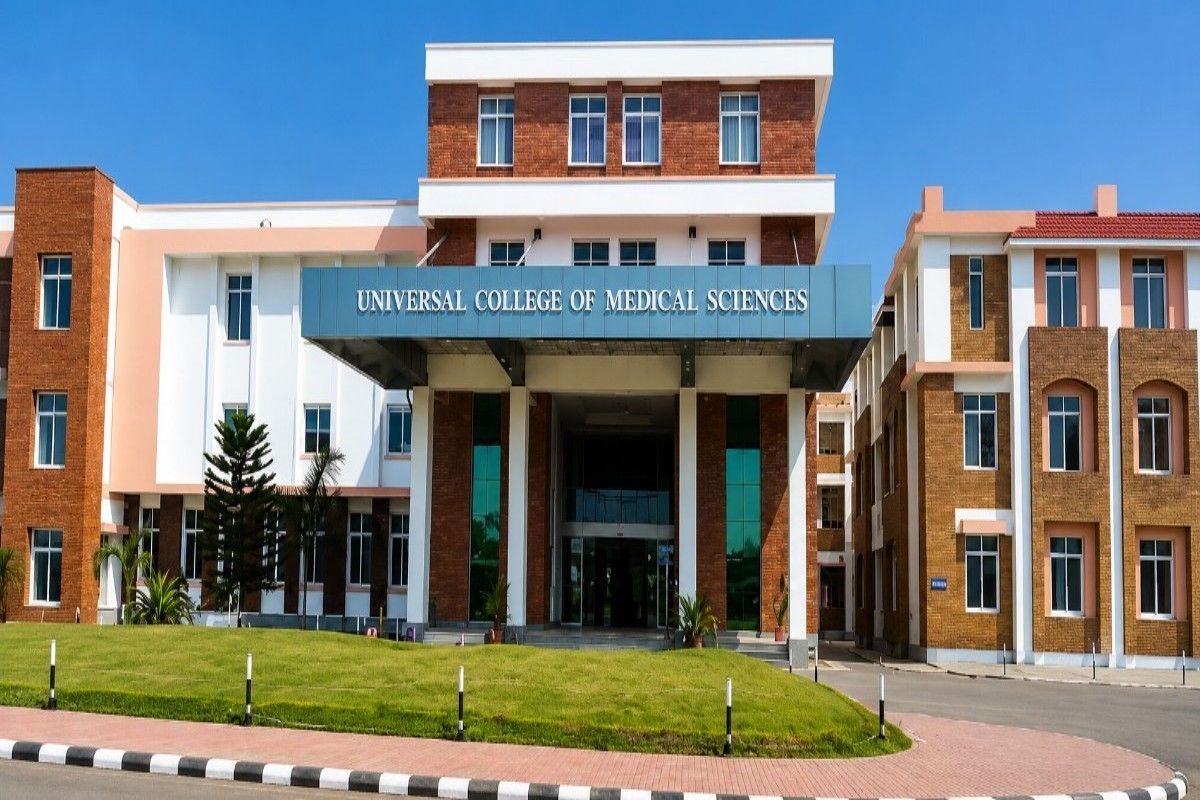
Explore fees, eligibility, and admission guidance for MBBS in Universal College of Medical Sciences (UCMS) in nepal.
 Partner
Explore fees, eligibility, and admission guidance for MBBS in Patan Academy of Health Sciences (PAHS) in nepal.
 Partner
Explore fees, eligibility, and admission guidance for MBBS in Nobel Medical College (NMCTH) in nepal.
 Partner
Explore fees, eligibility, and admission guidance for MBBS in Nepalgunj Medical College (NGMC) in nepal.
 Partner
Explore fees, eligibility, and admission guidance for Nepalese Army Institute of Health Sciences (NAIHS) in nepal.
 Partner
Explore fees, eligibility, and admission guidance for Nepal Medical College in nepal.
Our team provides university-specific guidance and a full nepal context briefing at every intake. Book a free counselling session →
Kathmandu Medical College published a total tuition of ₹55 lakh for its 2025/26 Indian/international MBBS fee structure. At ₹1 = NPR 1.60, this is approximately NPR 88 lakh. Additional charges apply separately.
Indian students who intend to study medicine abroad and later pursue registration in India should satisfy applicable NEET requirements. Students should also follow Nepal's MEC admission rules.
Nepal's Medical Education Commission conducts the MECEE-BL common entrance system and also publishes specific provisions for foreign applicants. Students should follow the foreign-candidate route applicable to their admission year.
An Indian student planning to use a foreign MBBS qualification for medical registration in India should not plan admission on the assumption that NEET can be skipped. The student must satisfy applicable Indian eligibility and NMC requirements.
Yes. English is generally the main academic language of MBBS programmes in established medical colleges.
A Nepal medical degree can be used toward the Indian foreign medical graduate pathway only when the student satisfies all NMC requirements applicable to the admission batch, including course duration, internship, clinical training, required subjects and licensing conditions.
Nepal's living costs can be moderate, but private MBBS tuition is not necessarily very low. Many Indian-student private-college packages fall around ₹50–65 lakh or more before living expenses.
Students generally need 10+2 or equivalent with Physics, Chemistry and Biology and must satisfy the required academic and entrance criteria. Indian students should also meet applicable NEET requirements.
No. Indian citizens do not require a visa to enter Nepal.