
Q1. When was Heinrich-Heine-Universität Düsseldorf founded?
+The university was founded in 1965, though it officially continues Düsseldorf's Medical Academy, which opened in 1907.
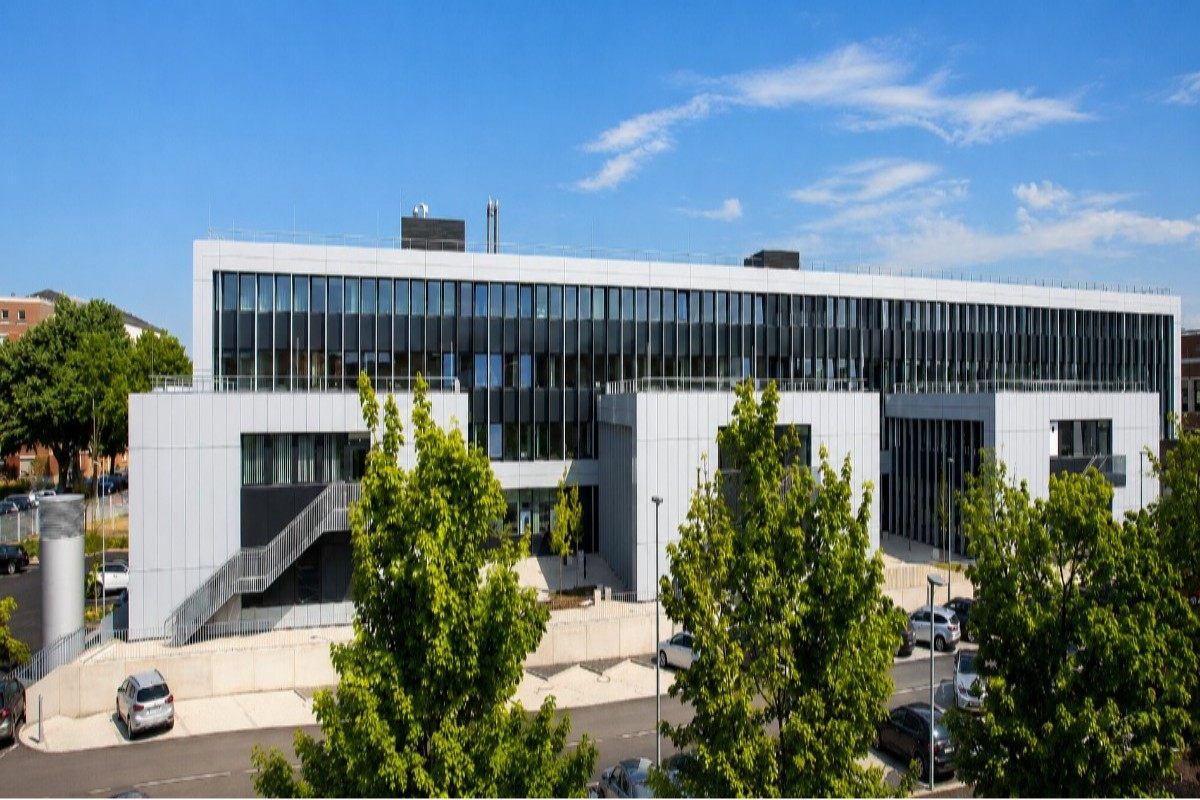
 Germany | Est. 1965
Germany | Recognised by the German state of North Rhine-Westphalia and the German Medical Association framework; the Staatsexamen is a nationally standardised qualification across Germany. | : German runs through the entire Modellstudiengang medium
Expert will call you within 2 hours
The College and What Makes It Different
People usually just call it HHU for short. The university itself was founded in 1965, but its roots actually go back much further. So, this makes it younger on paper than it really is underneath.
A public, state-run body runs it, and it now teaches over 36,500 students across five faculties. Medicine sits at the historical core of the whole institution, not as a later add-on.
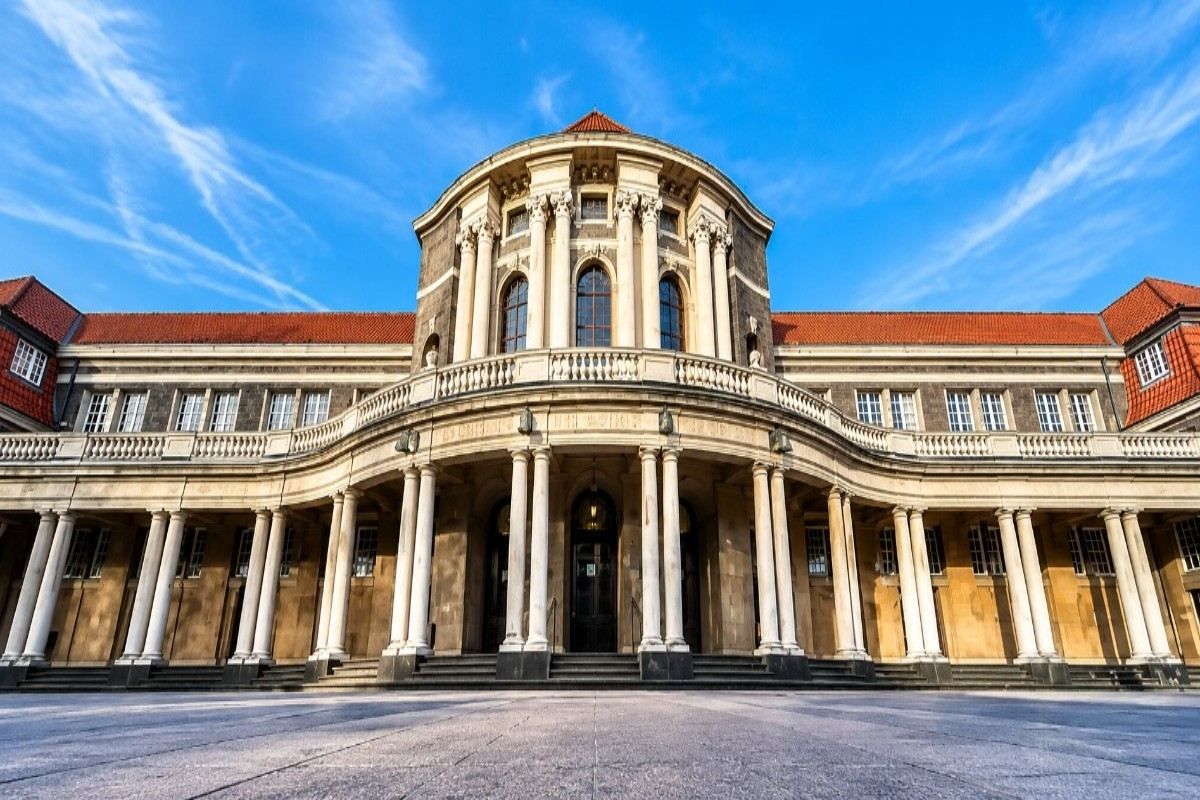
Here's a fact most overview pages skip entirely. HHU is officially the successor organisation to Düsseldorf's Medical Academy, which opened back in 1907. So genuine institutional history backs this college's medical training, stretching back well over a century, not just marketing copy.
The Düsseldorf Campus and Its Setting
HHU sits on a single, compact urban campus covering about 130 hectares in Düsseldorf. So, students move between lecture halls, labs, and the university hospital without long commutes across the city.
Clinical training runs through University Hospital Düsseldorf, sitting right alongside the medical faculty on the same campus. So, students step from the classroom into real clinical settings without switching sites entirely.
A dedicated learning building, called the O.A.S.E., serves medical students specifically. It spans eight floors of study rooms and a specialised library. So, the campus carries real, purpose-built infrastructure for medical training, not just shared general-purpose classrooms.
Course Structure, Cost, and Practical Details
HHU runs a Modellstudiengang, a specially designed medical curriculum called the Düsseldorfer Curriculum Medizin, introduced in 2013. The standard study period runs 12 to 13 semesters, working out to roughly six years and a few months. Students finish with a Staatsexamen, Germany's state medical examination, rather than a separate bachelor's or master's degree.
Admission runs through two separate channels depending on where a candidate comes from. Applicants from Germany and the EU generally apply through Hochschulstart.de, the nationwide restricted-admission body. International applicants from outside the EU apply directly to HHU, where the average grade of their university entrance qualification serves as the sole admission criterion.
Fee figures stay refreshingly simple here compared to many other countries. North Rhine-Westphalia charges no general tuition fees at public universities, and plans to charge non-EU students separately were dropped at the end of 2019. So the only regular charge is a semester contribution fee, not tuition in the usual sense.
Quick Overview
Parameter | Details |
Established | 1965, in Düsseldorf; successor to the city's Medical Academy, founded 1907 |
Institution Type | Public, state-run university |
Location | Universitätsstraße 1, 40225 Düsseldorf, Germany |
Programme | Human Medicine (Modellstudiengang), leading to a Staatsexamen |
Duration | 12 to 13 semesters (approx. 6 years, 3 to 6 months) |
Medium of Instruction | German |
Foreign Quota Note | No SAARC-style quota; non-EU applicants apply directly to HHU, with entrance-qualification grades as the sole stated criterion |
Teaching Hospital | University Hospital Düsseldorf (UKD), located on the same campus |
Fee Structure
Fee Component | Amount | Notes |
Tuition Fee | None | North Rhine-Westphalia charges no general tuition at public universities |
Non-EU Student Fee | None | Plans for a separate non-EU fee were scrapped at the end of 2019 |
Semester Contribution | Approx. EUR 300 to 350 per semester | Covers student union dues, social fund, and public transport ticket |
Living Costs | Not separately confirmed by the university | Düsseldorf runs on the pricier side for a German city |
Approx. Total Programme Cost | Roughly EUR 3,600 to 4,200 over 6 years (semester fees only) | Estimate only; confirm the current rate directly with the university |
Why Heinrich-Heine-Universität's Medical Faculty Deserves a Harder Look Than Its Founding Date Suggests
A Medical School Built on a Century-Old Foundation
Most rival pages just quote a university's official founding year and stop there. HHU's own founding year, 1965, actually understates its medical history, since it officially continues Düsseldorf's Medical Academy, established in 1907. So the medical training here rests on institutional roots that run more than a century deep, not a standing start from the 1960s.
A Curriculum Built Around Early Clinical Contact
Most guides describe medical curricula in vague, generic terms. HHU's Düsseldorfer Curriculum Medizin, introduced in 2013, puts students into small groups of up to 20 from the very first semester and organises teaching around organ and system-based blocks rather than isolated subjects. So the emphasis on early, structured clinical exposure here is a real, dated curricular choice, not just a marketing phrase.
Honest Assessment
Be upfront about a few real limits here. The whole programme runs in German, so applicants without strong German language skills will struggle from day one. Admission is genuinely competitive nationwide, since medicine remains one of the most sought-after subjects in Germany despite the demanding coursework. Non-EU applicants should also expect to gather several specific documents for direct application, since the process runs differently from the domestic Hochschulstart route.
So, who fits here best? Students comfortable studying entirely in German, and drawn to a research-heavy medical faculty, fit well. Students who value early clinical contact and small-group teaching fit well too. However, anyone hoping for an English-taught path should look elsewhere, since no such track exists here. Still, the century-plus institutional history and the tuition-free structure are genuine, well-documented strengths.
No hidden charges, no donation. The full picture of costs at MBBS in Heinrich Heine University Düsseldorf Faculty of Medicine.
Tuition Fee
€700 to €750.
None
Hostel Fee
€250 to €
Approximately €347–€418/month
Food & Meals
pproximately €900–€1,200/month for living expenses
PER MONTH
Insurance
approximately €120–€130/month for students
PER MONTH
Donation
NO DONATION
NO HIDDEN FEE
Total Estimated Cost
— Roughly EUR 3,600 to 4,200 over 6 years — Semester fees only; living costs remain the main expense
6 YEAR
25–35%
Average FMGE first-attempt pass rates for students from many overseas medical universities. Students from structured programs consistently score higher.
Students returning to India need to clear the FMGE/NExT exam. MBBS in Heinrich Heine University Düsseldorf Faculty of Medicine integrates exam-oriented coaching into the regular curriculum so students are prepared from day one.
A structured program that takes you from foundational sciences to clinical mastery.
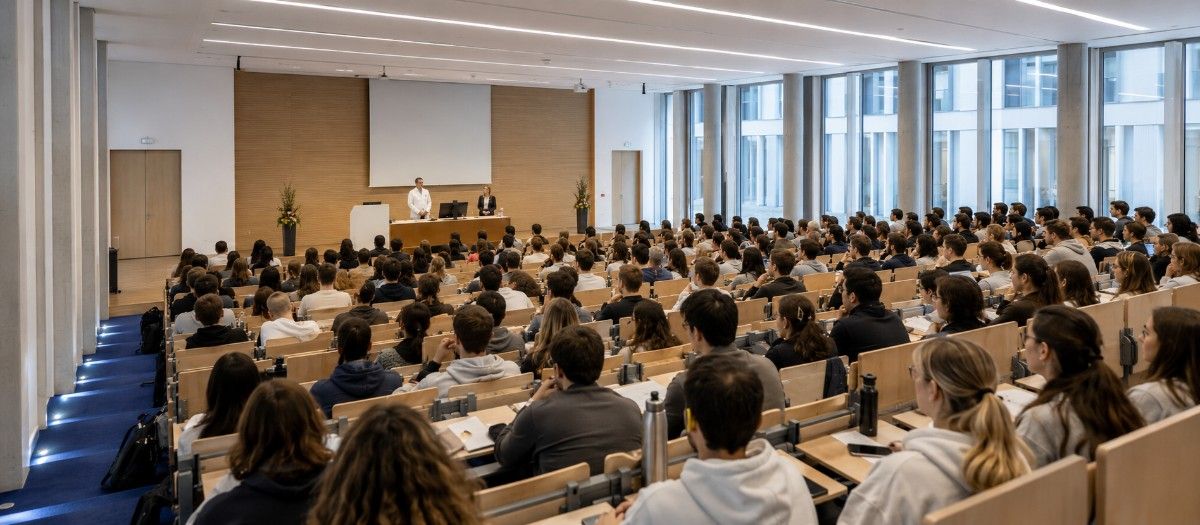
• Runs largely through lectures, seminars, and small-group sessions of up to 20 students.
• Consists of organ- and system-based topic blocks lasting six to eight weeks each, covering the scientific foundation of the first phase.
• Begins weaving hands-on clinical skills into the coursework earlier than many traditional curricula.
• Introduces practical, clinically oriented modules that grow more prominent alongside continued topic and study blocks.
• Builds direct patient contact and diagnostic reasoning through structured hospital placements.
• Covers a wide variety of clinical rotations spent directly within UKD's departments.
• Lets students pursue specific interests and early specialisation alongside the core coursework.
• Roughly 10 percent of the whole curriculum is set aside for elective (Wahlfach) study.
• Graduates need the Approbation, Germany's medical licence, before they can practise independently.
• The programme concludes with the state medical examination (Staatsexamen) rather than a separate internship year as such.
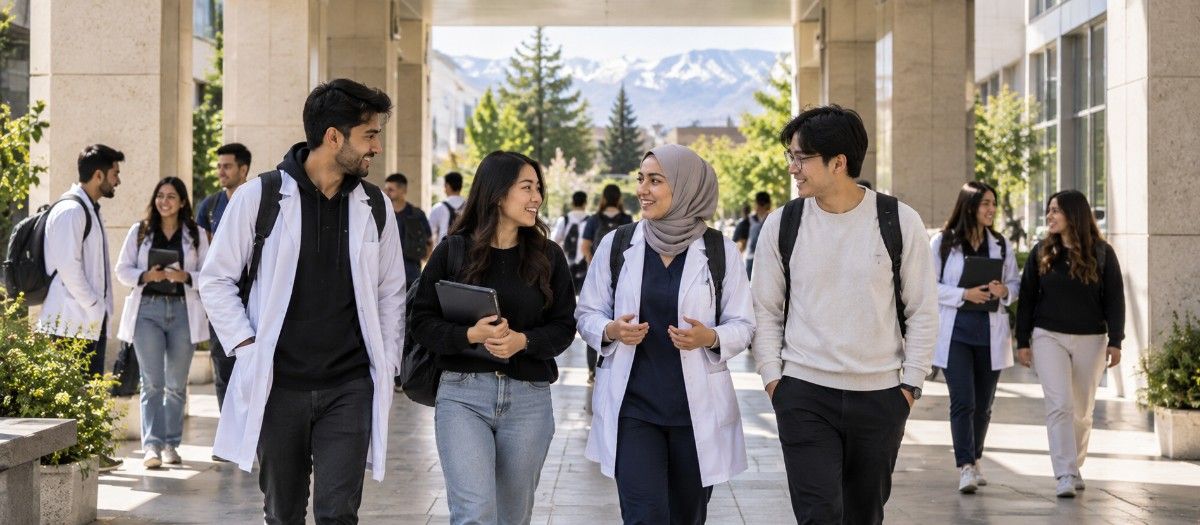
Furnished hostel rooms with Wi-Fi, laundry, 24/7 security, and Indian mess on or near campus.
Indian restaurants and mess facilities serving vegetarian and non-vegetarian home-style food daily.
Strong Indian community with cultural events, festival celebrations, and peer support groups.
Students get hands-on clinical training in government and private hospitals affiliated with the university.
Practical information for students planning to study at MBBS in Heinrich Heine University Düsseldorf Faculty of Medicine.
Prepare for all seasons. Thermal wear for winters, light clothing for summers. University provides heating in hostels.
Student visa processed with university invitation letter. Direct and connecting flights from major Indian cities.
Health insurance included in fees. Medical facility on campus plus city hospitals easily accessible.
Local SIM cards available. WhatsApp and video calls keep you connected with family back home.
Average monthly expenses of $150–$250 covering food, transport, and personal needs.
University library, online databases, and study groups. Seniors mentor juniors through academic challenges.
Our team guides you through every step — from application to arriving on campus.
Begin German lessons as early as possible, ideally alongside Class 11–12, targeting B1 within 12 months and progressing toward the required B2–C1 level.
Submit Class 10, 12, and any higher-education transcripts for verification. Processing typically takes 3–5 weeks; apply early, since this gates every subsequent step.
portal and apply to the correct track, the M-Kurs for medical aspirants, at your shortlisted Studienkolleg institutions.
Complete the roughly 10–12 month M-Kurs program covering Biology, Chemistry, Physics, and German, then pass the Feststellungsprüfung (FSP), the qualifying exam for university entry.
Submit applications to your shortlisted universities. Uni-assist fees run €75 for the first program and €30 for each additional program in the same semester.
University decisions follow Uni-assist’s document evaluation and forwarding; final admission is always the university’s own decision.
Deposit €11,904 into a blocked account (via Fintiba, Expatrio, or a similar provider) and arrange either public (€140–€160/month) or private health insurance; both are mandatory prerequisites for the visa stage.
Submit your visa application at the German consulate in India (Delhi, Mumbai, Bengaluru, or Chennai), with your admission letter, APS certificate, language proficiency proof, blocked account confirmation, and insurance proof. Realistic processing time is 6–12 weeks.
Bring originals of every document submitted digitally. Be prepared to discuss your study plans, financial arrangements, and reasons for choosing Germany.
Book travel around your intake date (October for Winter, April for Summer), and complete formal university enrollment on arrival. Medical study then begins with the Pre-Clinical phase.
Admission Helpline — Contact our counsellors for step-by-step assistance.
“The faculty here is incredibly supportive. The clinical training during hospital rotations has given me real confidence in patient care.”
“Affordable fees without compromising on quality. The campus facilities and hostel life made my transition abroad very smooth.”
“English medium instruction and WHO-recognized curriculum were the deciding factors for me. No regrets so far — excellent experience overall.”
“The university helped with everything from visa to accommodation. Hospital exposure from year three has been invaluable for my FMGE prep.”
“Just cleared my licensing exam on the first attempt. The structured coaching and mock exams during final year were a game-changer.”
“Safe campus, good food options, and a strong Indian student community. The teaching methodology is very practical and hands-on.”
The university was founded in 1965, though it officially continues Düsseldorf's Medical Academy, which opened in 1907.
The standard study period runs 12 to 13 semesters, roughly six years and a few months, ending in a Staatsexamen.
No, the entire programme runs in German, so applicants need strong German language skills before enrolling.
They apply directly to HHU, where the average grade of their university entrance qualification is the sole stated admission criterion.
There's no tuition fee, only a semester contribution of roughly EUR 300 to 350, covering student services and a transport ticket.
Training runs through University Hospital Düsseldorf, located directly on the same campus as the faculty.
Graduates receive a Staatsexamen, Germany's state medical examination, rather than a separate bachelor's or master's degree.
Yes, the Düsseldorfer Curriculum Medizin, introduced in 2013, uses organ- and system-based teaching blocks and early clinical exposure.
Very. Medicine remains one of Germany's most sought-after subjects, and domestic places run through a nationwide restricted-admission system.
Not immediately; graduates need the Approbation, Germany's official medical licence, before they can practise independently.


Our expert counsellors will guide you through the complete admission process — from documents to airport pickup.