If you’ve spent any time researching MBBS abroad, you’ve probably run into a wall of contradictory advice: one site tells you NEET is compulsory, another says it isn’t; one says you need IELTS, another says only German matters; half the pages still call the regulatory body “MCI” even though that name hasn’t existed since 2020. This guide is an attempt to cut through that noise. Everything below has been cross-checked against official sources, anabin.kmk.org (qualification database), anerkennung-in-deutschland.de (official recognition portal), uni-assist.de (application processing), daad.de (scholarships), and the National Medical Commission, and updated with 2026 pricing wherever a number is involved.
MBBS in Germany isn’t actually called “MBBS” once you get there. It’s Medizin (Human Medicine), a 6-year, 12-semester integrated program that ends not with a diploma but with a state license to practice, the Approbation. It’s tuition-free at nearly every public university, taught almost entirely in German, and considerably harder to get into than most consultancy websites let on. This page walks through all of it: the real cost breakdown, the Studienkolleg and APS processes nobody explains properly, the language roadmap, the visa and blocked account requirements, recognition back in India, and what a medical career in Germany actually pays.
1. Overview & Quick Facts
Is MBBS actually called “MBBS” in Germany? No. There’s no degree in Germany called MBBS. Medical education is called Medizin or Humanmedizin, and it isn’t split into a separate “undergraduate degree + internship” structure like India’s MBBS. It’s one long integrated program that ends in the Staatsexamen (State Examination) and, once passed, grants the Approbation, the actual license to practice medicine, equivalent in function to an MBBS + full registration in India.
Quick Facts Box
Factor | Detail |
Program name | Medizin / Humanmedizin |
Duration | 6 years, 3 months (12 semesters + Practical Year) |
Medium of instruction | German (C1 level required); a handful of private universities offer English-taught tracks |
Tuition at public universities | Free (only a semester contribution of €150–€500) |
NEET requirement | Not mandatory for admission in Germany; required only if you plan to practice in India later. |
Age limit | None; Germany has no national age cap for medical admission |
Degree recognition | Recognized by NMC, WHO, and widely across the EU |
Total realistic annual cost | ₹11–16 lakh (public university, including living costs) |
Top cities for medical study | Berlin, Munich, Heidelberg, Hamburg, Tübingen, Aachen |
Intakes | Winter (October), main intake; Summer (April), limited seats |
Why Choose Germany for MBBS
Three things make Germany genuinely different from the usual “MBBS abroad” pitch:
The cost math is real. A six-year medical degree at a public German university, tuition included, is genuinely cheaper than a private medical college in India, and you graduate with a degree that’s recognized across the EU, not just at home.
It isn’t a numbers game. Unlike several MBBS-abroad destinations that essentially sell seats, admission into German Medizin programs is capped and competitive (numerus clausus), with limited seats reserved for international applicants. That’s a harder path, but it also means the degree carries more weight.
The clinical exposure is early and heavy. German medical training folds theory and hospital-based clinical work together from an early stage, and the final “Practical Year” (Praktisches Jahr) is a full year of supervised hospital rotations before you’re even allowed to sit the licensing exam.
The honest trade-off: you’re committing to 1–2 years of German language preparation before your medical clock even starts, and the process (APS, Uni-Assist, Studienkolleg, visa) is bureaucratically heavier than most competing countries. If you’re comparing Germany against Georgia or the Caribbean because you want the fastest, lowest-friction route into an MBBS, Germany is not that. If you want a rigorous, low-cost, EU-recognized medical degree and you’re willing to spend two extra years preparing for it, it’s arguably the best value in the world right now.
Latest Updates for 2026 Intake
The blocked account requirement rose to €11,904/year (€992/month) for 2025–26 intakes, under the revised BAföG reference rate, noticeably higher than the pre-2024 figure of roughly €11,208.
TU Munich (TUM) introduced non-EU tuition fees of €2,000–€6,000 per semester from Winter 2024/25 for select programs; a reminder that “Germany = free” is a generalization, not a universal rule; always check the specific university and state.
Baden-Württemberg (home to Freiburg, Heidelberg, Tübingen, Ulm) continues to charge non-EU students €1,500/semester as a state-level tuition fee, on top of the semester contribution; this applies even at otherwise “free” public universities in that state.
The NMC’s National Exit Test (NExT) continues to replace the older FMGE/FMGL screening pathway for foreign medical graduates returning to practice in India, with phased implementation still being clarified; check nmc.org.in before assuming either exam applies to your batch.
2. Germany vs Other Countries: Where Does It Actually Stand?
Germany vs UK vs USA vs India
Factor | Germany | UK | USA | India (Private) |
Tuition cost (total, public/govt) | Free–€3,000/yr (semester fee only) | £30,000–£58,000/yr | $50,000–$90,000/yr | ₹15–25 lakh/yr |
Duration | 6 yrs 3 months | 5–6 years | 4 years (post-bachelor’s) + residency | 5.5 years |
Language | German (mostly) | English | English | English |
Entrance route | Studienkolleg/direct + language cert | UCAT/BMAT + A-Levels | MCAT + Bachelor’s degree | NEET |
NEET required | No (unless returning to India) | No | No | Yes |
Degree recognition in India | Yes (NMC-recognized university) | Yes | Yes | Yes |
Realistic total cost (6 yrs) | ₹65 lakh–₹1 crore | ₹2.5–4 crore | ₹3–5 crore+ | ₹90 lakh–₹1.5 crore |
Germany’s core advantage over the UK and US is blunt: you pay almost nothing for tuition, and living costs, while real, are lower than London, New York, or Boston. Against Indian private colleges, Germany actually comes out cheaper over six years once you factor in India’s rising private-college fees and “management quota” donations, provided you get in without needing a paid seat, which in Germany doesn’t exist as an option.
Country | Approx. Annual Cost (Tuition + Living) | Medium | Entrance Difficulty | NMC Recognition Status | Best For |
Germany | ₹2–3 lakh (public) + living | German (mostly) | High, capped seats, language gate | Yes, widely recognized universities | Long-term value, EU career |
Russia | ₹4–6 lakh | English/Russian | Low–Medium | Yes, but check each university on NMC list | Fast admission, budget |
Kazakhstan | ₹3.5–5 lakh | English | Low | Yes, university-specific | Budget-friendly, quick process |
Uzbekistan | ₹3–4.5 lakh | English | Low | Yes, university-specific | Very low cost |
Georgia | ₹4–6 lakh | English | Low–Medium | Yes, university-specific | English-medium, moderate cost |
Italy | ₹0–3 lakh (public, merit-based) | Italian/English (IMAT programs) | Medium-High | Yes | EU degree, English options |
Poland | ₹5–8 lakh | English | Medium | Yes | English-medium, EU degree |
Czech Republic | ₹6–9 lakh | English/Czech | Medium | Yes | English options, EU degree |
The pattern worth noticing: countries like Russia, Kazakhstan, Uzbekistan, and Georgia are cheaper and faster to get into precisely because the entry bar is lower and the medium is English from day one, but their degrees, while NMC-recognized on paper, carry less global weight and almost no career pathway within the country after graduation for an international student. Germany is the opposite trade: slower and harder to enter, but a degree with actual EU-wide career mobility at the end of it, and (unlike Italy, Poland, or Czech Republic) essentially free tuition rather than merely “affordable” tuition.
3. Germany’s Medical Education System: The Deep Breakdown
Almost every competing guide names the phases of German medical education without explaining what actually happens in each one. Here’s the real structure.
Pre-Clinical Phase (Vorklinik) 2 years / 4 semesters
This is foundational science: anatomy, physiology, biochemistry, medical terminology, and psychology/sociology basics. It ends with the first state examination, informally called the Physikum, which you must clear before progressing; this is the single biggest academic filter in the entire program, and a meaningful number of students (including German nationals) fail or repeat it.
Clinical Phase (Klinik) 3 years / 6 semesters
This covers organ-system-based clinical subjects, internal medicine, surgery, pediatrics, gynecology, psychiatry, and more, combined with supervised bedside teaching (Blockpraktika) in hospitals attached to the university. This phase ends with the second state examination (a written exam covering clinical knowledge across all major specialties).
Practical Year (Praktisches Jahr, or PJ) 1 year, 3 months
This is not an optional internship; it’s a mandatory, structured final year split into three rotations (usually 16 weeks each) across Internal Medicine, Surgery, and an elective specialty, done in a teaching hospital. Students function as part of the clinical team under supervision, seeing patients, assisting in procedures, and documenting cases. Many students complete part of the PJ abroad (including in India, under exchange arrangements) if their university permits it.
State Examination (Staatsexamen) Third Part
After the PJ, students sit the third and final state examination, an oral-practical exam assessing clinical competence directly. Passing all three state exam stages, plus the pre-clinical Physikum, is what completes the medical degree in Germany; there is no separate “graduation” ceremony that matters more than clearing these.
Medical License (Approbation)
Once the state examination is cleared, graduates apply for the Approbation, the actual legal license to practice medicine independently in Germany, granted by the state medical licensing authority (not the university). This is the document that functions like full medical registration in India. Without it, you can’t practice, even if you’ve technically “finished” your degree.
Public vs Private Universities Properly Compared
Factor | Public Universities | Private Universities |
Tuition | Free (semester contribution only, €150–€500) | €6,000–€20,000+ per semester |
Medium of instruction | German | German, some offer English-taught tracks |
Admission difficulty | Very high (numerus clausus, capped seats) | Lower, merit + fee-based |
Recognition | Universally strong | Generally recognized, but verify each one against anabin.kmk.org |
Examples | Charité Berlin, LMU Munich, Heidelberg, RWTH Aachen | Universität Witten/Herdecke (partial private funding model) |
Practically speaking, Germany doesn’t have a large private medical education sector the way, say, Georgia or the Caribbean do. Most students pursuing English-taught, private, fee-paying “MBBS in Germany” programs advertised online are actually being routed to a small number of institutions or blended pathways; always verify the specific university’s accreditation status directly on anabin.kmk.org before paying anything.
English vs German Medium Programs
This is one of the most misrepresented points across competitor content. The reality: the standard Medizin program is taught in German at essentially every public university, full stop. A very small number of private institutions advertise English-taught or partially English-taught pre-clinical years. Still, even these typically require you to transition to German for clinical rotations and patient interaction, since you cannot treat German patients without functional German. If a website tells you that you can complete a full MBBS in Germany entirely in English at a public university, that claim doesn’t hold up against how German medical licensing actually works.
4. APS Certificate Complete Guide
The Akademische Prüfstelle (APS), run through the German Embassy’s academic evaluation cell, is arguably the single most under-explained requirement across every competitor page, and it’s mandatory. You cannot get a German student visa without it.
What it is: A certification process that verifies the authenticity of your academic documents (Class 10, 12, and any higher-education transcripts) before you apply to German universities or for a visa. It exists because German authorities have had recurring issues with forged or inflated academic credentials from certain countries, India included.
Who needs it: Every Indian student applying for a German student visa for university-level study, including Studienkolleg applicants.
Documents required: - Class 10 and Class 12 mark sheets and certificates - Any bachelor’s degree transcripts/certificates (if applicable) - Passport copy - Passport-size photographs - Proof of fee payment
Fees: Approximately ₹18,000 (non-refundable) as of 2026; always confirm the current figure on the official APS India portal, as it’s periodically revised.
Processing time: Typically 3 to 5 weeks, though this can extend during peak application seasons (roughly March–June and September–November, ahead of the two main intakes). Apply early; a delayed APS certificate is one of the most common reasons students miss an intake entirely.
Why it’s important: Without a valid APS certificate, uni-assist will not process your university application, and the German consulate will not issue a student visa. It is, functionally, the gatekeeping step that happens before anything else on this list.
Validity: The APS certificate does not expire; it’s a one-time certification tied to your specific set of academic documents.
5. German Language Requirement Full Roadmap
Why German Is Mandatory
Because you will be examining, treating, and speaking with German patients from your clinical rotations onward, German medical schools require functional fluency, not conversational competence; this is why B2 to C1 is the standard threshold, not the A2/B1 level that’s sufficient for general study programs.
The A1 → C1 Roadmap (With Realistic Duration Per Level)
Level | What You Can Do | Typical Duration (from zero, dedicated study) |
A1 | Basic greetings, simple sentences | 2–3 months |
A2 | Everyday conversations, simple past tense | 2–3 months |
B1 | Independent conversation, opinions, routine topics | 3–4 months |
B2 | Fluent discussion, abstract topics, required for Studienkolleg entry at most colleges | 3–4 months |
C1 | Near-native comprehension, medical/academic vocabulary, required before clinical years | 4–6 months |
Realistic total: 14–20 months of consistent study to go from zero German to C1, assuming regular classes (not just self-study). Most successful applicants start German lessons in India (via Goethe-Institut, Max Mueller Bhavan branches, or private institutes) immediately after deciding on Germany, well before Class 12 boards are even done, so they arrive with at least B1–B2 already secured.
Accepted Language Exams
Exam | Recognized By | Notes |
TestDaF | Universally accepted | Most common choice; scored on a 3–5 band scale per section |
DSH (Deutsche Sprachprüfung für den Hochschulzugang) | Universities that administer it directly | Often taken in Germany after arrival, at the university itself |
Goethe-Zertifikat C1/C2 | Widely accepted | Common route for students studying in India first |
telc Deutsch C1 Hochschule | Widely accepted | Increasingly popular alternative to TestDaF |
DSD II (Deutsches Sprachdiplom) | Accepted, mainly for school-based German programs | Less common route for Indian applicants |
Can I Study Medicine in Germany Without German Language?
No, not realistically. Unlike engineering or business master’s programs, where a growing number of English-taught options exist, medical education in Germany is overwhelmingly German-medium at the point of admission and entirely German-medium once clinical rotations begin, because you cannot practice clinical medicine on German patients without functioning in German. A handful of private institutions market partially English-taught pre-clinical years, but treat these claims with real skepticism and verify the actual curriculum and clinical-year language requirement directly with the university before committing.
6. Studienkolleg Complete Guide
This is one of the biggest blind spots in almost every competing article; most mention the word “Studienkolleg” without explaining what it involves.
What Is Studienkolleg
A one-year preparatory program for international students whose school-leaving qualification (like India’s Class 12) isn’t considered directly equivalent to the German Abitur. It bridges the academic gap and ends with an entrance exam that determines whether you can proceed to university.
M-Kurs (Medical Track) Explained
Studienkolleg is divided into subject-specific tracks (Kurse), and for aspiring medical students, the relevant one is the M-Kurs, focused on Biology, Chemistry, Physics, and German. This is distinct from the T-Kurs (technical/engineering track) or W-Kurs (business/economics track); applying to the wrong track is a common and costly mistake.
Duration
Typically two semesters (roughly 10–12 months), though some colleges offer an intensive one-semester track for students who already meet a higher German proficiency bar at entry.
Subjects Covered (M-Kurs)
Entrance Exam
Before you’re admitted to Studienkolleg itself, most colleges require an entrance assessment that tests your German level (usually B1+) and basic subject knowledge; this is separate from the FSP exam that comes at the end of the program.
FSP (Feststellungsprüfung) The Exit Exam
The Feststellungsprüfung is the qualifying exam you take at the end of Studienkolleg. Passing it is what actually grants you eligibility to apply to a German university in your chosen field. It’s subject-specific (aligned to your M-Kurs coursework) and conducted in German. Passing criteria generally require clearing each subject component; failing one subject, even with strong scores elsewhere, can mean a retake of that section.
Colleges Offering Studienkolleg (M-Kurs)
Studienkollegs are attached to specific universities or run as standalone state institutions. Some of the well-known ones offering the M-Kurs track include those affiliated with Humboldt-Universität zu Berlin, TU Berlin, Heidelberg, Marburg, Kiel, and Göttingen, among others. Availability and exact affiliation change periodically, so confirm directly with the Studienkolleg or your target university’s international office before applying; this is not a fixed, permanent list.
7. Entrance Exams Comparison
Exam | What It Tests | When Required | Difficulty | Format |
TestAS | Academic aptitude (not subject knowledge) | Sometimes used by universities alongside Studienkolleg results, especially for direct bachelor applicants. | Moderate | Computer-based, multiple choice |
Studienkolleg Entrance Exam | German (B1+) and basic subject readiness | Before entering Studienkolleg | Moderate | Written, subject + language |
FSP (Feststellungsprüfung) | Subject knowledge (Biology, Chemistry, Physics) + German | At the end of Studienkolleg, gatekeeps university entry | High | Written + oral, subject-specific |
DSH | Academic German proficiency | Before/during university enrollment, if TestDaF not already held | Moderate–High | Written + oral |
TestDaF | Academic German proficiency | Before applying to university (can be taken in India) | High | Written + oral, standardized |
The practical sequencing for most Indian students: TestAS or nothing → Studienkolleg entrance exam → FSP → (TestDaF/DSH already completed alongside, or during, Studienkolleg). Not every student needs every exam on this list; it depends heavily on whether you’re going through Studienkolleg or applying with an already-recognized qualification.
8. The Complete Student Journey Visual Roadmap
Class 12 (PCB)
│
▼
German Language (A1 → B1/B2) — 8–12 months, started in India.
│
▼
APS Certificate Application — 3–5 weeks processing
│
▼
Uni-Assist Application (Studienkolleg)
│
▼
Studienkolleg (M-Kurs) — 2 semesters, ~10-12 months
│
▼
FSP Exam (pass required)
│
▼
University Application via Uni-Assist
│
▼
Admission Offer
│
▼
Student Visa Application (with Blocked Account + Health Insurance)
│
▼
Arrival in Germany + Immatrikulation (Enrollment)
│
▼
Medical Study Begins: Pre-Clinical (2 yrs) → Clinical (3 yrs) → PJ (1 yr 3 mo) → Staatsexamen → Approbation.
Realistic total timeline from starting German lessons to first day of medical school: roughly 2.5 to 3 years. This is the single most important expectation-setting fact in this entire guide: nobody enrolls in Medizin the semester after finishing Class 12. Budget for it.
9. Blocked Account (Sperrkonto) Dedicated Section
Why It’s Required
Germany requires proof that you can financially support yourself for at least one year without needing to work illegally or rely on public welfare. The blocked account is the standard mechanism for proving this.
Amount Needed (2026)
€11,904 per year, released at €992 per month. This figure is tied to Germany’s BAföG reference rate and is revised periodically; it rose from roughly €11,208 in earlier cycles, so always verify the current figure on the German Federal Foreign Office site or your visa consulate’s page before transferring funds.
How to Open One (Process)
Choose a provider; the most commonly used by Indian students are Fintiba, Expatrio, and Deutsche Bank’s dedicated student accounts.
Complete the online application and identity verification.
Transfer the full required amount (€11,904) into the account from India.
Receive a blocked account confirmation certificate; this goes into your visa application.
After arriving in Germany and opening a regular local bank account, the blocked account provider begins releasing €992/month into it.
What It Covers / Purpose
The blocked account is meant to cover general living expenses, rent, food, transport, and personal costs for your first year. It does not cover tuition, semester fees, health insurance premiums, or one-time costs like flights and visa fees, all of which need to be budgeted separately.
10. Health Insurance (Dedicated Section)
Mandatory for Enrollment
You cannot enroll at a German university, register your address, or receive your residence permit without valid proof of health insurance. It’s checked at multiple points, not just once.
Public (GKV) vs Private (PKV)
Factor | Public (GKV) | Private (PKV) |
Eligibility | Standard for students under 30 | Common for over-30 students, or those opting out of GKV early |
Approx. monthly cost (2026) | €140–€160/month | From €28–€80/month for basic plans; €110–€150 for comprehensive student plans |
Coverage | Comprehensive, includes dental, mental health, standardized across all providers | Varies significantly by provider and plan tier |
Switching later | Once you opt for GKV, switching to private later can be restrictive | Easier to upgrade plans, but harder to switch back to GKV once you leave it |
Approx. Cost Recap
Budget €140–€160/month if you go the standard public insurance route most Indian students take; that’s roughly ₹15,400–₹17,600/month or about ₹1.85–2.1 lakh/year at current exchange rates. Cheap private plans exist but often carry limitations (excluded procedures, capped hospitalization coverage) that make them a false economy for a six-year medical program where you’ll genuinely need reliable healthcare access.
11. Fees & Cost Breakdown (Granular) MBBS in Germany Cost for Indian Students
This is the section most competitor pages get vague or wrong on, either quoting a single misleading number (“MBBS in Germany is free!”) or lumping everything into one unhelpful range. Here’s the real, itemized picture for the 2026 academic year, with the exchange rate used throughout at 1 EUR = ₹110 (rates fluctuate; always check the live rate before transferring money; treat this as an estimate, not a fixed figure).
Tuition Fees
University Type | Fee (per semester) | INR Equivalent |
Public university (most states) | €150–€500 (semester contribution only) | ₹16,500–₹55,000 |
Public university, Baden-Württemberg (e.g., Freiburg, Heidelberg, Tübingen) | €1,500 + semester contribution | ₹1.7 lakh |
TU Munich (non-EU differential fee) | €2,000–€6,000 | ₹2.2–6.6 lakh |
Private universities | €6,000–€20,000/semester | ₹6.6 lakh–₹22 lakh |
Semester Contribution (Semesterbeitrag)
Even at “free” public universities, every student pays a mandatory semester contribution covering administrative costs, student union fees, and crucially, often a free or heavily discounted regional public transport pass. This ranges from €150–€500 per semester (₹16,500–₹55,000) depending on the university and city.
Hostel / Accommodation Fees
Type | Monthly Cost | INR Equivalent |
University dormitory (Studentenwohnheim) | €250–€450 | ₹27,500–₹49,500 |
Shared apartment (WG - Wohngemeinschaft) | €400–€650 | ₹44,000–₹71,500 |
Private studio/1-BHK | €600–€1,000+ | ₹66,000–₹1.1 lakh+ |
Dormitory rooms are cheapest but have long waitlists in cities like Munich, Berlin, and Heidelberg; apply the moment you have your admission letter, not after arrival.
Food, Transport, Books, Miscellaneous
Category | Monthly Cost | INR Equivalent |
Food/groceries (self-cooking) | €150–€250 | ₹16,500–₹27,500 |
Eating out occasionally | €50–€100 extra | ₹5,500–₹11,000 |
Local transport | Often included in semester ticket; otherwise €40–€70 | ₹4,400–₹7,700 |
Books/study material | €30–€60 | ₹3,300–₹6,600 |
Phone/internet | €20–€30 | ₹2,200–₹3,300 |
Personal/miscellaneous | €50–€100 | ₹5,500–₹11,000 |
Blocked Account Amount (Recap)
€11,904/year (€992/month)
Total Cost Table of Public University (EUR + INR)
Expense Head | Annual Cost (EUR) | Annual Cost (INR, approx.) |
Semester contribution (×2) | €300–€1,000 | ₹33,000–₹1.1 lakh |
Accommodation | €3,000–€7,800 | ₹3.3–8.6 lakh |
Food | €1,800–€3,000 | ₹1.98–3.3 lakh |
Health insurance | €1,680–€1,920 | ₹1.85–2.1 lakh |
Transport, books, misc. | €1,200–€1,900 | ₹1.32–2.1 lakh |
Total (living costs, excluding tuition) | €8,000–€15,600 | ₹8.8–17.2 lakh |
Realistic all-in annual budget at a standard public university (excluding Baden-Württemberg/TUM): ₹11–16 lakh, and over the full 6-year program, roughly ₹66 lakh to ₹96 lakh; this is before accounting for the one-time APS, uni-assist, visa, and blocked-account setup costs (another ₹1.5–2 lakh, largely one-time, in the first year).
One-Time / Setup Costs (Year 1 Only)
Item | Cost |
APS Certificate | ₹18,000 |
Uni-assist fees (multiple applications) | ₹15,000–₹20,000 |
Blocked account setup + provider fee | ₹8,000–₹12,000 |
Visa fee | ₹6,800 (€75) |
Flight tickets | ₹45,000–₹70,000 |
Initial settling-in (deposit, essentials) | ₹1–1.5 lakh |
11a. Curriculum What You’ll Actually Study
Core (Pre-Clinical) Subjects
Subject | Focus |
Anatomy | Human body structure, dissection-based learning |
Physiology | How organ systems function |
Biochemistry | Molecular and cellular processes |
Medical Terminology (Latin/German) | Foundational vocabulary for clinical study |
Psychology & Sociology | Behavioral basics relevant to patient care |
Clinical Subjects
Subject | Focus |
Internal Medicine (Innere Medizin) | Diagnosis and management of adult diseases |
Surgery (Chirurgie) | Surgical principles and procedures |
Obstetrics & Gynaecology | Pregnancy, childbirth, women’s health |
Paediatrics | Child health and development |
Pathology | Disease mechanisms |
Pharmacology | Drug action and therapeutics |
Microbiology & Immunology | Infectious disease and immune response |
Epidemiology & Public Health | Population-level health and prevention |
Additional Training
Medical ethics: Increasingly emphasized in German curricula, covering consent, end-of-life decisions, and professional conduct
Communication skills (Kommunikationstraining): Structured patient-communication modules, often with simulated patients
Patient care training: Hands-on nursing-adjacent basics completed early (many students do a mandatory nursing internship, Krankenpflegedienst, before or during pre-clinical years)
12. Best Medical Universities in Germany
University | City | QS Medicine Rank (approx., Germany-wide position) | Language | Semester Fee (approx.) | Known For |
Heidelberg University | Heidelberg | #1 in Germany (36th globally) | German | €151 (+€1,500 Baden-Württemberg fee for non-EU) | Germany’s oldest university (est. 1386), top-ranked medical faculty nationally |
Ludwig Maximilian University (LMU) Munich | Munich | #2 in Germany (43rd globally) | German | €150 (+ potential differential fees) | Consistently top-ranked, strong clinical training |
Charité – Universitätsmedizin Berlin | Berlin | #3 in Germany (51st globally) | German | €315 | Germany’s largest medical faculty (8,000+ students); strong research output |
RWTH Aachen University | Aachen | Top 10 in Germany | German | €300 | Strong integration of medicine with technical/biomedical engineering research |
University of Tübingen | Tübingen | Top 10 in Germany | German | €1,500+ (Baden-Württemberg fee applies) | Historic medical faculty, strong research focus |
University of Freiburg | Freiburg | Top 15 in Germany | German | €1,500+ (Baden-Württemberg fee applies) | Strong clinical and research reputation |
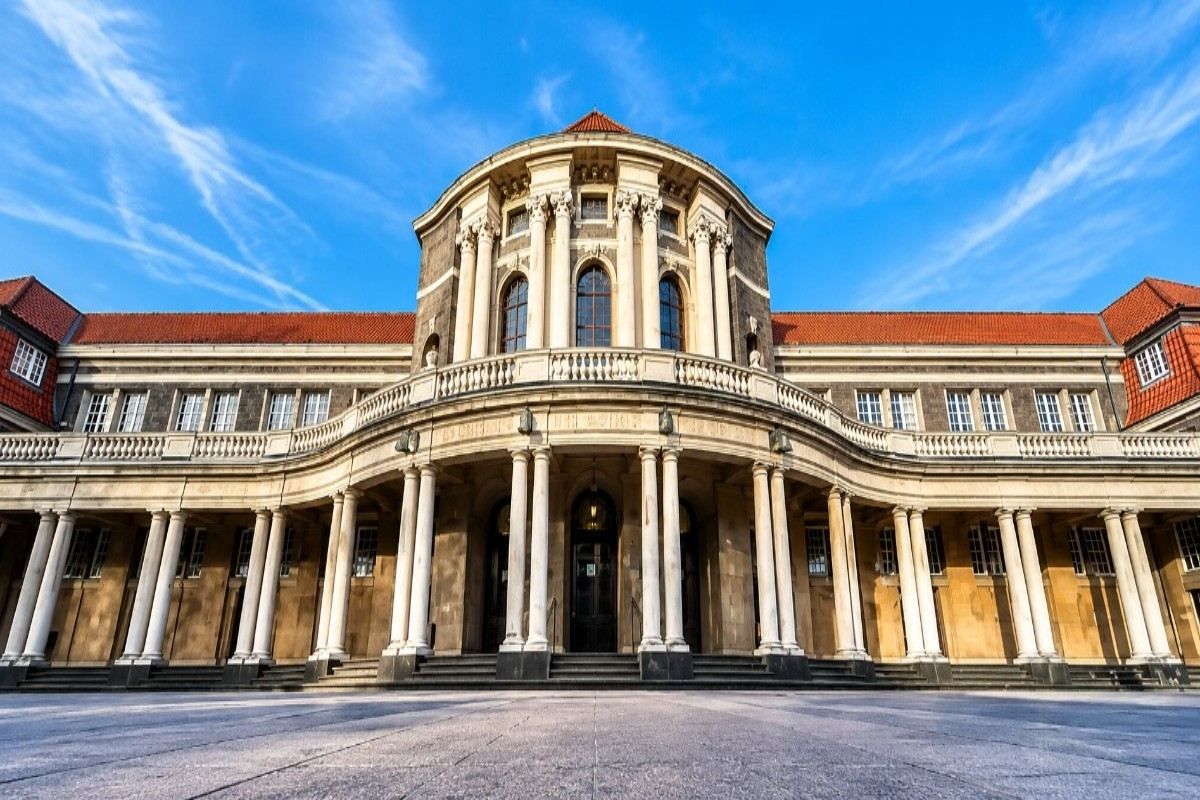
University of Hamburg (UKE) | Hamburg | Top 15 in Germany | German | €330 | Modern teaching hospital (Universitätsklinikum Hamburg-Eppendorf) |
Technical University of Munich (TUM) | Munich | Top 10 in Germany (Germany’s highest overall QS rank, 37th globally) | German | Non-EU differential fee €2,000–€6,000 | Strong biomedical/technical integration |
City-Wise Breakdown
Berlin: Largest student population, most affordable relative to size, home to Charité (one of Europe’s largest teaching hospitals).
Heidelberg: Smaller, academically intense, higher cost of living, and Baden-Württemberg tuition fee applies.
Munich: Highest cost of living in Germany, but strong university reputation and job market post-graduation.
Hamburg: Balanced cost of living, strong port-city economy, good English-speaking expat community for daily life outside university.
Tübingen: Small university town, lower living costs than big cities, but Baden-Württemberg fee applies.
Aachen: Close to Belgium/Netherlands border, strong technical-medical crossover, moderate cost of living.
University Selection Strategy
Don’t select purely by ranking. Weigh:
(1) whether the state charges the Baden-Württemberg-style tuition fee
(2) realistic cost of living in that specific city
(3) how many international/non-EU seats are actually available for Medizin at that university (this varies significantly and isn’t always publicly obvious; check with the international office directly)
(4) whether the Studienkolleg feeding into that university has a track record with Indian students, since some Studienkollegs have stronger placement pipelines into specific universities than others.
13. Recognition & Equivalence
Germany’s medical degree structure and its universities are recognized by India’s National Medical Commission (NMC), the regulatory body that replaced the Medical Council of India (MCI) in 2020. If you see a competitor page still referring to “MCI approval,” that’s outdated information; MCI has not existed as the governing body since the NMC Act took effect. Always verify a specific university’s current status via NMC’s official website and its foreign medical institution listings before enrolling, since recognition is generally at the institution level, not a blanket “Germany is recognized” statement.
German medical universities are listed in the World Directory of Medical Schools (the successor to the old WHO/AVICENNA directory), which is the internationally referenced database for medical school legitimacy, worth checking directly if you want independent confirmation beyond NMC.
If you ever consider practicing in the United States, German medical degrees are generally eligible for ECFMG certification (required for US residency applications), provided the university is listed in the World Directory of Medical Schools; this is a separate, additional process from Indian NMC recognition.
If You Already Hold a Foreign Medical Degree, Kenntnisprüfung & Berufserlaubnis
This is a genuine gap in almost all competitor content, relevant to doctors (not just fresh students) who already hold a medical degree from outside the EU and want to practice in Germany:
Berufserlaubnis: A temporary, restricted permit allowing a foreign-trained doctor to work under supervision in Germany while completing further requirements, without yet holding full Approbation.
Kenntnisprüfung: A knowledge examination (oral-practical) that non-EU medical graduates must pass to obtain full Approbation if their degree isn’t automatically recognized as equivalent. It tests clinical knowledge similarly to the German final state exam.
This pathway matters for Indian-trained doctors considering Germany post-MBBS (from India), not just for students who studied medicine in Germany from the start.
FMGE/NExT Requirement Clarity for India-Return Doctors
If you complete your Medizin degree in Germany and want to register to practice in India, you’re classified as a Foreign Medical Graduate and need to clear India’s screening requirement, historically the FMGE, now being phased toward the NExT (National Exit Test) under NMC’s newer framework. The exact transition timeline and which exam applies to which graduating batch has shifted more than once; check nmc.org.in directly for your specific year before assuming either exam applies to you.
14. Career After MBBS in Germany
Residency in Germany (Facharztausbildung)
After Approbation, doctors enter specialization training (Facharztausbildung), which typically takes 5–6 years depending on the specialty (shorter for general medicine, longer for surgical subspecialties). This is Germany’s equivalent of residency/PG training, done while employed and paid as a junior doctor (Assistenzarzt) at a hospital.
PG in Germany, Specialization Options & Duration
Specialization | Typical Duration |
General/Family Medicine (Allgemeinmedizin) | 5 years |
Internal Medicine | 5–6 years |
Surgery | 6 years |
Anesthesiology | 5 years |
Radiology | 5 years |
Psychiatry | 5 years |
Pediatrics | 5 years |
There is no separate, India-style “PG entrance exam”; progression into a Facharzt training slot is typically through direct hospital application/interview, and competitive specialties (surgery, radiology, dermatology) can have long waitlists at top hospitals.
Doctor Salary in Germany, Level-Wise Table (2026)
Level | Monthly Gross (EUR) | Annual Gross (EUR) | Approx. Annual (INR) |
Assistenzarzt (Resident, Year 1) | €5,200–€6,400 | €62,400–€76,800 | ₹68.6–84.5 lakh |
Facharzt (Specialist) | €6,600–€8,500 | €79,200–€102,000 | ₹87–112 lakh |
Oberarzt (Senior Consultant) | €8,500–€12,000 | €102,000–€144,000 | ₹112–158 lakh |
Chefarzt (Head of Department) | Individually negotiated | €150,000–€300,000+ | ₹1.65–3.3 crore+ |
Career Paths
Hospital employment: most common route, especially in the first 8–10 years
Private practice (Niederlassung): After completing Facharzt training, doctors can open independent practices, generally the highest-earning path long-term
Research: University hospitals combine clinical work with academic research positions
WHO / NGO / International roles: A German medical degree plus EU work rights opens doors to international health organizations headquartered across Europe
EU Mobility Advantage
An Approbation earned in Germany is broadly recognized across EU/EEA countries under mutual-recognition frameworks, meaning a Germany-trained doctor has meaningfully more freedom to relocate and practice across Europe than a graduate of most non-EU MBBS-abroad destinations; this is one of the strongest, and most under-marketed, long-term advantages of choosing Germany specifically.
15. Scholarships
DAAD Scholarship
The German Academic Exchange Service (DAAD) is the largest and most credible scholarship body for international students in Germany. For 2026:
Program Level | Monthly Stipend | Duration |
Master’s Study Scholarships | €934–€992/month | 12–24 months |
Doctoral Research Grants | €1,200–€1,400/month | 3–4 years |
DAAD scholarships for full Medizin degree programs at the bachelor’s-equivalent level are rare (DAAD funding is concentrated on Master’s/PhD/research levels). However, strong students should still check DAAD’s database directly, since exchange, research-year, and partial-program scholarships tied to specific German-Indian university partnerships do appear periodically.
Deutschlandstipendium
A merit-based national scholarship offering €300/month, co-funded by government and private sponsors, open to international students including those in medical programs, awarded through individual universities rather than centrally; check with your specific university’s scholarship office after enrollment.
University-Specific Scholarships
Many universities run their own scholarship or fee-waiver schemes for high-achieving international students, particularly relevant for Baden-Württemberg or TUM students facing the additional tuition fee; these aren’t centrally listed and require checking each university’s international office page directly.
State Scholarships
Some German federal states run their own scholarship programs for international students studying within that state; availability and amounts vary considerably and change year to year, so this needs direct verification with the relevant state ministry of education rather than a fixed number quoted here.
16. Working While Studying
The 140/280 Rule
International students in Germany are legally permitted to work 140 full days or 280 half-days per year without needing additional work-permit approval. Exceeding this requires special permission from the Federal Employment Agency and the immigration office.
Part-Time Job Options
Common options for medical students include tutoring, hospital administrative work, research assistant roles within the university, and part-time roles in student-heavy sectors like food service or retail. However, medical students, given their intense course load especially from the clinical phase onward, often have less realistic bandwidth for part-time work than students in other disciplines.
Practical Year (PJ) Stipend Possibility
During the Practical Year, some hospitals offer a modest monthly stipend (Aufwandsentschädigung) to PJ students, though this isn’t universal or guaranteed; the amount and availability vary by hospital and specialty, and it should be treated as a possible bonus rather than a reliable income source when budgeting.
17. Advantages & Disadvantages
Advantages
Tuition-free (or near-free) medical education at the vast majority of public universities, the single biggest financial advantage over almost every other MBBS-abroad destination.
Globally respected degree with strong recognition across the EU, and clear NMC recognition pathways for Indian licensing.
Rigorous clinical training, including a full mandatory Practical Year with real hospital responsibility.
Strong post-graduation earning potential, with specialist and consultant salaries well above Indian equivalents.
EU mobility: an Approbation earned in Germany opens career paths across the EU, not just within Germany.
Safe, high-quality living environment with strong public infrastructure and healthcare access for students themselves.
Disadvantages (Honestly Stated)
The German language requirement is a genuine, multi-year barrier: Not a minor formality. Underestimating this is the single most common reason students abandon the Germany plan partway through.
Admission is competitive and capped; Unlike destinations that essentially guarantee a seat for a fee, there’s a real chance of not securing a university seat even after clearing Studienkolleg and FSP.
The total pre-medical-school timeline (2.5–3 years) is significantly longer than most competing countries, which matters if you’re time-sensitive about starting your medical career.
Bureaucracy is heavy: APS, uni-assist, visa, blocked account, health insurance, and university enrollment each involve their own paperwork, processing times, and potential for delay.
Living costs, while lower than the UK/US, are not negligible: Especially in cities like Munich, where rent alone can eat a large share of a modest budget.
Limited English-medium options: For the actual medical degree itself, unlike Poland or Georgia, which cater more directly to English-only international applicants.
18. Common Mistakes Indian Students Make
Underestimating the language timeline, assuming 6 months of casual German lessons will get them to B2/C1, when realistic timelines run 14–20 months of consistent study.
Delaying the APS application, treating it as a “later” step when it’s actually one of the earliest gating requirements, causing missed intake deadlines.
Applying to the wrong Studienkolleg track (e.g., accidentally targeting T-Kurs instead of M-Kurs), which doesn’t align with medical admission requirements.
Assuming NEET or age limits apply the same way they do in India, leading to either unnecessary panic or, conversely, skipping NEET entirely and later finding it complicates Indian licensing plans.
Underbudgeting for the first year specifically, one-time costs (APS, visa, flights, deposits, winter clothing) add up to a meaningful lump sum beyond the recurring monthly budget, and students who plan only around the blocked-account figure often arrive short.
Not verifying a private university’s accreditation before paying, assuming any institution advertising “MBBS in Germany in English” is automatically NMC-recognized without checking anabin.kmk.org directly.
Waiting for a dorm room instead of applying immediately on receiving the admission letter, then scrambling for expensive short-term private housing on arrival.
Ignoring the Baden-Württemberg and TU Munich fee exceptions when budgeting, assuming every public university is fully free, then being caught off guard by a €1,500–€6,000/semester bill.
Treating consultancy claims as verified fact, several education consultancies repeat outdated or simplified information (MCI instead of NMC, incorrect age limits, overstated NEET requirements) because it’s copied from older marketing material rather than checked against current NMC/German sources.
19. Checklist Before Applying
☐ Confirm Class 12 PCB marks meet the general academic threshold expected by German universities
☐ Start German language classes (target: B1 within 12 months, C1 within 20 months)
☐ Research and shortlist target universities, factoring in state-level fee differences (Baden-Württemberg, TUM)
☐ Apply for APS Certificate early; don’t wait until documents are “fully ready”
☐ Get Class 10, 12, and any degree certificates apostilled/attested as required (this can take longer than expected; start 4–6 months ahead)
☐ Apply to Studienkolleg (correct track: M-Kurs) via uni-assist
☐ Register for TestDaF or equivalent language exam
☐ Open a blocked account well before your visa appointment (funds need to reflect and clear)
☐ Arrange health insurance before applying for the visa
☐ Book your visa appointment slot as early as your admission letter allows
☐ Apply for university dormitory housing immediately upon receiving admission
☐ Budget separately for one-time costs (APS, visa, flights, settling-in) beyond the blocked account figure
☐ Join Indian student groups/associations for your target university before arrival
Documents Preparation Guide: The Practical How-To
Most competitor pages list documents needed without explaining the “how.” Here’s the practical detail:
Attestation/Apostille: Indian academic documents (Class 10, 12 certificates) generally need apostille certification from the Ministry of External Affairs (via a regional authorized agency) before APS or university submission. This process typically takes 1–3 weeks but can extend during peak seasons; start at least 2 months before you need the documents for APS.
Translation: Documents not already in English need certified German or English translation by a sworn translator recognized in Germany (or by the German consulate in India); a notarized personal translation isn’t accepted. Budget 1–2 weeks and roughly ₹1,500–₹3,000 per document.
Timing sequence: Apostille → certified translation (if needed) → APS submission → uni-assist submission. Doing these out of order is a common cause of avoidable delay.
20. Glossary
Term | Meaning |
APS | Akademische Prüfstelle, academic document verification certificate, mandatory for Indian applicants |
TestAS | Standardized academic aptitude test sometimes used in German university admissions. |
FSP | Feststellungsprüfung, the qualifying exam at the end of Studienkolleg |
DSH | Deutsche Sprachprüfung für den Hochschulzugang, German language exam for university entry |
TestDaF | Standardized German language proficiency test accepted for university admission |
PJ | Praktisches Jahr, the mandatory one-year, three-month clinical practical year |
Approbation | The official medical license required to practice independently in Germany |
Uni-Assist | Centralized platform many German universities use to process international applications |
Staatsexamen | State Examination, the licensing exams that structure German medical education |
Sperrkonto | Blocked account, the financial-proof bank account required for a student visa |
Numerus Clausus | The capped-admission system limiting seats in high-demand programs like Medizin. |
Vorklinik | The pre-clinical phase of medical study |
Klinik | The clinical phase of medical study |
Assistenzarzt | Resident/junior doctor, first stage of specialization training |
Facharzt | Specialist doctor, after completing specialization training |
Immatrikulation | Formal university enrollment process in Germany |
Decision Scorecard MBBS in Germany
Factor | Rating (out of 5) |
Affordability | ★★★★★ (near-free tuition at public universities) |
Academic Quality | ★★★★★ (globally top-ranked medical faculties, Heidelberg, LMU, Charité) |
Clinical Exposure | ★★★★★ (mandatory full-year Practical Year with real hospital responsibility) |
Safety | ★★★★★ (low violent-crime rates in university cities) |
Student Life | ★★★★☆ (strong Indian community in major cities, some adjustment needed in smaller towns) |
Cost of Living | ★★★☆☆ (moderate–high, especially Munich; lower in Berlin/Leipzig-type cities) |
International Recognition | ★★★★★ (NMC, WHO/WDOMS, ECFMG-eligible, EU-wide mobility) |
Climate Tolerance Needed | ★★★☆☆ (cold winters, especially Bavaria and northern/eastern states) |
Language Commitment Needed | ★★☆☆☆ (mandatory B2–C1 German, 14–20 months of preparation) |
Admission Difficulty | ★★☆☆☆ (numerus clausus, capped, competitive seats, not guaranteed) |