
Q1. When was Universität Witten/Herdecke founded?
+It received state recognition on 14 July 1982, becoming Germany's first private university, with teaching beginning on 30 April 1983.
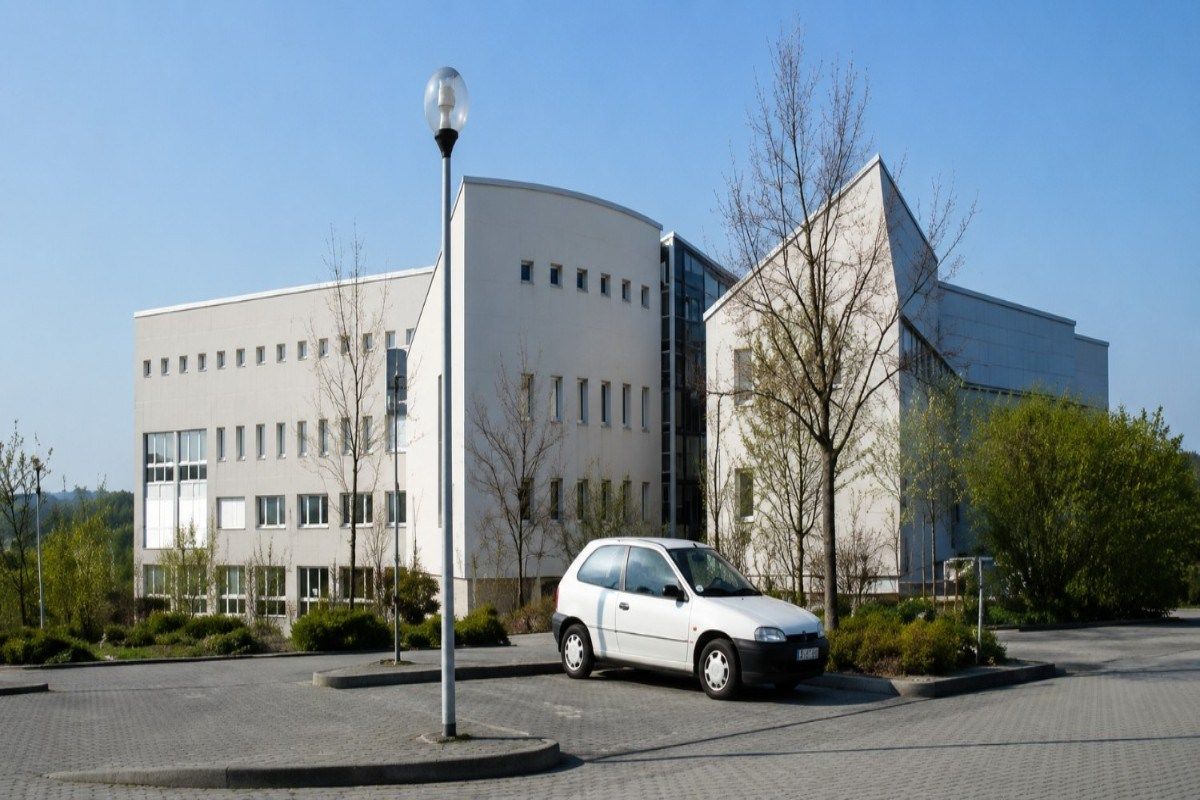
 Germany | Est. 1982
Germany | State-recognised by North Rhine-Westphalia since 1982; the Humanmedizin Modellstudiengang follows Germany's nationally standardised medical licensing framework. | German medium
Expert will call you within 2 hours
People mostly just call it UW/H for short. It holds a genuinely unique place in German higher education: it was formally state-recognised on 14 July 1982, becoming Germany's first university under private, non-state ownership. So, every private German medical school that followed came after this one specifically opened the door.
The idea behind UW/H reaches back much further than its 1982 recognition, though. It traces to an anthroposophical student group formed in Tübingen in 1945/46, in the immediate aftermath of the Second World War. The group's spiritual and intellectual leader, Gerhard Kienle, held that role until his death in June 1983, just months after the university he helped found finally began teaching. Kienle's own view was that both the horror of the war and the knowledge of medical practices that had reduced people to mere scientific objects demanded a genuine alternative, one built around institutions capable of enabling a free intellectual life, with the dignity and individuality of the sick patient placed firmly at the centre of medical care.
Here's a fact most guides skip entirely. Teaching itself began on 30 April 1983, with just 27 students forming the very first Humanmedizin cohort under what became known as the Herdecke-Modell. That original reform curriculum introduced problem-based learning to Germany systematically for the first time, alongside clinical and practical training built around real patients from early in the degree, well before most other German medical schools adopted similar approaches. Business studies and dentistry followed a year later, in 1984, with financial and intellectual backing from institutions including the Bertelsmann Stiftung, Deutsche Bank, the Krupp-Stiftung, and the Zeit-Stiftung.
The curriculum itself has gone through several documented phases of continuous reform since that first 1983 model, culminating in today's Modellstudiengang 2018plus. So, unlike institutions that adopt one reform curriculum and leave it largely unchanged, UW/H has treated its medical teaching as a genuinely ongoing project across four decades. The university today comprises two faculties, Gesundheit, or Health, covering Human Medicine, Dentistry, Nursing Science, and Psychology and Psychotherapy, and Wirtschaft & Gesellschaft, Economics and Society, teaching around 3,000 students across 16 state-accredited degree programmes.
UW/H's campus sits at Alfred-Herrhausen-Straße 50 in Witten, a mid-sized city in the Ruhr region of North Rhine-Westphalia. Witten itself is centrally located within the wider Ruhr area, with Bochum reachable in around ten minutes by suburban train, giving students easy access to the region's larger cities while studying in a smaller, more affordable base.
A genuinely distinctive feature of student life at UW/H is how many students study abroad during their degree: more than 80 percent take part in international placements at some point in their training, a notably high figure for a German medical programme. Admission to the university itself doesn't run through Germany's usual Numerus Clausus grade-cutoff system; UW/H describes its places as NC-frei, selected instead through a multi-stage internal process involving a written application and a personal interview covering motivation, social engagement, and resilience, with a formal committee ultimately deciding which applicants receive a place.
The Humanmedizin Modellstudiengang at UW/H runs 12.5 semesters, roughly six years and three months, concluding with a Staatsexamen, Germany's state medical examination, the same nationally standardised qualification awarded at public German medical faculties. UW/H offers 84 NC-frei places per semester, with separate application windows for the winter semester, 1 December to 1 February, and the summer semester, 1 June to 15 July, followed by a selection period running from late September to late November or late April to late June, respectively.
The application fee for this selection process is EUR 250, though it can be waived on request for applicants facing genuine financial hardship. Because UW/H is a private university, real tuition applies here, unlike Germany's public medical faculties. The total cost for the full Modellstudiengang is reported consistently at EUR 73,200.
What makes UW/H's fee structure genuinely distinctive is the financing choice it offers. Students can opt into the Umgekehrter Generationenvertrag, literally the "reverse generational contract," a financing model unique among German medical schools: students pay nothing during their studies at all, and only begin repaying a percentage of their income, for a fixed number of years, once they've graduated and started earning. This model has been run since 1995 by the StudierendenGesellschaft, a society founded and still managed by UW/H's own students, funded by the repayments of earlier graduates supporting the current generation. Students who prefer not to defer payment can instead pay a fixed amount immediately, working out to roughly EUR 1,220 a month across the programme's duration.
Living costs in Witten are reported at somewhere between EUR 680 and 850 a month, excluding tuition, putting it among the more affordable cities in North Rhine-Westphalia. Students can also apply for BAföG, Germany's standard state study grant, with a current maximum monthly rate of around EUR 934, alongside scholarships offered both by the StudierendenGesellschaft itself and by external foundations.
Parameter | Details |
Established | State-recognised 14 July 1982, as Germany's first private university; teaching began 30 April 1983 with 27 medical students |
Institution Type | Private, state-recognised, non-profit university |
Location | Alfred-Herrhausen-Straße 50, Witten, North Rhine-Westphalia, Germany |
Programme | Human Medicine (Modellstudiengang), leading to a Staatsexamen |
Duration | 12.5 semesters (approx. 6 years, 3 months) |
Medium of Instruction | German |
Foreign Quota Note | No SAARC-style quota; admission is NC-frei, based on a personal application and interview rather than Abitur grades alone |
Teaching Hospital | Partner teaching hospitals across the region; over 80% of students also complete study placements abroad |
Fee Structure
Fee Component | Amount | Notes |
Total Programme Fee | EUR 73,200 for the full Modellstudiengang | Reported consistently across multiple sources for the current programme |
Payment Option 1: Umgekehrter Generationenvertrag | EUR 0 during study; repaid later as an income-based percentage over a fixed number of years | Germany's only medical-school "reverse generational contract" model, run by a student-led society since 1995 |
Payment Option 2: Fixed Immediate Payment | Approx. EUR 1,220 per month across 12.3 to 12.5 semesters | Alternative to the income-based repayment model |
Application Fee | EUR 250 | Can be waived on request for applicants facing financial hardship |
Living Costs | Approx. EUR 680 to 850 per month, excluding tuition | Witten sits among the more affordable cities in North Rhine-Westphalia |
Most rival pages describing private German medical schools treat them as a recent trend. UW/H received state recognition in 1982, making it the first private university in the entire country, and its Herdecke-Modell introduced problem-based learning to German medical education systematically before most public faculties adopted similar methods. So, when this university describes itself as a pioneer, that claim rests on a specific, dated, independently verifiable first, not marketing language.
Most guides describe private medical school financing purely in terms of loans or upfront fees. UW/H's Umgekehrter Generationenvertrag lets students pay nothing during their studies at all, repaying only later, based on their actual income, through a system literally run by the university's own students since 1995. So, this financing model is a genuine structural innovation, not just a marketing-friendly payment plan.
Be upfront about a few real considerations here. As a private university, UW/H's total programme fee of EUR 73,200 is a real cost, even though the reverse generational contract defers when it's paid rather than eliminating it. The NC-frei admission process, while avoiding Germany's grade-cutoff system, still requires passing through a genuinely selective written application and interview process. The whole programme runs in German, so this isn't an option for applicants without strong German language skills.
So, who fits here best? Students drawn to a genuinely original, reform-minded medical curriculum, with a real, four-decade track record of continuous curricular development, fit well here. Students who want the flexibility of paying only after graduation, based on their future income, fit particularly well with the reverse generational contract model. However, applicants who need the zero-tuition structure of Germany's public universities should look elsewhere, since real fees apply here regardless of the repayment method chosen. Still, UW/H's genuine historical firsts and its uniquely flexible financing model are real, well-documented strengths.
No hidden charges, no donation. The full picture of costs at MBBS in Witten Herdecke University Faculty of Health.
Tuition Fee
€22,080 per year
€76,800
Hostel Fee
Approx. EUR 680 to 850 per month — approx. EUR 51,000 to 63,750 over 6 years
Approx. EUR 680 to 850 per month — approx. EUR 51,000 to 63,750 over 6 years
Food & Meals
€150 and €250 per month
per month
Insurance
€120 to €130 per month
per month
Donation
No Donation
No hidden fee
Total Estimated Cost
Roughly EUR 124,200 to 136,950 over 6 years (programme fee plus living costs) — before any BAföG or scholarship support
6 year
25–35%
Average FMGE first-attempt pass rates for students from many overseas medical universities. Students from structured programs consistently score higher.
Students returning to India need to clear the FMGE/NExT exam. MBBS in Witten Herdecke University Faculty of Health integrates exam-oriented coaching into the regular curriculum so students are prepared from day one.
A structured program that takes you from foundational sciences to clinical mastery.
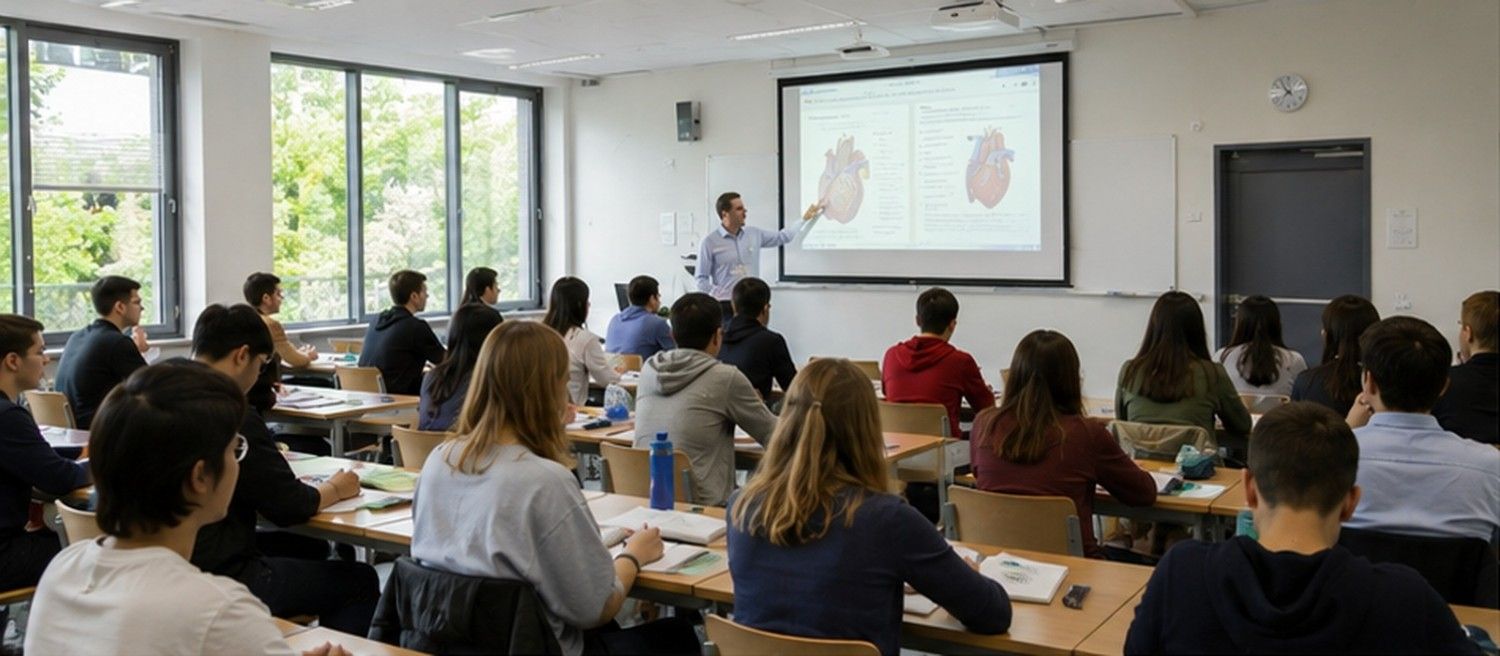
Introduces problem-based learning and early clinical and practical training with real patients, a hallmark of the original Herdecke-Modell.
Covers Anatomy, Physiology, and Biochemistry, forming the scientific foundation of the degree.
Continues small-group, problem-oriented teaching methods throughout the pre-clinical to clinical transition.
Introduces core clinical subjects including Pathology, Microbiology, and Pharmacology.
Runs through partner teaching hospitals, with over 80% of students also completing placements abroad.
Covers Internal Medicine, Surgery, and allied clinical subjects.
Bridges classroom learning and independent clinical practice ahead of the final state examination.
A dedicated final period spent largely in hospital settings, applying clinical skills under supervision.
Graduates need the Approbation, Germany's medical licence, before they can practise independently.
The programme concludes with the Staatsexamen, Germany's state medical examination.
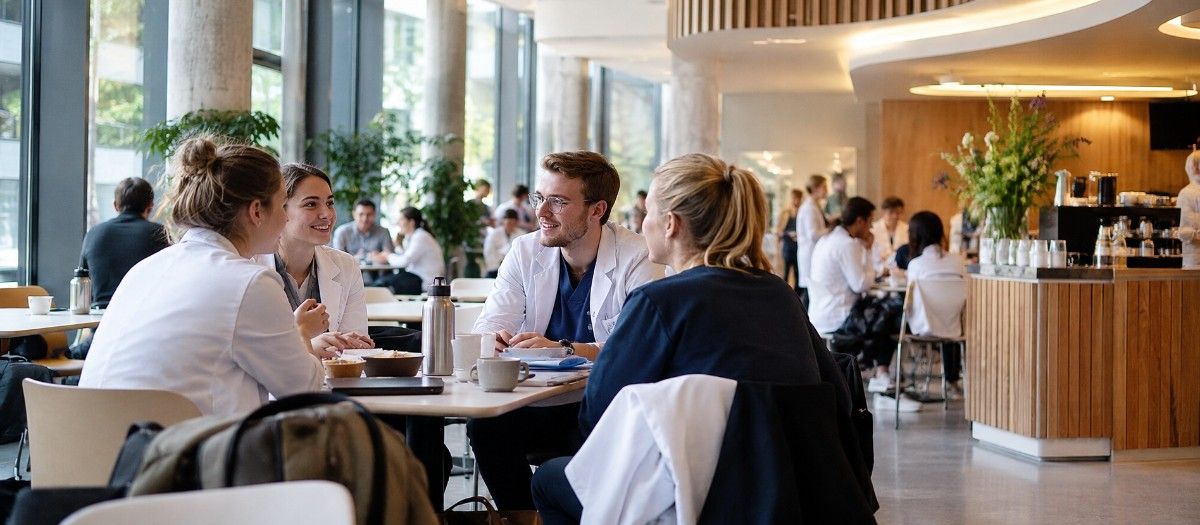
Furnished hostel rooms with Wi-Fi, laundry, 24/7 security, and Indian mess on or near campus.
Indian restaurants and mess facilities serving vegetarian and non-vegetarian home-style food daily.
Strong Indian community with cultural events, festival celebrations, and peer support groups.
Students get hands-on clinical training in government and private hospitals affiliated with the university.
Practical information for students planning to study at MBBS in Witten Herdecke University Faculty of Health.
Prepare for all seasons. Thermal wear for winters, light clothing for summers. University provides heating in hostels.
Student visa processed with university invitation letter. Direct and connecting flights from major Indian cities.
Health insurance included in fees. Medical facility on campus plus city hospitals easily accessible.
Local SIM cards available. WhatsApp and video calls keep you connected with family back home.
Average monthly expenses of $150–$250 covering food, transport, and personal needs.
University library, online databases, and study groups. Seniors mentor juniors through academic challenges.
Our team guides you through every step — from application to arriving on campus.
Begin German lessons as early as possible, ideally alongside Class 11–12, targeting B1 within 12 months and progressing toward the required B2–C1 level.
Submit Class 10, 12, and any higher-education transcripts for verification. Processing typically takes 3–5 weeks; apply early, since this gates every subsequent step.
portal and apply to the correct track, the M-Kurs for medical aspirants, at your shortlisted Studienkolleg institutions.
Complete the roughly 10–12 month M-Kurs program covering Biology, Chemistry, Physics, and German, then pass the Feststellungsprüfung (FSP), the qualifying exam for university entry.
Submit applications to your shortlisted universities. Uni-assist fees run €75 for the first program and €30 for each additional program in the same semester.
University decisions follow Uni-assist’s document evaluation and forwarding; final admission is always the university’s own decision.
Deposit €11,904 into a blocked account (via Fintiba, Expatrio, or a similar provider) and arrange either public (€140–€160/month) or private health insurance; both are mandatory prerequisites for the visa stage.
Submit your visa application at the German consulate in India (Delhi, Mumbai, Bengaluru, or Chennai), with your admission letter, APS certificate, language proficiency proof, blocked account confirmation, and insurance proof. Realistic processing time is 6–12 weeks.
Bring originals of every document submitted digitally. Be prepared to discuss your study plans, financial arrangements, and reasons for choosing Germany.
Book travel around your intake date (October for Winter, April for Summer), and complete formal university enrollment on arrival. Medical study then begins with the Pre-Clinical phase.
Admission Helpline — Contact our counsellors for step-by-step assistance.
“The faculty here is incredibly supportive. The clinical training during hospital rotations has given me real confidence in patient care.”
“Affordable fees without compromising on quality. The campus facilities and hostel life made my transition abroad very smooth.”
“English medium instruction and WHO-recognized curriculum were the deciding factors for me. No regrets so far — excellent experience overall.”
“The university helped with everything from visa to accommodation. Hospital exposure from year three has been invaluable for my FMGE prep.”
“Just cleared my licensing exam on the first attempt. The structured coaching and mock exams during final year were a game-changer.”
“Safe campus, good food options, and a strong Indian student community. The teaching methodology is very practical and hands-on.”
It received state recognition on 14 July 1982, becoming Germany's first private university, with teaching beginning on 30 April 1983.
The Modellstudiengang runs 12.5 semesters, roughly six years and three months.
No, the entire programme runs in German, so applicants need strong German language skills before enrolling.
No. UW/H describes its places as NC-frei, using a written application and personal interview process instead.
The total programme fee is EUR 73,200, payable either through fixed monthly instalments or via the income-based Umgekehrter Generationenvertrag after graduation.
A student-run financing model, in place since 1995, letting students pay nothing during their studies and instead repay a percentage of their income for a fixed period after graduation.
Graduates receive a Staatsexamen, Germany's state medical examination, followed by an Approbation before they can practise independently.
UW/H offers 84 NC-frei places per semester for Humanmedizin.
It was the first German university to systematically introduce problem-based learning into medical teaching, starting with its original 1983 Herdecke-Modell.
More than 80% of students complete an international study placement during their degree, a notably high figure for a German medical programme.


Our expert counsellors will guide you through the complete admission process — from documents to airport pickup.