
Q1. When was the Georg-August-Universität Göttingen founded?
+Teaching began in 1734, with the official, ceremonial inauguration following on 17 September 1737; medicine was among the four founding faculties.
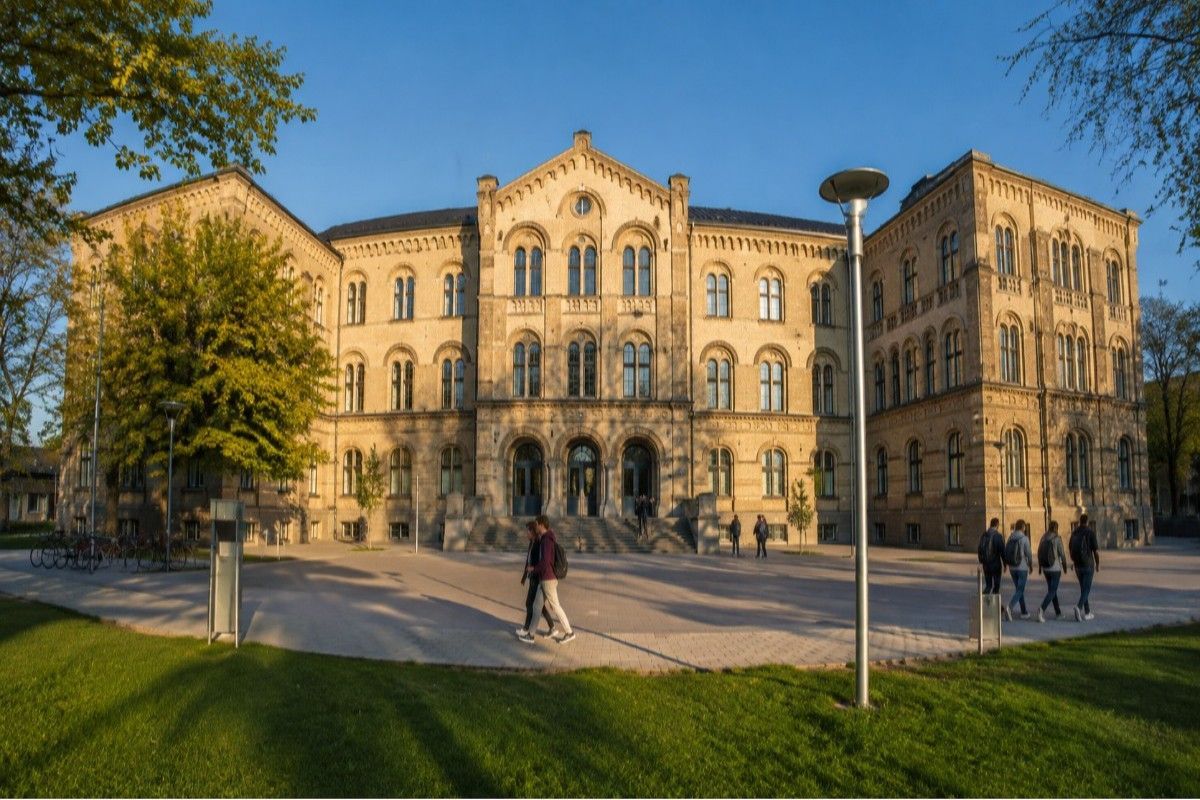
 Germany | Est. 1737
Germany | Recognised by the state of Lower Saxony; the Humanmedizin degree follows Germany's nationally standardised medical licensing framework. | German runs through the entire Regelstudiengang. No English-medium track exists for this programme. medium
Expert will call you within 2 hours
People mostly just call it UMG for short. The Georg-August-Universität itself was founded by King George II of Great Britain, who was simultaneously the Elector of Hanover, under the direction of his minister Gerlach Adolph von Münchhausen. Teaching actually began in 1734, though the university's formal, ceremonial inauguration only took place on 17 September 1737. So, if sources cite either 1734 or 1737 as the founding year, both are genuinely correct, just describing two different milestones in the same launch.
Medicine was one of the university's four original founding faculties, alongside Theology, Law, and Philosophy, though it started out, by the faculty's own account, somewhat on the margins of the new institution's attention. While many other eighteenth-century universities treated anatomy, botany, chemistry, medical theory, and practice as the core elements of medical study, Göttingen's planners instead pushed early for specialised institutes, beginning with anatomy and soon followed by surgery, for which a dedicated Wundärztliches Hospital, a hospital for wound-treating surgeons, was created in 1781.
Here's a fact most guides skip entirely. In 1752, Göttingen's medical faculty founded the Accouchierhaus, Germany's first academic institution dedicated to midwifery and obstetrics. So, well before most other German universities treated childbirth as a subject worthy of dedicated academic study, Göttingen had already built a specific institution for it. The polymath Albrecht von Haller, appointed to a chair covering anatomy, botany, and surgery in 1736, also founded the university's Botanical Garden in 1751, and served as the first president of the Königliche Societät der Wissenschaften, the Royal Society of Sciences that George II founded alongside the university itself.
Göttingen's connection to Nobel Prize-winning research is genuinely extensive: more than 40 Nobel laureates have been connected to the university across its history, including chemists Otto Wallach, Walther Nernst, Richard Zsigmondy, and Adolf Windaus, and physicists James Franck, Gustav Hertz, and Max Born, most recently joined by Herbert Kroemer, who completed his doctorate at Göttingen in the 1950s before winning the Physics prize in 2000. On 1 January 2003, Göttingen became one of the first universities in Germany to convert into a Stiftung öffentlichen Rechts, a public-law foundation, a genuinely early adoption of this now more common German university governance model.
The medical faculty's own clinical history predates the university itself by more than three centuries. The Hospital St Crucis at Geismartor was founded in Göttingen in 1390, well over 300 years before the Georg-August-Universität's own 1737 inauguration. So, organised medical care in Göttingen has a documented history stretching back to the very late fourteenth century, even though formal university-level medical training only began much later.
Today, Universitätsmedizin Göttingen employs close to 9,700 staff, together with its subsidiary companies, making it one of the largest employers in the region. It operates as part of the Georg-August-Universität Göttingen Stiftung Öffentlichen Rechts, led by a three-person executive board, and comprises both the medical faculty and the university hospital as one integrated institution. Around 4,000 of the university's roughly 28,000 total students study medicine specifically, across an institution offering more than 210 degree programmes in 13 faculties overall.
Medicine at Göttingen runs as a Regelstudiengang, Germany's standard medical curriculum, structured around the classic three stages: Vorklinik, the preclinical phase, Klinik, the clinical phase, and the Praktisches Jahr, a final practical year spent largely in hospital settings, working out to roughly six years and three months in total. The programme concludes with a Staatsexamen, Germany's state medical examination, rather than a separate bachelor's or master's degree.
Admission runs centrally through Germany's Stiftung für Hochschulzulassung, accessed via Hochschulstart.de, the same nationwide system used across the country for medicine, rather than through the university directly.
Fee figures here follow the standard pattern found across most German public universities. Lower Saxony charges no general tuition fees, and no separate fee applies to non-EU students in this state either. The only regular charge is the standard semester contribution, generally running to somewhere between EUR 300 and 400, covering Studierendenwerk services, student union dues, and a semester transport ticket.
Parameter | Details |
Established | Founded 1732/1734 by King George II; officially inaugurated 17 September 1737; medicine among the four founding faculties, with its own roots to an anatomy chair from 1734 |
Institution Type | Public university, organised as a Stiftung öffentlichen Rechts (public-law foundation) since 2003 |
Location | Göttingen, Lower Saxony, Germany |
Human Medicine (Regelstudiengang), leading to a Staatsexamen | |
Duration | Approx. 6 years, 3 months, following the standard Vorklinik, Klinik, and Praktisches Jahr structure |
Medium of Instruction | German |
Foreign Quota Note | No SAARC-style quota; no non-EU tuition fee in Lower Saxony |
Teaching Hospital | Universitätsmedizin Göttingen (UMG), with clinical roots tracing to the St Crucis Hospital, founded 1390 |
Fee Component | Amount | Notes |
Tuition Fee | None | Lower Saxony charges no general tuition fees |
Non-EU Student Fee | None | No separate fee applies to non-EU students in this state |
Semester Contribution | Approx. EUR 300 to 400 per semester | Covers Studierendenwerk services, student union dues, and a semester transport ticket |
Living Costs | Not separately confirmed by the university | Göttingen generally runs moderately priced for a German university city |
Approx. Total Programme Cost | Roughly EUR 3,600 to 4,800 over 6 years (semester fees only) | Estimate only; confirm the current rate directly with the university |
Most rival pages date a medical faculty's history to when its parent university was founded. Göttingen's own clinical history genuinely runs deeper: the Hospital St Crucis at Geismartor opened in Göttingen in 1390, more than 300 years before the Georg-August-Universität's own 1737 inauguration. So, organised medical care in this city has a documented history considerably older than the university itself.
Most guides describe a medical faculty's specialisations in general terms. Göttingen founded the Accouchierhaus in 1752, Germany's first academic institution dedicated specifically to midwifery and obstetrics, well ahead of most other German universities treating the subject as worthy of dedicated academic study. So, this faculty's specific historical firsts are genuinely documented, not vague claims of general excellence.
Be upfront about a few real limits here. The whole programme runs in German, so applicants without strong German language skills will struggle from the outset. Admission runs entirely through Germany's national Hochschulstart system rather than the university directly, so applicants need to track the national portal's quotas and deadlines. Medicine's own early history at Göttingen was described by the faculty itself as somewhat marginal compared to other subjects in its first decades, a genuine, honestly documented gap worth knowing about.
So, who fits here best? Students comfortable studying entirely in German, and drawn to a university with an extraordinary, documented Nobel Prize legacy and a genuinely centuries-deep clinical history in its host city, fit well here. Students who value studying within one of Germany's earliest public-law foundation universities fit well too. However, anyone hoping for an English-taught path should look elsewhere, since none exists here. Still, the zero-tuition structure and the university's remarkable research pedigree are genuine, well-documented strengths.
No hidden charges, no donation. The full picture of costs at MBBS in University Medical Center Göttingen Faculty of Medicine Germany.
Tuition Fee
USD $12,820 – $15,860
EUR €300 to €400 per semester
Hostel Fee
USD $4,200 – $6,000 per year
Aprrox. USD $4,200 – $6,000 per year
Food & Meals
Aprrox. USD $2,640 – $3,720
per year
Insurance
Aprrox. USD $1,860
per year
Donation
no donation
no hidden
Total Estimated Cost
Aprrox. USD $76,920 – $95,160
6 year
25–35%
Average FMGE first-attempt pass rates for students from many overseas medical universities. Students from structured programs consistently score higher.
Students returning to India need to clear the FMGE/NExT exam. MBBS in University Medical Center Göttingen Faculty of Medicine Germany integrates exam-oriented coaching into the regular curriculum so students are prepared from day one.
A structured program that takes you from foundational sciences to clinical mastery.
Builds on a teaching tradition dating to the faculty's early specialised anatomy institute, one of its first, from 1734.
Covers Anatomy, Physiology, and Biochemistry, forming the scientific foundation of the degree.
Draws on a clinical teaching tradition tracing back to the faculty's 1781 Wundärztliches Hospital for surgical training.
Introduces core clinical subjects including Pathology, Microbiology, and Pharmacology.
Runs largely through Universitätsmedizin Göttingen's integrated clinical departments.
Covers Internal Medicine, Surgery, and Obstetrics and Gynaecology, the latter tracing to Germany's first academic midwifery institution, founded 1752.
Bridges classroom learning and independent clinical practice ahead of the final state examination.
A dedicated final period spent largely in hospital settings, applying clinical skills under supervision.
Graduates need the Approbation, Germany's medical licence, before they can practise independently.
The programme concludes with the Staatsexamen, Germany's state medical examination.
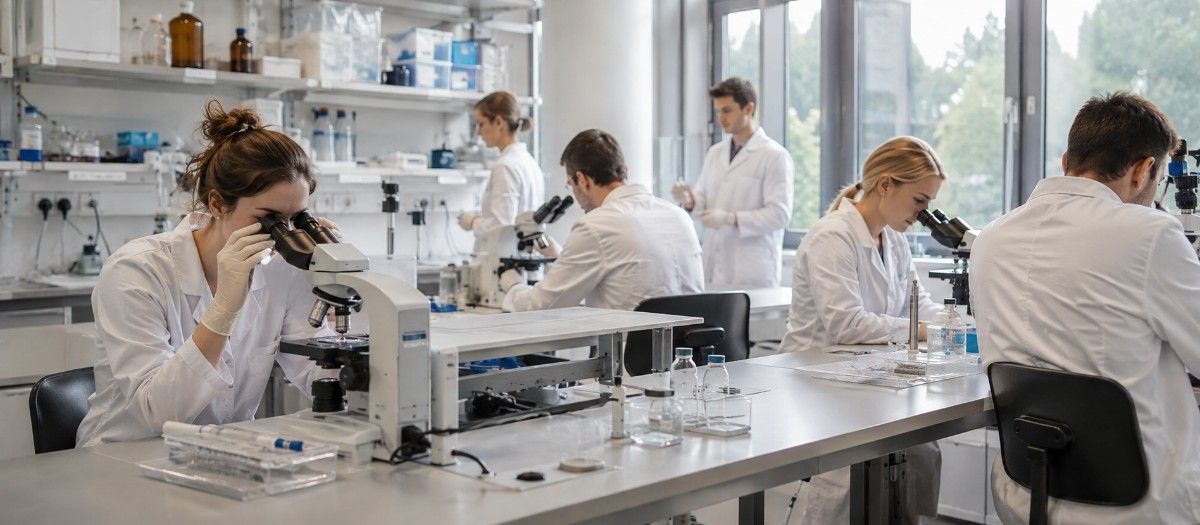
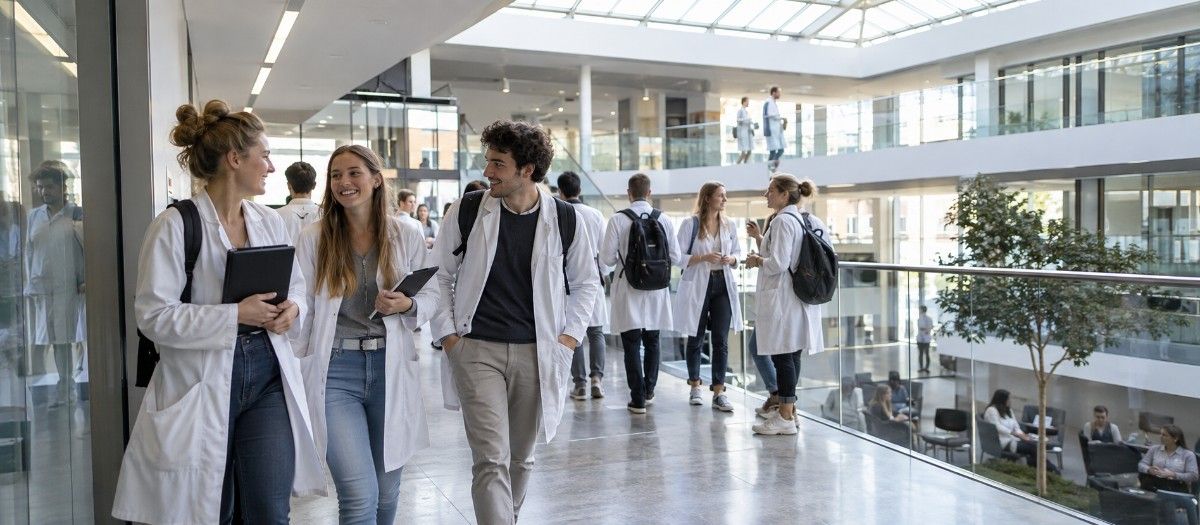
Furnished hostel rooms with Wi-Fi, laundry, 24/7 security, and Indian mess on or near campus.
Indian restaurants and mess facilities serving vegetarian and non-vegetarian home-style food daily.
Strong Indian community with cultural events, festival celebrations, and peer support groups.
Students get hands-on clinical training in government and private hospitals affiliated with the university.
Practical information for students planning to study at MBBS in University Medical Center Göttingen Faculty of Medicine Germany.
Prepare for all seasons. Thermal wear for winters, light clothing for summers. University provides heating in hostels.
Student visa processed with university invitation letter. Direct and connecting flights from major Indian cities.
Health insurance included in fees. Medical facility on campus plus city hospitals easily accessible.
Local SIM cards available. WhatsApp and video calls keep you connected with family back home.
Average monthly expenses of $150–$250 covering food, transport, and personal needs.
University library, online databases, and study groups. Seniors mentor juniors through academic challenges.
Our team guides you through every step — from application to arriving on campus.
Begin German lessons as early as possible, ideally alongside Class 11–12, targeting B1 within 12 months and progressing toward the required B2–C1 level.
Submit Class 10, 12, and any higher-education transcripts for verification. Processing typically takes 3–5 weeks; apply early, since this gates every subsequent step.
portal and apply to the correct track, the M-Kurs for medical aspirants, at your shortlisted Studienkolleg institutions.
Complete the roughly 10–12 month M-Kurs program covering Biology, Chemistry, Physics, and German, then pass the Feststellungsprüfung (FSP), the qualifying exam for university entry.
Submit applications to your shortlisted universities. Uni-assist fees run €75 for the first program and €30 for each additional program in the same semester.
University decisions follow Uni-assist’s document evaluation and forwarding; final admission is always the university’s own decision.
Deposit €11,904 into a blocked account (via Fintiba, Expatrio, or a similar provider) and arrange either public (€140–€160/month) or private health insurance; both are mandatory prerequisites for the visa stage.
Submit your visa application at the German consulate in India (Delhi, Mumbai, Bengaluru, or Chennai), with your admission letter, APS certificate, language proficiency proof, blocked account confirmation, and insurance proof. Realistic processing time is 6–12 weeks.
Bring originals of every document submitted digitally. Be prepared to discuss your study plans, financial arrangements, and reasons for choosing Germany.
Book travel around your intake date (October for Winter, April for Summer), and complete formal university enrollment on arrival. Medical study then begins with the Pre-Clinical phase.
Admission Helpline — Contact our counsellors for step-by-step assistance.
“The faculty here is incredibly supportive. The clinical training during hospital rotations has given me real confidence in patient care.”
“Affordable fees without compromising on quality. The campus facilities and hostel life made my transition abroad very smooth.”
“English medium instruction and WHO-recognized curriculum were the deciding factors for me. No regrets so far — excellent experience overall.”
“The university helped with everything from visa to accommodation. Hospital exposure from year three has been invaluable for my FMGE prep.”
“Just cleared my licensing exam on the first attempt. The structured coaching and mock exams during final year were a game-changer.”
“Safe campus, good food options, and a strong Indian student community. The teaching methodology is very practical and hands-on.”
Teaching began in 1734, with the official, ceremonial inauguration following on 17 September 1737; medicine was among the four founding faculties.
King George II of Great Britain, who was simultaneously Elector of Hanover, under the direction of his minister Gerlach Adolph von Münchhausen.
No, the entire Regelstudiengang runs in German, so applicants need strong German language skills before enrolling.
Places are allocated nationally through Hochschulstart.de (Stiftung für Hochschulzulassung), rather than through the university directly.
There's no tuition fee at all, even for non-EU students. The only cost is a semester contribution of roughly EUR 300 to 400.
Training runs through Universitätsmedizin Göttingen, with clinical roots tracing back to the Hospital St Crucis, founded in 1390.
The standard study period runs about 6 years and 3 months, covering Vorklinik, Klinik, and the Praktisches Jahr.
More than 40 Nobel laureates have been connected to the university across its history, most recently physicist Herbert Kroemer in 2000.
The Accouchierhaus, founded at Göttingen's medical faculty in 1752.
No, clinical placements sit inside the six-year programme itself, including the Praktisches Jahr, with no separate internship year afterward.


Our expert counsellors will guide you through the complete admission process — from documents to airport pickup.