1. Does Rostock teach medicine in English?
+No. The programme runs in German and requires C1-level German at application.

 Germany | Est. 1419
Germany | Ministry of Science, Culture, Federal and European Affairs of Mecklenburg-Vorpommern; degree governed by the Ärztliche Approbationsordnung; listed in the World Directory of Medical Schools. | German medium
Expert will call you within 2 hours
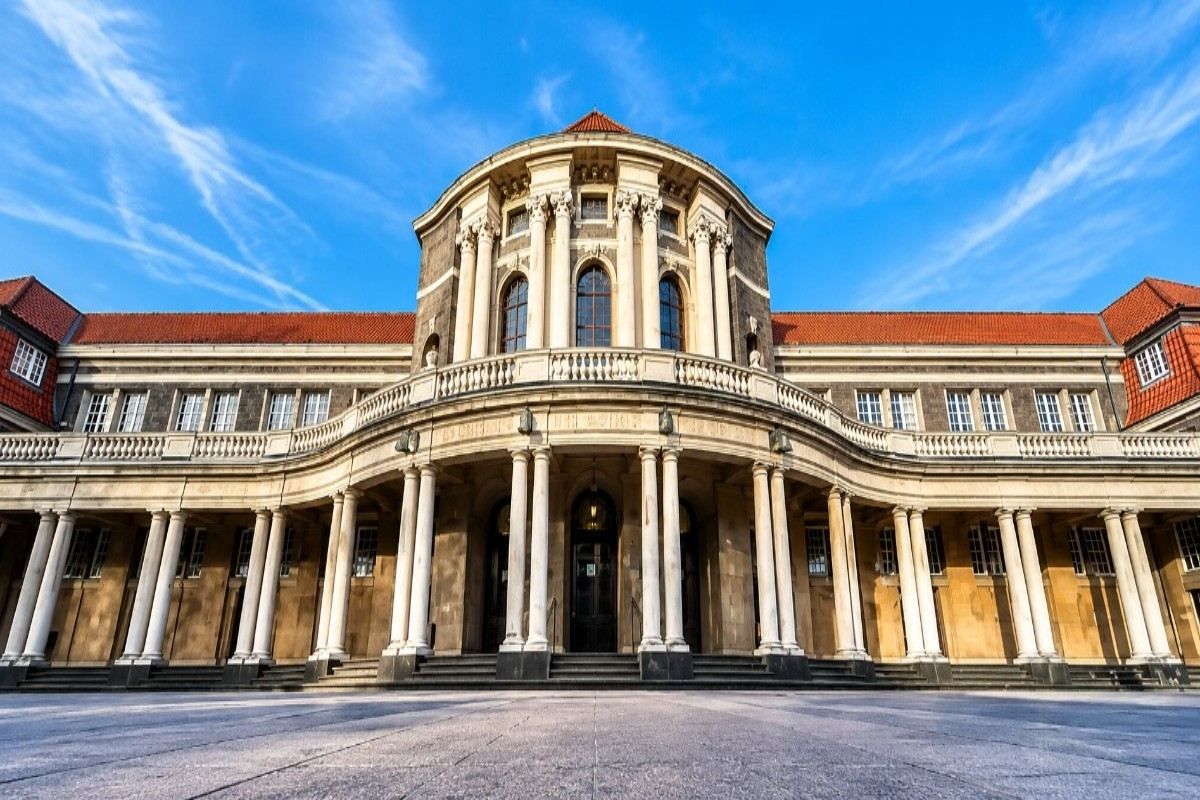
The Medizinische Fakultät at the University of Rostock has been around since 1419, making it the oldest medical school in northern Europe and the Baltic area. Since the university began in the same year, medicine has been taught in Rostock for more than 600 years. The faculty is now part of Universitätsmedizin Rostock, which is an integrated structure that runs the faculty and the university hospital as a single unit. About 210,000 people live in the city, which is on the Warnow river and close to the Baltic Sea. It has some of the lowest living costs of any German university city.
The program is based on the Ärztliche Approbationsordnung and lasts for 12 quarters, which is three months. You go through four semesters of preliminary work, six semesters of clinical work, and the 48-week Praktisches Jahr. The whole class is taught in German. Rostock does not offer an English-medium medical degree, and the faculty makes that clear on its admissions pages. This means that language skills are more important than grades when deciding who can attend than grades themselves.
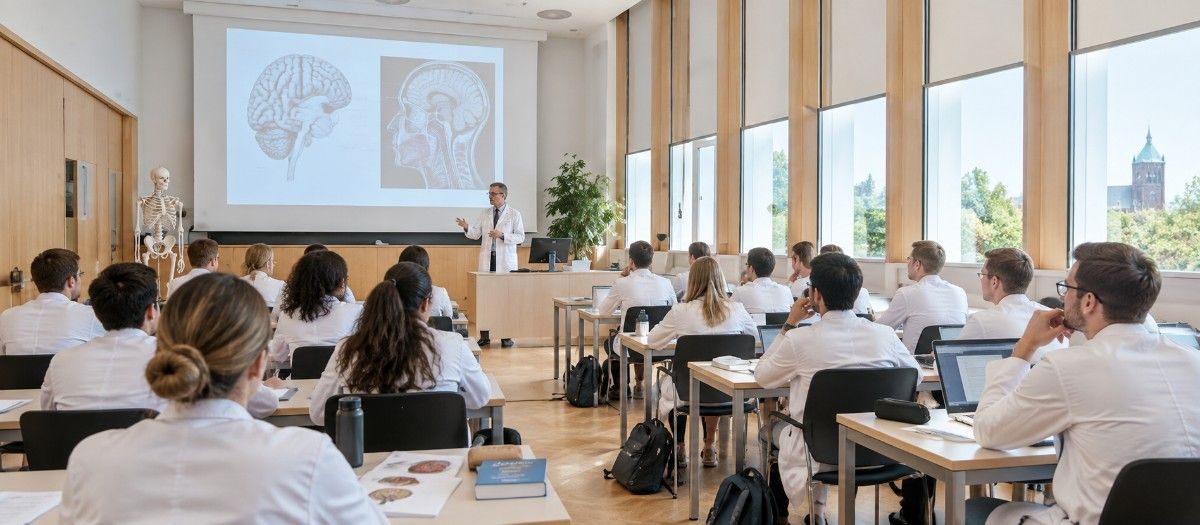
In Rostock, the primary years are built around anatomy, physiology, and biochemistry. The first year is centered around the dissection course. One of the oldest teaching collections in Germany is kept at the Institute of Anatomy. Students use this collection along with more modern imaging tools. Physiology and biochemistry practicals happen at the same time, and the teachers connect them to case studies so that you can understand why a mechanism is important in real life. After the fourth term, the Erste Ärztliche Prüfung ends this part.
Universitätsmedizin Rostock has about 1,000 beds spread out across its campuses and treats about 45,000 inpatients a year. This is where clinical training takes place. As the highest level of care provider in Mecklenburg-Vorpommern, it takes on patients that other hospitals in the area can't handle. Heart medicine, oncology, neurology, transplant medicine, and neonatology are some of its strong areas. A lot of catheter interventions and heart surgery are done at the heart center every year, and the oncology center is certified by the German Cancer Society. Mecklenburg-Vorpommern is a state with few people, so the hospital serves a big area. This means that students get to see a wide range of cases without having to compete with other teaching hospitals for the same patients.
Aging science, regenerative medicine, neurodegeneration, and medical technology are the main areas of research at Rostock. The school runs the Department of Life, Light, and Matter with the help of the natural sciences. It also works with the German Center for Neurodegenerative Diseases to study Parkinson's disease and dementia. It also has a Reference and Translation Center for Cardiac Stem Cell medicine, which makes it a leader in cell-based medicine. About a third of students finish a Dr. med. thesis, and the faculty offers an organized doctoral track for those who would rather do lab work than a clinical project. From the fifth term on, you can begin writing the thesis.
The number of students in a class help them learn. Rostock only takes in about 200 medical students during the winter semester, which is less than Munich, Berlin, or Cologne. Most bedside teaching groups have four to six students, so you check on patients yourself instead of watching others. In the skills lab, students learn how to do things like venipuncture, suturing, managing airways, ultrasound, and CPR. During the practical years, these skills are tested at set times during OSCEs. The faculty also has a program called "simulated patients," in which trained actors play common cases. This helps you get better at taking histories before you meet real patients.
Medicine for adults, surgery, kids, gynecology and obstetrics, neurology, psychiatry, dermatology, ophthalmology, ENT, anesthesiology, radiology, and general practice are all covered in the clinical part. General practice is very important in Rostock because there aren't enough family doctors in rural Mecklenburg-Vorpommern. Incentives, like scholarships during the course, are paid for by the state for students who promise to work in rural areas after they graduate. You have to apply for that separately, and the promise is legally binding.
Four months of Faculatur are played during the breaks between semesters during the clinical years. Part of it can be done abroad if the faculty agrees with the hospital. Through Erasmus, Rostock's Baltic links give students ways to get to Sweden, Denmark, Poland, and the Baltic states. The rest of the year is split into three 16-week blocks: internal medicine, surgery, and an option. Mecklenburg-Vorpommern gives you a PJ budget, and Universitätsmedizin Rostock adds to it, so you don't go without pay during your last year. After that come the Zweite und Dritte Ärztliche Prüfung. If you pass both, you get the Approval.
Costs are the most obvious benefit. At state universities in Mecklenburg-Vorpommern, there are no tuition fees. This is true for both EU and non-EU students. A semester fee of about EUR 120 covers the student union, the Studentenwerk, and a ticket for regional transportation. The rent in Rostock is much lower than the average in Germany. A room at the Studentenwerk Rostock-Wismar costs between EUR 200 and EUR 290 a month, while a room in a shared private flat costs between EUR 280 and EUR 400 a month. It's cheaper to shop, get around, and have fun here than in the southern or western states. For the student visa, you still need to have a blocked account worth EUR 11,904 per year, which is usually more than what you spend in Rostock.
The national system is used for admission. High school graduates from Germany or the EU can apply through hochschulstart.de. Applicants with a non-EU qualification apply through uni-assist, and Rostock gives out a certain number of study spots for foreigners, usually 5% of the total number of applicants. School scores, the TMS aptitude test, and sometimes previous healthcare training are all taken into account in the hiring process. Most applicants from outside the EU must first finish a Studienkolleg year and pass the Feststellungsprüfung, unless they already have a qualification that is recognized as comparable.
The reading is the same for an Indian student as it is for any German public medical school. The National Medical Commission is happy with the approval in terms of length and internship, so the qualification can be used in India after FMGE or NExT. The language is what stops most candidates. You need to be able to speak German at a level of C1, pass the DSH or TestDaF, and then fight in a small foreign quota against people who have often already studied in Germany. Plan to study German for at least a year before you apply. Getting a German license is one of the cheapest and least crowded things you can do in a year if you are willing to spend that much time. If you want to be taught in English, you should look elsewhere because this school does not offer it.
No hidden charges, no donation. The full picture of costs at MBBS in University of Rostock Faculty of Medicine.
Tuition Fee
Approximately EUR 120 (USD 130 / INR 11,440) per semester
EUR 240 per year
Hostel Fee
Approximately EUR 200 to EUR 290 (USD 216 to USD 313 / INR 19,008 to INR 27,544) per month
EUR 2,940 per year
Food & Meals
EUR 2,760
per year
Insurance
EUR 1,440
per year
Donation
No donation fee
No hidden fee
Total Estimated Cost
EUR 7,830 (Approx. INR 744,128)
6 Year
25–35%
Average FMGE first-attempt pass rates for students from many overseas medical universities. Students from structured programs consistently score higher.
Students returning to India need to clear the FMGE/NExT exam. MBBS in University of Rostock Faculty of Medicine integrates exam-oriented coaching into the regular curriculum so students are prepared from day one.
A structured program that takes you from foundational sciences to clinical mastery.
You dissect in small groups and build the chemistry and physics foundation. The three-month nursing internship gives your first ward experience.
Macroscopic anatomy, histology, embryology, physiology, biochemistry, medical physics, medical chemistry, biology, medical psychology and sociology, nursing internship.
You link structure to function across systems and sit the Erste Ärztliche Prüfung at the end of semester four.
Advanced physiology, advanced biochemistry, neuroanatomy, medical terminology, first aid, introduction to clinical medicine
You study disease mechanisms and begin bedside teaching in groups of four to six. Famulatur clerkships start in the breaks.
Pathology, pharmacology and toxicology, microbiology, virology, immunology, clinical chemistry, physical examination, radiology
You spend most hours on wards and in theatre, and OSCEs assess the skills you practised in the simulation lab.
Internal medicine, surgery, anaesthesiology, intensive care, emergency medicine, orthopaedics, urology, dermatology.
You complete the specialty blocks, finish the four months of Famulatur and choose your elective for the final year.
Paediatrics, gynaecology and obstetrics, neurology, psychiatry, ophthalmology, ENT, general practice, forensic medicine, epidemiology.
You work under supervision as part of the team, then sit the Zweite and Dritte Ärztliche Prüfung to earn the Approbation.
Praktisches Jahr, three blocks of 16 weeks in internal medicine, surgery and an elective specialty
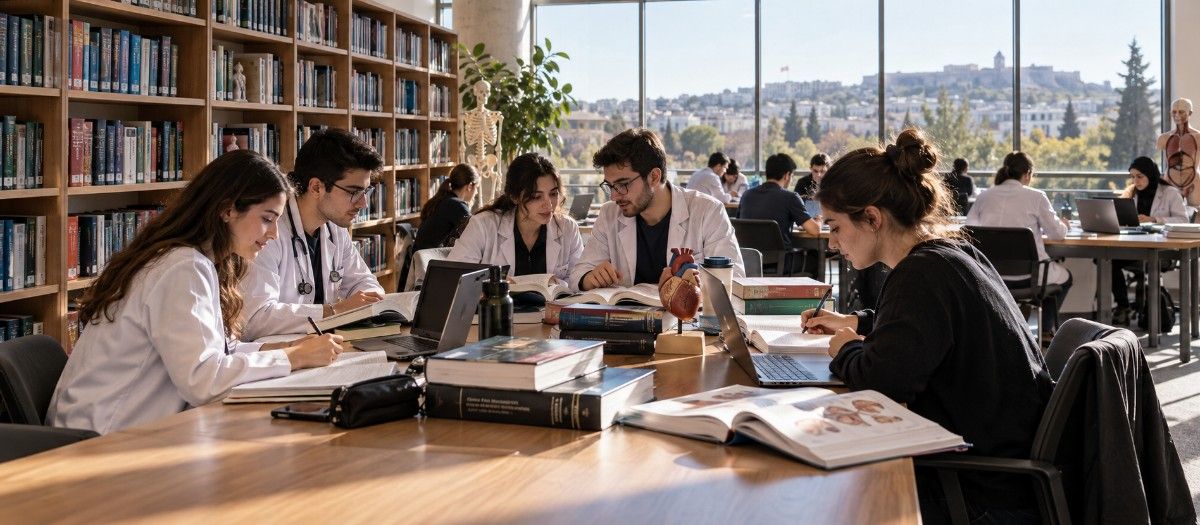
Furnished hostel rooms with Wi-Fi, laundry, 24/7 security, and Indian mess on or near campus.
Indian restaurants and mess facilities serving vegetarian and non-vegetarian home-style food daily.
Strong Indian community with cultural events, festival celebrations, and peer support groups.
Students get hands-on clinical training in government and private hospitals affiliated with the university.
Practical information for students planning to study at MBBS in University of Rostock Faculty of Medicine.
Prepare for all seasons. Thermal wear for winters, light clothing for summers. University provides heating in hostels.
Student visa processed with university invitation letter. Direct and connecting flights from major Indian cities.
Health insurance included in fees. Medical facility on campus plus city hospitals easily accessible.
Local SIM cards available. WhatsApp and video calls keep you connected with family back home.
Average monthly expenses of $150–$250 covering food, transport, and personal needs.
University library, online databases, and study groups. Seniors mentor juniors through academic challenges.
Our team guides you through every step — from application to arriving on campus.
Begin German lessons as early as possible, ideally alongside Class 11–12, targeting B1 within 12 months and progressing toward the required B2–C1 level.
Submit Class 10, 12, and any higher-education transcripts for verification. Processing typically takes 3–5 weeks; apply early, since this gates every subsequent step.
portal and apply to the correct track, the M-Kurs for medical aspirants, at your shortlisted Studienkolleg institutions.
Complete the roughly 10–12 month M-Kurs program covering Biology, Chemistry, Physics, and German, then pass the Feststellungsprüfung (FSP), the qualifying exam for university entry.
Submit applications to your shortlisted universities. Uni-assist fees run €75 for the first program and €30 for each additional program in the same semester.
University decisions follow Uni-assist’s document evaluation and forwarding; final admission is always the university’s own decision.
Deposit €11,904 into a blocked account (via Fintiba, Expatrio, or a similar provider) and arrange either public (€140–€160/month) or private health insurance; both are mandatory prerequisites for the visa stage.
Submit your visa application at the German consulate in India (Delhi, Mumbai, Bengaluru, or Chennai), with your admission letter, APS certificate, language proficiency proof, blocked account confirmation, and insurance proof. Realistic processing time is 6–12 weeks.
Bring originals of every document submitted digitally. Be prepared to discuss your study plans, financial arrangements, and reasons for choosing Germany.
Book travel around your intake date (October for Winter, April for Summer), and complete formal university enrollment on arrival. Medical study then begins with the Pre-Clinical phase.
Admission Helpline — Contact our counsellors for step-by-step assistance.
“The faculty here is incredibly supportive. The clinical training during hospital rotations has given me real confidence in patient care.”
“Affordable fees without compromising on quality. The campus facilities and hostel life made my transition abroad very smooth.”
“English medium instruction and WHO-recognized curriculum were the deciding factors for me. No regrets so far — excellent experience overall.”
“The university helped with everything from visa to accommodation. Hospital exposure from year three has been invaluable for my FMGE prep.”
“Just cleared my licensing exam on the first attempt. The structured coaching and mock exams during final year were a game-changer.”
“Safe campus, good food options, and a strong Indian student community. The teaching methodology is very practical and hands-on.”
No. The programme runs in German and requires C1-level German at application.
There is none. You pay a semester contribution of about EUR 120, which includes your transport ticket.
Twelve semesters and three months, which is six years and three months with the Praktisches Jahr.
About 200 in the winter semester, which keeps teaching groups small.
Through uni-assist, into a foreign quota of roughly five per cent of places.
A TMS score helps for most selection routes and often decides borderline cases.
Yes. The Approbation meets NMC duration and internship rules, and you then clear FMGE or NExT.
Roughly EUR 650 to EUR 800 per month including rent, which is below the German average.
Yes. The faculty approves foreign hospitals, and Erasmus links cover Sweden, Denmark, Poland and the Baltic states.
Yes. You can start a Dr. med. thesis from the fifth semester through the structured doctoral track.
Our expert counsellors will guide you through the complete admission process — from documents to airport pickup.