
Q1 Is the medical program at Leipzig taught in English?
+No. The entire program runs in German, at every stage, with no English-taught track for the core medical degree.

 Germany | Est. 1409
Germany | Regulated under Germany's Approbationsordnung für Ärzte; recognised across the European Union under Directive 2005/36/EC | German only medium
Expert will call you within 2 hours
The Leipzig is in the state of Saxony in the eastern part of Germany. The city is known for its long musical history, its part in bringing Germany back together, and the large number of young people who have moved there in the last few decades. This building is home to the Medizinische Fakultät of the University of Leipzig. It is one of the oldest medical schools in the German-speaking world that has always been open.
One of the oldest universities in Germany and one of the oldest in Europe that is still open for business. In 1409, the university opened. The college of medicine has been there almost from the start. This means that the medical school in Leipzig has been around for hundreds of years, which is a lot longer than most of the other schools in this series. About 30,000 students are now enrolled at Universität Leipzig, where they are taking a wide range of classes. The Institute of Medicine at Leipzig University Hospital, or Universitätsklinikum Leipzig (UKL), is very close to the Faculty of Medicine.
There are no English classes at this medical school. That is the most important thing to know right away. For the core medical degree that is taught in English, Leipzig does not have a track. Every class, test, clinical round, and interaction with patients starts in German at the start of the first term. Students who don't speak German well should accept this, even if Leipzig's history or lower cost of living seem interesting in other ways.
All over Germany, the process for getting in is the same. There are only a certain number of spots in medicine across the whole country. Hochschulstart, Germany's main admissions platform, handles these places. Students are picked based on their Abitur grade, how long they have been waiting since high school, their scores on the national aptitude test (TMS), and talks that are unique to each university. A lot of people want to get into these spots, just like at all German medical schools. But because Leipzig is cheaper to live in than towns like Munich or Hamburg, it is a good choice for many people who are looking for places to study in Germany.
There are standard rules for medical schooling in Germany. These are spelled out in the Approbationsordnung für Ärzte. This happens in three stages over the course of six years and three months. There are two years of anatomy, physiology, biochemistry, and neurology in the first part, which is called the vorklinischer Abschnitt. Another part of the course that has been there from the start is early contact with patients. The last part of this stage is the erster Teil der ärztlichen Prüfung, which is the first big national test.
This is the second step, which is the clinical part. It's all about practical training and lasts for three years. This includes surgery, internal medicine, pediatrics, psychology, and a lot of other fields. It is taught at UKL and its partner hospitals through classes, seminars, and hands-on work. After the third year, students do real hospital work for a whole year. This is called the Praktisches Jahr. Through rotations, they learn about internal medicine, surgery, and a field of their choice. Approbation is Germany's legal license to practice medicine. Students must pass the zweiter Abschnitt der ärztlichen Prüfung, which is the second national exam, before they can get Approbation.
UKL is a big, well-known university hospital in Leipzig that is used for clinical training. It is known for its work in oncology, cardiology, and transplant medicine, among other things. Medical studies at the university go back hundreds of years. Some parts of the hospital where students learn are very old and others are very new and are used for research. This is a good mix for people who want to learn about both academic medicine and clinical medicine.
Leipzig is one of the best places to study in Germany and has been for a long time. Its strong research shows this. There are strong ties between the Faculty of Medicine and study centers that work in neuroscience, heart disease, and public health. In Germany, for example, students who want to go into education or research can start the Promotion doctoral research track in their last few years of medical school. This means that motivated students can really do research while they are in school.
The way prices work at Leipzig is the same as at other public universities in Germany. In this case, the city has a strong case. Medicine costs very little or nothing to attend, just like Hamburg and other public schools in Germany. Instead, students pay a small fee every semester that covers costs like administration and a bus pass for students. Leipzig is different because it costs less to live there than Germany's bigger western cities. There is almost no cost to attend, which makes it one of the most cost-effective places in the country to study medicine for six years.
It's a great place to live for more than just school. The city has a long history of music that goes back to Johann Sebastian Bach. It also has an active, young arts scene that has grown a lot since Germany became one country again. The public transportation is good, there are lots of students there, and the rent is much less than in Munich, Frankfurt, or Hamburg. This makes it a great place to begin a long journey to become a doctor.
If you already speak and understand German well and want to live in one of Germany's more affordable big cities while getting a good education, the Medizinische Fakultät at Universität Leipzig is a fun and historically rich way to study German medicine. German medical schools, including Leipzig, only teach in German, so students who want to learn English won't be able to attend this school.
No hidden charges, no donation. The full picture of costs at MBBS in Leipzig University Faculty of Medicine.
Tuition Fee
Na
EUR 300
Hostel Fee
EUR 4,200-EUR5,400
EUR 4,200-EUR5,400
Food & Meals
EUR3,600-EUR4,500
per year
Insurance
€1,560
per year
Donation
No Donation
No Hidden fee
Total Estimated Cost
EUR8,050-EUR10,550
6 year
25–35%
Average FMGE first-attempt pass rates for students from many overseas medical universities. Students from structured programs consistently score higher.
Students returning to India need to clear the FMGE/NExT exam. MBBS in Leipzig University Faculty of Medicine integrates exam-oriented coaching into the regular curriculum so students are prepared from day one.
A structured program that takes you from foundational sciences to clinical mastery.
concludes with the erster Abschnitt der ärztlichen Prüfung (first state exam).
Anatomy, Physiology, Biochemistry, and Psychology, alongside early patient contact
taught through lectures, seminars, and structured hospital placements at UKL.
Internal Medicine, Surgery, Paediatrics, Psychiatry, and a wide range of clinical specialtie
The zweiter Abschnitt der ärztlichen Prüfung (second state exam), leading to Approbation, the licence to practise medicine in Germany.
A full year of hands-on hospital rotations across Internal Medicine, Surgery, and a chosen elective specialty.
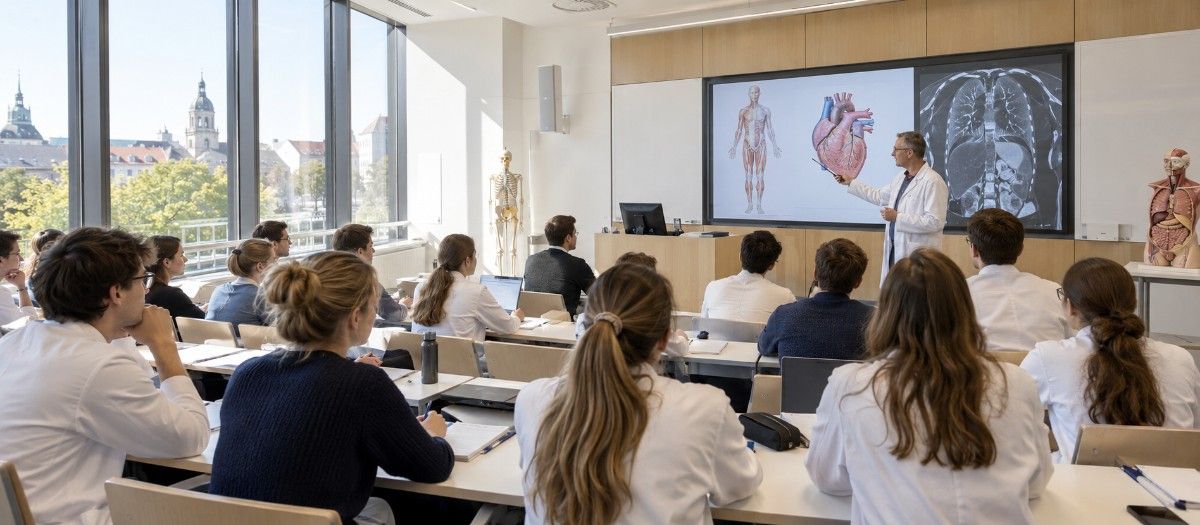

Furnished hostel rooms with Wi-Fi, laundry, 24/7 security, and Indian mess on or near campus.
Indian restaurants and mess facilities serving vegetarian and non-vegetarian home-style food daily.
Strong Indian community with cultural events, festival celebrations, and peer support groups.
Students get hands-on clinical training in government and private hospitals affiliated with the university.
Practical information for students planning to study at MBBS in Leipzig University Faculty of Medicine.
Prepare for all seasons. Thermal wear for winters, light clothing for summers. University provides heating in hostels.
Student visa processed with university invitation letter. Direct and connecting flights from major Indian cities.
Health insurance included in fees. Medical facility on campus plus city hospitals easily accessible.
Local SIM cards available. WhatsApp and video calls keep you connected with family back home.
Average monthly expenses of $150–$250 covering food, transport, and personal needs.
University library, online databases, and study groups. Seniors mentor juniors through academic challenges.
Our team guides you through every step — from application to arriving on campus.
Begin German lessons as early as possible, ideally alongside Class 11–12, targeting B1 within 12 months and progressing toward the required B2–C1 level.
Submit Class 10, 12, and any higher-education transcripts for verification. Processing typically takes 3–5 weeks; apply early, since this gates every subsequent step.
portal and apply to the correct track, the M-Kurs for medical aspirants, at your shortlisted Studienkolleg institutions.
Complete the roughly 10–12 month M-Kurs program covering Biology, Chemistry, Physics, and German, then pass the Feststellungsprüfung (FSP), the qualifying exam for university entry.
Submit applications to your shortlisted universities. Uni-assist fees run €75 for the first program and €30 for each additional program in the same semester.
University decisions follow Uni-assist’s document evaluation and forwarding; final admission is always the university’s own decision.
Deposit €11,904 into a blocked account (via Fintiba, Expatrio, or a similar provider) and arrange either public (€140–€160/month) or private health insurance; both are mandatory prerequisites for the visa stage.
Submit your visa application at the German consulate in India (Delhi, Mumbai, Bengaluru, or Chennai), with your admission letter, APS certificate, language proficiency proof, blocked account confirmation, and insurance proof. Realistic processing time is 6–12 weeks.
Bring originals of every document submitted digitally. Be prepared to discuss your study plans, financial arrangements, and reasons for choosing Germany.
Book travel around your intake date (October for Winter, April for Summer), and complete formal university enrollment on arrival. Medical study then begins with the Pre-Clinical phase.
Admission Helpline — Contact our counsellors for step-by-step assistance.
“The faculty here is incredibly supportive. The clinical training during hospital rotations has given me real confidence in patient care.”
“Affordable fees without compromising on quality. The campus facilities and hostel life made my transition abroad very smooth.”
“English medium instruction and WHO-recognized curriculum were the deciding factors for me. No regrets so far — excellent experience overall.”
“The university helped with everything from visa to accommodation. Hospital exposure from year three has been invaluable for my FMGE prep.”
“Just cleared my licensing exam on the first attempt. The structured coaching and mock exams during final year were a game-changer.”
“Safe campus, good food options, and a strong Indian student community. The teaching methodology is very practical and hands-on.”
No. The entire program runs in German, at every stage, with no English-taught track for the core medical degree.
Through Hochschulstart, Germany's national medical admissions platform, based on Abitur grade, waiting time, TMS test score, and university interviews.
Approximately 6 years and 3 months, covering the vorklinischer Abschnitt, klinischer Abschnitt, and a final Praktisches Jahr, ending in Approbation.
Little to no tuition fee applies for medicine at public German universities, including Leipzig, though a small semester contribution covers administrative costs and a transport pass. Confirm current non-EU fee policy directly with the university.
NEET is not part of the German admissions process, but Indian graduates must still clear FMGE or NExT under standard NMC rules to practise in India after finishing their German medical degree.
Primarily at Universitätsklinikum Leipzig (UKL), a major university hospital with strength in oncology, cardiology, and transplant medicine.
Yes, fully recognised across the EU under Directive 2005/36/EC. Graduates aiming to practise outside Germany or the EU must separately meet that country's own licensing requirements.
Genuinely old. The university was founded in 1409, and medicine has formed part of it since close to that founding, making it one of the oldest continuously running medical faculties in the German-speaking world.
Leipzig offers notably lower living costs than Germany's larger western cities, alongside a rich cultural and musical history, while still providing strong clinical training through UKL.
No. Since every stage of teaching, examination, and clinical practice runs in German, students need genuinely strong, working German language skills, typically to at least a C1 certificate level, before considering this path.


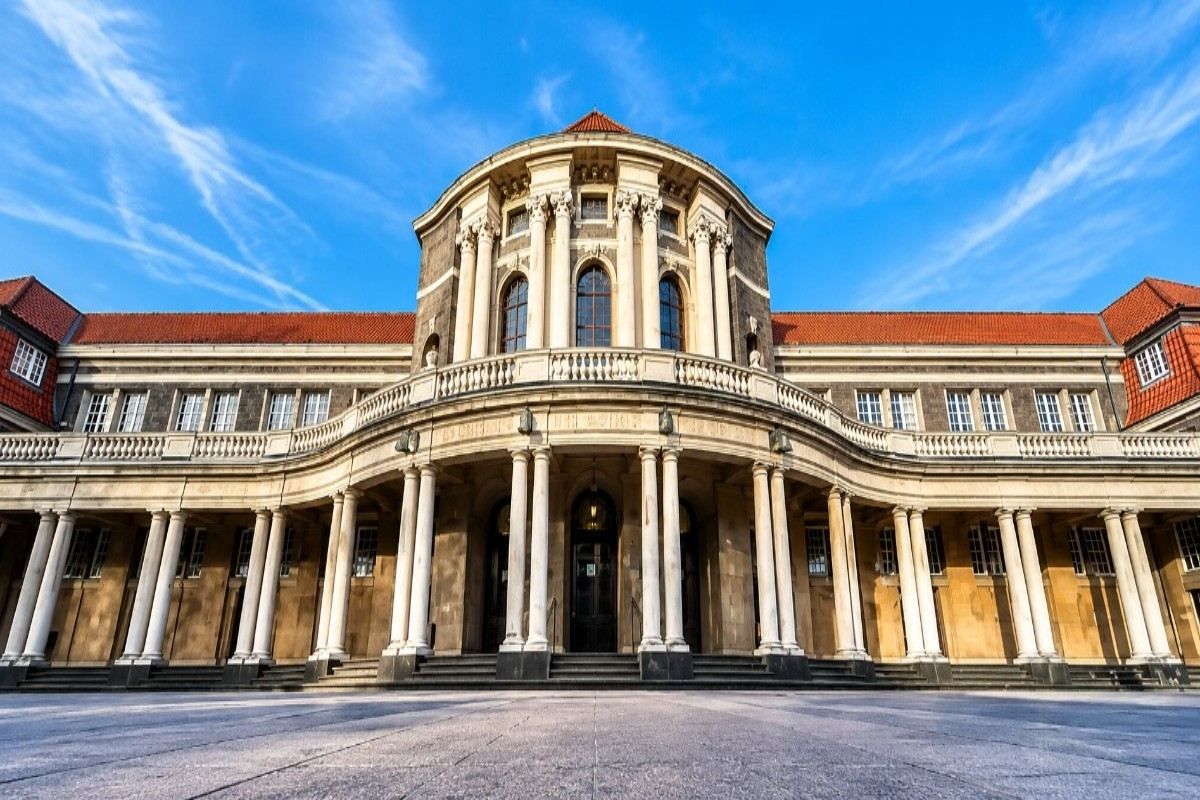
Our expert counsellors will guide you through the complete admission process — from documents to airport pickup.