
Q1. When was the University of Greifswald founded?
+It was formally opened on 17 October 1456 as the Academia Gryphica, with medicine among its four founding faculties.
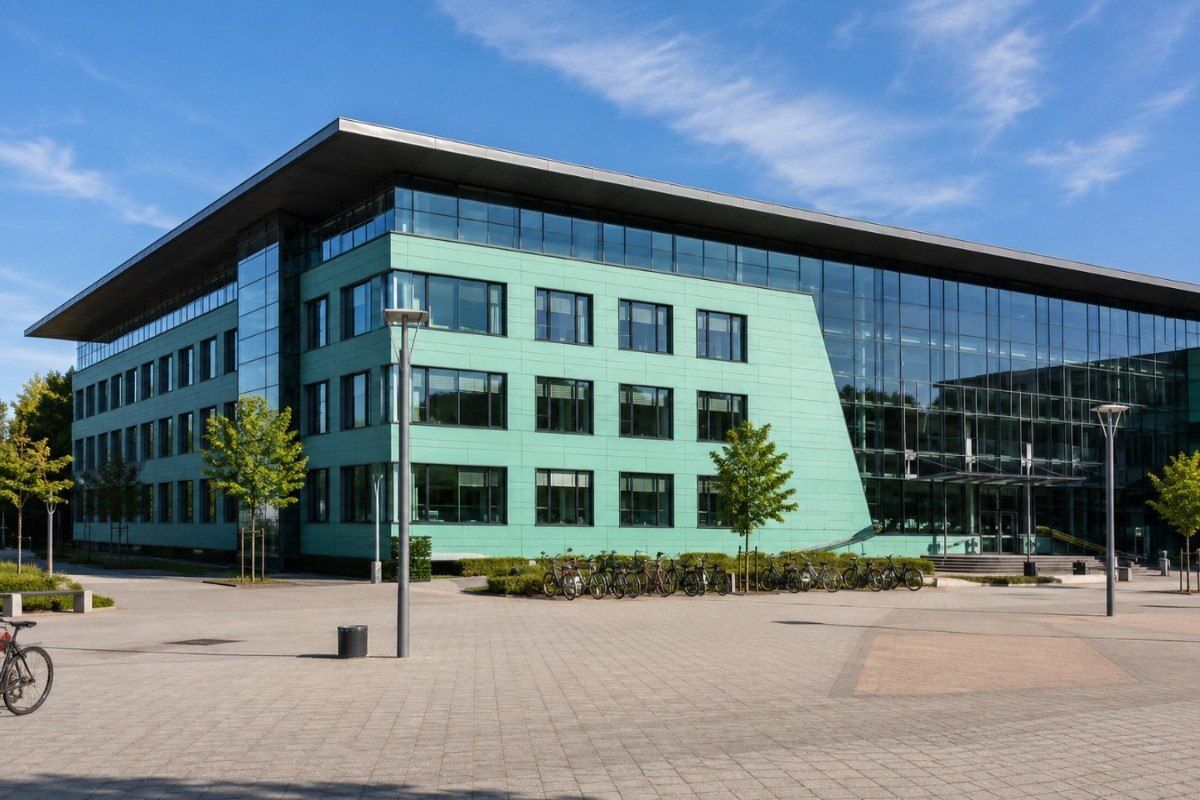
 Germany | Est. 1456
Germany | Recognised by the state of Mecklenburg-Vorpommern; the Humanmedizin degree follows Germany's nationally standardised medical licensing framework. | German runs through the entire Regelstudiengang. No English-medium track exists for this programme. medium
Expert will call you within 2 hours
People mostly just call it Unimedizin Greifswald for short. Its parent university is one of the oldest in Germany, formally opened on 17 October 1456 as the Academia Gryphica, with medicine counted among its founding faculties from that very first day. So, medical training and this university's own history have been genuinely inseparable for well over 560 years.
The founding story here is specific and well documented. Greifswald's own mayor, Heinrich Rubenow, drove the university's creation, securing papal approval from Pope Callixtus III and imperial approval from Emperor Frederick III, with Duke Wartislaw IX of Pomerania-Wolgast placing the new institution under his protection. Rubenow himself became the university's first rector, and the founding ceremony took place in Greifswald's own St Nikolai Cathedral, where the university still holds its annual matriculation ceremony today.
Here's a fact most guides skip entirely. Because Pomerania's territorial control shifted repeatedly over the centuries, Greifswald has, at different points, genuinely been the oldest university of more than one country. From 1648 to 1815, following the Peace of Westphalia's division of Pomerania, the region belonged to Sweden, making Greifswald Sweden's own oldest university for that century and a half. Then, from 1815 to 1947, Pomerania belonged to Prussia, making Greifswald Prussia's oldest university too. So, this single institution has held the title of oldest university in two entirely different states, purely as a result of shifting territorial control over the region it happened to sit in.
The medical faculty's own early history moved slowly by comparison. For its first roughly 300 years, it had no clinical facilities in the modern sense at all. The first documented practical training outside pure lecture-hall teaching came through the Lazarett-Ordnung, the hospital regulations, for the Royal Swedish Landeslazarett, which opened in 1781 with capacity for 20 beds. In 1794, the faculty opened its first "ambulatory clinic," offering free treatment to patients from poorer families while simultaneously training its medical students, a genuinely dual-purpose model that shaped the faculty's clinical culture from the very start. The medical faculty's growth accelerated markedly once Prussia took over the region in 1815, developing into Prussia's second-largest medical faculty, with researchers including Friedrich Loeffler and Ferdinand Sauerbruch working there.
The university carried the name Ernst-Moritz-Arndt-Universität Greifswald from 1933 to 1945, and again from 1954 to 2018, honouring the writer Ernst Moritz Arndt, before reverting to its simpler, original name, Universität Greifswald, in 2018. So, if older material refers to "EMAU Greifswald," it's describing the very same institution under a name it no longer officially carries.
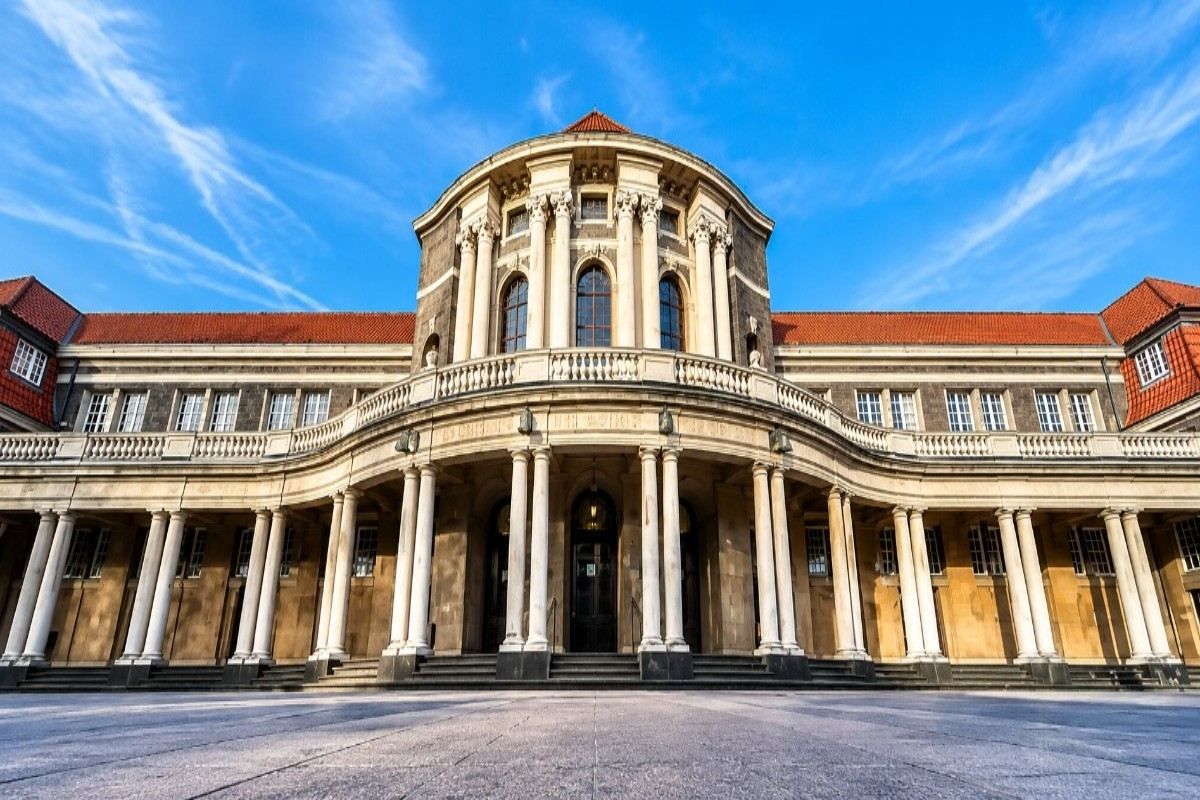
Greifswald is a Hanseatic city on Germany's Baltic Sea coast, and the university's campus sits directly in the historic city centre, near St Nikolai Cathedral. So, students here study within a genuinely compact, walkable medieval city core, rather than a sprawling suburban campus.
Universitätsmedizin Greifswald became its own independent public-law legal entity in 2010, formed by merging the university's Medical Faculty with the Universitätsklinikum Greifswald, though it remains a constituent part of the wider University of Greifswald. Today it comprises 21 clinics and polyclinics, plus 19 institutes and further central facilities, concentrated together on the Campus Beitz-Platz. This concentration is deliberate, giving the medical centre a genuinely efficient, closely integrated infrastructure for interdisciplinary work, and it holds recognised status as a Maximalversorger, Germany's designation for hospitals equipped to treat the most complex and severe cases.
The university maintains international exchange relationships with more than 200 partner universities, and draws international students and researchers from over 100 different countries, a genuinely wide reach for a mid-sized city on Germany's Baltic coast. Its research focus has naturally grown to include the wider Baltic Sea region itself, building on Greifswald's centuries-old Hanseatic and Scandinavian trading connections.
Medicine at Greifswald runs as a Regelstudiengang, Germany's standard medical curriculum, structured around the classic three stages: Vorklinik, the preclinical phase, Klinik, the clinical phase, and the Praktisches Jahr, a final practical year spent largely in hospital settings, working out to roughly six years and three months in total. The programme concludes with a Staatsexamen, Germany's state medical examination, rather than a separate bachelor's or master's degree.
Admission runs centrally through Germany's Stiftung für Hochschulzulassung, accessed via Hochschulstart.de, the same nationwide system used across the country for medicine, rather than through the university directly. Around 1,100 students study medicine at Greifswald's medical faculty.
Fee figures here follow the standard pattern found across most German public universities. Mecklenburg-Vorpommern charges no general tuition fees, and no separate fee applies to non-EU students in this state either. The only regular charge is the standard semester contribution, generally running to somewhere between EUR 150 and 250, covering Studierendenwerk services, student union dues, and a semester transport ticket, making Greifswald's overall fee burden among the lower ones found across German public medical faculties.
Parameter | Details |
Established | 17 October 1456, as the Academia Gryphica; medicine among the four founding faculties from the start |
Institution Type | Public, state-run university |
Location | Greifswald, Mecklenburg-Vorpommern, Germany, on the Baltic Sea coast |
Human Medicine (Regelstudiengang), leading to a Staatsexamen | |
Duration | Approx. 6 years, 3 months, following the standard Vorklinik, Klinik, and Praktisches Jahr structure |
Medium of Instruction | German |
Foreign Quota Note | No SAARC-style quota; no non-EU tuition fee in Mecklenburg-Vorpommern |
Teaching Hospital | Universitätsmedizin Greifswald, a Maximalversorger, with 21 clinics/polyclinics and 19 institutes on the Campus Beitz-Platz |
Fee Component | Amount | Notes |
Tuition Fee | None | Mecklenburg-Vorpommern charges no general tuition fees |
Non-EU Student Fee | None | No separate fee applies to non-EU students in this state |
Semester Contribution | Approx. EUR 150 to 250 per semester | Covers Studierendenwerk services, student union dues, and a semester transport ticket |
Living Costs | Not separately confirmed by the university | Greifswald generally runs cheaper than Germany's larger cities |
Approx. Total Programme Cost | Roughly EUR 1,800 to 3,000 over 6 years (semester fees only) | Estimate only; confirm the current rate directly with the university |
Most rival pages simply cite a founding year. Greifswald's history is genuinely more unusual: shifting territorial control meant this single institution was, at different points, both Sweden's oldest university, from 1648 to 1815, and then Prussia's oldest, from 1815 to 1947. So, this university's age carries a genuinely rare, documented double distinction, not just one long, simple timeline.
Most guides describe a hospital's facilities as spread across a city. Greifswald's 21 clinics, 19 institutes, and further central facilities all sit together on one concentrated site, the Campus Beitz-Platz. So, the interdisciplinary, close-quarters working culture here is a genuine structural feature, not an incidental description.
Be upfront about a few real limits here. The whole programme runs in German, so applicants without strong German language skills will struggle from the outset. Admission runs entirely through Germany's national Hochschulstart system rather than the university directly, so applicants need to track the national portal's quotas and deadlines. Greifswald is also a smaller city than Germany's major medical hubs, so students shouldn't expect the scale of student life found in Berlin or Munich.
So, who fits here best? Students comfortable studying entirely in German, and drawn to one of Germany's oldest universities with a genuinely distinctive Baltic Sea regional identity, fit well here. Students who value a compact, closely integrated medical campus and a lower overall cost of living fit well too. However, anyone hoping for an English-taught path should look elsewhere, since none exists here. Still, the zero-tuition structure and the university's genuinely rare double historical distinction are real, well-documented strengths.
No hidden charges, no donation. The full picture of costs at MBBS in Greifswald University Medicine.
Tuition Fee
$10,062 – $12,182
€124 per semester
Hostel Fee
$3,600 – $5,400 per year
$3,600 – $5,400 per year
Food & Meals
$2,640 – $3,960
per year
Insurance
$1,620
per year
Donation
no donation
no hidden fee
Total Estimated Cost
$61,230 – $73,260
6 year
25–35%
Average FMGE first-attempt pass rates for students from many overseas medical universities. Students from structured programs consistently score higher.
Students returning to India need to clear the FMGE/NExT exam. MBBS in Greifswald University Medicine integrates exam-oriented coaching into the regular curriculum so students are prepared from day one.
A structured program that takes you from foundational sciences to clinical mastery.
● Runs largely on the concentrated Campus Beitz-Platz medical site.
● Covers Anatomy, Physiology, and Biochemistry, forming the scientific foundation of the degree.
● Draws on the faculty's long-standing dual model of patient care and student training, dating back to its 1794 ambulatory clinic.
● Introduces core clinical subjects including Pathology, Microbiology, and Pharmacology.
● Runs through the 21 clinics and polyclinics of Universitätsmedizin Greifswald.
● Covers Internal Medicine, Surgery, and allied clinical subjects.
● Bridges classroom learning and independent clinical practice ahead of the final state examination.
● A dedicated final period spent largely in hospital settings, applying clinical skills under supervision.
● Graduates need the Approbation, Germany's medical licence, before they can practise independently.
● The programme concludes with the Staatsexamen, Germany's state medical examination.
Furnished hostel rooms with Wi-Fi, laundry, 24/7 security, and Indian mess on or near campus.
Indian restaurants and mess facilities serving vegetarian and non-vegetarian home-style food daily.
Strong Indian community with cultural events, festival celebrations, and peer support groups.
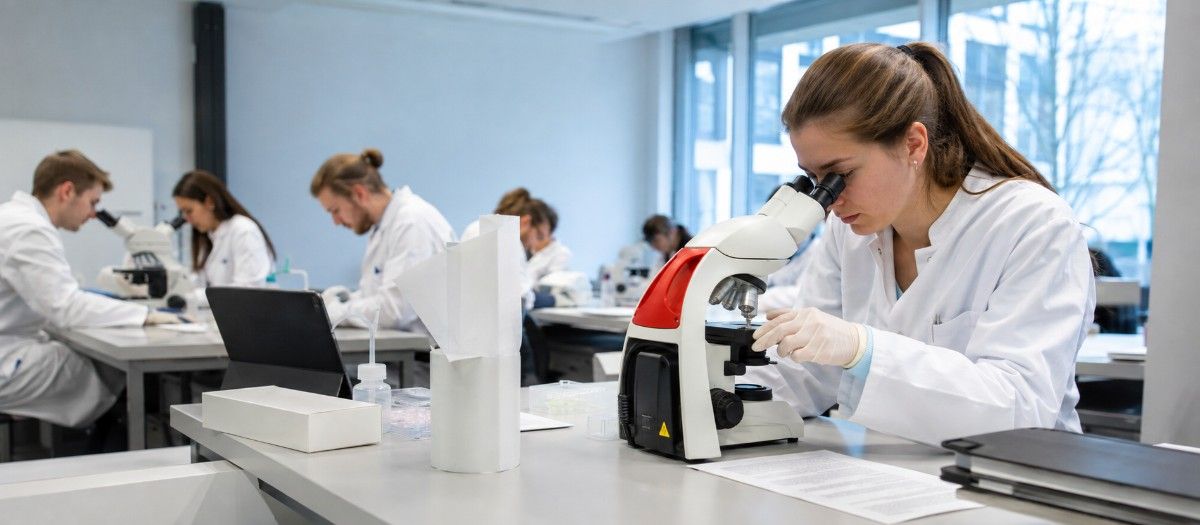
Students get hands-on clinical training in government and private hospitals affiliated with the university.
Practical information for students planning to study at MBBS in Greifswald University Medicine.
Prepare for all seasons. Thermal wear for winters, light clothing for summers. University provides heating in hostels.
Student visa processed with university invitation letter. Direct and connecting flights from major Indian cities.
Health insurance included in fees. Medical facility on campus plus city hospitals easily accessible.
Local SIM cards available. WhatsApp and video calls keep you connected with family back home.
Average monthly expenses of $150–$250 covering food, transport, and personal needs.
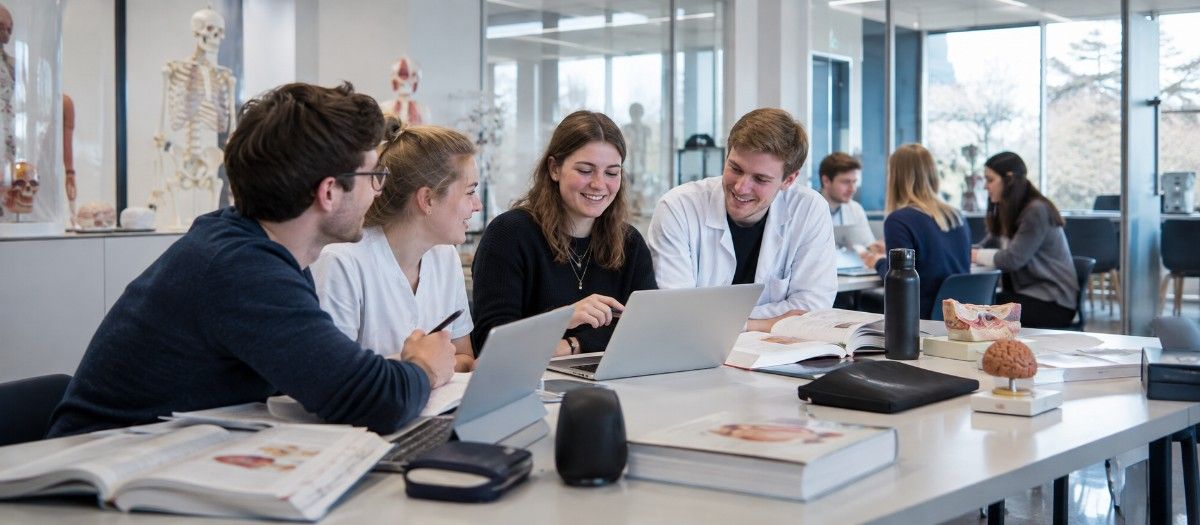
University library, online databases, and study groups. Seniors mentor juniors through academic challenges.
Our team guides you through every step — from application to arriving on campus.
Begin German lessons as early as possible, ideally alongside Class 11–12, targeting B1 within 12 months and progressing toward the required B2–C1 level.
Submit Class 10, 12, and any higher-education transcripts for verification. Processing typically takes 3–5 weeks; apply early, since this gates every subsequent step.
portal and apply to the correct track, the M-Kurs for medical aspirants, at your shortlisted Studienkolleg institutions.
Complete the roughly 10–12 month M-Kurs program covering Biology, Chemistry, Physics, and German, then pass the Feststellungsprüfung (FSP), the qualifying exam for university entry.
Submit applications to your shortlisted universities. Uni-assist fees run €75 for the first program and €30 for each additional program in the same semester.
University decisions follow Uni-assist’s document evaluation and forwarding; final admission is always the university’s own decision.
Deposit €11,904 into a blocked account (via Fintiba, Expatrio, or a similar provider) and arrange either public (€140–€160/month) or private health insurance; both are mandatory prerequisites for the visa stage.
Submit your visa application at the German consulate in India (Delhi, Mumbai, Bengaluru, or Chennai), with your admission letter, APS certificate, language proficiency proof, blocked account confirmation, and insurance proof. Realistic processing time is 6–12 weeks.
Bring originals of every document submitted digitally. Be prepared to discuss your study plans, financial arrangements, and reasons for choosing Germany.
Book travel around your intake date (October for Winter, April for Summer), and complete formal university enrollment on arrival. Medical study then begins with the Pre-Clinical phase.
Admission Helpline — Contact our counsellors for step-by-step assistance.
“The faculty here is incredibly supportive. The clinical training during hospital rotations has given me real confidence in patient care.”
“Affordable fees without compromising on quality. The campus facilities and hostel life made my transition abroad very smooth.”
“English medium instruction and WHO-recognized curriculum were the deciding factors for me. No regrets so far — excellent experience overall.”
“The university helped with everything from visa to accommodation. Hospital exposure from year three has been invaluable for my FMGE prep.”
“Just cleared my licensing exam on the first attempt. The structured coaching and mock exams during final year were a game-changer.”
“Safe campus, good food options, and a strong Indian student community. The teaching methodology is very practical and hands-on.”
It was formally opened on 17 October 1456 as the Academia Gryphica, with medicine among its four founding faculties.
Pomerania's territorial control shifted over time: the region belonged to Sweden from 1648 to 1815, then to Prussia from 1815 to 1947, making Greifswald the oldest university in each state during those periods.
No, the entire Regelstudiengang runs in German, so applicants need strong German language skills before enrolling.
Places are allocated nationally through Hochschulstart.de (Stiftung für Hochschulzulassung), rather than through the university directly.
There's no tuition fee at all, even for non-EU students. The only cost is a semester contribution of roughly EUR 150 to 250.
Training runs through Universitätsmedizin Greifswald, a Maximalversorger with 21 clinics and polyclinics on the Campus Beitz-Platz.
The standard study period runs about 6 years and 3 months, covering Vorklinik, Klinik, and the Praktisches Jahr.
Yes, it was called Ernst-Moritz-Arndt-Universität Greifswald from 1933 to 1945 and again from 1954 to 2018, before reverting to Universität Greifswald.
All 21 clinics, 19 institutes, and further facilities are concentrated together on one site, Campus Beitz-Platz, rather than spread across the city.
No, clinical placements sit inside the six-year programme itself, including the Praktisches Jahr, with no separate internship year afterward.


Our expert counsellors will guide you through the complete admission process — from documents to airport pickup.