
Q1. When was the University of Mainz founded?
+The original university was founded in 1477, with medicine among its founding faculties; it was closed during the French Revolutionary era and reopened only in 1946.
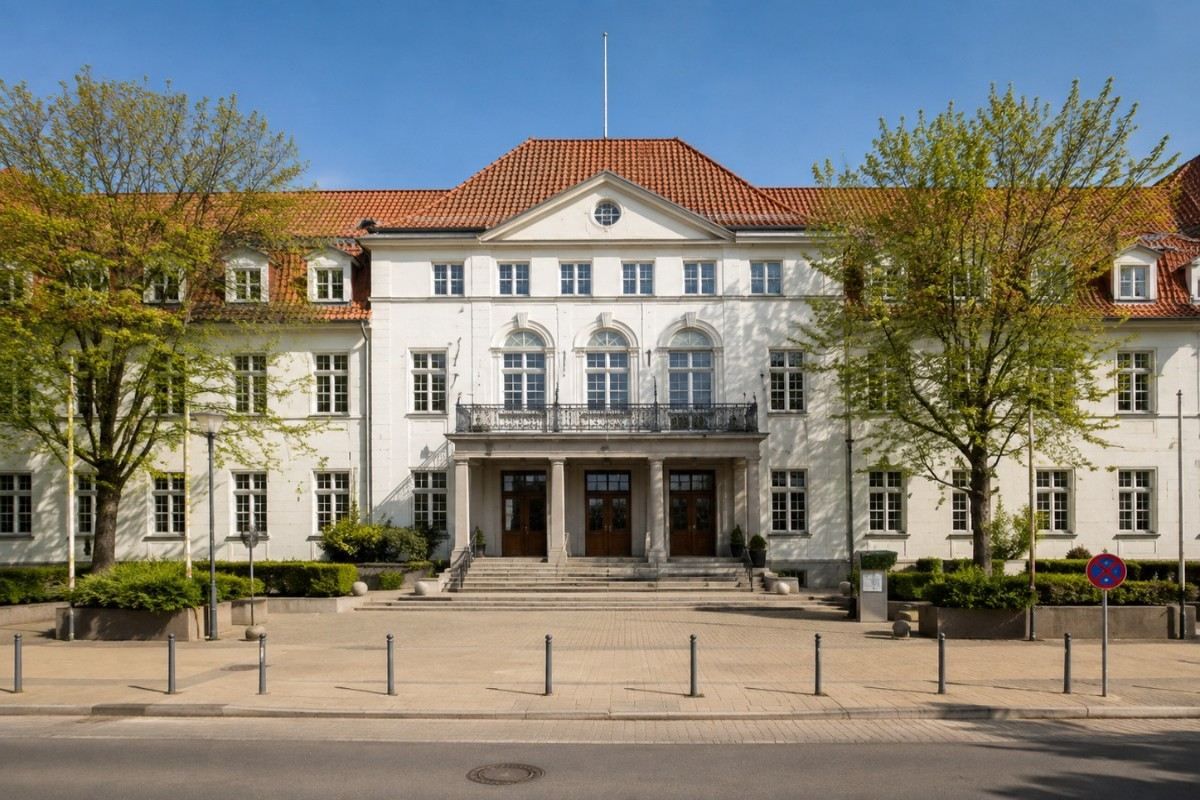
 Germany | Est. 1477
Germany | Recognised by the state of Rhineland-Palatinate; the Humanmedizin degree follows Germany's nationally standardised medical licensing framework. | German runs through the entire Regelstudiengang. No English-medium track exists for this programme. medium
Expert will call you within 2 hours
People mostly just call it Unimedizin Mainz for short. Its history splits genuinely cleanly into two distinct eras. The original University of Mainz was founded in 1477, with medicine counted among its founding faculties from that very first year. So, this institution's connection to medical education stretches back well over five centuries, even though the university most people know today only reopened comparatively recently.
The eighteenth century brought real, documented investment in the medical faculty's clinical side. In 1781, the Mainz prince-elector and archbishop, Friedrich Karl Joseph von Erthal, established a university fund specifically to provide the resources needed to upgrade the medical faculty with its own teaching hospital. Work began in 1784 to convert the secularised Reichsklara convent for this purpose, before planners switched in 1788 to the buildings of another dissolved convent, Altmünster, where the first ten hospital rooms were completed in 1790. Whether these rooms were ever actually used for their intended purpose is genuinely uncertain, since the prince-elector handed the Altmünster convent over to Benedictine monks as early as 1793, as compensation for their own convent, destroyed during the city's siege.
Here's a fact most guides skip entirely. The old University of Mainz was closed during the era of the French Revolution, and it stayed shut for 150 years. It wasn't until 1946, on the initiative of the French occupying military authority following the Second World War, that the university, and with it the medical faculty, was formally re-founded. The city of Mainz made its own hospital available for teaching and research use, and the university clinic opened in those municipal facilities on 15 November 1946, with the medical faculty beginning its own lecture programme just three days later. A formal lease agreement between the city and the university followed in June 1950, and the early 1950s brought a genuine early crisis, with falling student numbers and a medical faculty that had to contend with a municipal hospital never originally built for university-level teaching.
The Johannes Gutenberg-Universität Mainz today describes itself as an "open university," a civic university genuinely integrated into the surrounding society, with a stated commitment to lifelong learning and rapid, wide-reaching knowledge and technology transfer. As the only full university, Volluniversität, in the entire state of Rhineland-Palatinate, it brings together nearly every academic discipline, including Universitätsmedizin Mainz and two separate arts colleges, under one institutional roof, a combination described as genuinely unique within the German university landscape.
The clinical and clinical-theoretical facilities of Universitätsmedizin Mainz sit only around a kilometre from the university's main campus, keeping the medical training environment closely tied to the wider university rather than operating as a distant, separate site.
Universitätsmedizin Mainz is the only medical facility in Rhineland-Palatinate holding Supramaximalversorger status, Germany's very highest tier of hospital care provision, above even the standard Maximalversorger designation used at many other university hospitals. It comprises more than 60 clinics, institutes, and departments, together with two central medical-supply facilities, its own pharmacy and a transfusion centre, and treats roughly 403,000 patients a year across inpatient and outpatient care. With around 9,000 staff, it stands as one of the region's largest employers. Some of the hospital's own historic pavilion-style buildings, originally built between 1911 and 1914 as a 750-bed municipal hospital, have held protected heritage status since 1983 and remain visible today around the medical centre's entrance area and its landscaped central garden.
Medicine at Mainz runs as a Regelstudiengang, Germany's standard medical curriculum, with a Regelstudienzeit of 13 semesters, roughly six and a half years. Distinctively, the programme accepts new students at the start of both the winter and the summer semester each year, rather than only once annually, a scheduling flexibility not offered at every German medical faculty. Teaching combines digital lectures, simulation-based training, and interactive formats, and a voluntary preparatory course, "NaWi-gation ins Medizinstudium," is offered before the degree formally begins, to ease the transition into the natural-science foundations of the programme.
Since 1 January 2009, under Rhineland-Palatinate's own Universitätsmedizingesetz, the university hospital and the medical department of the Johannes Gutenberg-Universität were merged into the single legal entity known today as Universitätsmedizin der Johannes Gutenberg-Universität Mainz, replacing the earlier name, Klinikum der Johannes Gutenberg-Universität Mainz. So, while medical training itself is centuries old, the exact organisational structure that runs it today is a comparatively recent, specifically legislated arrangement.
Fee figures here follow the standard pattern found across most German public universities. Rhineland-Palatinate charges no general tuition fees, and no separate fee applies to non-EU students in this state either. The only regular charge is the standard semester contribution, generally running to somewhere between EUR 300 and 350, covering Studierendenwerk services, student union dues, and a semester transport ticket.
Parameter | Details |
Established | University founded 1477, medicine among the founding faculties; closed under Napoleon around 1798; university and medical faculty reopened 1946 by French occupation authorities |
Institution Type | Public, state-run university |
Location | Mainz, Rhineland-Palatinate, Germany |
Human Medicine (Regelstudiengang), leading to a Staatsexamen | |
Duration | 13 semesters (approx. 6 years, 6 months), starting in either winter or summer semester |
Medium of Instruction | German |
Foreign Quota Note | No SAARC-style quota; no non-EU tuition fee in Rhineland-Palatinate |
Teaching Hospital | Universitätsmedizin Mainz, the only Supramaximalversorger (highest care tier) medical facility in Rhineland-Palatinate |
Fee Component | Amount | Notes |
Tuition Fee | None | Rhineland-Palatinate charges no general tuition fees |
Non-EU Student Fee | None | No separate fee applies to non-EU students in this state |
Semester Contribution | Approx. EUR 300 to 350 per semester | Covers Studierendenwerk services, student union dues, and a semester transport ticket |
Living Costs | Not separately confirmed by the university | Mainz runs moderately priced compared to Germany's largest cities |
Approx. Total Programme Cost | Roughly EUR 3,900 to 4,550 over 6.5 years (semester fees only) | Estimate only; confirm the current rate directly with the university |
Most rival pages describe a founding date and treat everything since as one unbroken story. Mainz's own history is genuinely different: founded in 1477, closed during the French Revolutionary era, and not reopened until 1946, on the specific initiative of France's own post-war occupying authority. So, this institution's modern identity is tied to a real, documented, 150-year interruption, not a smooth continuous timeline.
Most guides describe a teaching hospital's scale in vague terms. Universitätsmedizin Mainz holds Supramaximalversorger status, Germany's very highest hospital care tier, and it's the only facility in the whole of Rhineland-Palatinate to hold it. So, students here train at a genuinely singular institution within their own state, not one of several comparable options.
Be upfront about a few real limits here. The whole programme runs in German, so applicants without strong German language skills will struggle from the outset. Admission is genuinely competitive, running through Germany's national restricted-admission system for medicine. The early 1950s crisis in student numbers, tied to the original municipal hospital's limited infrastructure, is a reminder that this institution's post-war rebuilding wasn't instantaneous or without real growing pains.
So, who fits here best? Students comfortable studying entirely in German, and drawn to the only full university in Rhineland-Palatinate, with its singular Supramaximalversorger teaching hospital, fit well here. Students who value the flexibility of starting in either the winter or summer semester fit well too. However, anyone hoping for an English-taught path should look elsewhere, since none exists here. Still, the zero-tuition structure and the university's genuinely unique civic and disciplinary integration are real, well-documented strengths.
No hidden charges, no donation. The full picture of costs at MBBS in University Medical Center of the Johannes Gutenberg Mainz.
Tuition Fee
USD $12,830 – $16,836
USD $366.90 per semester
Hostel Fee
USD $5,340 – $7,320 per Year
USD $5,340 – $7,320 per year
Food & Meals
USD $2,640 – $3,360
per year
Insurance
USD $2,160 – $2,640
per year
Donation
no donation
no hidden fee
Total Estimated Cost
USD $76,980 – $101,016
6.5 year
25–35%
Average FMGE first-attempt pass rates for students from many overseas medical universities. Students from structured programs consistently score higher.
Students returning to India need to clear the FMGE/NExT exam. MBBS in University Medical Center of the Johannes Gutenberg Mainz integrates exam-oriented coaching into the regular curriculum so students are prepared from day one.
A structured program that takes you from foundational sciences to clinical mastery.
Supported by the optional preparatory course for students easing into the natural-science foundations.
Covers Anatomy, Physiology, and Biochemistry, forming the scientific foundation of the degree.
Uses digital lectures and simulation-based training alongside traditional teaching.
Introduces core clinical subjects including Pathology, Microbiology, and Pharmacology.
Runs through more than 60 clinics, institutes, and departments at Universitätsmedizin Mainz.
Covers Internal Medicine, Surgery, and allied clinical subjects, with research strengths in immunology, cardiovascular research, and neuroscience.
Bridges classroom learning and independent clinical practice ahead of the final state examination.
A dedicated final period spent largely in hospital settings, applying clinical skills under supervision.
Graduates need the Approbation, Germany's medical licence, before they can practise independently.
The programme concludes with the Staatsexamen, Germany's state medical examination.
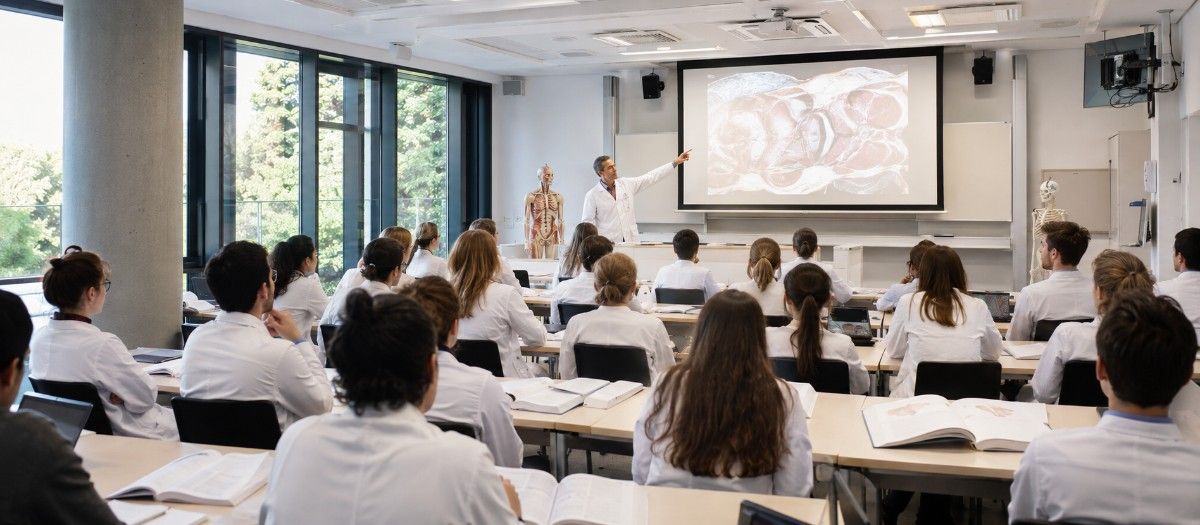

Furnished hostel rooms with Wi-Fi, laundry, 24/7 security, and Indian mess on or near campus.
Indian restaurants and mess facilities serving vegetarian and non-vegetarian home-style food daily.
Strong Indian community with cultural events, festival celebrations, and peer support groups.
Students get hands-on clinical training in government and private hospitals affiliated with the university.
Practical information for students planning to study at MBBS in University Medical Center of the Johannes Gutenberg Mainz.
Prepare for all seasons. Thermal wear for winters, light clothing for summers. University provides heating in hostels.
Student visa processed with university invitation letter. Direct and connecting flights from major Indian cities.
Health insurance included in fees. Medical facility on campus plus city hospitals easily accessible.
Local SIM cards available. WhatsApp and video calls keep you connected with family back home.
Average monthly expenses of $150–$250 covering food, transport, and personal needs.
University library, online databases, and study groups. Seniors mentor juniors through academic challenges.
Our team guides you through every step — from application to arriving on campus.
Begin German lessons as early as possible, ideally alongside Class 11–12, targeting B1 within 12 months and progressing toward the required B2–C1 level.
Submit Class 10, 12, and any higher-education transcripts for verification. Processing typically takes 3–5 weeks; apply early, since this gates every subsequent step.
portal and apply to the correct track, the M-Kurs for medical aspirants, at your shortlisted Studienkolleg institutions.
Complete the roughly 10–12 month M-Kurs program covering Biology, Chemistry, Physics, and German, then pass the Feststellungsprüfung (FSP), the qualifying exam for university entry.
Submit applications to your shortlisted universities. Uni-assist fees run €75 for the first program and €30 for each additional program in the same semester.
University decisions follow Uni-assist’s document evaluation and forwarding; final admission is always the university’s own decision.
Deposit €11,904 into a blocked account (via Fintiba, Expatrio, or a similar provider) and arrange either public (€140–€160/month) or private health insurance; both are mandatory prerequisites for the visa stage.
Submit your visa application at the German consulate in India (Delhi, Mumbai, Bengaluru, or Chennai), with your admission letter, APS certificate, language proficiency proof, blocked account confirmation, and insurance proof. Realistic processing time is 6–12 weeks.
Bring originals of every document submitted digitally. Be prepared to discuss your study plans, financial arrangements, and reasons for choosing Germany.
Book travel around your intake date (October for Winter, April for Summer), and complete formal university enrollment on arrival. Medical study then begins with the Pre-Clinical phase.
Admission Helpline — Contact our counsellors for step-by-step assistance.
“The faculty here is incredibly supportive. The clinical training during hospital rotations has given me real confidence in patient care.”
“Affordable fees without compromising on quality. The campus facilities and hostel life made my transition abroad very smooth.”
“English medium instruction and WHO-recognized curriculum were the deciding factors for me. No regrets so far — excellent experience overall.”
“The university helped with everything from visa to accommodation. Hospital exposure from year three has been invaluable for my FMGE prep.”
“Just cleared my licensing exam on the first attempt. The structured coaching and mock exams during final year were a game-changer.”
“Safe campus, good food options, and a strong Indian student community. The teaching methodology is very practical and hands-on.”
The original university was founded in 1477, with medicine among its founding faculties; it was closed during the French Revolutionary era and reopened only in 1946.
It closed around 1798 and stayed shut for roughly 150 years, reopening in 1946 on the initiative of France's post-war military occupation authority.
No, the entire Regelstudiengang runs in German, so applicants need strong German language skills before enrolling.
Places are allocated nationally through Hochschulstart.de (Stiftung für Hochschulzulassung), rather than through the university directly.
There's no tuition fee at all, even for non-EU students. The only cost is a semester contribution of roughly EUR 300 to 350.
Training runs through Universitätsmedizin Mainz, the only Supramaximalversorger medical facility in Rhineland-Palatinate.
The standard study period runs 13 semesters, roughly six and a half years, with intake possible in either winter or summer semester.
It's Germany's very highest tier of hospital care provision, above the standard Maximalversorger designation used at many other university hospitals.
It's the only full university, Volluniversität, in Rhineland-Palatinate, combining nearly all academic disciplines, including two arts colleges, under one roof.
No, clinical placements sit inside the 13-semester programme itself, including the Praktisches Jahr, with no separate internship year afterward.


Our expert counsellors will guide you through the complete admission process — from documents to airport pickup.