Most MBBS guides for Nepal focus on Kathmandu. That choice is understandable but lazy, because it skips over Janakpur entirely a city that offers something no Kathmandu college can match. Janakpur is the capital of the Madhesh Province, the ancient seat of the Mithila Kingdom, and the city where the Janaki Temple draws hundreds of thousands of Hindu pilgrims every year. For Indian students from Bihar, UP, Jharkhand, and the eastern states, arriving in Janakpur is not a cultural adjustment. It is a return to something familiar. Maithili, Hindi, and Bhojpuri are spoken in the streets. The food is recognisable. The calendar of festivals matches. The Sitamarhi-Darbhanga border is just 23 km away.
Janaki Medical College and Teaching Hospital JMC was founded in December 1999 by the Ram Janaki Health Foundation and began admitting MBBS students in 2003. Since then, it has grown from an 80-seat intake to a 100-seat programme, with two owned hospitals, a postgraduate programme in Surgery and Emergency Medicine launched in 2020, and an MD/MS in Orthopaedics added. The college is affiliated with Tribhuvan University's Institute of Medicine, which means the curriculum, examination structure, and academic standards are the same as those used at IOM Maharajgunj — Nepal's flagship public medical institution. That affiliation matters more than most guides acknowledge because it directly determines the degree's quality and international recognition.
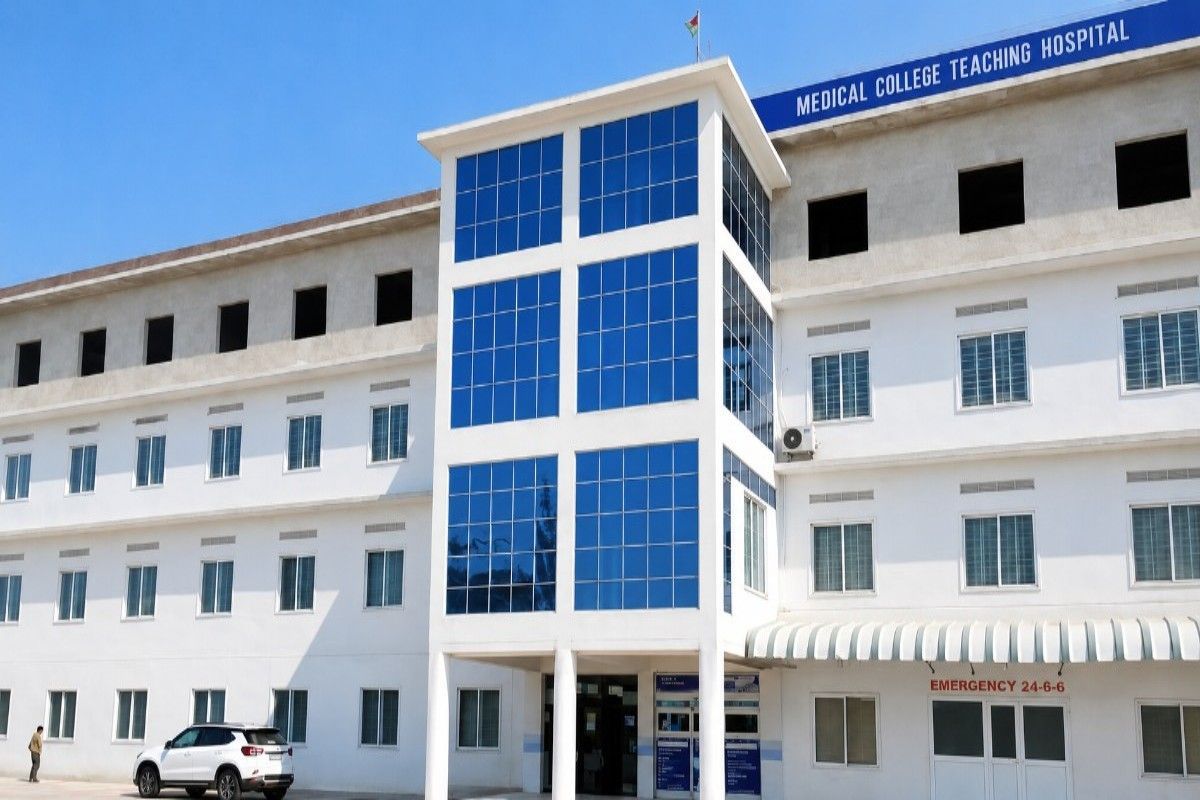
The clinical side of JMC is built around two hospitals that JMC owns and runs directly. The first is a 160-bed facility at the Ramdaiya Bhawadi campus, where academic activities and initial clinical exposure are housed together. The second is a larger 350+-bed multi-speciality hospital in Bramhapuri, in the city centre of Janakpur. Combined, the two hospitals provide over 500 teaching beds. Because Janakpur is the capital of Madhesh Province and the largest urban centre for a wide surrounding region, the patient inflow at JMCTH Teaching Hospital reflects the actual disease burden of the eastern Terai high-volume general medicine, obstetric emergencies, trauma, and infectious disease presentations that rarely appear in Kathmandu urban hospitals at the same frequency. The COVID-19 multicentric study, which included JMCTH among Nepal's designated hospitals, confirms that it is a real tertiary-level facility rather than a college annex.
For Indian students, the location advantage cuts both ways. On the one hand, Janakpur's proximity to Bihar and UP means social integration is almost effortless. On the other hand, it also means the clinical case mix reflects the health conditions of the Indo-Gangetic Plain, the same diseases, the same presentations, and the same patient demographics that will appear in FMGE and NExT examinations. Students who do their clinical years in Janakpur are, in effect, training on the population they will serve as doctors in India. That alignment is rarely mentioned but genuinely matters for examination performance and professional readiness.
Nepal's Medical Education Commission regulates the cost structure at JMC. For international students, the total course fee is USD 60,000 for the full 5.5-year programme, approximately INR 50 lakh in tuition alone. Adding hostel, food, insurance, and personal expenses, the total all-inclusive cost over 5.5 years typically ranges from INR 55 to 65 lakh. That is notably lower than most private colleges in Kathmandu, which charge comparable or higher fees while offering less cultural alignment for students from eastern Indian states. There is no donation or capitation charge because the MEC fee regulation applies to all medical colleges in Nepal.
The one area where JMC differs meaningfully from Kathmandu colleges is urban infrastructure. Janakpur is a smaller city, and it shows in things like internet reliability, electricity supply, and the range of restaurants and shopping options. However, the city has improved rapidly over the last five years, the campus has backup power, and for students who are genuinely focused on their medical education rather than the amenities of a major capital, the tradeoff is straightforward. Quieter city, same curriculum, same TU degree, lower cost, and a far easier social environment for students from eastern India.