The University and What Makes It Different
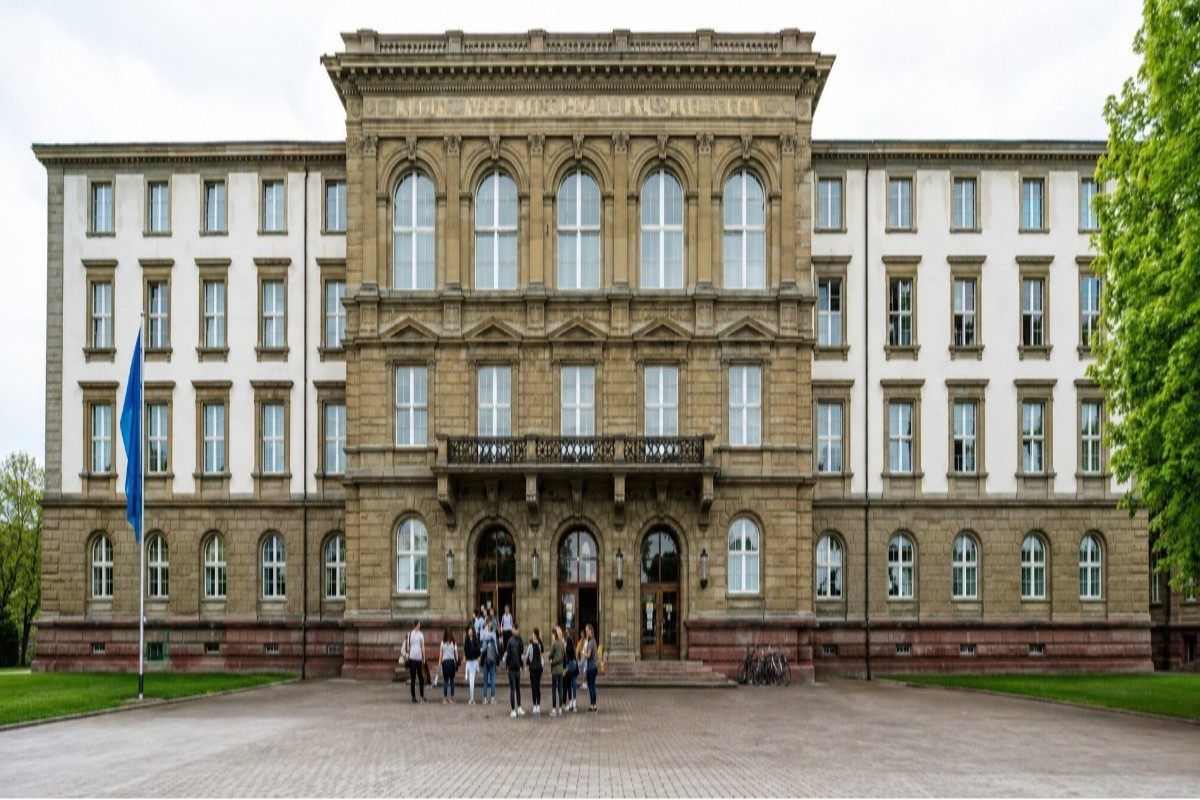
People just call it JLU, or Uni Gießen for short. It goes back to 1607. For nearly 340 years, it actually carried a different name, Ludwigs-Universität, after the Hessian landgrave who founded it. So the "Justus-Liebig" name you see today is newer than the university itself.
Here is a fact most guides skip entirely. After the Second World War, the university almost did not survive as a full institution. For a decade, it carried on only as a college of agriculture and veterinary medicine. Full university status returned only in 1957. At that point, it took the name of Justus von Liebig, the famous chemist who had taught there from 1824 to 1852. So the current name honours a legacy professor, not the founder.
This is a public university, run by the state of Hesse. It is the second-largest university in Hesse, behind Frankfurt's Goethe University, and the second-oldest full university in the state, right after Philipps-Universität Marburg. Around 26,000 to 28,000 students study here across the whole institution.
Medical training runs through Universitätsklinikum Gießen und Marburg, usually shortened to UKGM. This teaching hospital is genuinely unusual in one way. It merged the Gießen and Marburg university clinics into one structure back in 2005, and it later became Germany's first fully privatised university hospital, now run under Rhön-Klinikum AG. So this is not a purely state-run hospital anymore, though it still functions as the faculty's core teaching site.
Research output backs this up too. In the German Research Foundation's national funding atlas, the combined Gießen and Marburg medical research profile placed seventh nationwide. So genuine, measurable research strength sits behind the teaching here, not just marketing language.
The Gießen Campus and Its Setting
Gießen itself is a compact city in Hesse, central Germany, home to around 90,000 people. Locals often call it a real student city, since students make up a large share of the population. Frankfurt sits under an hour away by train, so bigger-city access stays fairly easy.
The medical faculty carries the internal name Fachbereich 11. Its buildings sit within the university's Natural and Life Sciences campus cluster, alongside science and veterinary medicine departments on the Seltersberg site. A dedicated Medical Teaching Centre, the Medizinisches Lehrzentrum, handles much of the practical and simulation-based training.
A partner clinic worth knowing about is the Kerckhoff-Klinik, a high-performance cardiology and rheumatology centre linked into the faculty's teaching and research networks. So students get exposure to specialised centres beyond the main university hospital site as well.
The university's own crest still carries an Antoniuskreuz, a cross linked to the historic Antoniterkloster in nearby Grünberg. So even the logo ties back centuries, into the region's medical and monastic history.
Course Structure, Cost, and Practical Details
Here is where this page needs to be direct with you. Medicine at Gießen is not an MBBS degree. It is Humanmedizin, and it finishes with a Staatsexamen, a State Examination, under German medical law. The Approbationsordnung für Ärzte, the federal doctor-licensing regulation, governs how the whole course runs.
the standard course length is 13 semesters, or about six years and three months. It splits into a preclinical stage, a clinical stage, and a final practical year. Teaching runs almost entirely in German, so a certified, strong level of German is expected before you can start.
Admission does not run through the university directly either. Places are limited nationwide across Germany, and the Stiftung für Hochschulzulassung, Germany's central admissions body, allocates them. Grades, aptitude test scores from the TMS, and each university's own selection weighting all factor into the final result. So getting a seat depends on a nationwide process, not a single college's own admissions office.
On cost, there is real good news. Hesse charges no tuition fees at its public universities, medicine included. A semester contribution still applies, though. Reports place this at roughly EUR 270 to 350 per semester, and it usually bundles in a public transport ticket and student services fee, not the degree itself.
One more point genuinely worth knowing. The medical faculty has a long-standing reputation for sending a high share of its students abroad, whether for an exchange semester or part of the practical year. JLU holds partnerships with more than 70 universities worldwide, plus over 210 Erasmus partner institutions across Europe. So an international outlook is baked into the course, even though the core teaching itself stays in German.
Quick Overview
Parameter | Details |
Founded | 1607, as Ludwigs-Universität; regained full university status in 1957 under its current name |
Institution Type | Public state university, run by the state of Hesse |
Location | Gießen, Hesse, Germany (under an hour from Frankfurt by train) |
Programme | Humanmedizin (Medicine), leading to the German Staatsexamen |
Duration | 13 semesters (about 6 years, 3 months), including the practical year |
Medium of Instruction | German; a certified strong level of German is required |
Admission Route | Centrally managed nationwide through Stiftung für Hochschulzulassung; not a direct university application |
Teaching Hospital | Universitätsklinikum Gießen und Marburg (UKGM), Gießen site |
Fee Structure
Fee Component | Amount | Notes |
Tuition Fee | None | Hesse charges no tuition fees at public universities |
Semester Contribution | Approx. EUR 270 to 350 per semester | Covers student services and a public transport ticket |
Living Costs (rent) | Approx. EUR 300 to 450 per month | Gießen runs cheaper than most large German cities |
Food and Other Costs | Approx. EUR 350 to 450 per month | Groceries, personal expenses, and leisure |
Health Insurance | Around EUR 100 to 120 per month | Mandatory for all students in Germany |
Donation | No Donation | No capitation fees exist under German public law |
Why Justus-Liebig-Universität Gießen Deserves a Harder Look Than You've Given It
A Genuinely Unusual Teaching Hospital Structure
Most rival pages never explain this properly. UKGM merged two university hospitals, Gießen and Marburg, into one system, and later became Germany's first fully privatised university clinic. That structure is rare, and it shapes how students rotate across two academic cities during clinical training.
A Faculty With Real International Habits Many guides claim "international exposure" in vague terms. Gießen's medical faculty has a genuine, tracked record here, having long led other departments in the share of students who study or train abroad during the course. So global exposure is a real, measured feature, not just brochure language.
Honest Assessment be clear about a few real points here. This is not a typical fee-paying, English-medium route into a medical degree. German fluency is required, certified, before you even begin. Seats depend on a competitive, nationwide German process, not on a direct application to this college. So, who fits here best? Students who already have strong German, or are committed to reaching that level, fit well. Students seeking a fast, English-only entry into medicine should look elsewhere. Still, for those ready to meet its language and academic bar, Gießen's low-cost structure and its unusual, research-strong hospital system are genuinely worth a closer look.