1. Is IKSU a public or private university?
+It is a public university, accredited by Kyrgyzstan's Ministry of Education and Science, with roots going back to 1940.
 Kyrgyzstan | Est. 1940
Kyrgyzstan | Licensed and accredited by Kyrgyzstan's Ministry of Education and Science | English (for international medical students), with Kyrgyz and Russian used in local academic and clinical settings medium
Expert will call you within 2 hours
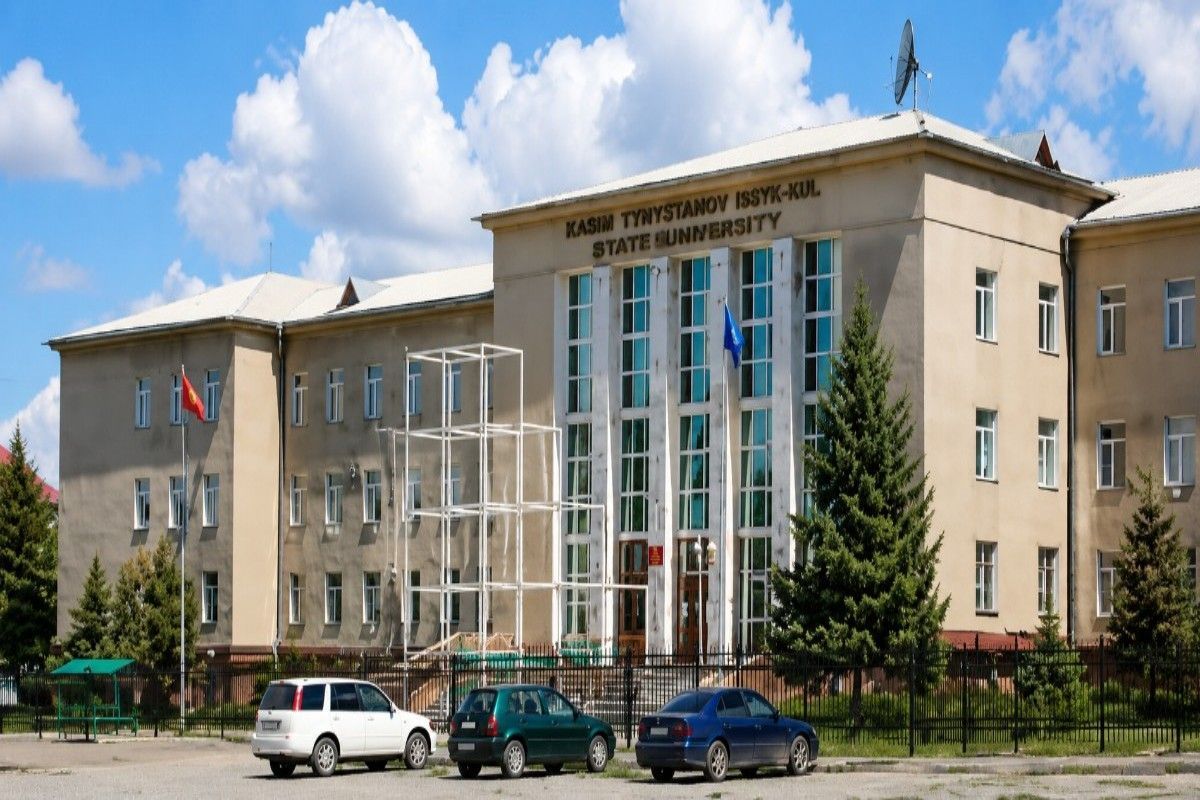
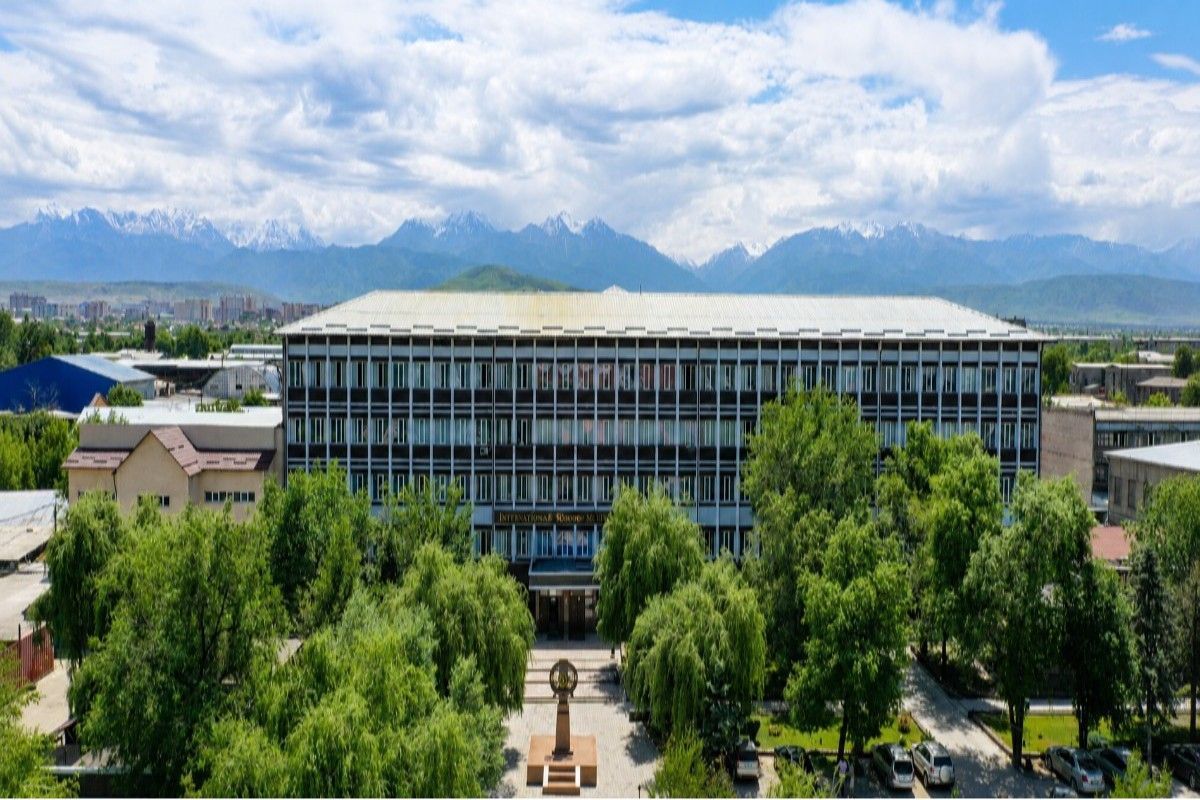
Karakol is in the very eastern part of Kyrgyzstan. It is right next to Issyk-Kul, which is one of the biggest mountain lakes in the world. It's a pretty city that's away from the noise of Bishkek. The medicine school for Kasym Tynystanov Issyk-Kul State University is right here. A lot of people just say "IKSU" for short.
College has been around for a long time. It began as a Teachers' Institute in 1940. This took place in a city called Przhevalsk at the time. The old Kyrgyz name for that city is still used today: Karakol. The school changed its name to the Przhevalsk Pedagogical Institute in 1953. In 1988, it became a part of Kyrgyz State University. It broke off in 1992. It turned into its own separate school. It got its present name that same year. Kasym Tynystanov is honored by the school. He learned Kyrgyz, wrote poetry, and worked to improve education. He had a hand in making the current Kyrgyz alphabet and writing style. In its place, IKSU is a public school. The Ministry of Education and Science in Kyrgyzstan checks it out and backs it up.
There is more to IKSU than just a medical school, that is true. There is a wide variety of classes available to choose from. It contains a great deal of items. This encompasses a wide range of disciplines, including applied physics, tourism, mathematics, and computer science, among plenty of others. The path of medicine is included in this more comprehensive picture. Not only can the medical students use a tiny portion of the college grounds, but they can use the entire campus. Abdrahmanova Street, number 103, is the location of the primary structure in Karakol. A portion of the school is also located in Cholpon-Ata, which is not too far distant from the main campus. The northern bank of the lake is home to this town, which serves as a popular vacation destination.
The majority of the time, the medical curriculum at IKSU is comparable to that of Kyrgyzstan's other teaching institutions of medicine. The duration of it is six years. Students receive instruction in fundamental scientific concepts during their first few years of schooling. Biology, biochemistry, anatomy, and histology are the subjects that students study in their college education. Over the course of time, the emphasis will shift to clinical and applied subjects. The fields of pathology, medicines, bacteria, and general medicine are as examples of some of them. In the final section of the study, the majority of the clinical work is conducted in hospitals. They get knowledge by working in actual hospitals. They gain knowledge through case discussions and by doing things on their own. You are required to complete a work year at the conclusion of the course.
For the international track, the lessons are taught in English. Still, some sources say that batches sometimes mix Russian and English. Students who are thinking about going to this school should check directly with IKSU to see how languages are taught now before they apply. Every year and every teacher, this information can change.
Cost is one of the clearer reasons students pick IKSU over Kyrgyzstan's bigger, capital-city schools. The cost of tuition is between USD 2,800 and USD 3,400 per year. This comes from outside sources that help people get in. It's near the bottom of the usual fee range in Kyrgyzstan. Based on the school picked, that range goes from about USD 2,800 to USD 6,500 a year. In general, it costs less to live in Karakol than in Bishkek. Since it's not the national center and is a smaller, quieter city in the middle of nowhere, this makes sense.
It gets much colder here in the winter than in Bishkek. Mountain ranges are close to Karakol. Every year, snow falls and it gets really cold in the winter. When students choose IKSU, they should be okay with colder weather. They should also be okay with life moving more slowly in that area. This is different from how a campus in a major city feels, which is busier and more connected.
Indian applicants are accepted in the same way that Kyrgyzstan normally accepts national applicants. It is required that students have completed upper secondary school. Bio, chemistry, and physics must be core topics. Most schools want you to get at least 50% in all three of these subjects. Also, you must have a valid NEET score. This is what India's National Medical Commission says about going to school outside of India to learn medicine. There is no different test to get into IKSU, and the school does not ask for donations. This fits with what most Kyrgyz medical schools have seen in general.
Details about clinical training should be checked out directly before you sign up. The IKSU is not a medical school; it is a larger regional university. So, students should find out exactly where training at the bedside and hospital rotations happen. They should also find out how deep the medical school's staff and tools really go. This is more important here than at Kyrgyzstan's older, more specialized medical schools. Those schools have had decades to make their clinical facilities better.
Life in Karakol is very different from life in Kyrgyzstan's busier cities. The Issyk-Kul area is one of the most beautiful places in the country. It's easy to get to the mountains, alpine hikes, and the lake itself. Many students appreciate this calmer, more nature-focused setting while they are working hard on their medical degrees. This is good for students who want a place to relax after class. This is better than the loud, busy feel of a major city.
Aside from the academics, you should think about what it's like to live at IKSU every day. Bishkek's clock is much faster than Karakol's. The stores close earlier. At night, the streets are less crowded. For some students, this calm pace is a welcome change from living in the city for years. Some people may think there isn't enough to do outside of class and study time. Since six years is a long time to spend in one type of place, you should really think about this before you decide.
The lake itself is also worth mentioning. Even in Karakol's harsh winters, Issyk-Kul never fully freezes because it is so deep and has a small amount of salt in it. It makes the area look very strange and interesting in the winter, with snow-covered mountains surrounding a blue lake that stays open. This is one of the most beautiful places in this series for students who like to hike, ski, or just walk by a lake. For the right kind of student, this is a real perk, not just a nice line in an ad.
Students who want a public university with ties to the area in Kyrgyzstan that is located in a truly beautiful lakeside city and are okay with a cooler climate and a smaller school should consider Kasym Tynystanov Issyk-Kul State University. Other than Kyrgyzstan's more crowded medical schools in the capital city, this one stands out. Before paying any fee, anyone who is still thinking about it should still check with the university directly about the current medicine-specific staff depth, the readiness of the hostels, and the exact clinical training sites. At a bigger area school like this one, these details can change from year to year.
No hidden charges, no donation. The full picture of costs at MBBS in Kasym Tynystanov Issyk-Kul State University Medical Faculty.
Tuition Fee
Approximately USD 4,500 per year
2,800–3,400 2.34–2.84 lakh
Hostel Fee
~900 ~0.75 lakh
~900 ~0.75 lakh
Food & Meals
~1,100 ~0.92 lakh
per month
Insurance
~500 ~0.42 lakh
per year
Donation
No Donation
No Hidden Fee
Total Estimated Cost
~5,300–5,900 ~4.43–4.93 lakh ~31,800–35,400~26.58–29.58 lakh
6 year
25–35%
Average FMGE first-attempt pass rates for students from many overseas medical universities. Students from structured programs consistently score higher.
Students returning to India need to clear the FMGE/NExT exam. MBBS in Kasym Tynystanov Issyk-Kul State University Medical Faculty integrates exam-oriented coaching into the regular curriculum so students are prepared from day one.
A structured program that takes you from foundational sciences to clinical mastery.
Introduces students to the structure of the human body, basic sciences, medical terminology, and scientific foundations.
Human Anatomy, Histology, Medical Biology, Medical Chemistry, Physics, Latin Language, Medical Informatics
Focuses on body functions, disease mechanisms, microorganisms, genetics, and principles of drug therapy.
Physiology, Biochemistry, Microbiology, Immunology, Genetics, Pathological Anatomy, Pharmacology
Bridges theoretical sciences with clinical medicine through diagnostic techniques and early patient exposure.
Pathophysiology, General Surgery, Internal Medicine, Radiology, Epidemiology, Laboratory Diagnostics
Students undertake hospital-based clinical rotations while learning diagnosis and treatment of common diseases.
Internal Medicine, General Surgery, Pediatrics, Obstetrics & Gynecology, ENT, Ophthalmology, Dermatology, Neurology
Develops advanced clinical decision-making, specialty training, and emergency patient management
Cardiology, Oncology, Urology, Orthopedics, Psychiatry, Infectious Diseases, Emergency Medicine, Anesthesiology
Full-time supervised clinical internship preparing graduates for independent medical practice and licensing examinations.
Internal Medicine, Surgery, Pediatrics, Obstetrics & Gynecology, Family Medicine, Community Medicine
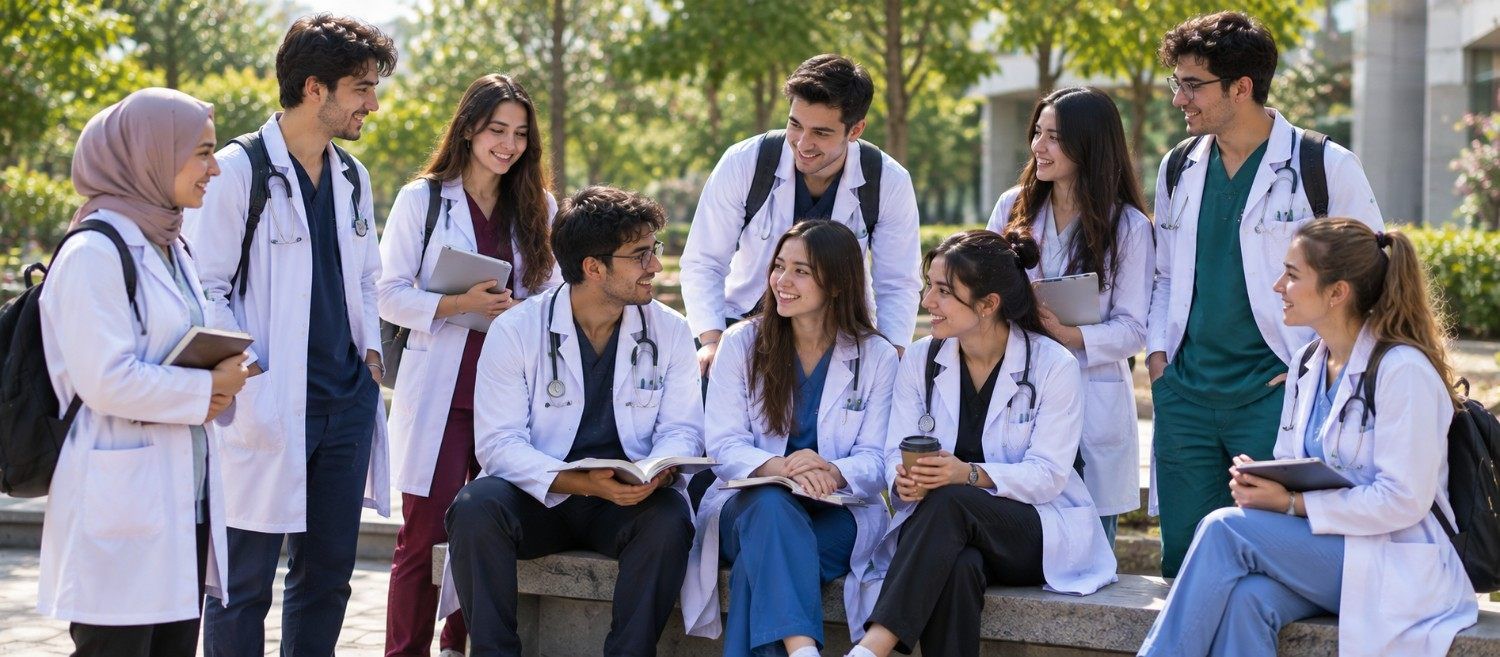
Furnished hostel rooms with Wi-Fi, laundry, 24/7 security, and Indian mess on or near campus.
Indian restaurants and mess facilities serving vegetarian and non-vegetarian home-style food daily.
Strong Indian community with cultural events, festival celebrations, and peer support groups.
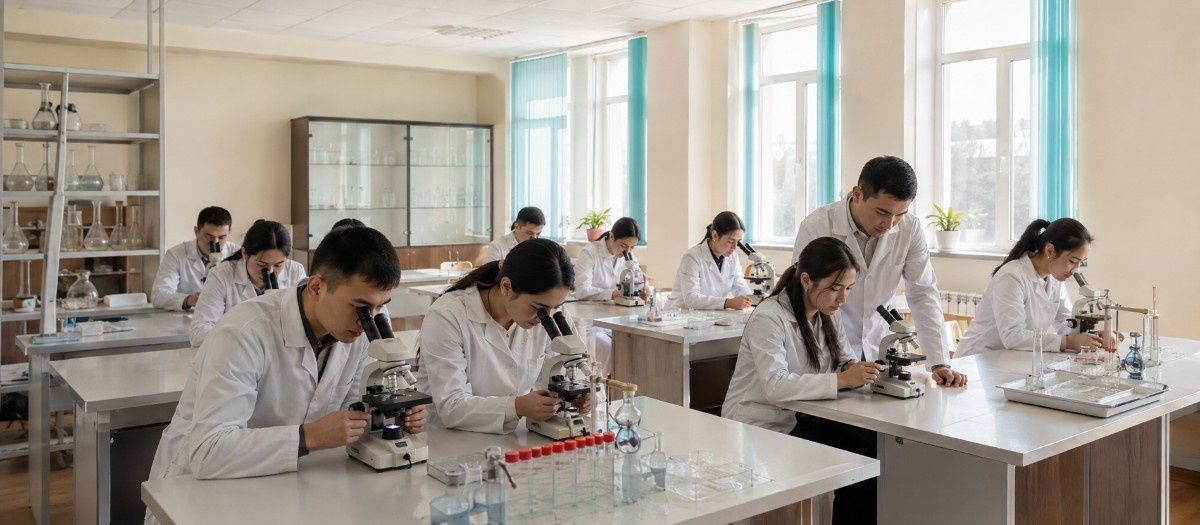
Students get hands-on clinical training in government and private hospitals affiliated with the university.
Practical information for students planning to study at MBBS in Kasym Tynystanov Issyk-Kul State University Medical Faculty.
Prepare for all seasons. Thermal wear for winters, light clothing for summers. University provides heating in hostels.
Student visa processed with university invitation letter. Direct and connecting flights from major Indian cities.
Health insurance included in fees. Medical facility on campus plus city hospitals easily accessible.
Local SIM cards available. WhatsApp and video calls keep you connected with family back home.
Average monthly expenses of $150–$250 covering food, transport, and personal needs.
University library, online databases, and study groups. Seniors mentor juniors through academic challenges.
Our team guides you through every step — from application to arriving on campus.
Shortlist a university and confirm current NMC/WHO WDOMS status directly; don't rely solely on an agent's claim.
Submit the application form with scanned academic documents and passport.
Receive a provisional admission/invitation letter, typically within 7-10 working days.
Pay the initial tuition instalment as per the university's payment schedule.
Apply for the Kyrgyz student visa at the nearest visa centre, allowing 7-15 working days for processing.
Book travel and prepare for departure.
Complete in-person registration and a medical check-up upon arrival.
Begin classes at the start of the academic year (September/October).
Admission Helpline — Contact our counsellors for step-by-step assistance.
“The faculty here is incredibly supportive. The clinical training during hospital rotations has given me real confidence in patient care.”
“Affordable fees without compromising on quality. The campus facilities and hostel life made my transition abroad very smooth.”
“English medium instruction and WHO-recognized curriculum were the deciding factors for me. No regrets so far — excellent experience overall.”
“The university helped with everything from visa to accommodation. Hospital exposure from year three has been invaluable for my FMGE prep.”
“Just cleared my licensing exam on the first attempt. The structured coaching and mock exams during final year were a game-changer.”
“Safe campus, good food options, and a strong Indian student community. The teaching methodology is very practical and hands-on.”
It is a public university, accredited by Kyrgyzstan's Ministry of Education and Science, with roots going back to 1940.
The course runs for 6 years, including a required internship year, matching the standard structure used across Kyrgyzstan's medical schools.
The international track is generally taught in English, though batches may sometimes mix English and Russian. Confirm the current setup directly with the university before applying.
Tuition runs at approximately USD 2,800 to 3,400 per year, based on third-party admissions sources. Confirm exact current fees directly with IKSU.
Yes, in line with standard National Medical Commission rules for Indian students studying medicine abroad.
Karakol is smaller, quieter, and set beside Issyk-Kul lake, offering a calmer, more scenic setting than the capital, though winters are noticeably colder.
Exact clinical training sites should be confirmed directly with the university, since IKSU runs as a broader regional school rather than a dedicated medical institute.
IKSU is a well-established regional public university, but its medical faculty has less independent international documentation than Kyrgyzstan's older, dedicated medical academies. Direct verification of accreditation and recognition is recommended.
No, despite Karakol's harsh winters, the lake stays open and unfrozen year-round, thanks to its slight salt content and depth, giving the region a distinctive snow-and-blue-water look each winter.
Clearly quieter and slower, with shops and streets closing earlier at night. This is good for students who want to study at a slower pace, although if you want a busier city social scene Karakol may be limiting over the full six-year degree.

Our expert counsellors will guide you through the complete admission process — from documents to airport pickup.