
Q1. Is KUSMS a government institution or a private one?
+KUSMS is a public non-profit institute belonging to Kathmandu University. But the tuition fee is comparatively more expensive than that of other IOMs. Thus, it lies between the two aspects.

 nepal | Est. 1994
nepal | Recognised by WHO, NMC India, Nepal Medical Council, MEC Nepal, ECFMG USA; KU, an autonomous non-profit institution; UGC Nepal approved. | 100% English; no Nepali required; IELTS/TOEFL not mandatory; dedicated PBL classrooms and audio-visual lecture halls medium
Expert will call you within 2 hours
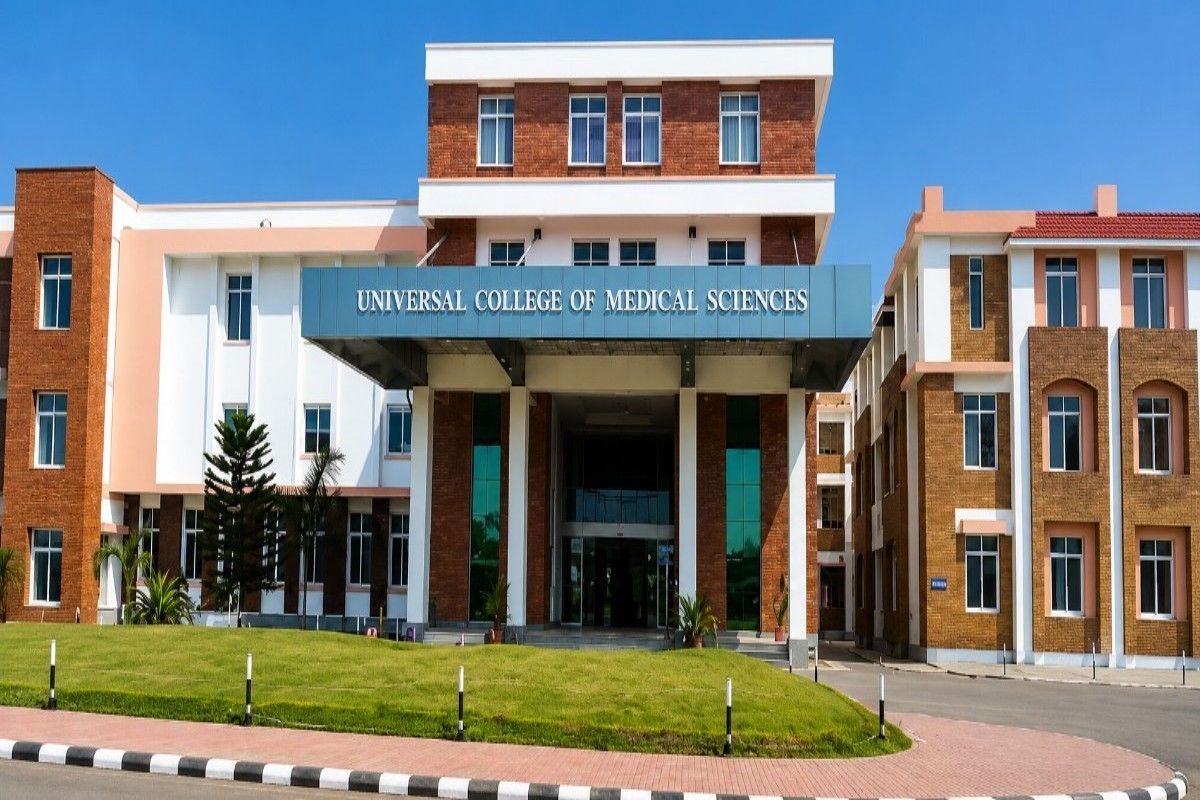
Drive 30 kilometres east of Kathmandu on the Araniko Highway, and the city noise starts to fade. By the time you reach Dhulikhel, a hilltop municipality of roughly 16,000 people, with unobstructed views of the Himalayan range on a clear morning, you are not where anyone imagines a top medical school would be. That is, in fact, exactly the point. Kathmandu University School of Medical Sciences was deliberately built here, away from the urban centre, because the hospital around which it was built, Dhulikhel Hospital, was conceived as a community institution rather than a city institution. And that founding philosophy shapes everything about how KUSMS teaches medicine.
KUSMS was established in 1994 as one of the nine schools of Kathmandu University, which is itself an autonomous, not-for-profit, non-government institution. The MBBS programme formally launched on 7 September 2001, a date the school marks annually as KUSMS Day, with a first batch of 43 Nepali students. Since then, it has grown into the largest school within KU, producing over 1,000 MBBS doctors and 250 specialist doctors each year, as well as another 900 health professionals in nursing, dentistry, pharmacy, physiotherapy, and allied health sciences. It currently has 7 affiliated medical colleges across Nepal in addition to its own constituent campus at Dhulikhel.
Dhulikhel Hospital is what makes KUSMS clinically distinctive. Opened in 1996 under the patronage of the late King HM Birendra Bir Bikram Shah Dev as a collaborative project of the Dhulikhel municipality, NepaliMed International, and the Dhulikhel Health Service Association, it was built on the belief that quality healthcare need not be expensive or restricted to urban populations. Today, Dhulikhel Hospital is a 475-bed tertiary care centre with a catchment population of approximately 2.5 million people across more than 50 districts of Nepal. It runs close to 90 short and long-term training programmes annually. And it is a designated research site under the NIH Fogarty International Centre's Fulbright-Fogarty Fellowship programme. This distinction places KUSMS alongside some of the world's leading academic medical institutions for clinical research training.
The NIH Fogarty designation is the thing that almost every guide to KUSMS completely misses. It means that Fulbright-Fogarty Fellows researchers from American institutions come to Dhulikhel Hospital specifically to run implementation science projects, digital health trials, epidemiological cohort studies, and hybrid effectiveness studies. An MBBS student rotating at Dhulikhel Hospital is working in the same building as international research fellows. The clinical environment is not just a teaching hospital. It is a functioning research site with active NIH-funded projects happening in real time. For students interested in research, global health, or postgraduate careers in academic medicine, that environment is categorically different from what any MBBS destination in Central Asia or Eastern Europe can offer.
The KUSMS curriculum uses Problem-Based Learning (PBL) as a formal, structural component from Year 1 onward. This is not cosmetic. Dedicated PBL classrooms were built into the Chaukot basic science building specifically for this purpose, and the PBL sessions are a graded part of the programme, not an optional add-on. PBL at KUSMS is designed around real clinical cases, which means students are building clinical reasoning from the first year, not waiting until Year 3 to start thinking like doctors. That reasoning is exactly what FMGE and NExT examine. Students who work through 200 PBL cases over five years are better prepared for those examinations than students who memorise subject textbooks in isolation.
For Indian students, KUSMS sits in an interesting position on the Nepal MBBS spectrum. It is not the government institution that IOM/Tribhuvan is, so seats are not allocated solely through the MECEE government merit lists. It is affiliated with a genuinely prestigious, autonomous university and a hospital with a 30-year track record of community-oriented tertiary care. The total 5.5-year cost at KUSMS typically runs between INR 55 to 65 lakh all-inclusive, which is lower than most Indian private medical colleges and comparable to other KU-affiliated options. The hostel is mandatory for all international students throughout the entire course and internship, which is actually a significant benefit, since it guarantees accommodation without the uncertainty of apartment hunting in an unfamiliar city.
Finally, Dhulikhel itself deserves more than a passing sentence. The town is clean, safe, and genuinely pleasant to live in. The Himalayan views, including the Langtang, Gaurishankar, and Numbur ranges, on a clear morning, are not a marketing image. They are what you see out of the hostel window. The air quality is significantly better than Kathmandu's. The cost of living is lower. The pace of life is calmer. For a student spending five and a half years building the clinical and academic foundation of a medical career, the environment matters more than most guides acknowledge.
No hidden charges, no donation. The full picture of costs at Kathmandu University School of Medical Sciences (KUSMS) Dhulikhel.
Tuition Fee
NPR 5,25,000/year (INR 3.28 lakh); total 5.5-year all-inclusive cost INR 55–65 lakh; no capitation fee
NPR 5,25,000/yr, INR 3.28 lakh/yr, Total 5.5yr: INR 55–65 lakh(all-inclusive)
Hostel Fee
NPR 12,000/month (INR 7,500); double sharing; hostel is mandatory for all international students; cafeteria on campus
NPR 12,000/month, INR 7,500/month, Double sharing Mandatory for international
Food & Meals
NPR 5,000–5,500, INR 3,100–3,400Cafeteria on campus, Indian/Nepali menu
Per Month
Insurance
INR 15,000–25,000 Nepal student health scheme available, Year 1 slightly higher
Per Year
Donation
No Donation
No Hidden Fees
Total Estimated Cost
INR 55–65 lakh Total 5.5 Year All-Inclusive Cost
Total 5.5 Year
25–35%
Average FMGE first-attempt pass rates for students from many overseas medical universities. Students from structured programs consistently score higher.
Students returning to India need to clear the FMGE/NExT exam. Kathmandu University School of Medical Sciences (KUSMS) Dhulikhel integrates exam-oriented coaching into the regular curriculum so students are prepared from day one.
A structured program that takes you from foundational sciences to clinical mastery.
• PBL classrooms introduce clinical reasoning from semester one
• Anatomy, Biochemistry, Physiology, and Histology taught with PBL integration
• Research methodology and advanced Pathological Anatomy introduced
• Microbiology, Pharmacology, Pathology, and Forensic Medicine
• Propedeutics of Internal Medicine bedside history and examination
• First structured ward postings at Dhulikhel Hospital begin
• Neurology, Psychiatry, Dermatology, ENT, Ophthalmology clinical modules
• Internal Medicine, Surgery, Paediatrics, OBG at Dhulikhel Hospital
• FMGE/NExT subject-wise revision; research project completed this phase
• Emergency Medicine, Orthopaedics, Radiology, Community Medicine rotations
• Structured FMGE/NExT coaching; mock exams built into schedule
• Compulsory rotations: Medicine, Surgery, Paediatrics, OBG, Emergency


Furnished hostel rooms with Wi-Fi, laundry, 24/7 security, and Indian mess on or near campus.
Indian restaurants and mess facilities serving vegetarian and non-vegetarian home-style food daily.
Strong Indian community with cultural events, festival celebrations, and peer support groups.
Students get hands-on clinical training in government and private hospitals affiliated with the university.
Practical information for students planning to study at Kathmandu University School of Medical Sciences (KUSMS) Dhulikhel.
Prepare for all seasons. Thermal wear for winters, light clothing for summers. University provides heating in hostels.
Student visa processed with university invitation letter. Direct and connecting flights from major Indian cities.
Health insurance included in fees. Medical facility on campus plus city hospitals easily accessible.
Local SIM cards available. WhatsApp and video calls keep you connected with family back home.
Average monthly expenses of $150–$250 covering food, transport, and personal needs.
University library, online databases, and study groups. Seniors mentor juniors through academic challenges.
Our team guides you through every step — from application to arriving on campus.
AMW's Nepal specialist compares BPKIHS, Manipal, KMC, Nobel, and National. FMGE rates, fees, city, and clinical quality within 24 hours of your first enquiry.
AMW sends your Nepal-specific checklist. A passport is recommended, though not mandatory. All documents verified before submission
AMW submits directly to your shortlisted partner college. Offer letters are typically received within 5–10 working days
AMW receives your offer letter, walks you through the terms, and advises on fee payment and seat confirmation
Initial deposit secures your September–October 2026 seat. AMW advises on INR transfer to Nepal is straightforward given bilateral banking relations
AMW orients you on Kathmandu or Pokhara city logistics, hostel setup, what to carry, and first-week expectations at your college.
Fly Delhi–Kathmandu (1.5–2 hrs) or use a land route if geographically convenient. No visa, no passport required, just your voter ID.
AMW's local Nepal team coordinates your hostel check-in and college registration. You are not navigating this alone
College orientation, campus familiarisation, and early settling-in support from AMW's Nepal team during your first week.
AMW maps out your 5.5-year FMGE preparation plan from Day 1. Year 4 coaching begins formally, but the preparation strategy starts at enrolment.
Admission Helpline — Contact our counsellors for step-by-step assistance.
“The faculty here is incredibly supportive. The clinical training during hospital rotations has given me real confidence in patient care.”
“Affordable fees without compromising on quality. The campus facilities and hostel life made my transition abroad very smooth.”
“English medium instruction and WHO-recognized curriculum were the deciding factors for me. No regrets so far — excellent experience overall.”
“The university helped with everything from visa to accommodation. Hospital exposure from year three has been invaluable for my FMGE prep.”
“Just cleared my licensing exam on the first attempt. The structured coaching and mock exams during final year were a game-changer.”
“Safe campus, good food options, and a strong Indian student community. The teaching methodology is very practical and hands-on.”
KUSMS is a public non-profit institute belonging to Kathmandu University. But the tuition fee is comparatively more expensive than that of other IOMs. Thus, it lies between the two aspects.
Your NEET score alone will be enough, but still, you have to apply using mec.gov.np. However, your admission to KUSMS through the private route is based solely on NEET scores.
Yes. The institution was renamed to KUSMS in 2006, but KUMS still circulates widely. So, when you see KUMS in consultancy materials, it refers to the same Dhulikhel campus you are researching.
The tuition cost is 37 to 42 lakhs INR. In addition, the cost of living in Dhulikhel is around USD 160 per month. Hence, the total budget for 5.5 years falls somewhere between 43 and 50 lakhs INR.
. Practical labs begin in the first year itself. Furthermore, full ward rotations at the 700-bed Dhulikhel Hospital begin from year three across all core departments. Patient volume at Dhulikhel is consistently high.
Yes. Nepal compels all its graduates to serve for a year in the countryside after an internship. Thus, your total contribution will amount to five and a half academic years, plus a year-long internship period, plus another year in the countryside.
Yes, and most FAQs skip this entirely. KUSMS runs DM and M.Ch. programs in Cardiology, Neurology, Nephrology, and Neurosurgery at affiliated colleges. So, full specialisation through MBBS to super-speciality is achievable within the KU system.
. Based on the MEC requirements, international students must pay their fees in three instalments, minus the hostel fees and mess charges. It means the total fee does not need to be paid at once. KUSMS also offers additional packages for international students.
Yes. The degree is recognised by the NMC India, WHO, the Nepal Medical Council, and the Sri Lanka Medical Council. Additionally, graduates are eligible for USMLE Steps and PLAB. So, the degree carries multi-country licensing mobility that most FAQs underreport.
Students needing Nepal's lowest fees should choose IOM. However, those prioritising a private-standard hospital, three-instalment fee flexibility, and KU affiliation will find KUSMS worth the higher cost. Know exactly which trade-off fits your situation before deciding.


Our expert counsellors will guide you through the complete admission process — from documents to airport pickup.