
Q1. Is Kyrgyz Uzbek University NMC- and WHO-recognised, or is that just a marketing claim?
+A. KUU is listed on WDOMS, recognised by NMC and WHO. Indian graduates are eligible for NExT. Always verify at wdoms.org yourself before enrolling.
 Kyrgyzstan | Est. 1994
Kyrgyzstan | WHO and NMC India recognised; licensed by the Kyrgyzstan Ministry of Education and Science; ECFMG-eligible; graduates can sit FMGE/NExT, USMLE, and PLAB | 100% English medium for international students; no Kyrgyz, Russian, IELTS, or TOEFL required; NEET qualification is the medium
Expert will call you within 2 hours
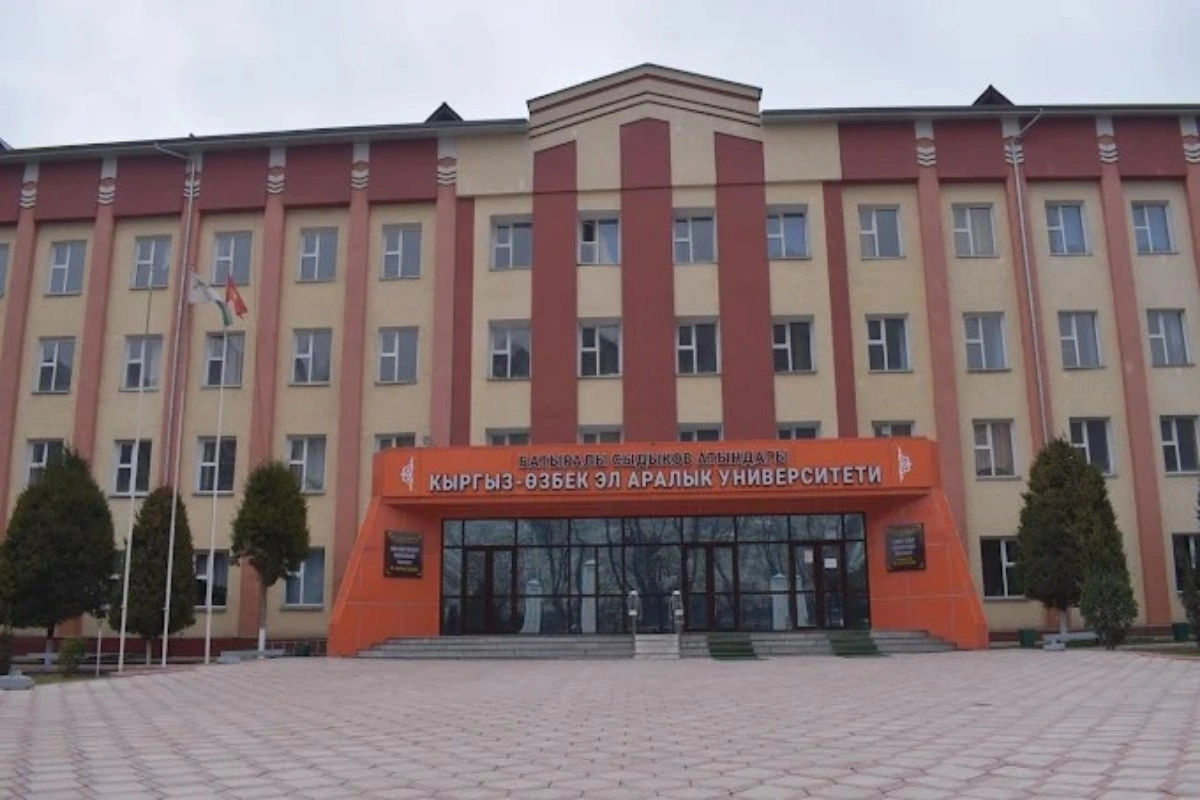
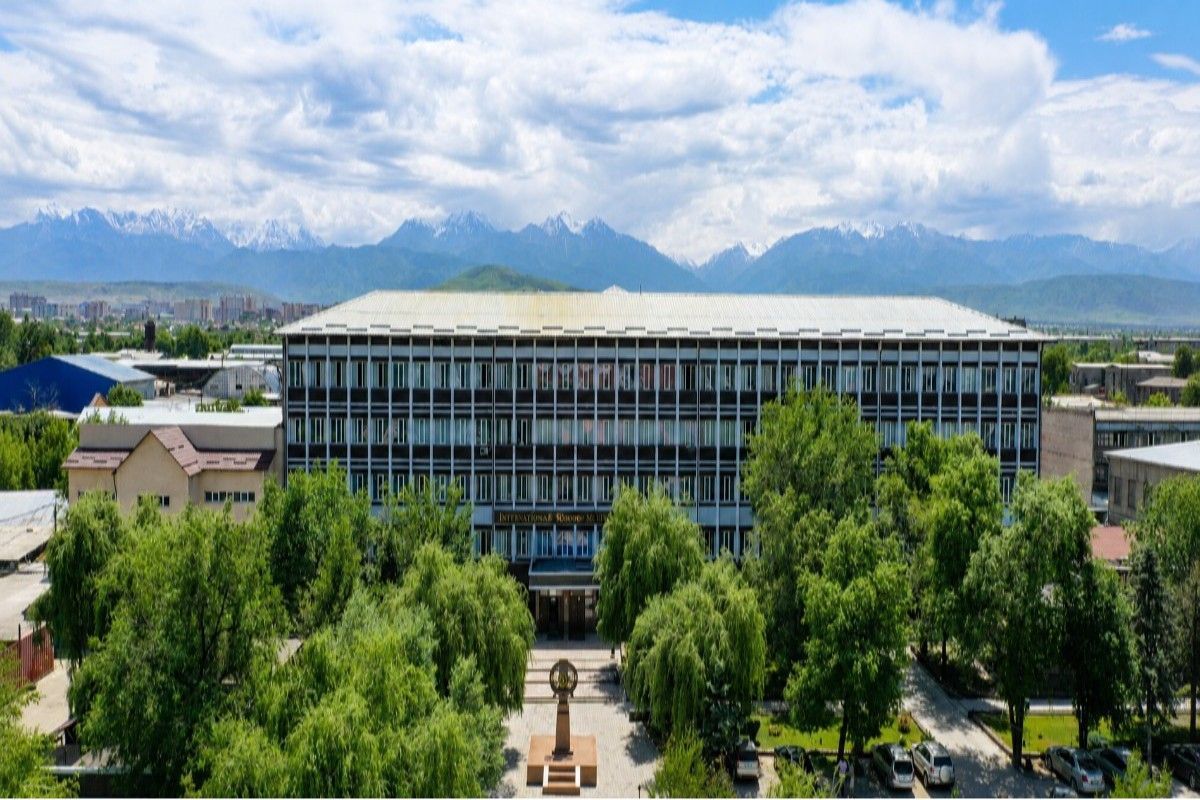
Kyrgyz Uzbek University — officially named Batyraly Sydykov Kyrgyz-Uzbek International University — is a public, non-profit higher education institution founded in 1994 and located in Osh, Kyrgyzstan's second-largest city. KUU is not a single-faculty medical college that opened to chase the international MBBS market. It is a classical multidisciplinary university with 12 departments, over 10,000 enrolled students, 32 specialities, and 380 teaching staff — including 16 professors, 13 Doctors of Science, 2 Academicians of the National Academy of Science of the Kyrgyz Republic, and 21 docents. The Medical Faculty sits within this wider institution, meaning students study and live in a real university environment rather than in an isolated medical hostel.
The university is accredited by the Ministry of Education and Science of Kyrgyzstan, and the Medical Faculty is recognised by both the National Medical Commission (NMC) of India and the World Health Organisation (WHO). For Indian students, both of those recognitions are non-negotiable — without them, the degree has no value back home. KUU clears both. Graduates are eligible to sit for the FMGE/NExT in India, the USMLE in the United States, and the PLAB in the United Kingdom.
The location in Osh is something most guides either dismiss in a sentence or ignore. That is a mistake. Osh is one of Central Asia's oldest continuously inhabited cities — over 3,000 years old — and sits at the strategic junction of the ancient Silk Road routes through the Fergana Valley. Today it is a functioning city of nearly 300,000 people with hospitals, markets, transport links, and a sizeable Indian and South Asian student community built up over more than two decades of medical education. Students who have studied here consistently describe Osh as surprisingly liveable — the city is compact, affordable, and safe, with a pace of life that suits focused academic work.
For Indian students choosing between Osh options, KUU occupies an interesting position. It is a public university — government-funded, not profit-driven — which translates into fee stability, institutional accountability, and a curriculum tied to national standards. The total 6-year cost is INR 18–22 lakhs, making it among the most affordable NMC-recognised MBBS programmes worldwide: no donation fee, no capitation, no surprise charges on arrival.
One thing consistently missing from competitor pages on KUU is an honest discussion of the Osh advantage in clinical-training terms. Because KUU is embedded in a city with functioning tertiary care infrastructure — Osh Regional United Hospital alone handles thousands of inpatients per year across general medicine, surgery, paediatrics, traumatology, and obstetrics — students rotating through affiliated facilities in Years 3 to 6 encounter real caseloads rather than staged demonstrations. Clinical experience in a mid-sized city with genuine healthcare demand is qualitatively different from rotating through a hospital where international students are treated as observers rather than participants.
In July 2025, the Kyrgyz government introduced a moratorium on new medical education licences until December 2027 and set a minimum tuition floor of USD 3,000 per year for international students. This direct quality-control measure filters out the wave of undercapitalised new colleges that the NMC flagged in its 2021 advisory. KUU, an established public university founded in 1994, sits well above that threshold and is completely unaffected by the moratorium. Students choosing KUU now are choosing an institution that has been operating continuously for over 30 years, not one of the dozens of new colleges whose licences and infrastructure were rightly questioned.
No hidden charges, no donation. The full picture of costs at Kyrgyz Uzbek University Medical Faculty Osh.
Tuition Fee
USD 3,000/yr (INR 2.87 lakh approx); total 6-year all-inclusive cost INR 18–22 lakhs; no donation, no capitation, no hidden charges on arriv
USD 3,000/yr/ INR 2.87 lakh/yr
Hostel Fee
USD 600–900/yr (INR 57,000–86,000 approx); separate male and female blocks; Indian mess available; shared, double, and single room options o
USD 600–900/yr/ INR 57,000–86,000
Food & Meals
USD 3,000/yr/ INR 2.87 lakh/yr USD 600–900/yr/ INR 57,000–86,000 INR 5,700–9,000/ month, USD 60–95 INR 25,000–35,000/yr(Year 1 higher)
per month
Insurance
INR 25,000–35,000/yr(Year 1 higher)
per year
Donation
No Donation
Hidden Fees
Total Estimated Cost
INR 18–22 lakh Total 6 Year Cost
6 Year
25–35%
Average FMGE first-attempt pass rates for students from many overseas medical universities. Students from structured programs consistently score higher.
Students returning to India need to clear the FMGE/NExT exam. Kyrgyz Uzbek University Medical Faculty Osh integrates exam-oriented coaching into the regular curriculum so students are prepared from day one.
A structured program that takes you from foundational sciences to clinical mastery.
• Foundational modules in Medical Latin, History of Medicine, and Clinical Ethics establish the professional and scientific framework every doctor carries into clinical practice
• Core pre-clinical subjects — Anatomy, Histology, Biochemistry, Biophysics, and Cell Biology — taught in KUU's faculty laboratories using structured practical and digital resources
• Small-group problem-based learning sessions develop clinical reasoning skills directly tested in FMGE/NExT and USMLE Step 1
• Physiology, Microbiology, Virology, and advanced Biochemistry; Pharmacology principles and Pathological Anatomy complete the pre-clinical foundation
• Propedeutics of Internal Medicine begins: structured patient history-taking, physical examination, and ward rounds with real patients from this year
• Advanced Pathology, Pathophysiology, and Immunology with first supervised clinical postings at KUU-affiliated Osh hospitals under senior faculty supervision
• Clinical modules in Neurology, Psychiatry, Dermatology, ENT, and Ophthalmology; FMGE/NExT subject-wise preparation integrated into the timetable
• Full hospital rotations in Internal Medicine, General Surgery, Paediatrics, and OBG across affiliated Osh hospitals, with direct patient management responsibilities
• Advanced rotations in Surgery, Traumatology, Emergency Medicine, Cardiology, and Oncology; students independently assess and manage cases under specialist consultant guidance
• Advanced rotations in Surgery, Traumatology, Emergency Medicine, Cardiology, and Oncology; students independently assess and manage cases under specialist consultant guidance
• Structured FMGE/NExT, USMLE, and PLAB coaching with mock examinations and clinical case discussions throughout the internship year
• Compulsory full-time rotations across Internal Medicine, Surgery, Paediatrics, OBG, Emergency Medicine, and Community Medicine within KUU's Osh hospital network


Furnished hostel rooms with Wi-Fi, laundry, 24/7 security, and Indian mess on or near campus.
Indian restaurants and mess facilities serving vegetarian and non-vegetarian home-style food daily.
Strong Indian community with cultural events, festival celebrations, and peer support groups.
Students get hands-on clinical training in government and private hospitals affiliated with the university.
Practical information for students planning to study at Kyrgyz Uzbek University Medical Faculty Osh.
Prepare for all seasons. Thermal wear for winters, light clothing for summers. University provides heating in hostels.
Student visa processed with university invitation letter. Direct and connecting flights from major Indian cities.
Health insurance included in fees. Medical facility on campus plus city hospitals easily accessible.
Local SIM cards available. WhatsApp and video calls keep you connected with family back home.
Average monthly expenses of $150–$250 covering food, transport, and personal needs.
University library, online databases, and study groups. Seniors mentor juniors through academic challenges.
Our team guides you through every step — from application to arriving on campus.
Shortlist a university and confirm current NMC/WHO WDOMS status directly; don't rely solely on an agent's claim.
Submit the application form with scanned academic documents and passport.
Receive a provisional admission/invitation letter, typically within 7-10 working days.
Pay the initial tuition instalment as per the university's payment schedule.
Apply for the Kyrgyz student visa at the nearest visa centre, allowing 7-15 working days for processing.
Book travel and prepare for departure.
Complete in-person registration and a medical check-up upon arrival.
Begin classes at the start of the academic year (September/October).
Admission Helpline — Contact our counsellors for step-by-step assistance.
“The faculty here is incredibly supportive. The clinical training during hospital rotations has given me real confidence in patient care.”
“Affordable fees without compromising on quality. The campus facilities and hostel life made my transition abroad very smooth.”
“English medium instruction and WHO-recognized curriculum were the deciding factors for me. No regrets so far — excellent experience overall.”
“The university helped with everything from visa to accommodation. Hospital exposure from year three has been invaluable for my FMGE prep.”
“Just cleared my licensing exam on the first attempt. The structured coaching and mock exams during final year were a game-changer.”
“Safe campus, good food options, and a strong Indian student community. The teaching methodology is very practical and hands-on.”
A. KUU is listed on WDOMS, recognised by NMC and WHO. Indian graduates are eligible for NExT. Always verify at wdoms.org yourself before enrolling.
A. Total MBBS fees sit around Rs. 18.49 lakhs for the full course — the lowest in Kyrgyzstan. Factor in food and living, and budget Rs. 22–25 lakhs all-in.
A. Yes. Indian students must have a valid NEET score and also 50% marks in PCB in class XII (40% for reserved category candidates).
A. KUU is a government university under Kyrgyzstan's Ministry of Health and Education. Government status affects fee stability and long-term recognition credibility — most FAQs skip this.
A. All academics run in English. Hospital wards use Kyrgyz and Russian, though picking up basic phrases noticeably helps during clinical rotations. Nobody warns you before you land.
A. Hospital training begins from year four onwards. Years 1 to 3 are dedicated to preclinical sciences, which also include case-based learning. Clinical exposure starts from the fourth year.
A. September intake has larger cohort sizes and more peer support. February suits students who missed September. Both are equally valid for NMC compliance — cohort size is the real difference.
A. Osh is safe, affordable, and historically Uzbek-influenced—Near Sulaiman-Too, a UNESCO site. Culturally rich but not cosmopolitan — expect a few weeks of adjustment.
A. No. No institution can guarantee this. Clearing NExT depends entirely on your own preparation and consistency. Universities provide medical education; exam coaching is your responsibility.
A. Osh State University is an older institution and also bigger compared to KUU, with better clinical facilities. KUU is cheaper and easier to cope with.


Our expert counsellors will guide you through the complete admission process — from documents to airport pickup.