Q`1 When was Marmara University's Faculty of Medicine established?
+The wider university traces to 1883 under the Ottoman Empire, but the Faculty of Medicine itself was founded considerably later, in 1982.
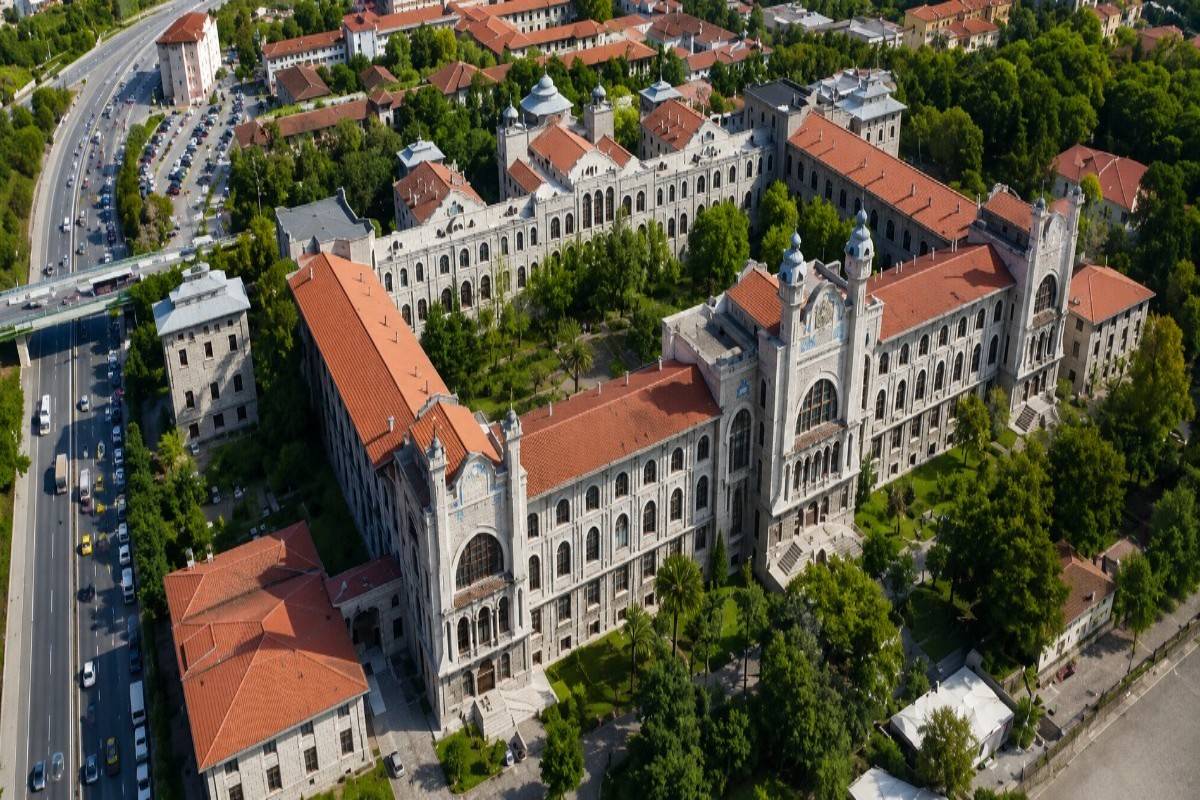
 Turkey | Est. 1883
Turkey | Turkey's Higher Education Council (YÖK) | English for Human Medicine; medium
Expert will call you within 2 hours
People mostly just call it Marmara for short. Its own history genuinely traces back to 1883, when it was founded under the Ottoman Empire as Hamidiye Ticaret Mekteb-i Âlisi, a commercial school, considerably before the university took the shape most students recognise today. The university's own name comes directly from the Sea of Marmara, near which its main campus sits. So, this university's identity is tied to both its Ottoman-era commercial-school origins and its own specific coastal geography.
Here is a fact most guides skip entirely. Medicine specifically was not part of Marmara's original 1883 founding. The Faculty of Medicine was established considerably later, in 1982, nearly a century after the university's own commercial-school beginnings. So, applicants should understand Marmara's own deep institutional age and its medical faculty's own, more recent founding as two genuinely separate facts, not one continuous medical tradition stretching back to 1883.
Marmara is genuinely distinctive linguistically. It is the only university in Turkey offering undergraduate and postgraduate programmes in four separate languages, Turkish, English, French, and German, with some sources describing Arabic as a further offering too. Human Medicine specifically is taught in English, alongside Dentistry, while Pharmacy runs in Turkish. Marmara counts among its notable alumni Recep Tayyip Erdoğan, President of Turkey, who graduated from the university's Faculty of Economics and Administrative Sciences, a genuinely specific, real connection worth knowing.
A genuinely distinctive international partnership worth highlighting is that Marmara University's Faculty of Medicine runs a Joint International Medicine Programme with the Eastern Mediterranean University's Dr. Fazıl Küçük Faculty of Medicine in Cyprus. This joint programme has its own documented graduating cohorts, with one specific reported class of 34 students receiving their diplomas together in Istanbul, and the programme itself has been included in the World Directory of Medical Schools, WDOMS, a real, specific, verifiable international academic partnership rather than a vague claim of global reach. So, students on this specific track genuinely benefit from exposure to two distinct national healthcare systems and academic environments during their studies, rather than remaining confined to a single country's medical education framework throughout.
Marmara operates across nine campuses spread throughout Istanbul, though its main campus sits in the Göztepe district of Kadıköy, on the Asian side of the city. The Faculty of Medicine specifically is located near this main campus, in the Maltepe district, directly attached to Marmara's own university hospital and teaching hospital, with permanently based clinical staff present across both the hospital and the faculty.
Istanbul offers genuinely rich international student life, and Marmara maintains a dedicated International Student Office providing support across accommodation, administrative processes, and general integration into university life. As Turkey's second-largest university, with a faculty and administrative staff running into the thousands, Marmara offers students access to a genuinely large, well-resourced academic community.
Human Medicine at Marmara runs six years, following Turkey's standard national medical curriculum, taught entirely in English. Admission requirements are reported by one detailed source as relatively straightforward, a high school diploma with a score of at least 80 percent, alongside a minimum 60 percent score in an English language exam, though applicants should confirm the current exact requirements directly, since Turkey's national YÖS, Foreign Student Exam, generally applies for admission to Turkish public universities more broadly.
NEET remains a genuine requirement for Indian applicants here, exactly as it does for most other MBBS-style destinations covered in guides like this one, and Indian graduates would still need to clear the FMGE or NExT exam to practise medicine back in India.
Istanbul's Asian side, home to Marmara's main campus, offers a genuinely different pace and character compared to the more tourist-heavy, historic European side of the city, giving students a real, more residential, locally lived-in experience of Istanbul day to day. This side of the city is home to genuine neighbourhood markets, parks along the Marmara Sea coastline, and considerably less crowded streets than the city's most famous historic districts, while still remaining well connected to the rest of Istanbul via ferries, metro lines, and bridges spanning the Bosphorus.
Marmara's own scale as Turkey's second-largest university also means medical students here study within a genuinely broad, interdisciplinary academic community, with real opportunities to interact with students and researchers across economics, law, engineering, and the arts, not just fellow medical students alone. This breadth, combined with the university's genuinely rare four-language teaching structure and its real, documented international medicine partnership with Cyprus, gives Marmara a distinctive institutional character worth understanding fully before applying.
Fee figures here are genuinely worth setting out with real care, since reported figures diverge considerably and none of the sources reviewed confirmed a single, specific, official rate for Medicine alone.
Cost Item | Amount | Notes |
Tuition Fee (upper reported estimate for Medicine) | Approx. USD 9,650/year | Reported as the top of a wide fee range spanning all Marmara programmes; likely closer to Medicine's actual rate |
Tuition Fee (general reported figure, less specific) | Approx. USD 5,000/year (USD 2,500/semester) | Reported by a separate source without confirming whether this applies specifically to Medicine |
Total Tuition (6 years, upper estimate) | Approx. USD 57,900 | Based on the higher reported annual rate held stable across the programme |
Total Tuition (6 years, lower estimate) | Approx. USD 30,000 | Based on the lower, less specific general estimate, if it does apply to Medicine specifically |
Scholarships | Available to international students based on academic merit | May cover tuition fees or provide a living stipend; confirm current eligibility directly |
Total 6-Year Estimate | — | Roughly USD 30,000-57,900, depending on which reported estimate applies; confirm the exact Medicine-specific figure directly |
Note: request Marmara's own current, official Medicine-specific fee schedule directly, given the genuine spread across third-party sources.
Most lists mention Marmara as just another Turkish public university. However, they do not explain its genuine, documented joint international medicine programme, or its genuinely rare four-language structure. The reason is simple. It is about a real, verifiable cross-border partnership, and a genuine linguistic breadth.
Marmara is not like most other Turkish public universities when it comes to international partnerships. In fact, its Faculty of Medicine runs a real, documented Joint International Medicine Programme with the Eastern Mediterranean University in Cyprus, with a specific graduating cohort of 34 students and inclusion in the World Directory of Medical Schools. Furthermore, applicants get a genuine, verifiable cross-border academic partnership here, not a general claim of international recognition.
The four-language structure also matters more than most guides let on. For example, most guides describing Turkish universities' language offer focus on a simple English-versus-Turkish split. Marmara is specifically the only university in Turkey teaching undergraduate and postgraduate programmes across four separate languages, Turkish, English, French, and German. Moreover, this university's linguistic breadth is a genuine, documented structural distinction, not a marketing description.
One thing most other blogs miss is how much reported Medicine-specific fees actually conflict here. In addition to a higher, more Medicine-specific-seeming figure of roughly USD 9,650 a year, a separate source cites a considerably lower, less specific general rate around USD 5,000. Since no source confirms a single official Medicine rate directly, applicants should request this figure directly from Marmara before finalising a six-year budget.
No hidden charges, no donation. The full picture of costs at MBBS in Marmara University Faculty of Medicine.
Tuition Fee
USD 5,000-9,650/year (genuine spread across sources); no confirmed capitation fee
Approx. USD 9,650/year
Hostel Fee
4,500 TL per month
4,500 per month
Food & Meals
USD $ 260
per year
Insurance
USD $ 183
per month
Donation
No Donation
No Hidden fee
Total Estimated Cost
Approx. USD 30,000-57,900, depending on which reported estimate applies
6 year
25–35%
Average FMGE first-attempt pass rates for students from many overseas medical universities. Students from structured programs consistently score higher.
Students returning to India need to clear the FMGE/NExT exam. MBBS in Marmara University Faculty of Medicine integrates exam-oriented coaching into the regular curriculum so students are prepared from day one.
A structured program that takes you from foundational sciences to clinical mastery.
● In addition, this stage builds the scientific foundation for everything that follows
● First, Anatomy, Physiology, and Biochemistry are taught entirely in English, consistent with Marmara's English-medium track
● Furthermore, this stage prepares students for the transition into full clinical rotations
● Next, Pathology, Microbiology, and Pharmacology build the diagnostic foundation needed for clinical training
● Moreover, some students may also access the Joint International Medicine Programme's cross-border clinical opportunities
● Then, Medicine, Surgery, and allied clinical subjects run through hands-on training at Marmara's own university hospital
● Also, Indian graduates would still need to clear the FMGE or NExT exam to practise medicine in India
● Finally, graduates receive a Physician qualification, equivalent to an MD or MBBS, upon completing the six-year programme
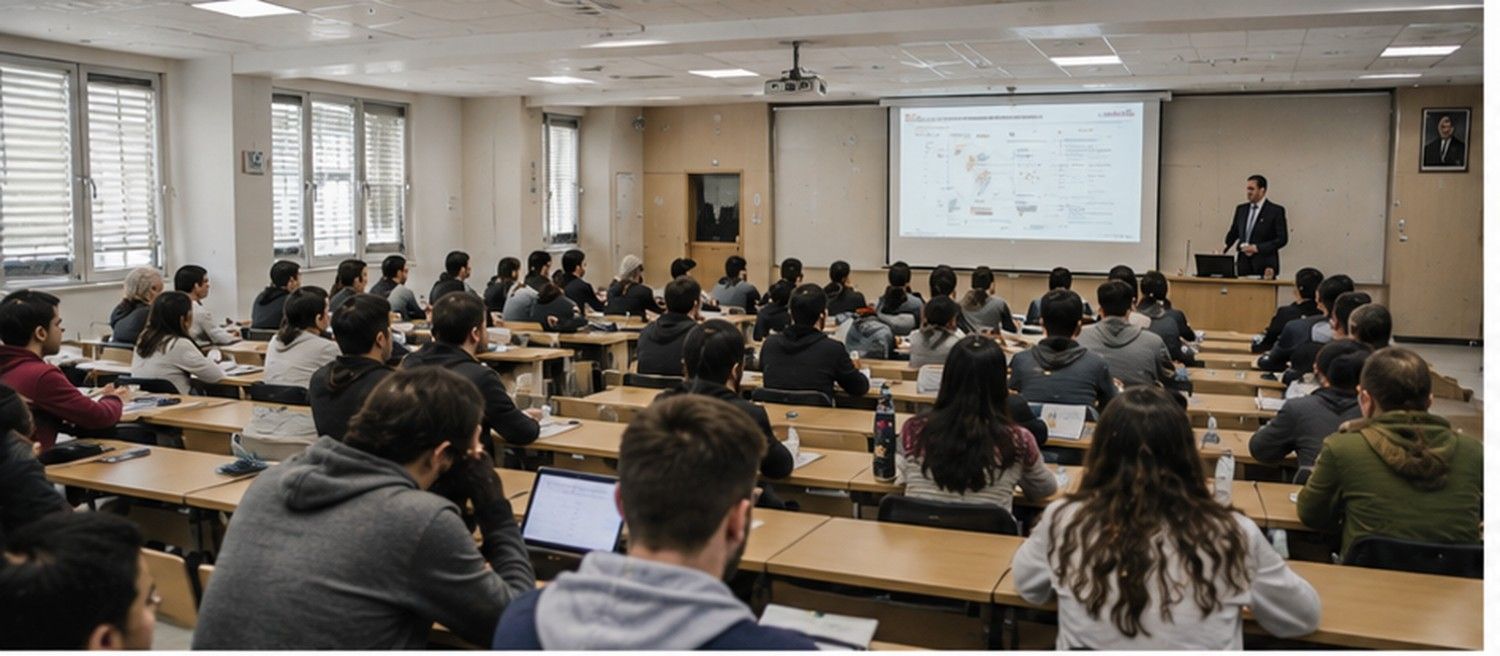
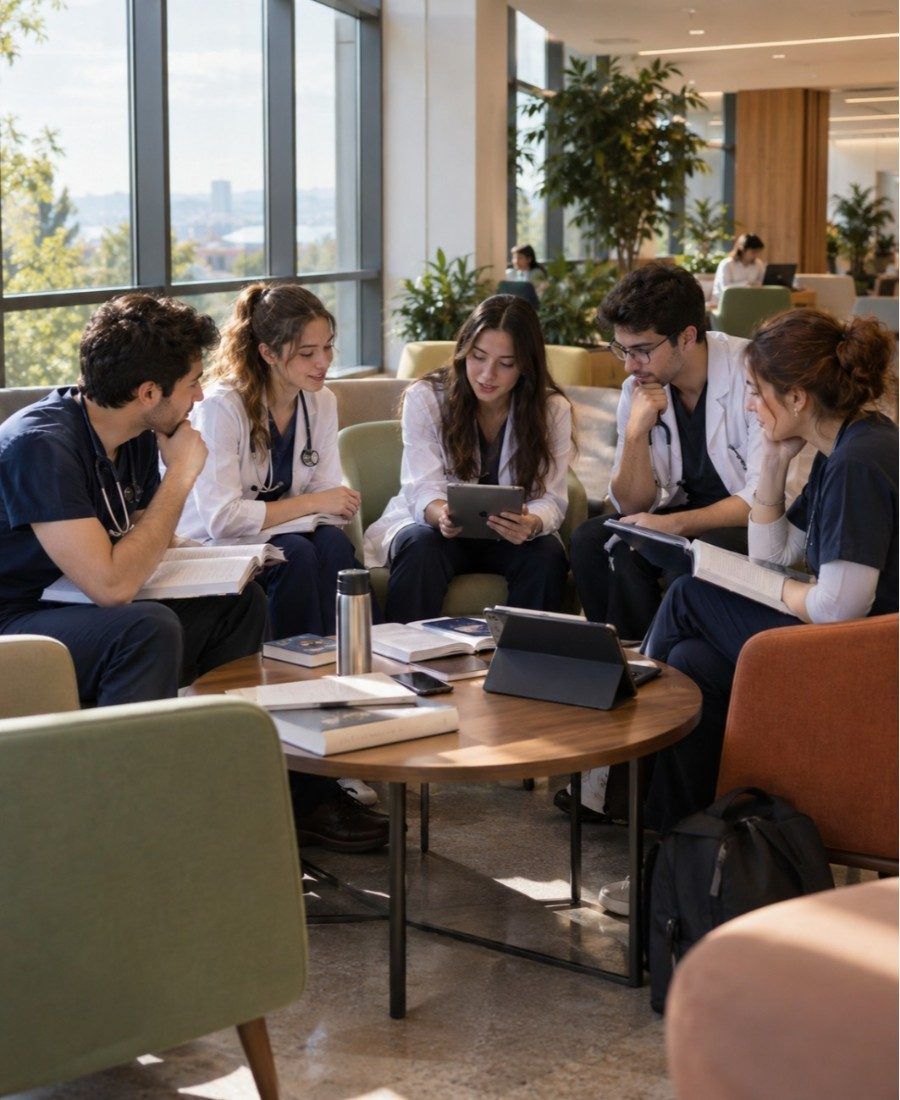
Furnished hostel rooms with Wi-Fi, laundry, 24/7 security, and Indian mess on or near campus.
Indian restaurants and mess facilities serving vegetarian and non-vegetarian home-style food daily.
Strong Indian community with cultural events, festival celebrations, and peer support groups.
Students get hands-on clinical training in government and private hospitals affiliated with the university.
Practical information for students planning to study at MBBS in Marmara University Faculty of Medicine.
Prepare for all seasons. Thermal wear for winters, light clothing for summers. University provides heating in hostels.
Student visa processed with university invitation letter. Direct and connecting flights from major Indian cities.
Health insurance included in fees. Medical facility on campus plus city hospitals easily accessible.
Local SIM cards available. WhatsApp and video calls keep you connected with family back home.
Average monthly expenses of $150–$250 covering food, transport, and personal needs.
University library, online databases, and study groups. Seniors mentor juniors through academic challenges.
Our team guides you through every step — from application to arriving on campus.
Share your NEET score, academic record, and budget. Our Turkey specialist provides an honest assessment comparing Turkey with Georgia, Armenia, and Russia and, within Turkey, identifies the right university based on NMC recognition status, clinical quality, preferred city, and total cost. NMC status verification is the first step for every Turkey recommendation.
AMW submits your application to the selected university with all required documents. Most Turkish private medical universities for English-medium programmes do not require a separate university entrance exam beyond NEET, though some require YÖS. AMW advises on this for each specific university. Offer letters are typically issued within 2–4 weeks.
AMW assists with your Turkish student visa application a straightforward process for Indian nationals. Required documents include a university acceptance letter, financial means documentation, health insurance, and a biometric appointment at the Turkish Embassy in India. Processing typically takes 3–6 weeks.
AMW coordinates travel planning and arranges airport pickup in Istanbul or Ankara. Our local Turkey representative handles hostel check-in, university registration, and city orientation. Support continues throughout the first month.
Admission Helpline — Contact our counsellors for step-by-step assistance.
“The faculty here is incredibly supportive. The clinical training during hospital rotations has given me real confidence in patient care.”
“Affordable fees without compromising on quality. The campus facilities and hostel life made my transition abroad very smooth.”
“English medium instruction and WHO-recognized curriculum were the deciding factors for me. No regrets so far — excellent experience overall.”
“The university helped with everything from visa to accommodation. Hospital exposure from year three has been invaluable for my FMGE prep.”
“Just cleared my licensing exam on the first attempt. The structured coaching and mock exams during final year were a game-changer.”
“Safe campus, good food options, and a strong Indian student community. The teaching methodology is very practical and hands-on.”
The wider university traces to 1883 under the Ottoman Empire, but the Faculty of Medicine itself was founded considerably later, in 1982.
Yes, Human Medicine is taught in English, alongside Dentistry; Pharmacy runs in Turkish.
Turkey's national YÖS (Foreign Student Exam) is generally required, alongside a qualifying NEET score for Indian applicants.
Yes, a valid, qualifying NEET score is required for Indian applicants under NMC guidelines.
Reports genuinely conflict, ranging from roughly USD 5,000 to USD 9,650 a year; confirm the current, exact Medicine-specific rate directly with Marmara.
Which hospital handles clinical training for students?
A genuine, WDOMS-listed collaboration between Marmara's Faculty of Medicine and Eastern Mediterranean University's Dr. Fazıl Küçük Faculty of Medicine in Cyprus.
Its main campus sits in Göztepe, Kadıköy, on the Asian side of Istanbul, with the Faculty of Medicine nearby in Maltepe district.
Four: Turkish, English, French, and German, making it the only university in Turkey offering this range.
Recep Tayyip Erdoğan, President of Turkey, who graduated from the Faculty of Economics and Administrative Sciences.
Our expert counsellors will guide you through the complete admission process — from documents to airport pickup.